
Deep breathing exercises help reduce stress quickly by slowing your heart rate, relaxing your nervous system, and promoting steady, controlled breathing.
They are one of the fastest, safest, and most accessible ways to ease tension—anywhere, anytime.
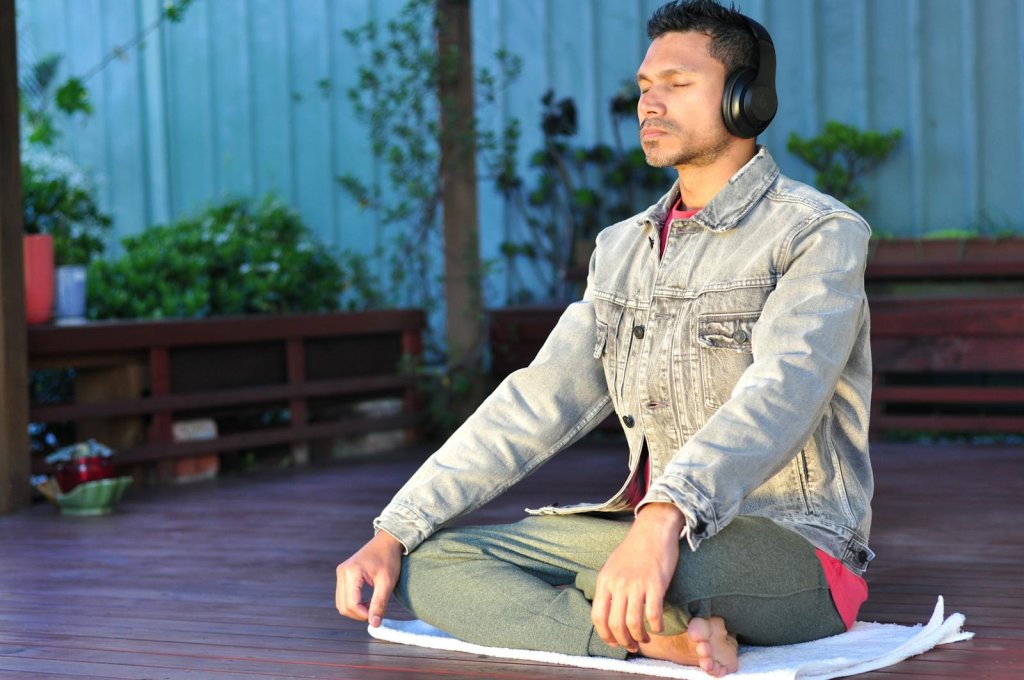
Understanding how deep breathing works matters because even 2–5 minutes of slow, diaphragmatic breathing can activate your body’s relaxation response, improve focus, and support emotional regulation. This guide covers simple, science-backed techniques you can start today.
What Are Deep Breathing Exercises?
Deep breathing exercises involve slow, controlled breaths that engage the diaphragm instead of shallow chest breathing.
Most techniques aim for 6–10 breaths per minute, which supports:
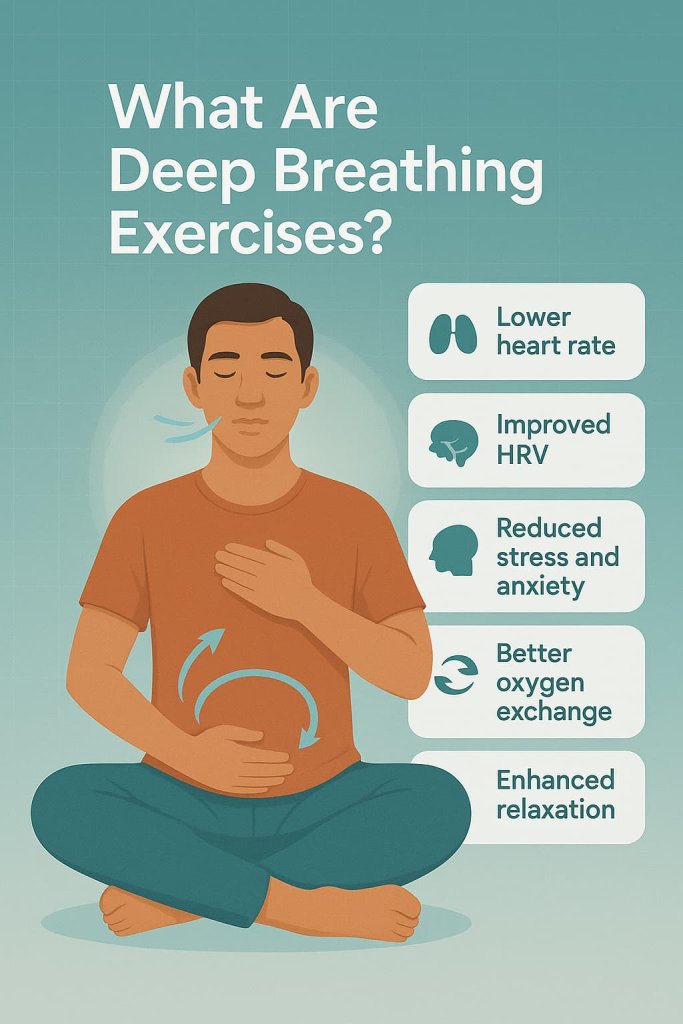
- Lower heart rate
- Improved heart rate variability (HRV)
- Reduced stress and anxiety
- Better oxygen exchange
- Enhanced relaxation
Deep breathing is frequently used in mindfulness, yoga, and clinical stress-management programs.
Benefits of Deep Breathing for Stress Relief
Deep breathing supports your mental and physical well-being in several measurable ways:
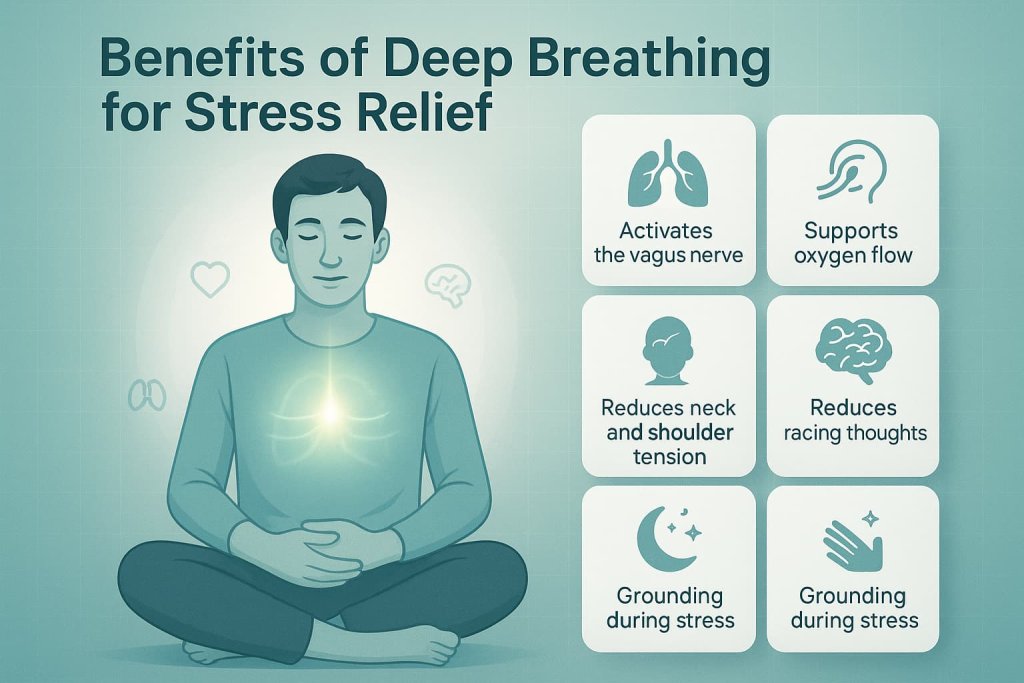
- Activates the vagus nerve, shifting the body into a calmer state
- Enhances HRV, a marker of stress resilience
- Reduces muscle tension in the neck, shoulders, and chest
- Supports oxygen flow and lung efficiency
- Helps interrupt racing thoughts and anxious patterns
- Assists with winding down before sleep
- Can serve as a grounding tool during stressful moments
Consistent practice enhances these benefits over time.
How to Do Deep Breathing Safely
Deep breathing is generally safe for most people, but practice gently and avoid forcing long breaths.
Follow these guidelines:
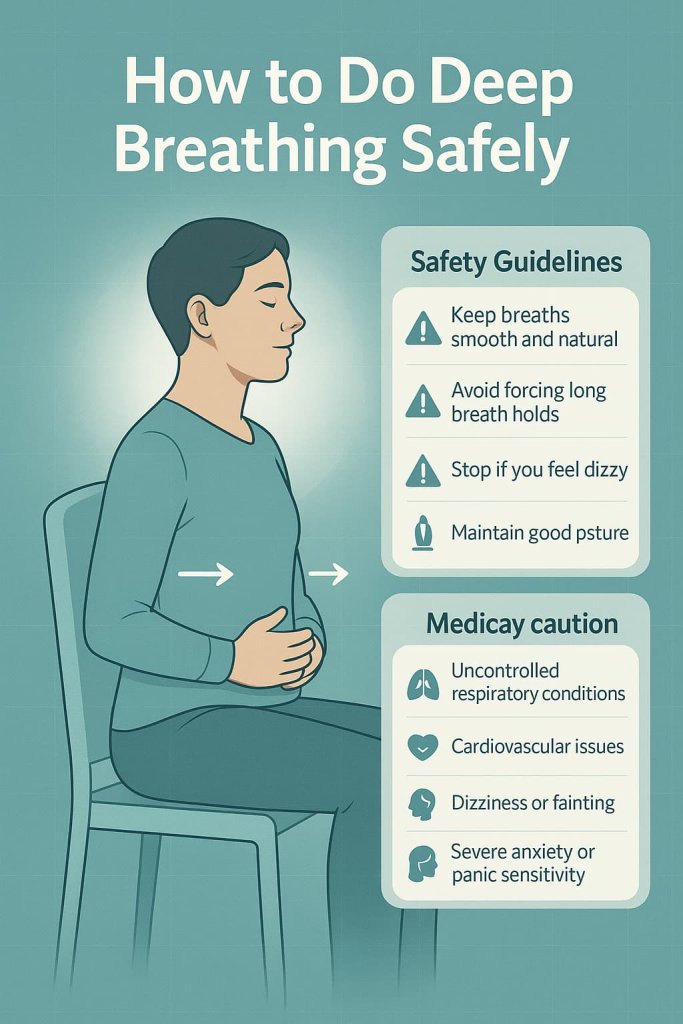
- Keep breaths smooth and natural.
- Do not push breath holds if they feel uncomfortable.
- Stop if you feel dizzy or lightheaded.
- Maintain good posture so the diaphragm can expand fully.
- For bedtime techniques, ensure you are seated or lying down.
Consult a healthcare professional before beginning if you have:
- Uncontrolled respiratory conditions
- Cardiovascular issues
- Frequent dizziness or fainting
- Severe anxiety or panic disorders where body-focused practices may become overwhelming
This guide is for informational purposes only and does not replace medical advice.
12 Best Deep Breathing Exercises That Melt Stress in Minutes
Deep breathing exercises are one of the fastest ways to calm your mind and relax your body—anytime, anywhere. These simple, science-supported techniques help lower stress, steady your breathing, and bring you back to a more balanced state within minutes.
1. Diaphragmatic (Belly) Breathing
Why it works:
Diaphragmatic breathing shifts your body from shallow chest breathing to deep abdominal expansion. This activates the parasympathetic nervous system (your natural “rest and digest” state), lowers heart rate, and helps reduce stress hormones. It also improves oxygen exchange and reduces unnecessary tension in the upper chest and shoulders.
Muscles worked:
Diaphragm, intercostal muscles, abdominal stabilizers.
How to do it:
- Sit or lie in a comfortable position.
- Place one hand on your chest and the other on your belly.
- Slowly inhale through your nose, allowing your belly to rise more than your chest.
- Exhale gently through your mouth, letting your belly fall.
- Continue for 2–5 minutes, keeping the breath smooth and controlled.
Trainer Tip:
Keep the hand on your chest as still as possible—this ensures the diaphragm is doing the work, not the upper chest.
2. Resonance Breathing (6 Breaths Per Minute)
Why it works:
Resonance breathing uses a slow pace (about six breaths per minute) to enhance heart rate variability (HRV), a key marker of your body’s ability to handle stress. This rhythm balances the autonomic nervous system and promotes a deep state of calm.
Muscles worked:
Diaphragm, intercostals, core stabilizers.
How to do it:
- Inhale steadily for 4 seconds.
- Exhale slowly for 6 seconds.
- Maintain this pattern for 5 minutes.
Trainer Tip:
Count silently in your mind and avoid rushing the exhale—longer exhales produce stronger relaxation.
3. Box Breathing (4–4–4–4 Method)
Why it works:
Box breathing regulates the nervous system by combining equal-length inhaling, holding, exhaling, and holding again. This improves concentration, reduces acute stress spikes, and stabilizes the breath during challenging moments.
Muscles worked:
Diaphragm, intercostals.
How to do it:
- Inhale smoothly for 4 seconds.
- Hold your breath for 4 seconds.
- Exhale for 4 seconds.
- Hold again for 4 seconds.
- Continue for 1–3 minutes.
Trainer Tip:
Visualize tracing the four sides of a square—this improves mental focus and keeps your pace consistent.
4. 4–7–8 Breathing Technique
Why it works:
This breathing pattern extends the exhale significantly and introduces a structured breath hold. The long exhalation slows the heart rate and the hold increases CO₂ tolerance, which can deepen relaxation and help prepare the body for sleep.
Muscles worked:
Diaphragm, intercostals.
How to do it:
- Inhale for 4 seconds.
- Hold your breath for 7 seconds.
- Exhale slowly for 8 seconds.
- Repeat for 3–4 cycles.
Trainer Tip:
If the 7-second breath hold feels difficult, shorten the hold until your body adapts.
5. Equal Ratio Breathing (4–4 or 5–5)
Why it works:
Matching the inhale and exhale length brings balance to the autonomic nervous system. It creates a rhythmic breathing pattern that settles the mind and builds breath awareness—ideal for beginners.
Muscles worked:
Diaphragm, intercostals.
How to do it:
- Inhale slowly for 4–6 seconds.
- Exhale for the same amount of time.
- Continue for 3–5 minutes.
Trainer Tip:
Imagine your breath moving in a smooth wave—no pauses, no strain.
6. Extended Exhale Breathing (Longer Exhalations)
Why it works:
Longer exhalations directly stimulate the vagus nerve, which enhances relaxation and reduces sympathetic (“fight or flight”) activity. This technique is extremely effective for quick stress relief.
Muscles worked:
Diaphragm, intercostals.
How to do it:
- Inhale gently for 4 seconds.
- Exhale for 6–8 seconds.
- Continue for 2–5 minutes.
Trainer Tip:
Let the exhale feel natural rather than forced—forcing air out can create tension.
7. Alternate Nostril Breathing (Nadi Shodhana)
Why it works:
Alternating airflow between nostrils balances oxygen intake and promotes harmony between the left and right hemispheres of the brain. It reduces anxiety, restores mental clarity, and supports emotional steadiness.
Muscles worked:
Diaphragm, nasal valves, intercostals.
How to do it:
- Use your right hand: thumb closes the right nostril, ring finger closes the left.
- Close the right nostril and inhale through the left.
- Close the left and exhale through the right.
- Inhale through the right.
- Close the right and exhale through the left.
- Repeat 5–10 cycles.
Trainer Tip:
Keep your breathing quiet and smooth. Loud breathing indicates tension or blockage.
8. Left-Nostril Breathing (Night-Time Calm)
Why it works:
Breathing exclusively through the left nostril is traditionally associated with lowering arousal and calming the nervous system. It promotes relaxation by increasing parasympathetic activity.
Muscles worked:
Diaphragm, nasal passages, intercostals.
How to do it:
- Gently close your right nostril with a finger.
- Inhale and exhale slowly through your left nostril only.
- Continue for 1–3 minutes.
Trainer Tip:
Use this before bed or anytime your mind feels overstimulated.
9. Pursed-Lip Breathing
Why it works:
Pursed-lip breathing slows airflow, increases exhalation time, and helps maintain open airways. It’s commonly used to reduce breathlessness and helps anchor the mind during stressful moments.
Muscles worked:
Diaphragm, intercostals, lips/oral muscles.
How to do it:
- Inhale gently through your nose for 2 seconds.
- Exhale through pursed lips (as if blowing out a candle) for 4–6 seconds.
- Continue for 1–2 minutes.
Trainer Tip:
Focus on making the exhale long and steady—avoid blowing too hard.
10. Bhramari (Bee Breath)
Why it works:
The humming vibration created during exhalation soothes the nervous system and reduces muscular tension in the face and head. It also naturally lengthens your exhale, promoting deeper relaxation.
Muscles worked:
Diaphragm, throat muscles, facial and vocal vibration muscles.
How to do it:
- Inhale deeply through your nose.
- Exhale slowly while creating a gentle humming “mmm” sound.
- Repeat 5–8 times.
Trainer Tip:
Keep the humming soft—not loud—to avoid throat strain and promote a calming vibration.
11. Mindful Breath Counting
Why it works:
This method improves mental focus by tying breath awareness to a counting sequence. It helps reduce racing thoughts, interrupt stress patterns, and strengthen concentration.
Muscles worked:
Diaphragm, intercostals.
How to do it:
- Inhale and mentally count “one.”
- Exhale and count “two.”
- Continue up to ten, then restart.
Trainer Tip:
If your mind wanders or you lose count, simply begin again without judgment.
12. Guided Breathing Using Apps or Devices
Why it works:
Guided tools provide pacing, structure, and cues that make it easier to stay consistent. Devices like RESPeRATE use evidence-based slow-breathing algorithms that help lower stress and support cardiovascular health.
Muscles worked:
Diaphragm, intercostals (same as other deep breathing techniques).
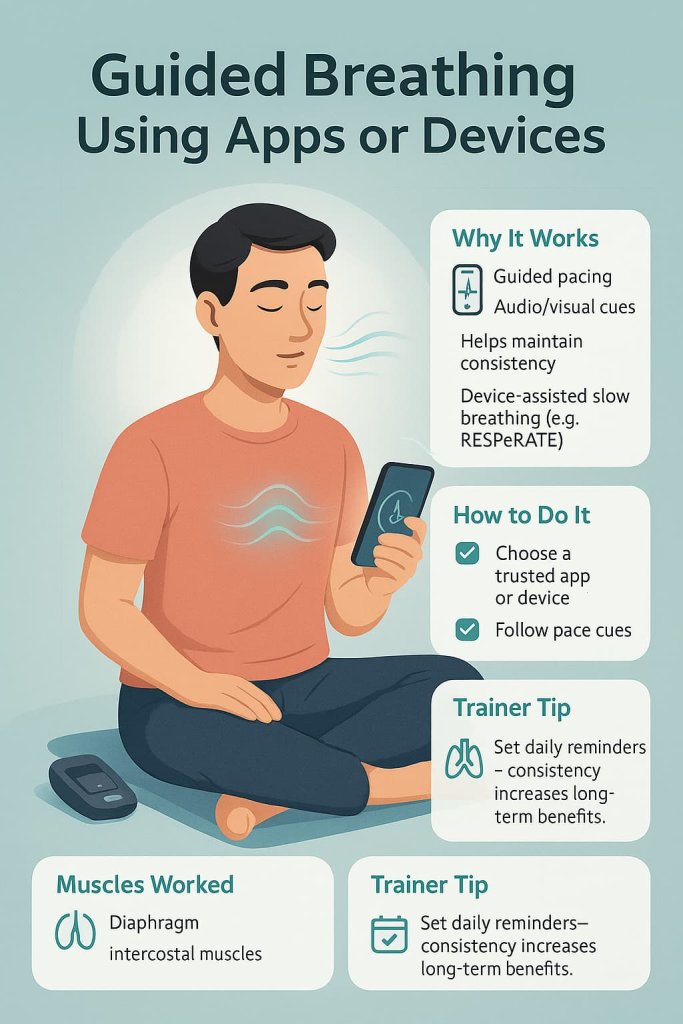
How to do it:
- Choose a trusted app or device.
- Follow the breath cues or visual guides.
- Practice for 5–10 minutes.
Trainer Tip:
Set a reminder for daily practice—consistency is what delivers long-term stress-reduction benefits.
How Long and How Often Should You Practice?
- Quick stress relief: 2–3 minutes
- Deep relaxation: 5–10 minutes
- Best routine: 10–20 minutes per day or several times per week
- Breathing pace: Aim for 6–10 breaths per minute
- Timing: Morning, mid-day resets, and bedtime are ideal
Consistency is more important than duration.
Who Should Avoid Certain Techniques?
You should speak with your doctor before practicing certain breathing exercises if you have:
- Severe asthma or chronic lung conditions
- Uncontrolled blood pressure
- Cardiovascular disorders
- Frequent dizziness or fainting
- Respiratory infections
- Panic disorders triggered by breath awareness
Avoid long breath holds (such as the 7-second hold in 4–7–8 breathing) if they feel uncomfortable.
Safety Tips
- Avoid pushing or forcing breath holds.
- If you feel dizzy, stop and breathe normally.
- Start slowly if you have a respiratory condition.
- Talk to your doctor if you have:
- Heart conditions
- Severe asthma
- Breathing disorders
- Frequent dizziness
- Use these exercises to support well-being, not replace medical care.
This content is for informational purposes only and not medical advice.
FAQs
1. How long does it take for deep breathing to reduce stress?
Most people feel calmer within 1–3 minutes of slow, controlled breathing.
2. Is deep breathing safe for everyone?
Generally yes, but people with medical conditions should consult a doctor first.
3. What is the best deep breathing exercise for beginners?
Diaphragmatic breathing is the easiest and most accessible starting point.
4. Can deep breathing help me sleep?
Yes—techniques like 4–7–8 and long exhalations are commonly used for winding down.
5. How many times per day should I practice?
1–2 sessions daily is ideal; even one short session helps.
6. Do breathing apps work?
Apps like Calm and Headspace provide structure and can improve consistency.
7. Can deep breathing help during panic attacks?
It may help calm the nervous system, but should be used gently and without force.
Conclusion
Deep breathing exercises are powerful, simple tools to calm your mind, reduce stress, and support your overall well-being. Even a few minutes a day can make a noticeable difference. Start with one or two techniques and gradually explore the full list to find what works best for you.
Ready to feel calmer? Begin with 2 minutes of diaphragmatic breathing today.
References
- Russo MA, Santarelli DM, O’Rourke D. The physiological effects of slow breathing in the healthy human. Biofeedback. 2017.
URL: https://pmc.ncbi.nlm.nih.gov/articles/PMC5709795/ - Hopper SI, Murray SL, Ferrara LR, Singleton JK. Effectiveness of diaphragmatic breathing for reducing physiological and psychological stress in adults: A systematic review. JBI Database System Review and Implementation Report. 2019.
URL: https://pubmed.ncbi.nlm.nih.gov/31436595/ - Yau KKY, Loke AY. Effects of diaphragmatic deep breathing exercises on prehypertensive and hypertensive adults: A systematic review. Complementary Therapies in Clinical Practice. 2021.
URL: https://www.sciencedirect.com/science/article/abs/pii/S1744388121000141 - Woo M, et al. Effects of slow-paced breathing and humming breathing on heart rate variability and affect. Physiology & Behavior. 2025.
URL: https://www.sciencedirect.com/science/article/abs/pii/S0031938425001738 - Nivethitha L, Mooventhan A, Manjunath NK. Heart rate variability changes during and after the practice of Bhramari pranayama. International Journal of Yoga. 2017.
URL: https://pmc.ncbi.nlm.nih.gov/articles/PMC5433120/ - Ghiya S, Lee CM. Influence of alternate nostril breathing on heart rate variability in healthy subjects. International Journal of Yoga. 2012.
URL: https://pmc.ncbi.nlm.nih.gov/articles/PMC3276936/ - NHS. Breathing exercises for stress. NHS (UK).
URL: https://www.nhs.uk/mental-health/self-help/guides-tools-and-activities/breathing-exercises-for-stress/ - American Heart Association. Stress and Heart Health; Breathing Brings Benefits.
Stress and Heart Health URL: https://www.heart.org/en/healthy-living/healthy-lifestyle/stress-management/stress-and-heart-health
Breathing Brings Benefits URL: https://www.heart.org/en/healthy-living/healthy-lifestyle/stress-management/breathing-brings-benefits-infographic