
Rib flare exercises are core-and-breathing drills that help you “stack” your ribcage over your pelvis so your lower ribs don’t pop up and forward. If your ribs lift when you brace, breathe, or stand tall, these exercises can improve core control, posture habits, and breathing mechanics so your trunk feels more stable during daily life and training.
Rib flare is often discussed as a movement pattern (not always a medical diagnosis). If you have chest pain, shortness of breath, dizziness, or sharp rib/back pain, get medical advice before trying self-correction.
What Is Rib Flare?
Rib flare usually refers to the lower front ribs sitting tipped up and forward, often paired with a “chest up, low back arched” posture. In practical terms, it can look like:
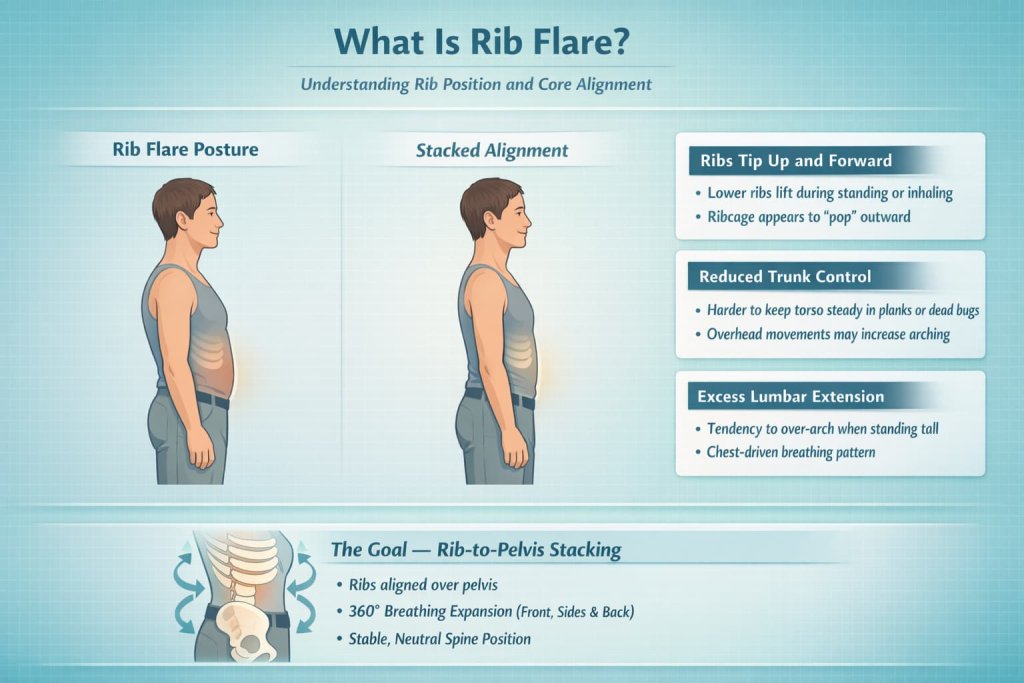
- Lower ribs visibly lifting or “ribcage popping” when you stand, inhale, or reach overhead
- Difficulty keeping your torso steady during core exercises (dead bug, planks, overhead pressing)
- Tendency to over-arch your lower back when you try to “stand tall”
A helpful goal is “stacking”: ribs over pelvis, with a calm breath that expands 360 degrees (front, sides, and back), not just the chest.
Why Rib Flare Happens
Rib flare can show up for different reasons, including:
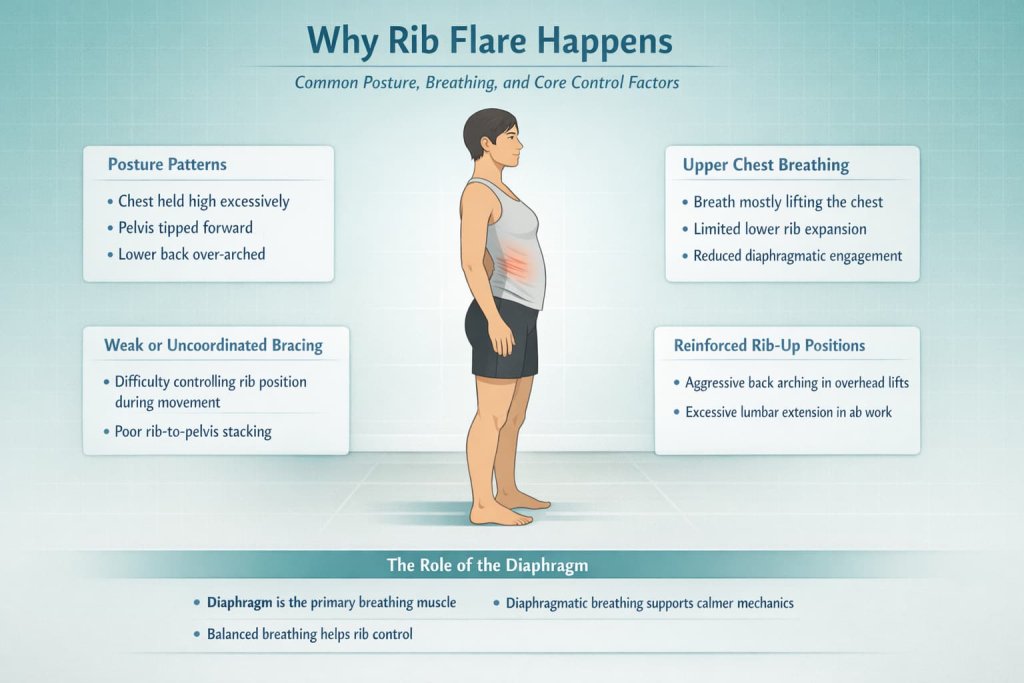
- Habitual posture patterns (chest lifted, pelvis tipped forward)
- Breathing strategy that drives air mostly into the upper chest instead of using the diaphragm
- Weak or poorly coordinated abdominal bracing (especially during movement)
- Training habits that reinforce rib-up positions (aggressive back arching during overhead or ab work)
Breathing matters because the diaphragm is your main breathing muscle, and learning diaphragmatic breathing can support calmer, more efficient breathing mechanics and relaxation responses, as explained by the Cleveland Clinic.
5 Best Rib Flare Exercises
Use these as a simple “reset + reinforce” sequence. Do them slowly. If your ribs pop up, reduce the range of motion and focus on an easy exhale.
1) 90/90 Wall Breathing (Rib Stack Reset)
How to do it:
- Lie on your back with hips and knees bent to about 90 degrees, feet on a wall
- Gently tilt your pelvis so your low back feels heavy (avoid aggressive flattening)
- Inhale quietly through your nose, letting the breath expand low and wide
- Exhale slowly through pursed lips and feel your lower ribs “knit down”
- Pause 2–3 seconds at the end of the exhale, then inhale again
- Do 5–8 slow breaths
Why it works: This position makes it easier to feel your ribs soften down as you exhale while keeping your low back from over-arching. It encourages better rib-to-pelvis stacking and reinforces diaphragmatic breathing, which can improve trunk control and reduce the tendency to flare the ribs during posture and lifting.
Trainer Tip: If you feel your neck or upper chest working hard, make the inhale smaller and lengthen the exhale. Think “quiet breath, heavy ribs.”
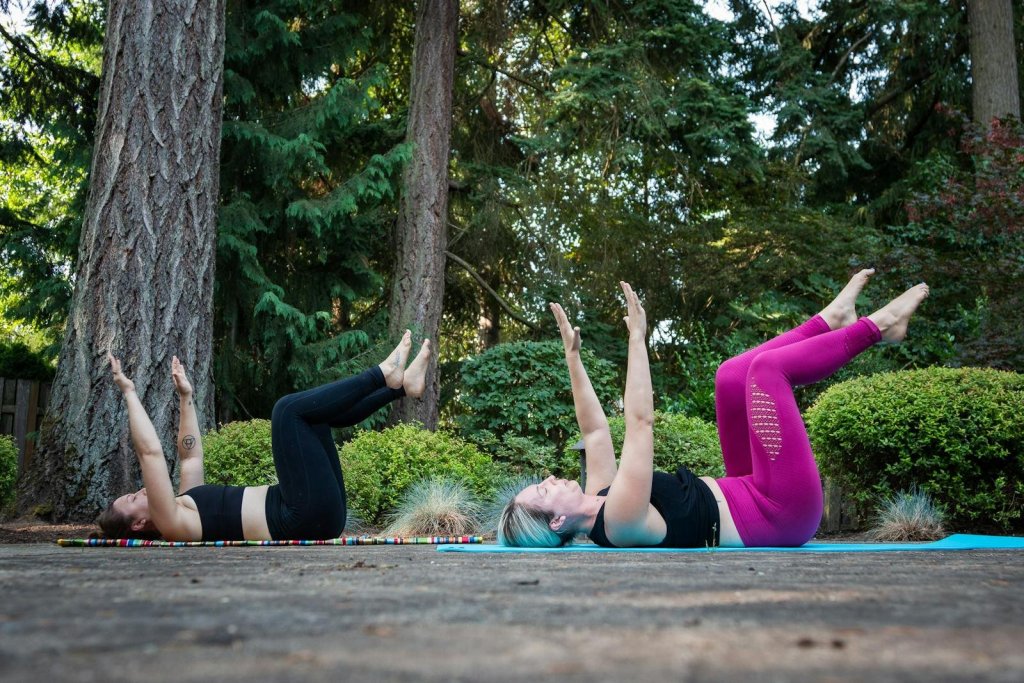
2) Dead Bug (Rib Flare Control Under Movement)
How to do it:
- Lie on your back, bring knees and hips to about 90 degrees, arms up
- Exhale gently and feel ribs come down toward your pelvis
- Keep that “stacked” feeling as you slowly lower one heel toward the floor
- Return, then switch sides (or add an opposite arm reach if stable)
- Do 6–10 controlled reps per side
Why it works: Dead bugs train anti-extension control. You must keep your ribs from popping up while your arms and legs move, which directly addresses the coordination issue behind rib flare during exercise.
Trainer Tip: If your ribs lift or your lower back arches, shorten the lever. Keep knees more bent and reduce the range of motion until you can maintain control.
3) Glute Bridge With Exhale (Stack + Posterior Tilt Practice)
How to do it:
- Lie on your back with knees bent, feet flat
- Exhale softly and feel ribs settle down
- Lift hips until knees, hips, and shoulders line up (no rib “pop”)
- Hold 2–3 seconds while breathing calmly
- Lower with control and repeat for 8–12 reps
Why it works: Many people flare their ribs by overusing lumbar extension. This bridge variation teaches you to extend the hips without over-arching the lower back, reinforcing a neutral rib and pelvis position.
Trainer Tip: Think “ribs heavy, belt buckle slightly up.” The movement should come from the hips, not the lower back.
4) Bear Plank Breathing (Short Lever Anti-Extension)
How to do it:
- Start on hands and knees, hands under shoulders, knees under hips
- Exhale and gently “zip up” your ribs toward your pelvis
- Lift knees 1–2 inches off the floor (back stays flat)
- Take 3–5 slow breaths without letting ribs pop up
- Rest and repeat 3–5 rounds
Why it works: This short-lever plank challenges your ability to resist spinal extension. You must maintain rib control while supporting body weight, which builds real-world anti-extension strength.
Trainer Tip: If you start shaking or losing rib control, reduce the hold time or lower your knees slightly. Quality is more important than duration.
5) Wall Reach (Serratus Reach for Ribcage Position)
How to do it:
- Stand facing a wall, forearms on the wall at shoulder height
- Exhale slowly and feel ribs soften down (no crunching)
- Gently push forearms into the wall and “reach” your upper back wide
- Keep neck relaxed and breathe 3–5 slow breaths
- Repeat 2–3 rounds
Why it works: Rib position and shoulder blade mechanics are closely linked. The wall reach helps activate the serratus anterior while encouraging the ribs to stay stacked, which can improve control during overhead movements.
Trainer Tip: The reach should feel like your shoulder blades sliding forward around your ribcage—not shrugging your shoulders toward your ears.
How Rib Flare Exercises Help Strengthen Your Core
Rib flare exercises improve how your ribcage, pelvis, and core muscles work together. Instead of just tightening your abs, they train control, alignment, and breathing coordination.
They help by:
- Improving rib-to-pelvis stacking for better alignment
- Building anti-extension strength to reduce over-arching
- Reinforcing diaphragmatic breathing for better trunk stability
- Enhancing core control during movement and lifting
Over time, this supports stronger, more stable posture and movement.
Rib Flare Exercises: What You’re Actually Training
Most effective rib flare exercise programs train two skills:
- Exhale control (bringing ribs down without crunching)
- Anti-extension core strength (keeping ribs/pelvis stacked while arms/legs move)
Fitness education sources like the American Council on Exercise discuss how breathing mechanics and trunk stability are often coached together in core training.
Common Mistakes That Keep Rib Flare Stuck
- Over-bracing (holding your breath and pushing ribs up)
- Exhaling by crunching (ribs down by collapsing the chest)
- Going too hard too soon (long planks and heavy overhead work before control is solid)
- Chasing “flat ribs” visually instead of training steadiness during movement
Simple 10-Minute Rib Flare Routine
Do this 3–5 days per week:
- 90/90 Wall Breathing: 5–8 breaths
- Dead Bug: 6–10 reps per side
- Glute Bridge With Exhale: 8–12 reps
- Bear Plank Breathing: 3 rounds of 3–5 breaths
- Wall Reach: 2 rounds of 3–5 breaths
Who Should Be Careful or Get Checked First?
Be cautious and consider professional guidance if you have:
- Chest pain, unexplained shortness of breath, or dizziness with breathing drills
- Recent rib injury, fracture, or significant trauma
- Persistent sharp rib or back pain that worsens with exercise
- Neurologic symptoms (numbness, tingling, weakness)
General posture guidance can also help you check whether you’re overextending or collapsing your spine; practical posture advice is available from MedlinePlus.
FAQs
Can rib flare be “fixed” permanently?
It often improves with consistent practice, but it’s usually a habit, strength, and coordination issue. You may need to reinforce it during daily posture and lifting.
How long does it take to see changes?
Many people feel better control within 2–4 weeks of regular practice, but visible posture changes can take longer, depending on habits and training.
Should I always keep my ribs “down”?
You want ribs stacked and controlled, not forced down. Over-tucking or constant “ribs down” tension can make breathing feel restricted.
Can rib flare cause back pain?
Rib flare often pairs with an over-arched lower back, which can increase stress for some people. If you have ongoing pain, get a proper assessment.
Are breathing exercises really necessary for rib flare?
They can help because rib flare often appears during inhalation or bracing. Clinical research indexed by PubMed has explored combining diaphragmatic breathing with core stabilization in certain populations.
What if rib flare happens only during workouts?
That’s common. Use the breathing reset before training, then choose core work (dead bug, bear plank) that teaches control during movement.
Can I train abs normally if I have rib flare?
Yes—just prioritize anti-extension control first. If crunch-heavy work makes your ribs pop up, reduce it temporarily and rebuild control.
Conclusion
Rib flare exercises work best when you combine slow exhale control with anti-extension core training you can hold during movement. Start with 90/90 breathing, reinforce with dead bugs and bear planks, and carry that stacked “ribs over pelvis” feeling into your posture and workouts.
If you want, tell me what equipment you have (none, band, cable, gym), and I’ll build a short rib flare routine tailored to your training days.
This content is for informational purposes only and not medical advice.