
A large boiled egg has about 78 calories. That makes it a simple, protein-rich food that can fit into many healthy eating patterns without adding a lot of calories. According to USDA FoodData Central, the exact number depends mostly on the egg’s size, not the boiling method.
If you are counting calories, trying to eat more protein, or building more balanced meals, boiled eggs are useful because they are easy to portion, convenient, and cooked without added oil or butter. They also provide several important nutrients in a relatively small serving.
How Many Calories Are in a Boiled Egg?
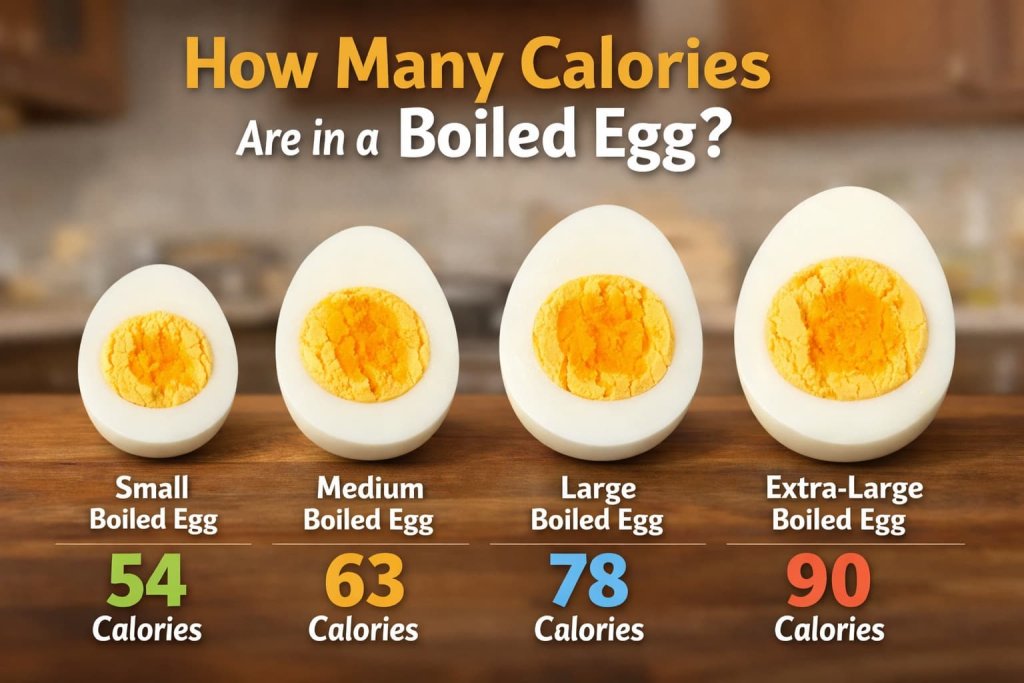
Here is the most practical calorie guide by egg size:
- Small boiled egg: about 54 calories
- Medium boiled egg: about 63 calories
- Large boiled egg: about 78 calories
- Extra-large boiled egg: about 90 calories
These numbers can vary slightly by brand, size grading, and exact edible portion, but for most people, this is the most realistic everyday guide. The main reason calorie counts change is simple: bigger eggs contain more egg.
Nutrition Profile of a Boiled Egg
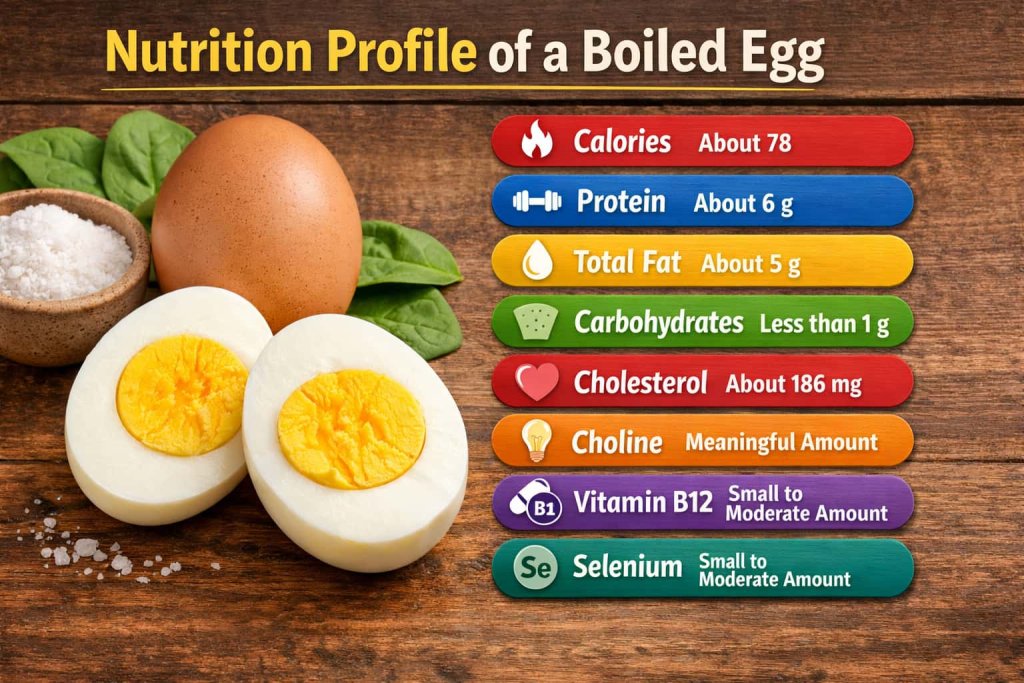
Here is a realistic nutrition profile for 1 large boiled egg:
| Nutrient | Typical amount |
|---|---|
| Calories | about 78 |
| Protein | about 6 g |
| Total fat | about 5 g |
| Carbohydrates | less than 1 g |
| Cholesterol | about 186 mg |
| Choline | meaningful amount |
| Vitamin B12 | small to moderate amount |
| Selenium | small to moderate amount |
A boiled egg is best known for its high-quality protein, but that is not the whole story. It also contains important nutrients in the yolk, including choline, vitamin B12, and selenium. The NIH Office of Dietary Supplements explains that choline is an essential nutrient, and eggs are one of the richer food sources.
Is a Boiled Egg Good for Weight Management?
A boiled egg can be a smart food for weight management because it gives you a solid amount of protein for relatively few calories. A large boiled egg has about 6 grams of protein, which may help with fullness and make meals or snacks feel more satisfying.
That said, no single food causes weight loss on its own. What matters most is your overall eating pattern, your total calorie intake, and how well your meals support consistency over time. The American Heart Association recommends focusing on the overall pattern of healthy eating rather than judging one food in isolation.
A boiled egg may be especially useful for weight management when you pair it with foods that add fiber and volume, such as:
- fruit
- raw vegetables
- whole-grain toast
- salads
- grain bowls
Key Nutrients in a Boiled Egg

Protein
Protein is one of the biggest reasons people choose boiled eggs. Egg protein is considered complete, meaning it provides all nine essential amino acids your body needs from food. That makes boiled eggs a practical option for breakfast, snacks, or adding protein to a meal.
Choline
Choline is one of the most important nutrients in eggs. It supports normal brain and nervous system function and helps maintain healthy cell structure. Many people do not think about choline when choosing foods, but eggs are one of the better-known dietary sources.
Vitamin B12
Boiled eggs also provide vitamin B12, which helps support nerve function and red blood cell production. While eggs are not the highest source compared with some animal foods, they can still contribute to daily intake.
Selenium
Selenium is another useful nutrient in eggs. It supports antioxidant processes and normal thyroid function. Even though the amount per egg is not huge, it still adds value, especially in a balanced diet.
Who Should Be a Little More Careful With Boiled Eggs?
For many healthy adults, boiled eggs can fit comfortably into a balanced diet. Still, some people may need to pay closer attention to how often they eat whole eggs and how eggs fit into their broader eating pattern.
People Managing High Cholesterol or Heart Risk
Egg yolks contain dietary cholesterol. The American Heart Association notes that eggs can still fit into a heart-healthy diet, but people with high LDL cholesterol or other cardiovascular concerns may need more personalized guidance.
For readers who want the protein in eggs while limiting dietary cholesterol, using more egg whites and fewer whole eggs can be a practical approach. The American Heart Association treats one whole egg and two egg whites as roughly comparable protein choices, which can make it easier to adjust meals without cutting eggs out completely.
People With Diabetes or Familial Hypercholesterolemia
People with diabetes, established heart disease, or familial hypercholesterolemia should be more careful about assuming unlimited egg intake is a good idea. In these cases, the right amount depends on the full diet pattern and personal medical advice.
People With Egg Allergy
Anyone with an egg allergy should avoid boiled eggs unless a qualified clinician has advised otherwise. This is a separate issue from calories, protein, or cholesterol.
Is a Boiled Egg Healthier Than a Fried Egg?
A boiled egg and a fried egg can be fairly similar at baseline, but boiling is often the lower-calorie option because it does not require added butter or oil. Once fat is added to a pan, the calories in a fried egg can rise quickly.
That is one reason boiled eggs are often chosen by people who want a simple, portion-friendly way to eat eggs without extra calories from cooking fat.
How Many Boiled Eggs Can You Eat in a Day?
There is no single answer that fits everyone. It depends on your overall diet, health history, and how often you eat other sources of saturated fat and cholesterol.
The American Heart Association says healthy people can include up to one whole egg per day in a heart-healthy eating pattern, and some older adults with healthy cholesterol levels may include more. That does not mean everyone should eat eggs every day. It means eggs can fit into a healthy overall diet when the bigger picture is balanced.
Tips to Keep Boiled Eggs Healthy
Boiled eggs are healthiest when the rest of the meal also supports your goals. Good ways to keep them balanced include:
- pair them with vegetables, fruit, or whole grains
- keep an eye on high-sodium seasonings
- use mayo-based sauces sparingly if you are watching calories
- add them to balanced meals instead of relying on them alone
- pay attention to portion size if you eat multiple eggs at once
Food Safety for Boiled Eggs
Boiled eggs are simple to prepare, but safe storage still matters. The Centers for Disease Control and Prevention advises refrigerating perishable foods within 2 hours, or within 1 hour if temperatures are above 90°F.
A practical rule is to cool boiled eggs and refrigerate them promptly rather than leaving them out for long periods. That matters even more for meal prep, packed lunches, picnics, and travel.
The USDA Ask USDA guidance says hard-cooked eggs should be used within 1 week when stored in the refrigerator, whether they are left in the shell or peeled. That gives you a simple rule for meal prep: refrigerate boiled eggs promptly, then plan to use them within the next several days rather than keeping them too long.
USDA also explains that hard-cooked eggs spoil faster than fresh eggs, so once eggs are boiled, it is best to treat them as a short-term refrigerated food.
Common Questions About Boiled Egg Calories
How many calories are in 2 boiled eggs?
Two large boiled eggs have about 156 calories. If the eggs are smaller or larger than standard large eggs, the total will be a little lower or higher.
Are boiled eggs low carb?
Yes. Boiled eggs contain very little carbohydrate, which is one reason they are commonly used in lower-carb eating patterns.
Is the yolk the most calorie-dense part?
Yes. Most of the egg’s fat and cholesterol are in the yolk, so the yolk contains more calories than the white. The yolk is also where many of the egg’s vitamins and choline are found.
The Bottom Line
A large boiled egg has about 78 calories, along with about 6 grams of protein and several useful nutrients. For many people, it is a practical choice for balanced meals, easy snacks, and weight-management-friendly eating because it is filling, portable, and cooked without added fat.
If you are generally healthy, boiled eggs can be a nutritious part of your diet. If you are managing cholesterol, heart disease, or another condition that affects your diet choices, it is smarter to look at eggs as part of your full eating pattern rather than on their own.
Sources and References
- USDA FoodData Central — Food Search
- NIH Office of Dietary Supplements — Choline Fact Sheet for Health Professionals
- American Heart Association — The American Heart Association Diet and Lifestyle Recommendations
- American Heart Association — Suggested Servings From Each Food Group
- American Heart Association — Here’s the Latest on Dietary Cholesterol and How It Fits in With a Healthy Diet
- Centers for Disease Control and Prevention — Preventing Food Poisoning
- USDA Ask USDA — How Long Can You Keep Hard-Cooked Eggs?
- USDA Ask USDA — Why Do Hard-Cooked Eggs Spoil Faster Than Fresh Eggs?