
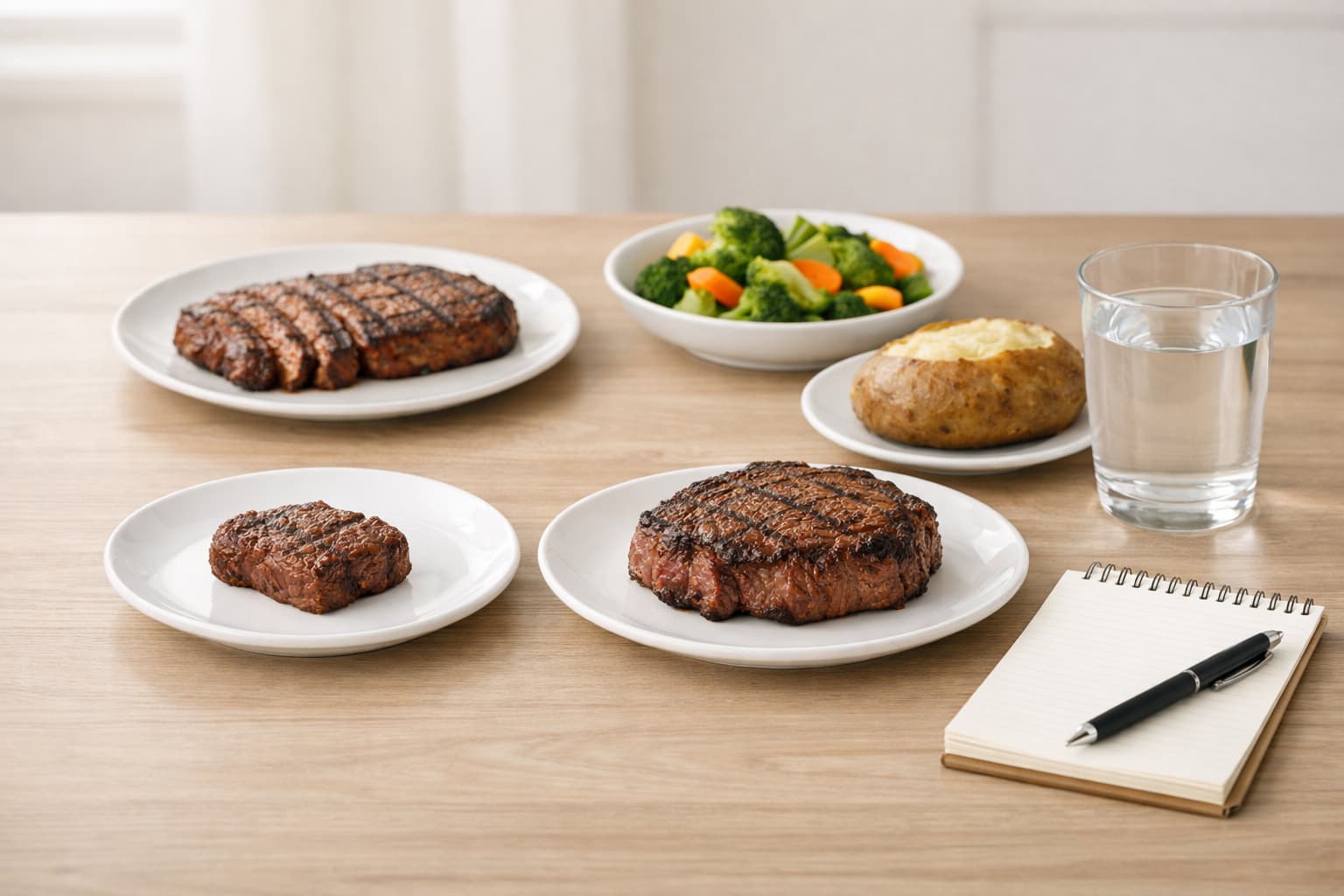
Steak calories can range widely, but a practical rule is that a 3-ounce cooked serving is often around 150 to 250 calories depending on the cut and fat level. That is why “how many calories in steak” does not have one fixed answer. Leaner cuts such as sirloin or tenderloin are usually lower in calories, while fattier cuts such as ribeye are typically higher. USDA guidance and FoodData Central also make it clear that portion size, visible fat, and preparation method all matter. USDA FoodData Central
If you are trying to manage calories, build muscle, or make better restaurant choices, steak can still fit into a balanced diet. The key is to know the cut, keep portions realistic, and pay attention to added butter, oil, and sauces. USDA food-safety guidance also matters: steaks should reach 145°F (62.8°C) and rest for at least 3 minutes before eating. USDA FSIS safe temperature chart
How Many Calories in Steak by Serving Size
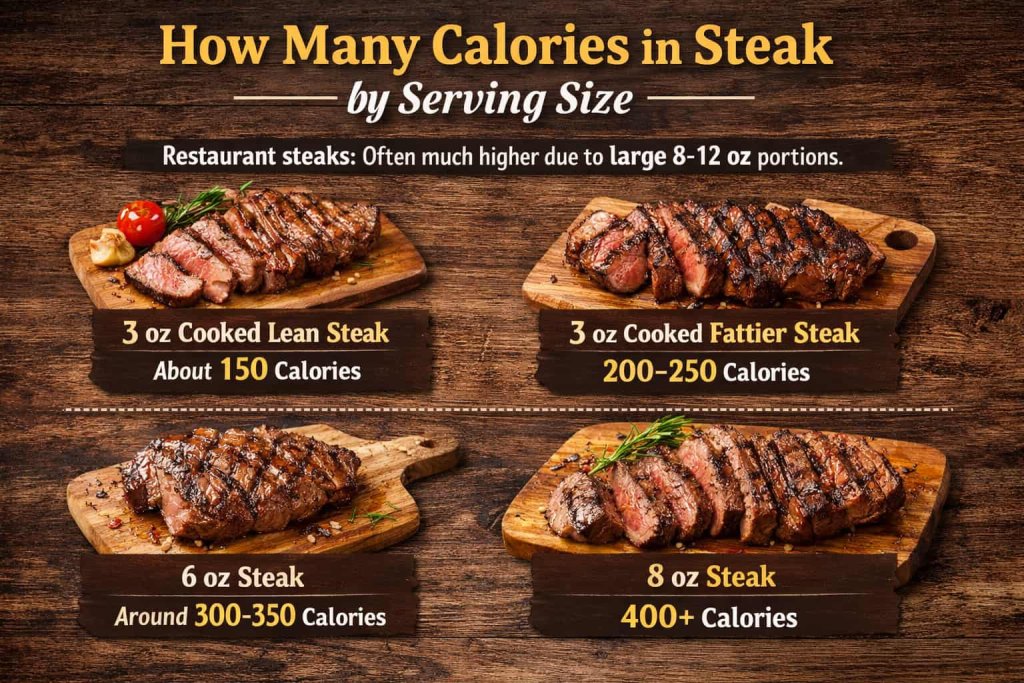
The most useful everyday answer is based on a 3-ounce cooked portion, which is the standard reference size used in many nutrition resources. A 3-ounce serving of lean beef is commonly described as having about 150 calories and about 25 grams of protein. Fattier steaks can be noticeably higher. American Heart Association guidance on lean meats
Here is the most practical calorie guide for plain steak:
- 3 ounces cooked lean steak: about 150 calories
- 3 ounces cooked fattier steak: often closer to 200 to 250 calories
- 6 ounces steak: roughly double the 3-ounce amount
- 8 ounces steak: often lands in the 400-calorie-plus range for richer cuts
- Restaurant steaks: can be much higher because many portions are 8 to 12 ounces or more before sides and toppings are added
Steak calories by cut at a glance
Because steak calories depend heavily on fat content, it helps to compare common cuts side by side. Exact numbers vary by trimming and cooking method, but this quick guide gives readers a more practical starting point:
| Steak cut | Typical calorie level | What to know |
|---|---|---|
| Tenderloin / filet | Lower | Usually one of the leaner steak choices |
| Top sirloin | Lower to moderate | Often a good balance of flavor and calories |
| New York strip | Moderate | Usually leaner than ribeye but higher than filet |
| T-bone / porterhouse | Moderate to higher | Varies because it includes more than one muscle |
| Ribeye | Higher | Commonly one of the fattiest and most calorie-dense cuts |
| Prime rib | Higher | Richer, more marbled, and usually higher in saturated fat |
As a general rule, steaks with more visible marbling usually have more calories. Leaner cuts such as sirloin, tenderloin, and round are often the better choice when you want more protein for fewer calories.
Why steak calories vary so much
Steak calories change mostly because of:
- Cut: ribeye is usually fattier than sirloin or tenderloin
- Trim: visible fat raises calories
- Cooking method: pan-frying with butter or oil adds calories
- Portion size: many people eat far more than 3 ounces in one sitting
- Toppings and sides: garlic butter, creamy sauces, fries, and loaded potatoes can add hundreds of extra calories
Raw vs. cooked steak calories: an important detail
One common source of confusion is whether the steak is measured raw or cooked. A steak usually weighs less after cooking because it loses water. That means 3 ounces cooked is not the same as 3 ounces raw, even if it came from the same piece of meat.
For everyday tracking, it helps to stay consistent:
- Use raw values if you weigh the steak before cooking
- Use cooked values if you weigh it after cooking
- Do not switch between raw and cooked entries for the same portion
This small detail can make a noticeable difference in calorie estimates, especially for larger steaks.
Nutrition Profile of Steak
Steak is more than a calorie number. It is a high-protein, nutrient-dense food that also provides several vitamins and minerals your body needs.
A typical lean 3-ounce cooked serving provides:
- About 25 grams of protein
- Important amounts of iron
- Vitamin B12
- Zinc
- Selenium
Key nutrients in steak
Protein
Protein helps support muscle maintenance and can make meals feel more filling. MedlinePlus notes that protein can help with weight control because it helps you feel full and satisfied. MedlinePlus protein overview
Iron
Beef contains heme iron, the form of iron found in animal foods, which is generally more bioavailable than nonheme iron from plant foods. That makes steak a useful iron source for people who need more iron-rich foods in their diet. NIH Office of Dietary Supplements iron information
Vitamin B12
Vitamin B12 is naturally found in animal foods, including beef. It helps support nerve function and red blood cell formation. NIH Office of Dietary Supplements vitamin B12 fact sheet
Zinc
Zinc supports immune function, growth, and many cellular processes. Meat is one of the recognized dietary sources of zinc. NIH Office of Dietary Supplements zinc fact sheet
Selenium
Selenium helps with thyroid function, DNA production, and antioxidant-related processes. Meat is one of the foods that provides selenium. NIH Office of Dietary Supplements selenium fact sheet
Is Steak Good for Weight Management?
Steak can be good for weight management when the portion is moderate and the cut is relatively lean. The main reason is protein. Higher-protein foods can help you feel fuller, which may make it easier to stay satisfied with fewer calories overall.
Steak tends to work best for weight management when you:
- Choose leaner cuts
- Keep the portion to around 3 to 4 ounces cooked
- Pair it with vegetables, beans, or other high-fiber foods
- Skip heavy butter sauces and oversized steakhouse portions
When steak becomes less weight-loss-friendly
Steak meals can become calorie-dense fast when they include:
- Large cuts such as 10- to 16-ounce steaks
- Fatty cuts such as ribeye or heavily marbled prime beef
- Added butter, oil, creamy peppercorn sauce, or cheese toppings
- Fries, loaded mashed potatoes, or large restaurant appetizers on the side
Another thing to watch is that restaurant steak meals and pre-seasoned steak products are not the same as plain steak. Marinades, compound butter, sugary glazes, breading, and creamy sauces can raise both calories and sodium quickly. If you are tracking intake closely, plain steak with simple seasoning is usually easier to estimate accurately.
Which Steak Cuts Are Usually Leaner?
If you want lower-calorie steak, guidance from the American Heart Association is straightforward: look for cuts labeled round, loin, or sirloin, and choose choice or select grades rather than prime when possible. Trimming visible fat also helps.
Lean-leaning options often include:
- Top sirloin
- Tenderloin/filet
- Top round
- Eye of round
Cuts that are often higher in calories and saturated fat include:
- Ribeye
- Prime rib
- T-bone/porterhouse depending on trim
- Heavily marbled steaks
Who Should Be a Little More Careful With Steak?
Steak can fit into many eating patterns, but some people should be more selective about how often and how much they eat.
People limiting saturated fat
The American Heart Association recommends limiting saturated fat, and current federal diet guidance continues to emphasize choosing lean proteins to keep saturated fat lower. This matters more with fatty cuts and oversized portions. American Heart Association saturated fat guidance
In practical terms, this usually does not mean you have to avoid steak completely. It means choosing leaner cuts more often, keeping portions moderate, and treating fattier steaks such as ribeye or prime rib as less frequent options.
People with high LDL cholesterol or heart-health concerns
If you are following a heart-healthy eating plan, leaner cuts, smaller portions, and less added butter are usually better choices. The American Heart Association specifically points people toward loin and round cuts and away from prime, heavily marbled options.
People closely tracking calories
Steak is not automatically high in calories, but richer cuts can be much more calorie-dense than lean ones. That is why the cut and portion matter so much.
People at higher risk from undercooked meat
Young children, older adults, pregnant people, and anyone with a weakened immune system should be especially careful with food safety. Use a thermometer rather than relying only on color or doneness terms. USDA says steaks should reach 145°F and then rest for 3 minutes.
How to Keep a Steak Meal Lighter
If you like steak but want a more balanced meal, these strategies help:
- Pick sirloin, round, or tenderloin
- Keep the cooked portion around 3 to 4 ounces
- Trim visible fat
- Grill, broil, or pan-sear with minimal added fat
- Serve it with vegetables, salad, beans, or potatoes without heavy toppings
- Skip or limit butter-based finishing sauces
Steak Calories vs. Protein: Why It Can Still Be Worth It
One reason steak remains popular in balanced diets is that it gives you a lot of protein in a relatively modest serving. Lean beef can provide around 25 grams of protein in a 3-ounce cooked portion, which is a strong protein return for the calories. That can make steak a practical option for satiety, especially when compared with calorie-heavy meals that are lower in protein.
Safe Cooking Reminder for Steak
From a safety standpoint, whole cuts of beef such as steak should be cooked to 145°F (62.8°C) and allowed to rest for at least 3 minutes before eating. If the steak is mechanically tenderized, proper temperature checking is especially important. USDA FSIS mechanically tenderized beef guidance
Best Steak Choice if You Are Ordering at a Restaurant
If you are trying to keep a steak meal lighter when eating out, the easiest strategy is to choose a leaner cut, order the smallest available portion, and skip butter-heavy toppings.
A practical restaurant approach looks like this:
- Choose sirloin, filet, or another leaner cut
- Look for a portion closer to 6 ounces or less
- Ask for sauce or butter on the side
- Swap fries or loaded potatoes for vegetables or a plain baked potato
- Share oversized steakhouse portions if needed
This keeps the meal closer to the nutrition profile of plain steak instead of turning it into a much higher-calorie restaurant entrée.
FAQs About How Many Calories in Steak
How many calories are in a 6 oz steak?
A 6-ounce steak is roughly double a 3-ounce serving. That means a leaner 6-ounce steak may be around 300 calories, while a fattier 6-ounce steak can be notably higher. The exact total depends on the cut and preparation.
Is steak high in calories?
Not always. Lean steak is moderate in calories for the protein it provides, but fattier cuts and larger portions can be high in calories.
Is steak good for weight loss?
It can be, especially when you choose a leaner cut and keep the portion moderate. The protein content may help with fullness, but large steakhouse portions and rich toppings can work against weight-loss goals.
What is the leanest steak to order?
Cuts labeled round, loin, or sirloin are generally better starting points when you want a leaner steak.
Conclusion
Steak calories depend on the cut, portion size, and cooking method, not just the word “steak” itself. For many people, the most useful benchmark is that a 3-ounce cooked serving usually falls around 150 to 250 calories, with leaner cuts on the lower end and fattier cuts on the higher end. Steak also provides high-quality protein, iron, zinc, vitamin B12, and selenium, which is why it can still be part of a balanced diet when portions stay realistic.
If you want the best balance of calories, protein, and heart-health friendliness, start with a leaner cut, keep the portion moderate, and build the rest of the meal around simple sides.
Sources/References
- USDA Agricultural Research Service — FoodData Central
- USDA FSIS — Safe Minimum Internal Temperature Chart
- USDA FSIS — Mechanically Tenderized Beef
- American Heart Association — Making the Healthy Cut: Fish, Poultry and Lean Meats
- American Heart Association — Saturated Fats
- MedlinePlus — Proteins
- NIH Office of Dietary Supplements — Iron Fact Sheet for Consumers
- NIH Office of Dietary Supplements — Vitamin B12 Fact Sheet for Consumers
- NIH Office of Dietary Supplements — Zinc Fact Sheet for Consumers
- NIH Office of Dietary Supplements — Selenium Fact Sheet for Consumers