
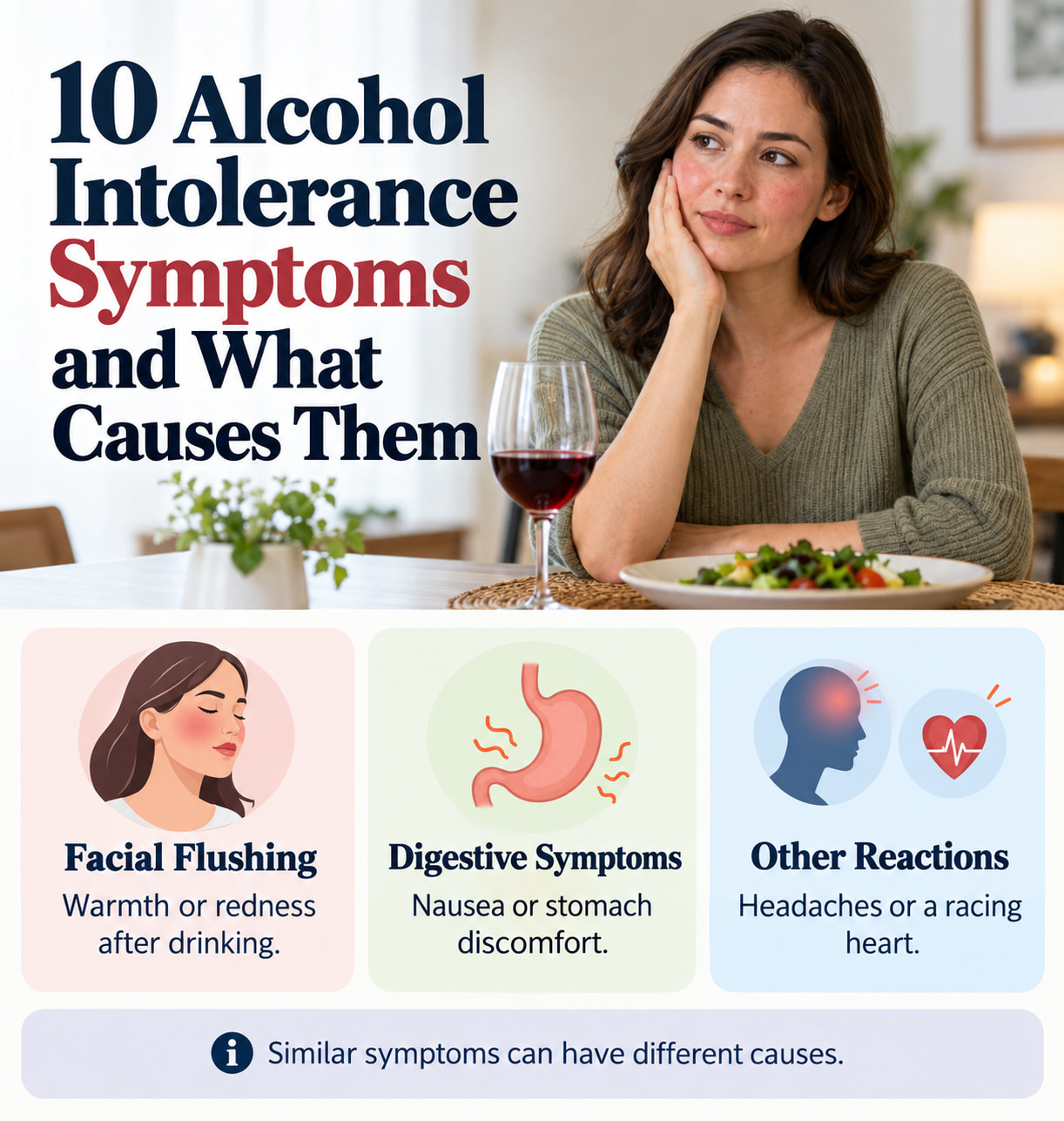
Alcohol intolerance symptoms can include facial flushing, a stuffy nose, nausea, headaches, a racing heart, and digestive discomfort—even after a small amount of alcohol. Similar reactions can also come from ingredients in a drink, medication interactions, or an allergy, so symptoms alone cannot identify the cause.
Understanding these differences can help you recognize patterns, avoid triggers, and know when to get medical help.
Get emergency help for sudden trouble breathing, tongue or throat swelling, collapse, or difficulty waking someone after drinking. These symptoms should never be dismissed as ordinary intolerance.
What Is Alcohol Intolerance?
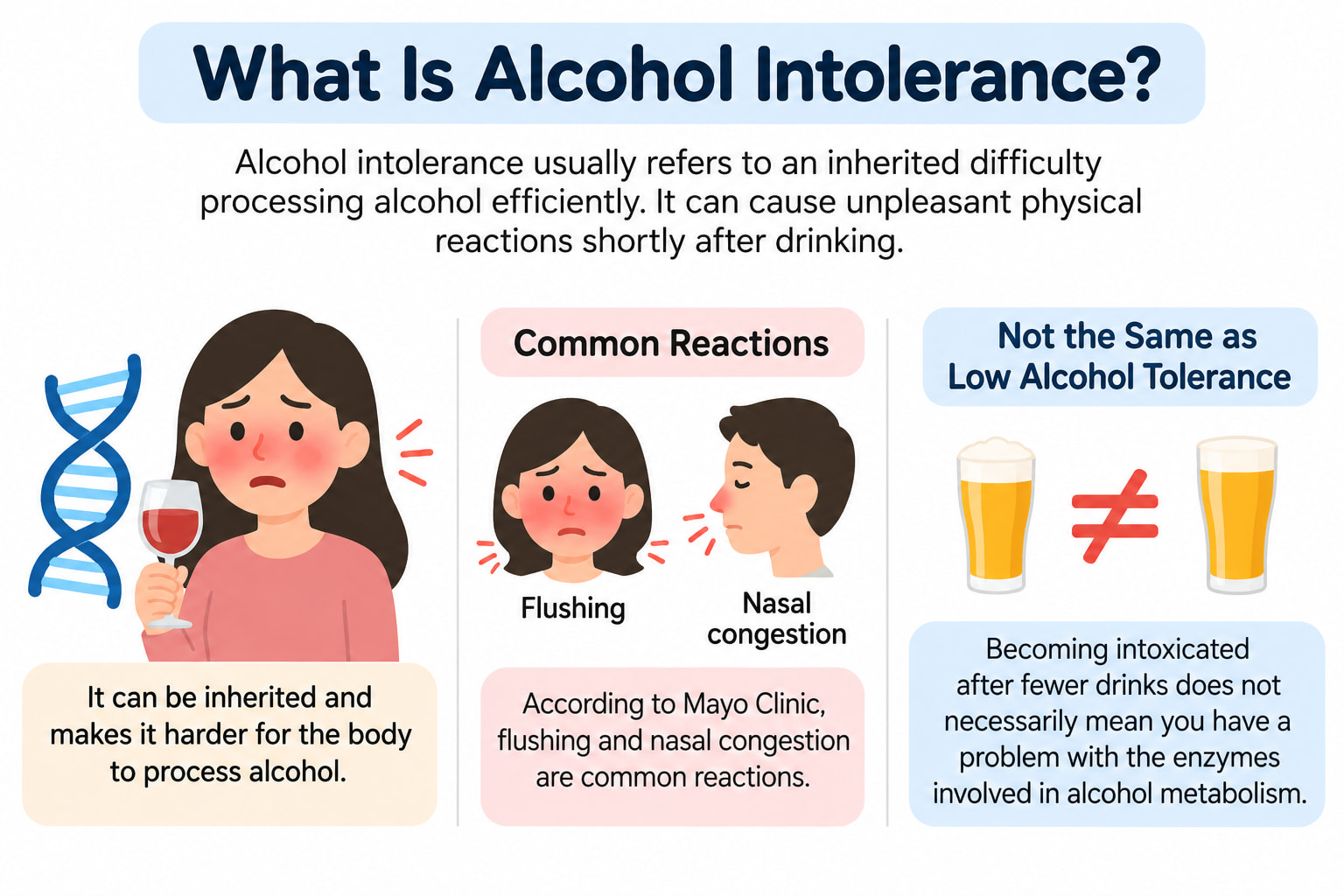
Alcohol intolerance usually refers to an inherited difficulty processing alcohol efficiently. It can cause unpleasant physical reactions shortly after drinking.
According to Mayo Clinic, flushing and nasal congestion are common reactions. However, many people who react to alcoholic drinks have another explanation for their symptoms.
Alcohol intolerance is different from low alcohol tolerance. Becoming intoxicated after fewer drinks does not necessarily mean you have a problem with the enzymes involved in alcohol metabolism.
10 Alcohol Intolerance Symptoms
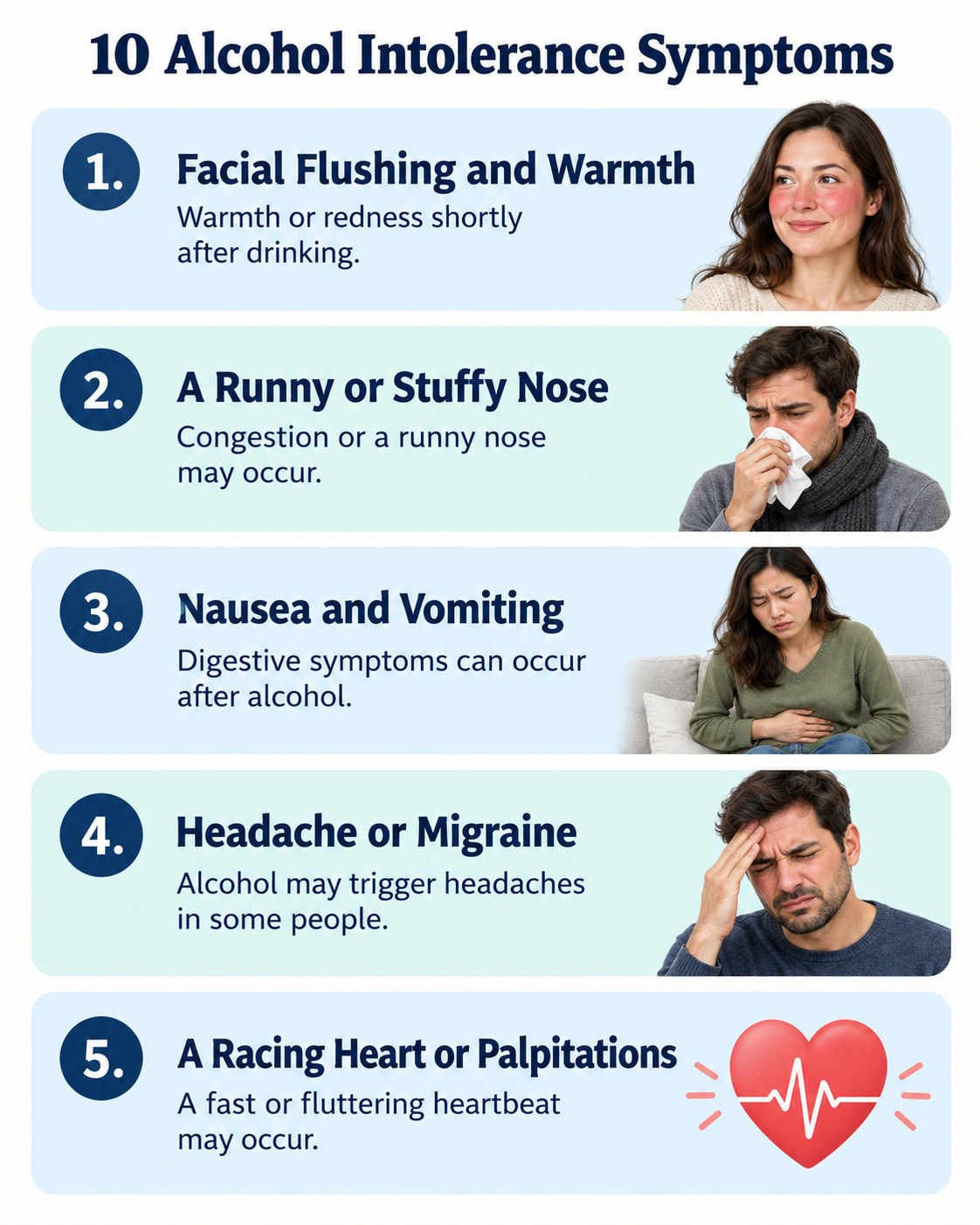
The following signs and symptoms can occur with alcohol intolerance. Some also occur with allergies, ingredient sensitivities, medication interactions, or alcohol’s other effects. Use this list to understand possible reactions, not to diagnose yourself.
1. Facial Flushing and Warmth
Your face may feel hot or become noticeably flushed soon after drinking. The warmth and color change can also affect your neck or chest.
This alcohol flush reaction is a characteristic feature of intolerance, particularly when it happens after a small amount.
2. A Runny or Stuffy Nose
You may develop nasal congestion or a runny nose after drinking.
These symptoms can accompany alcohol intolerance, but they can also occur in response to substances in a beverage. A stuffy nose by itself does not establish which mechanism is responsible.
3. Nausea and Vomiting
Feeling sick or vomiting can occur with alcohol intolerance. However, these symptoms also happen with excessive drinking and other alcohol-related reactions.
Vomiting together with difficulty staying awake or abnormal breathing is a warning sign that requires emergency help.
4. Headache or Migraine
Alcohol can trigger a headache or migraine in some people, including those who experience an alcohol flush reaction.
Headaches also occur during hangovers. Whether the pain starts shortly after drinking or later, and whether other symptoms accompany it, provides useful information for a healthcare professional.
5. A Racing Heart or Palpitations
You may notice a rapid heartbeat or a fluttering sensation after drinking. These symptoms are reported with alcohol intolerance, but they can have other causes.
Palpitations accompanied by chest pain, shortness of breath, or faintness need emergency assessment.
6. Low Blood Pressure
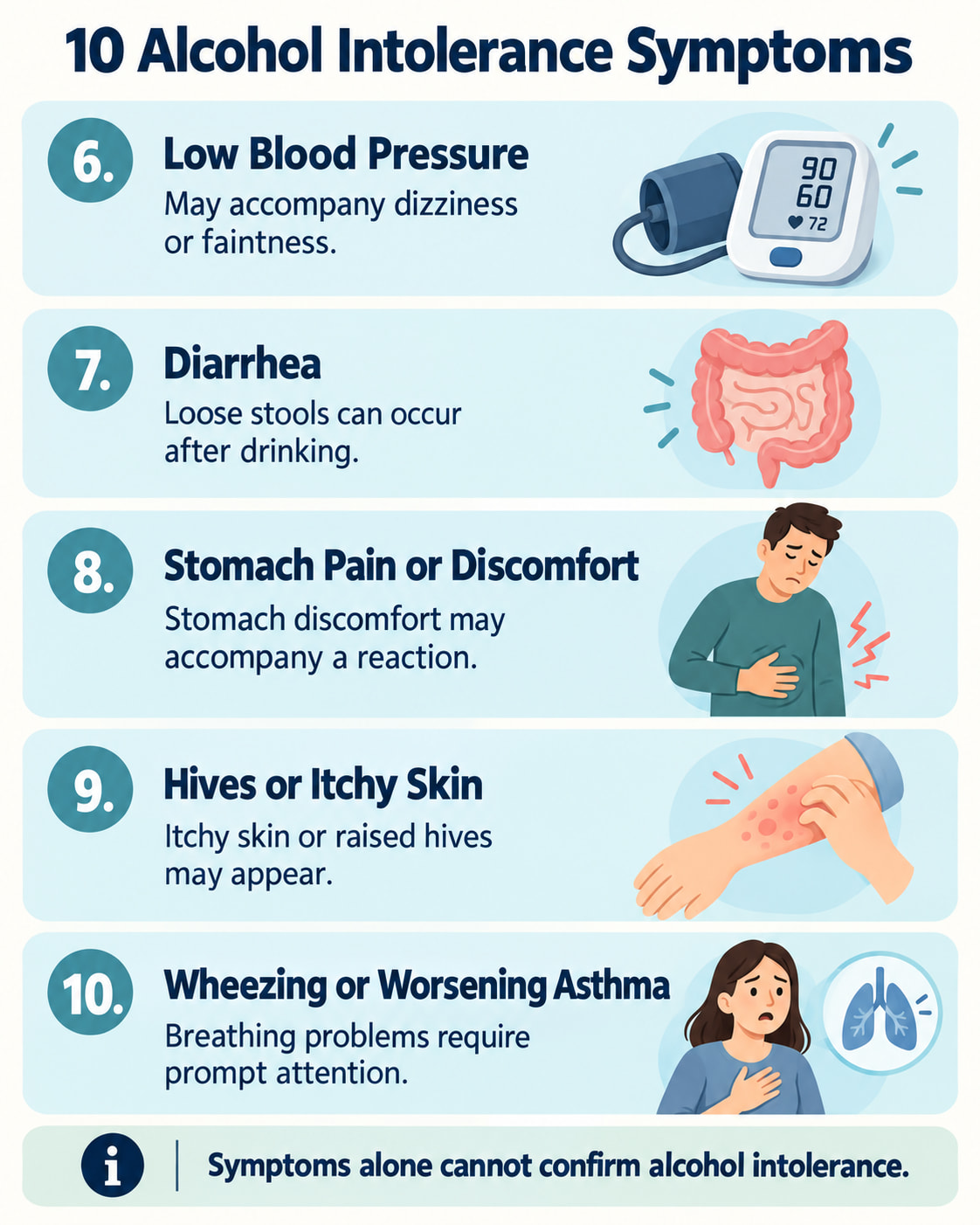
A drop in blood pressure can accompany an alcohol reaction. This is a physical sign rather than a sensation you can reliably identify on your own.
Low blood pressure may cause dizziness or faintness, although these symptoms have other possible explanations. Collapse after drinking requires emergency attention.
7. Diarrhea
Loose stools or diarrhea can occur after drinking in people with alcohol intolerance.
Because diarrhea has many possible causes, it is not a reliable indicator on its own. Note whether it happens repeatedly after alcohol and whether other symptoms occur at the same time.
8. Stomach Pain or Discomfort
Some people develop stomach pain or an unsettled feeling after drinking. Cedars-Sinai includes stomach pain among possible alcohol intolerance symptoms.
Digestive discomfort can also occur with an allergic reaction. Severe or persistent pain deserves medical assessment rather than an assumption that alcohol intolerance explains it.
9. Hives or Itchy Skin
Hives are raised, itchy areas of skin that may appear during an alcohol-related reaction.
They can accompany alcohol flushing, and alcohol may also aggravate existing hives. Their appearance does not, by itself, distinguish an allergy from intolerance or another reaction.
10. Wheezing or Worsening Asthma
Alcohol can worsen asthma symptoms in some people. Possible triggers include acetaldehyde, a substance produced during alcohol breakdown, and ingredients such as sulfites.
Sudden wheezing or breathing difficulty should not be treated as routine discomfort. Seek emergency help if breathing becomes difficult.
What Causes Alcohol Intolerance Symptoms?
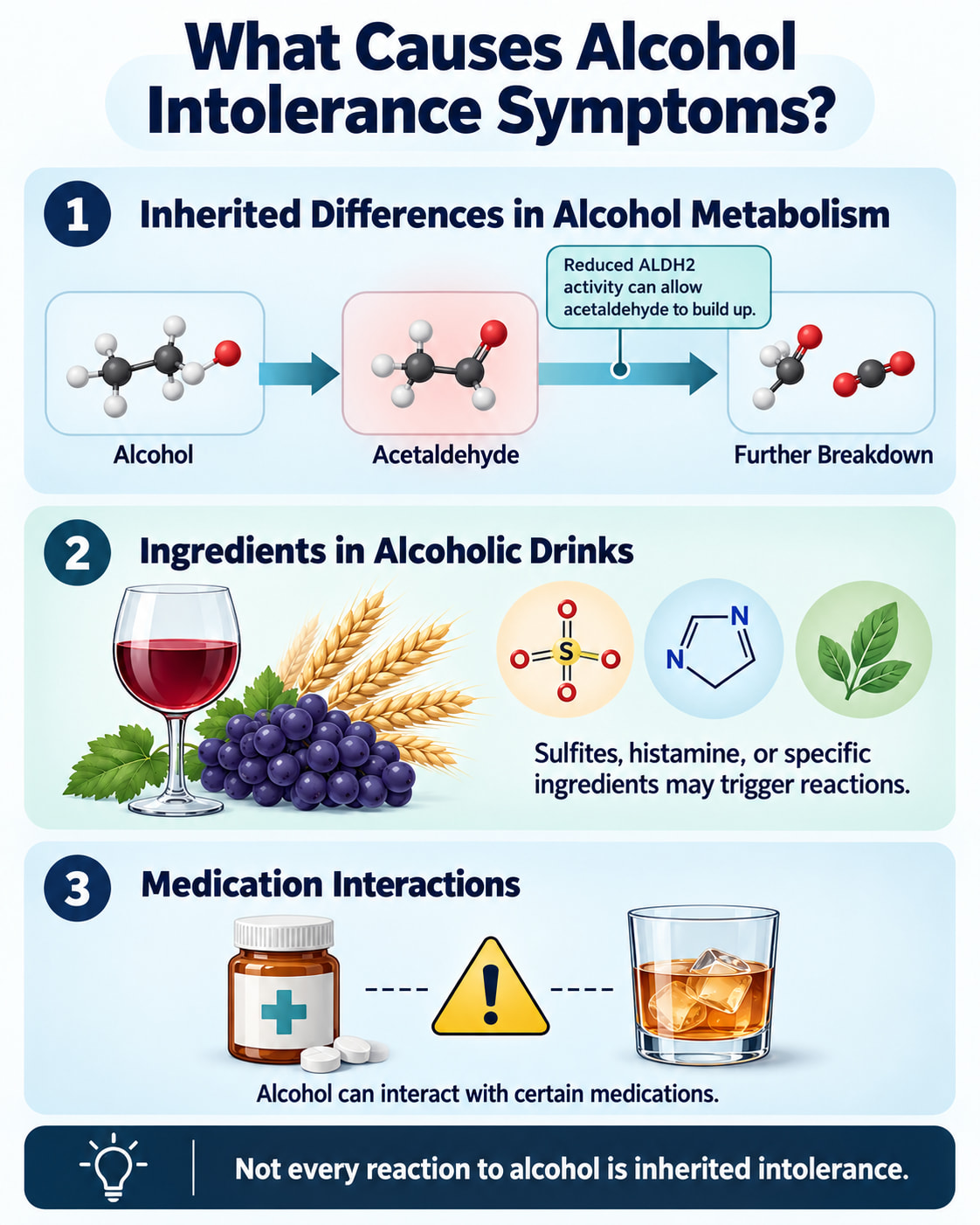
Inherited Differences in Alcohol Metabolism
Your body converts alcohol into acetaldehyde and then breaks that substance down further.
An enzyme called ALDH2 helps clear acetaldehyde. Certain inherited enzyme differences can allow it to accumulate, producing unpleasant reactions. These differences are more common among people of East Asian ancestry, but they occur in other populations too.
The National Institute on Alcohol Abuse and Alcoholism explains the alcohol flush reaction and its connection to altered alcohol metabolism.
Ingredients in Alcoholic Drinks
Some people react to a beverage ingredient rather than having inherited alcohol intolerance.
Possible triggers include:
- Sulfites, which can provoke wheezing in susceptible people.
- Histamine, which may contribute to nasal symptoms, headaches, or stomach upset.
- Grapes, wheat, barley, yeast, or hops, which can cause reactions in people allergic to those ingredients.
These mechanisms differ. Sulfite sensitivity, for example, should not automatically be called an allergy. ASCIA’s guidance on alcohol reactions explains these distinctions.
Medication Interactions
Alcohol and medicines can affect each other in several ways. A medication may alter alcohol metabolism, while alcohol can increase or change a medicine’s effects.
Interactions depend on the specific medicine. Ask a pharmacist or healthcare professional about your prescriptions, over-the-counter products, and supplements. Do not stop prescribed medication so that you can drink.
Alcohol Intolerance vs. Alcohol Allergy vs. a Hangover
These conditions can share symptoms, but their underlying causes differ.
| Condition | What distinguishes it |
|---|---|
| Alcohol intolerance | Difficulty processing alcohol can produce unpleasant reactions after a small amount. |
| Alcohol or ingredient allergy | The immune system reacts to alcohol or a beverage ingredient. Symptoms can be serious even after a small exposure. |
| Hangover | Symptoms generally peak as blood alcohol concentration returns to about zero, often after the drinking episode. |
A true allergy to ethanol itself is uncommon. Allergies to beverage ingredients and other sensitivities are separate possibilities. A clinician may need to assess the reaction to distinguish them.
Can Alcohol Intolerance Symptoms Start Suddenly?
You may begin noticing reactions to drinks you previously tolerated. That change does not establish that you have suddenly developed an inherited enzyme difference.
A new medicine, a different beverage ingredient, or another explanation may be involved. Review changes in what you drink and which medicines you take, and discuss new or recurring reactions with a healthcare professional.
Avoid experimenting with additional drinks to work out the cause, especially if a previous reaction involved swelling, breathing problems, or faintness.
How Is Alcohol Intolerance Diagnosed?
Assessment usually starts with your symptoms, medical history, and the circumstances surrounding the reaction.
Helpful details include:
- The drink and amount consumed.
- How soon symptoms began.
- Which symptoms occurred and how long they lasted.
- Whether similar reactions have happened before.
- Medicines or supplements taken around the same time.
When an allergy is suspected, a clinician may consider skin or blood testing. Mayo Clinic describes these allergy tests, which investigate possible allergic triggers rather than serving as a universal test for inherited alcohol intolerance.
What to Do if You Notice Symptoms After Drinking
Avoid the Suspected Trigger
Avoid the drink that caused the reaction while seeking clarification. If alcohol metabolism is the problem, switching from wine to beer or spirits does not remove the alcohol exposure.
Choosing an alcohol-free option avoids the need to keep testing your reaction.
Keep a Brief Record
Write down the drink, approximate amount, symptoms, and timing. Keep the ingredient label or product name when possible.
This gives a healthcare professional more useful information than a general description such as “alcohol makes me feel bad.”
Do Not Use Antihistamines to Keep Drinking
Suppressing flushing does not prevent acetaldehyde-related harm. An improvement in visible symptoms is not evidence that further drinking is safe.
Continuing to drink despite an alcohol flush reaction is associated with increased risks of certain cancers, including esophageal cancer.
When to Seek Medical Help
Arrange medical advice for significant, recurring, or unexplained reactions, especially if symptoms may be linked to a medicine or allergy. Severe pain also deserves assessment.
Call 911 in the United States or your local emergency number for:
- Sudden tongue or throat swelling.
- Difficulty breathing or swallowing.
- Collapse or severe faintness.
- Palpitations accompanied by chest pain or shortness of breath.
These may indicate a severe allergic reaction or another urgent problem.
Difficulty waking someone, seizures, or slow or irregular breathing after drinking can indicate alcohol overdose. NIAAA’s alcohol overdose guidance advises getting emergency help without waiting for every warning sign. Never assume an unconscious person can safely “sleep it off.”
Frequently Asked Questions
Can You Have Alcohol Intolerance Symptoms After One Drink?
Yes. Symptoms may occur after a small amount of alcohol. Allergic reactions can also happen after a small exposure, so the amount consumed does not reliably distinguish intolerance from allergy.
How Long Do Alcohol Intolerance Symptoms Last?
There is no single reliable duration for every reaction. The cause and symptom pattern matter. Do not wait for a predicted recovery time if symptoms are severe, worsening, or involve breathing problems or faintness.
Is Facial Flushing Always a Sign of Alcohol Intolerance?
No. Flushing can have several explanations, including medicines and skin conditions. A repeated reaction after alcohol may be an important clue, but facial redness alone cannot confirm an inherited enzyme difference.
Can You React to Wine but Not Other Alcoholic Drinks?
Yes. Differences in ingredients may explain why one beverage causes symptoms and another does not. However, this pattern does not prove a particular allergy or establish that another drink is safe for you.
Can Inherited Alcohol Intolerance Go Away?
Inherited alcohol-processing differences do not disappear through drinking practice. Avoiding alcohol can prevent the associated reactions. Symptoms linked to a medication or specific ingredient may have a different explanation and course.
Do Antihistamines Prevent Alcohol Intolerance Symptoms?
They may suppress some symptoms, but they do not correct the underlying metabolism problem or prevent acetaldehyde-related harm. They should not be used to make continued drinking seem safe.
Conclusion
Alcohol intolerance symptoms can affect your skin, nose, digestion, heart rate, and breathing. Similar symptoms can also arise from other alcohol-related reactions, which makes the cause worth clarifying.
If drinking repeatedly makes you feel unwell, avoid the trigger, record what happens, and discuss the pattern with a healthcare professional. You do not need to keep drinking to prove that a reaction is real.
This content is for informational purposes only and not medical advice.