
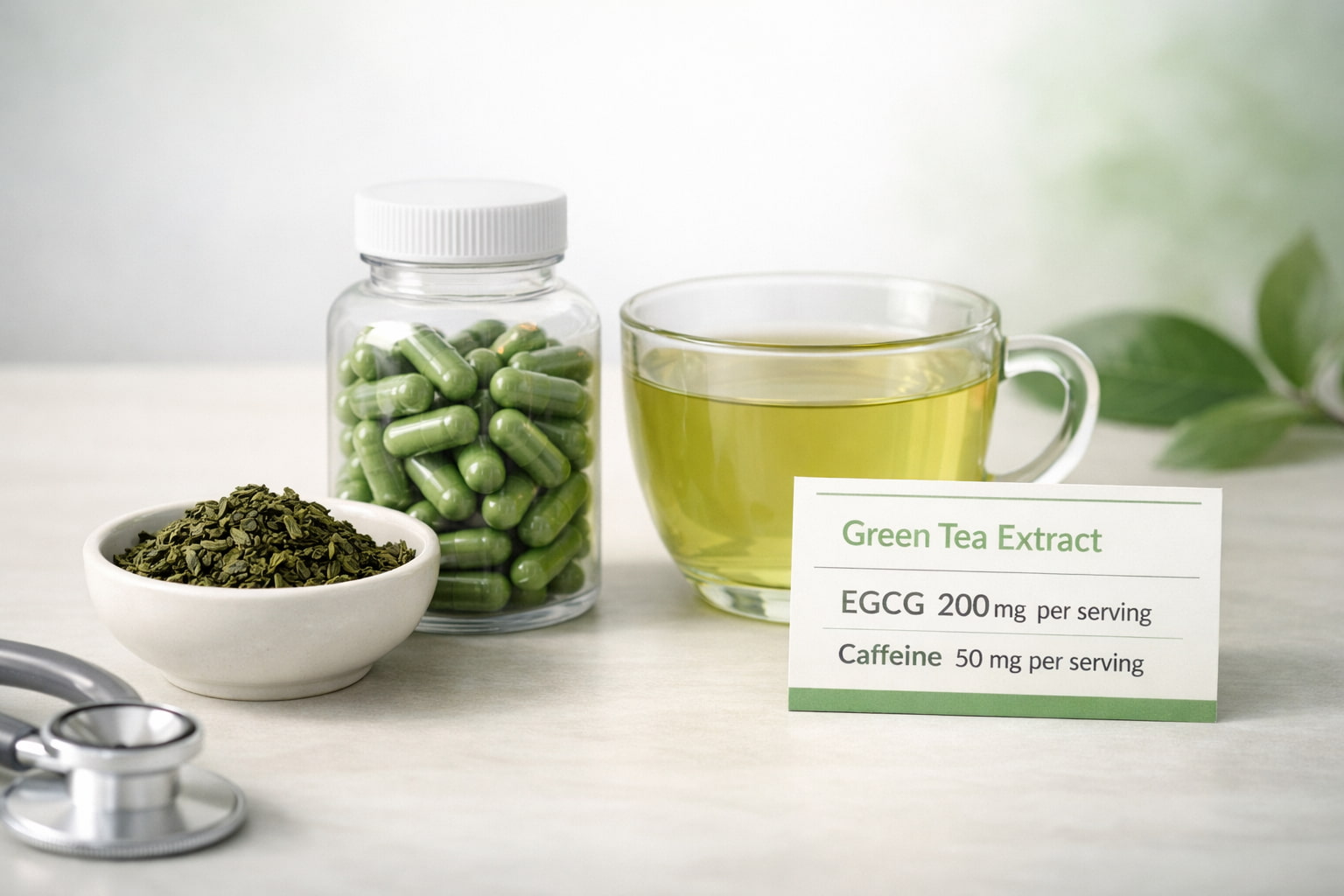
Green tea extract may offer small benefits for weight and LDL cholesterol, but it is not a miracle supplement, and concentrated products carry a real liver risk that matters more than most labels suggest. That is why it helps to understand what green tea extract actually is, how it differs from brewed tea, which claims are realistic, and when a concentrated supplement may not be worth the tradeoff.
What Is Green Tea Extract?
Green tea extract is a concentrated form ofCamellia sinensis, the same plant used to make green tea. The main compounds studied in extracts are catechins, especially EGCG, and many products also contain caffeine. According to the NIH Office of Dietary Supplements, a typical brewed cup of green tea contains about 240 to 320 mg of catechins and about 45 mg of caffeine, while supplement products can be much more concentrated.
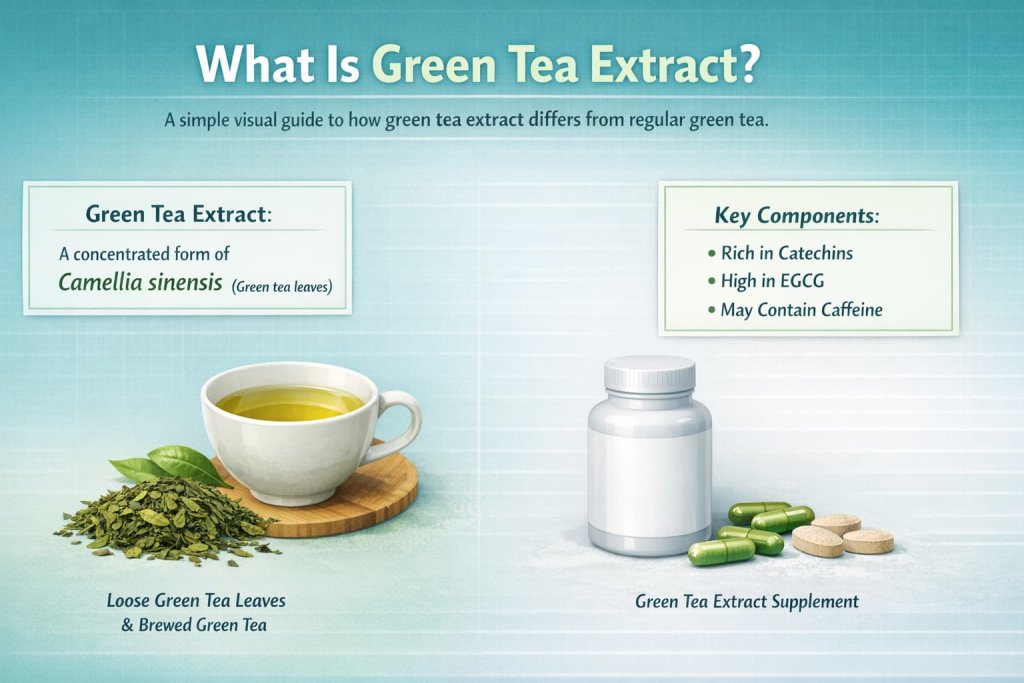
That concentration difference matters. A cup of tea is usually consumed gradually and often with food, while supplements are commonly sold as capsules or slimming products that deliver a larger amount at once. Official safety reviews treat brewed green tea and concentrated extract as meaningfully different situations.
What Green Tea Extract May Actually Do
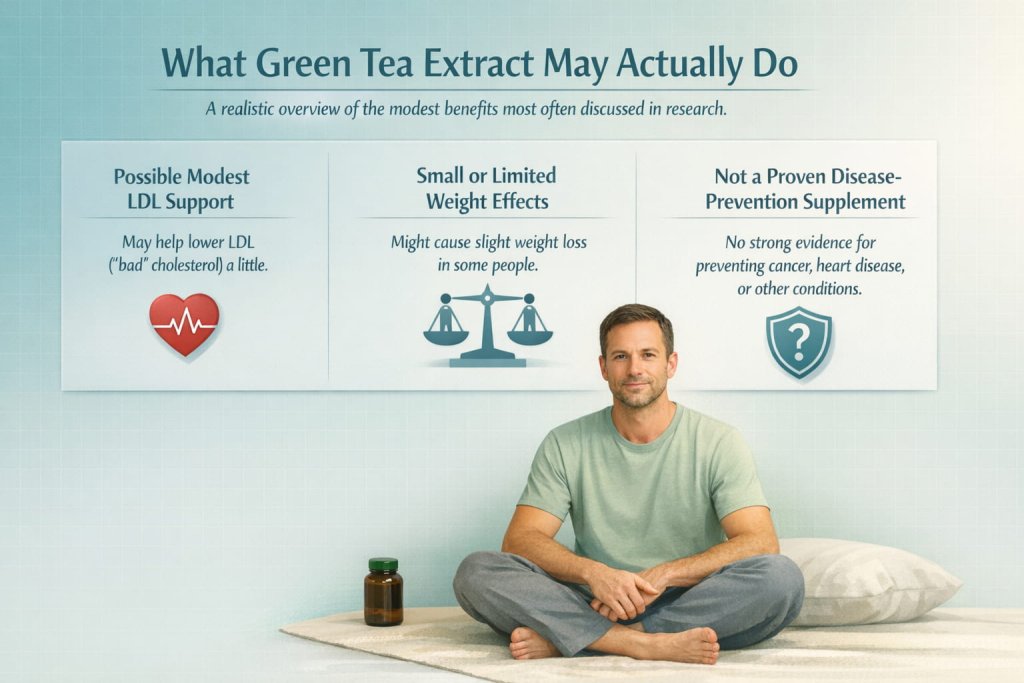
Green tea extract is usually promoted for weight loss, cholesterol support, antioxidant effects, and chronic disease prevention. The evidence is more cautious than the marketing. The National Center for Complementary and Integrative Health says definite conclusions still cannot be reached for most uses, and the overall benefits appear modest rather than dramatic.
Green Tea Extract for Weight Loss
This is the claim most people search for, but it is also the easiest one to overstate. The available research suggests that green tea catechins and caffeine may have a modest effect on body weight, but the effect is usually small and not likely to be clinically meaningful for most adults.
In plain English, green tea extract is not a reliable shortcut for fat loss. It may slightly shift the numbers for some people, especially in formulas that combine catechins with caffeine, but it does not replace the basics of calorie intake, diet quality, sleep, and physical activity.
One practical detail matters here: the small weight effect seen in some studies appears to come mostly from catechins plus caffeine together, not from EGCG alone. The NIH Office of Dietary Supplements notes that limited trials of catechins or EGCG alone generally have not shown meaningful changes in body weight, which helps explain why some green tea extract products look more impressive on labels than they do in real-world results.
Green Tea Extract for Cholesterol
This is one of the more supportable benefit areas, but the effect still looks modest. NCCIH notes that green tea products have reduced total cholesterol and LDL cholesterol to a small extent in randomized studies, without improving HDL cholesterol or triglycerides. That makes the claim “may modestly support LDL cholesterol” more accurate than stronger phrases like “improves heart health” or “protects against heart disease.”
Green Tea Extract for Cancer Prevention or Chronic Disease
This is where marketing often runs ahead of the evidence. NCCIH says results on green tea and cancer have been inconsistent, and although some observational links have been reported for heart disease, the overall picture is not consistent across populations. That is not the same thing as proving prevention.
Green Tea Extract Is Not the Same as Drinking Green Tea
This distinction is one of the most important practical points for readers. NCCIH says no safety concerns have been reported for green tea consumed as a beverage by adults, although it does contain caffeine. The European Food Safety Authority likewise concluded that catechins from green tea drinks are generally safe, while concentrated supplement doses at or above 800 mg per day may pose health concerns.
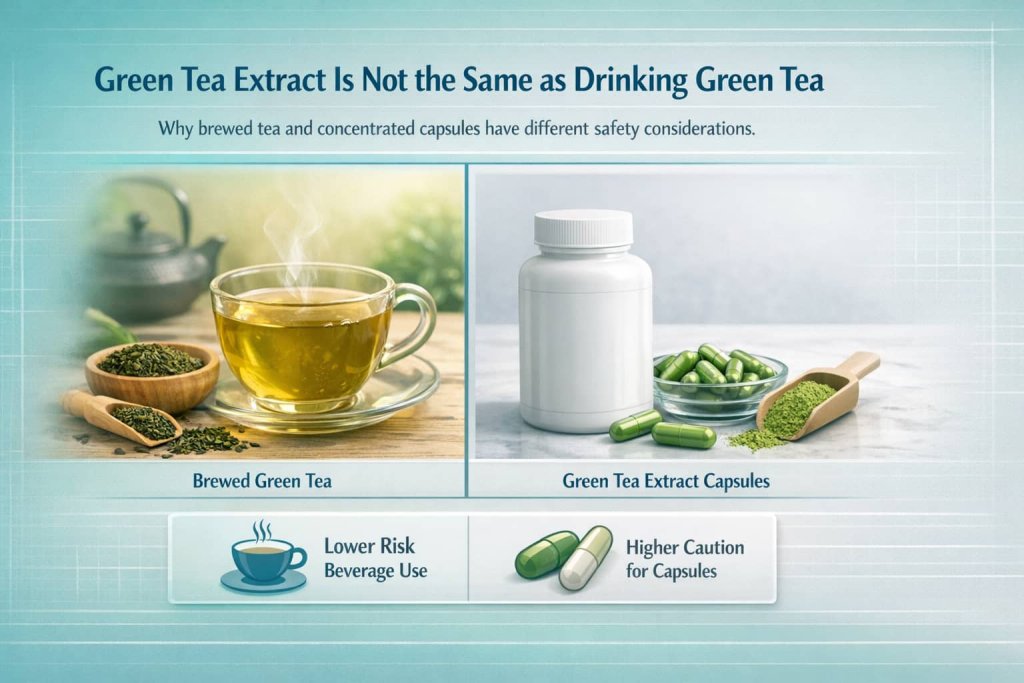
Health Canada reached a similar conclusion. Its review found that liver-related problems were mainly reported when green tea extract or purified EGCG was taken in solid dosage forms such as capsules and under fasting conditions, while exposure as part of foods or under pre-fed conditions reduced those effects.
For many readers, that difference changes the decision. If the goal is simply to enjoy green tea or get a modest amount of catechins, brewed tea is the lower-risk option described in official safety reviews, while concentrated capsules are the form that deserves much more caution.
Green Tea Extract Side Effects and Liver Risk
Common side effects of green tea extract supplements include nausea, constipation, abdominal discomfort, and increased blood pressure. The more serious concern is liver injury. NIH LiverTox classifies green tea extract as a well-established cause of clinically apparent liver injury, and reported cases have sometimes been severe.
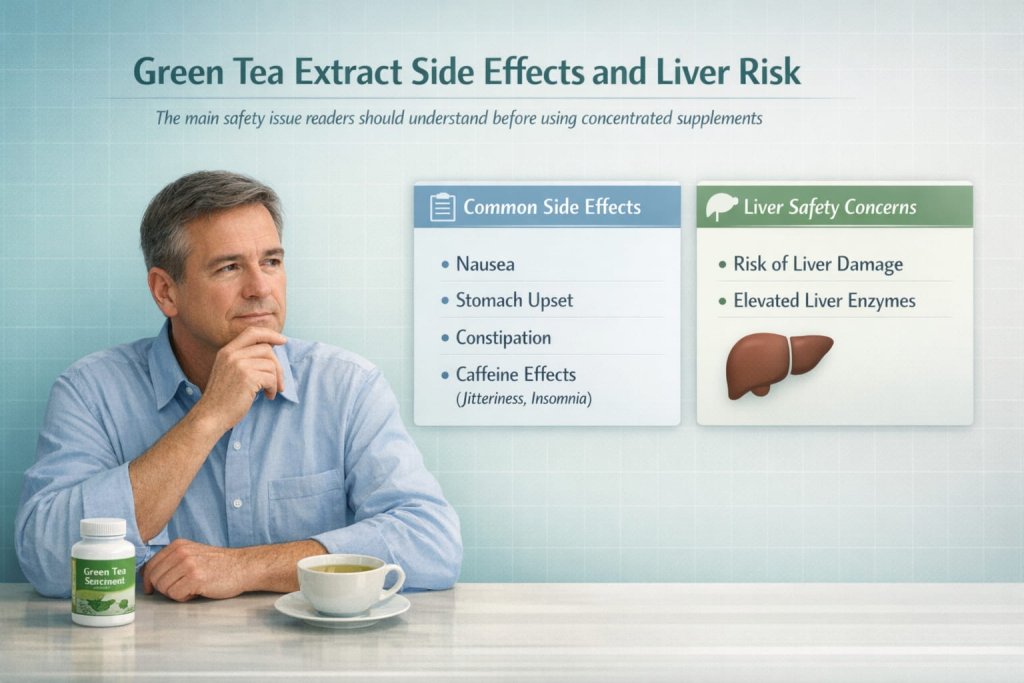
Most reported liver injury cases involve concentrated tablets or capsules rather than normal tea drinking. In many cases, the pattern resembles acute hepatitis and improves after the product is stopped, but some cases have involved liver failure, transplant, or death.
Safety Box
Concentrated green tea extract deserves extra caution because official reviews repeatedly link high-dose capsules, bolus dosing, and fasting use with a higher risk of liver problems. Stop using the product and seek medical care promptly if symptoms such as yellowing of the skin or eyes, dark urine, severe fatigue, vomiting, or right upper abdominal pain appear.
If someone still chooses to use green tea extract, taking it with food is one of the clearest harm-reduction steps mentioned in official reviews. NCCIH and the NIH Office of Dietary Supplements note that liver problems appear more likely when concentrated green tea extract is taken on an empty stomach, so fasting use is a poor choice for this type of supplement.
What Dose Raises More Concern?
There is no single universal safe dose that applies to everyone. That is one reason strong marketing claims can be misleading. EFSA concluded that EGCG doses at 800 mg per day may be associated with initial signs of liver damage and that it could not identify a safe supplement dose from the available evidence.
Health Canada adds useful dose context. Its review found no increased liver enzymes or adverse liver effects in clinical trials below 600 mg EGCG per day, found statistically significant liver-enzyme elevations at 600 to 800 mg per day in capsule form, and found that doses above 800 mg per day were associated with liver damage in some cases. That does not prove lower doses are risk-free for every person, but it does show where official concern becomes much stronger.
Medication Interactions With Green Tea Extract
Green tea extract is not just a natural product sitting outside normal drug-safety issues. NCCIH says high-dose green tea can reduce blood levels of nadolol, green tea extract can reduce blood levels of atorvastatin, and research has also shown an interaction with raloxifene.
That means a simple rule is the safest one: do not assume green tea extract is routine or harmless if you take prescription medicine. FDA guidance for consumers using dietary supplements advises people to speak with a doctor, pharmacist, or other health professional before using supplements because supplements can involve health risks. The NIH weight-loss supplement guidance gives the same advice, especially for people with medical conditions such as high blood pressure, diabetes, liver disease, or heart disease.
Who Should Be Careful With Green Tea Extract?
Green tea extract is not a good fit for everyone. Based on Health Canada’s cautionary labeling, concentrated green tea extract products intended for supplemental use are adult-only and not recommended for pregnant or breastfeeding women. Health Canada also says same-day stacking with other green tea extract products or supplemented foods should be avoided to reduce the risk of overconsumption.
Extra caution also makes sense for people who:
- take prescription medicines, especially nadolol, atorvastatin, raloxifene, or other medicines with interaction potential
- have liver disease, heart disease, diabetes, or high blood pressure
- are sensitive to caffeine
- are under 18
- have had prior liver problems or unexplained liver-enzyme elevations
How to Read a Green Tea Extract Label More Carefully
A better green tea extract label is one that tells you what is actually inside it. Look for:
- the amount of EGCG per serving
- the amount of total catechins per serving
- the caffeine content, especially if the formula is marketed for energy or weight loss
- whether the product is a capsule or concentrated bolus dose
- whether the serving directions tell you to take it with food
It also helps to compare the label with everything else you consume that day, including coffee, tea, pre-workout powders, and energy drinks. The FDA caffeine guidance says 400 mg of caffeine per day is an amount not generally associated with negative effects for most adults, but sensitivity varies, and green tea extract products can still be a poor fit for people who are prone to jitters, poor sleep, palpitations, or blood pressure spikes.
A red flag is a label that emphasizes fat-burner language but hides catechin or EGCG amounts behind a proprietary blend. If the meaningful active amounts are not clear, the risk is harder to judge and the claimed benefit is harder to evaluate.
Is Green Tea Extract FDA-Approved?
Not as an oral supplement for general health, weight loss, or cholesterol support. FDA says dietary supplements are not approved for safety and effectiveness before they are marketed. Manufacturers are responsible for evaluating safety and labeling before marketing, and FDA can act after a product reaches the market if it is unsafe or misbranded.
There is one easy point of confusion here. NCCIH notes that FDA has approved a topical prescription green tea extract ointment for external genital and perianal warts. That does not mean oral green tea extract supplements are FDA-approved for the claims commonly seen on supplement labels.
Frequently Asked Questions About Green Tea Extract
Does green tea extract help you lose weight?
Maybe a little, but not much. Official reviews say the effect is modest at best and usually too small to be clinically meaningful for most people.
Can green tea extract damage the liver?
Yes. The risk appears uncommon, but official reviews consistently recognize liver injury as the main serious safety concern, especially with concentrated capsules and higher-dose EGCG products.
Is drinking green tea safer than taking green tea extract?
In general, yes. Brewed green tea and concentrated extract are treated differently by official safety reviews, which consistently report greater concern with concentrated supplement use than with normal beverage intake.
Should green tea extract be taken on an empty stomach?
That is not a good assumption. Official reviews found higher concern under fasting conditions, and taking green tea extract with food may reduce the possible risk of liver damage.
Bottom Line
Green tea extract is best understood as a concentrated supplement with modest possible benefits and meaningful safety limits, not as an all-purpose wellness shortcut. For most readers, the strongest evidence supports a cautious message: weight-loss effects are small, cholesterol changes may be modest, and the biggest issue is liver safety with concentrated products.
If your goal is general wellness, brewed green tea is the simpler and lower-risk option. If you are considering a supplement, make sure the label clearly discloses EGCG, catechins, and caffeine, avoid taking it on an empty stomach, and be extra careful if you take medications or have a medical condition.
Sources and References
- National Center for Complementary and Integrative Health — Green Tea
- NIH Office of Dietary Supplements — Dietary Supplements for Weight Loss: Fact Sheet for Health Professionals
- U.S. Food and Drug Administration — Information for Consumers on Using Dietary Supplements
- U.S. Food and Drug Administration — Spilling the Beans: How Much Caffeine Is Too Much?+
- NIH LiverTox — Green Tea
- European Food Safety Authority — EFSA Assesses Safety of Green Tea Catechins
- Health Canada — Summary of Health Canada’s Safety Assessment of Green Tea Extract for Use as a Supplemental Ingredient