
Carrots are low in calories. A medium raw carrot has about 25 calories, and 100 grams of raw carrots has about 41 calories. That makes carrots one of the easiest vegetables to fit into a balanced eating plan, whether you want a light snack, a lower-calorie side, or a crunchy ingredient that adds volume without many calories. According to USDA, carrots also provide fiber and important nutrients, especially vitamin A activity from beta-carotene.
How many calories are in carrots?
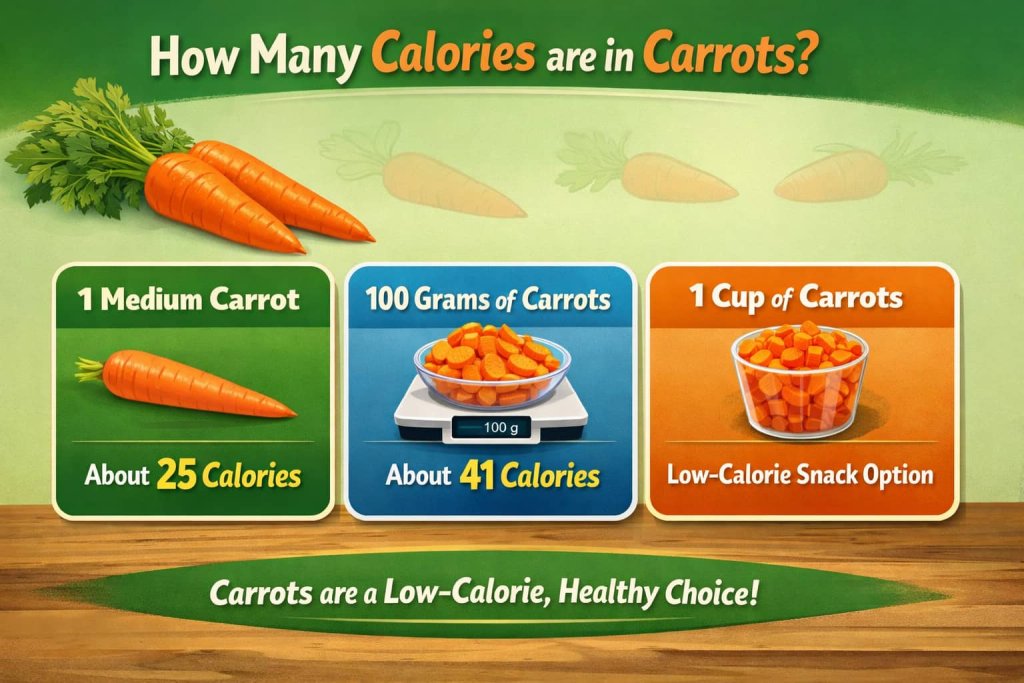
For most readers, these are the most useful everyday numbers for plain raw carrots:
- 1 medium raw carrot: about 25 calories
- 100 grams of raw carrots: about 41 calories
- 1 cup raw carrots: generally low in calories and still a light option for snacks or meals
The exact number can vary a little with carrot size and how it is measured, but carrots are consistently a low-calorie vegetable in official USDA nutrition resources.
Quick carrot calorie guide
For an even more practical everyday reference, here are a few common plain carrot serving sizes based on USDA FoodData Central entries:
- 1 medium raw carrot: about 25 calories
- 1 large raw carrot: about 30 calories
- 10 baby carrots: about 35 calories
- 1 cup chopped raw carrots: about 50 to 55 calories
- 100 grams raw carrots: about 41 calories
These numbers can vary slightly based on size, brand, and how the carrots are cut, but they give a reliable everyday estimate for plain carrots.
Carrot calories by serving size
A practical way to think about carrot calories is by portion.
Small serving
A few carrot sticks or baby carrots usually add only a modest amount of calories, which is one reason carrots work well as a snack or lunchbox food. USDA materials classify carrots as a low-calorie vegetable choice.
Medium carrot
One medium carrot, about 61 grams, provides around 25 calories along with carbohydrate, fiber, and very little fat. This is the most useful everyday portion for a simple calorie answer.
Larger portions
Even a larger serving of plain carrots stays relatively light in calories compared with chips, pastries, or heavily processed snacks. That makes carrots useful when you want more food volume without a large calorie load. The broader Dietary Guidelines for Americans also support choosing nutrient-dense vegetables within calorie limits.
Nutrition profile of carrots
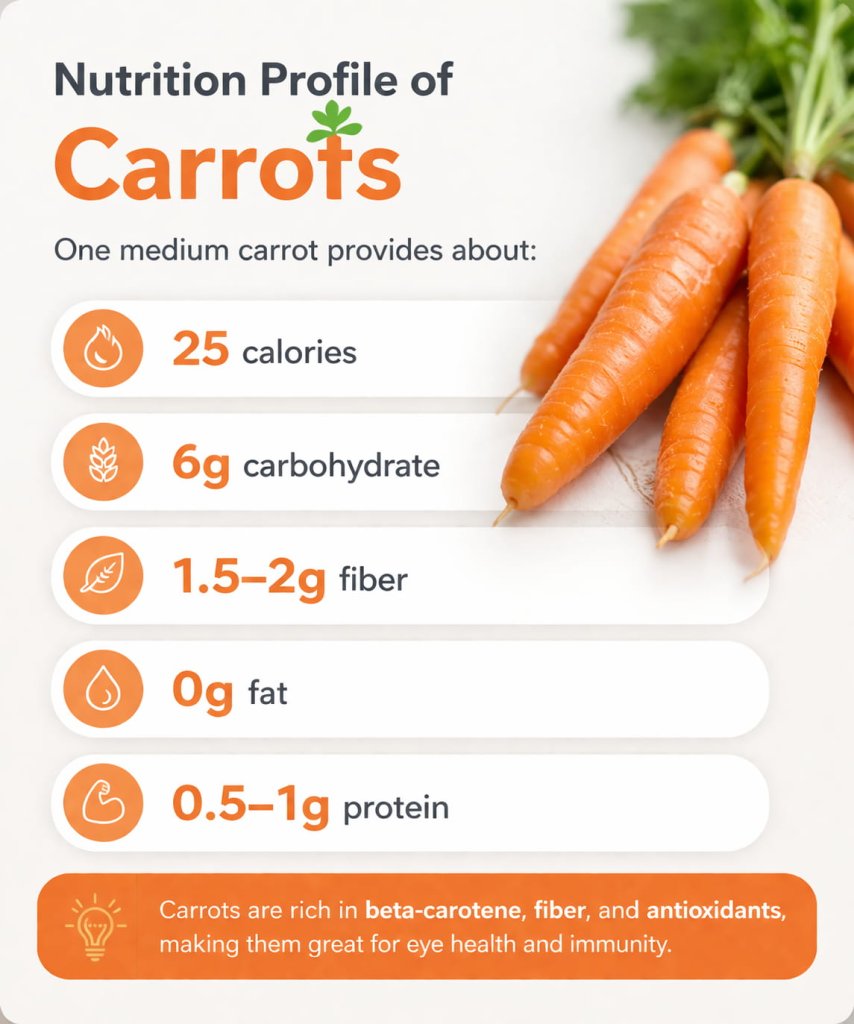
One medium carrot provides about:
- 25 calories
- 6 grams of carbohydrate
- 1.5 to 2 grams of fiber
- 0 grams of fat
- about 0.5 to 1 gram of protein
Carrots also contribute potassium and are especially known for beta-carotene, the orange plant pigment the body can convert into vitamin A. USDA MyPlate materials also note that adding vegetables such as carrots can help increase fiber and potassium intake.
Key nutrients in carrots
Beta-carotene and vitamin A
According to the National Institutes of Health, carrots contain provitamin A carotenoids such as beta-carotene, which the body can convert into vitamin A. NIH explains that vitamin A supports normal vision, immune function, growth and development, and the normal maintenance of organs and tissues. That is one of the main reasons carrots are considered nutrient-dense even though they are very low in calories.
Fiber
Carrots provide fiber, which can support fullness and help make meals or snacks more satisfying. USDA also highlights fiber as one of the important nutrients many people need more of in their diets.
Potassium
Carrots are not one of the very highest-potassium foods, but they still add to overall potassium intake. USDA MyPlate materials specifically mention carrots as a way to help increase potassium intake as part of an overall healthy eating pattern.
Are carrots good for weight management?
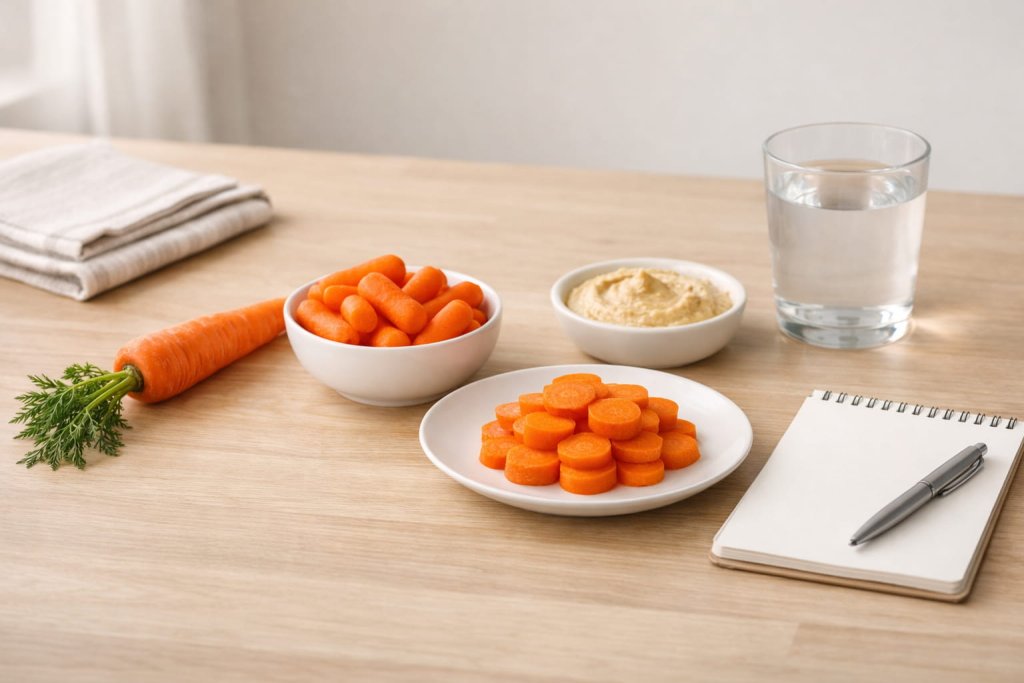
Yes, carrots can be a smart food for weight management. They are low in calories, naturally high in water, and provide fiber, which can make snacks and meals feel more filling without adding many calories. The Dietary Guidelines for Americans recommend choosing nutrient-dense foods and vegetables while staying within calorie limits, and carrots fit that pattern well.
Carrots may be especially useful when they replace more calorie-dense snack foods. For example, plain carrots or carrots with a lighter dip are usually a much lower-calorie choice than fried snacks or heavily sweetened foods. USDA also suggests vegetables as practical substitutes for higher-calorie options.
Are carrots too high in sugar or carbs?
Usually, no. Carrots contain some natural carbohydrate, but the amount in a normal serving is modest. A medium carrot has about 6 grams of carbohydrate and around 2 grams of fiber, which helps explain why plain carrots can still fit well into balanced meals and snacks. In real-life portions, plain carrots are very different from sugary desserts or highly processed snack foods.
For most people, the more important question is not whether carrots contain natural sugar, but how they are prepared and what they are eaten with. Plain carrots are very different from sweetened carrot dishes, carrot cake, or carrot juice with less fiber.
When carrot calories can go up
Plain carrots are low in calories, but carrot-based foods are not always equally light.
Dips and spreads
Calories can rise quickly when carrots are paired with creamy dressings, ranch, or high-fat dips. The carrots themselves stay low in calories, but the total snack changes depending on what you add. The Dietary Guidelines advise limiting foods and beverages higher in saturated fat, sodium, and added sugars.
If you like carrots with dip, it can help to portion the dip first instead of eating straight from a large container. That keeps the snack more balanced while still making carrots enjoyable and satisfying.
Glazed or sweetened carrots
Cooked carrots with butter, brown sugar, honey, or syrup can have much more calories than plain steamed or roasted carrots. That does not make them off-limits, but it does change the calorie count and overall nutrition profile.
Carrot juice and carrot desserts
Carrot juice can be more concentrated than whole carrots and usually contains less fiber per calorie than the whole vegetable. Carrot cake, muffins, and sweet breads are very different foods nutritionally from plain carrots and can be much higher in calories, added sugars, and fat. That is why it helps to separate plain carrots from carrot-flavored foods when answering calorie questions.
Whole carrots are usually the better choice when fullness matters because they take longer to eat and keep their natural fiber structure. Juice can still fit into a balanced diet, but it is easier to consume quickly and may be less satisfying than eating whole carrots.
Raw vs cooked carrots
Raw and cooked carrots are both nutritious choices. Cooking changes texture and water content, so calorie numbers by weight can shift a little depending on preparation, but carrots remain a relatively low-calorie vegetable either way. The bigger calorie difference usually comes from added oil, butter, sweeteners, or sauces rather than from the carrot itself. According to USDA FoodData Central, both raw and cooked carrots remain relatively light foods on their own.
Who should be a little more careful
Most people can eat carrots regularly without a problem, but a few situations are worth mentioning.
People with oral allergy syndrome
According to the American Academy of Allergy, Asthma & Immunology, some people react to raw fruits and vegetables because of oral allergy syndrome. Symptoms can include itching or swelling of the mouth, lips, tongue, or throat soon after eating raw produce. Carrots can be a trigger for some people, especially those with certain pollen allergies. Rarely, symptoms can become more serious.
People eating extremely large amounts of carrot-rich foods
According to the NHS, very high beta-carotene intake from foods such as carrots can sometimes lead to yellow-orange skin discoloration. This is usually harmless, but it can be surprising if you do not know the cause.
People watching total snack calories
Carrots themselves are light, but snacks built around carrots are not always low in calories. Large portions of hummus, creamy dip, or sweet carrot preparations can shift the total much higher. For calorie awareness, it is better to look at the full snack or dish, not just the carrot.
A simple way to use carrots in a healthy diet
Carrots work well when you want a food that is easy, affordable, and filling for relatively few calories. Good options include:
- raw carrot sticks with a lighter dip
- sliced carrots added to salads
- steamed or roasted carrots with minimal added fat
- shredded carrots in grain bowls or wraps
- carrots used to add bulk to soups and stews
These uses line up well with federal guidance to build meals around nutrient-dense vegetables and keep extra saturated fat, sodium, and added sugar in check.
A simple way to make carrots easier to eat regularly is to wash, peel, and portion them ahead of time. Keeping plain carrot sticks or sliced carrots ready in the fridge can make it easier to choose them instead of more calorie-dense convenience snacks.
FAQs about how many calories in carrots
Are carrots low in calories?
Yes. A medium carrot has about 25 calories, and 100 grams of raw carrots has about 41 calories.
Are carrots good for weight loss?
They can be helpful in a weight-loss eating plan because they are low in calories, provide fiber, and can replace more calorie-dense snacks.
Do cooked carrots have more calories than raw carrots?
Not by much on their own. The biggest calorie increase usually comes from added butter, oil, sugar, or sauces.
Are baby carrots the same as regular carrots for calories?
They are generally similar as a plain vegetable food. The main difference is portion size, not that one is a high-calorie option and the other is not. USDA FoodData Central includes both baby carrots and mature raw carrots as low-calorie foods.
The bottom line
Carrots are a low-calorie, nutrient-dense vegetable that can fit easily into everyday meals and snacks. They provide fiber, potassium, and beta-carotene, and a medium carrot has only about 25 calories. For most people, plain raw or lightly cooked carrots are a smart choice when they want something crunchy, filling, and easy to work into a healthy eating pattern.
Sources and References
- USDA — Carrots
- USDA Food and Nutrition Service — Carrots, Fresh
- USDA Agricultural Research Service — FoodData Central
- National Institutes of Health — Vitamin A and Carotenoids – Health Professional Fact Sheet
- Dietary Guidelines for Americans — Dietary Guidelines for Americans, 2020–2025
- American Academy of Allergy, Asthma & Immunology — Oral Allergy Syndrome
- NHS — Vitamin A