
A large plain fried egg has about 90 calories. That makes it a fairly moderate-calorie food on its own, but the total can rise quickly depending on how much oil or butter you use and what you eat with it. If you want an accurate answer for weight management, it helps to look at both the egg itself and the cooking method.

A fried egg can fit into many eating patterns because it provides protein and several important nutrients in a small portion. The key is understanding where the extra calories usually come from and when a fried egg is a smart choice versus when the full meal becomes much heavier.
How Many Calories in a Fried Egg Exactly?
According to the USDA FoodData Central, one large fried egg has about 90 calories. USDA nutrient tables also list a large fried egg at 6.26 grams of protein, 6.83 grams of fat, and 0.38 grams of carbohydrate.
That means the egg itself is not especially high in calories. In many real-life meals, the bigger calorie jump happens when the egg is fried in extra fat or served with calorie-dense sides such as toast with butter, sausage, bacon, or cheese.
Fried Egg Calories by Cooking Situation
Here is the most practical way to think about fried egg calories in everyday meals.
Plain fried egg
A plain large fried egg is about 90 calories based on USDA data.
Fried egg cooked with oil
If you use about 1 teaspoon of vegetable oil, that adds about 40 calories, based on a USDA Food and Nutrition Service nutrition sheet. In that case, one fried egg may be closer to 130 calories, depending on how much oil stays in the pan and on the egg.
Fried egg cooked with butter
A tablespoon of salted butter provides about 102 calories, according to a USDA butter nutrition sheet. That works out to roughly 34 calories per teaspoon. So a fried egg cooked in about 1 teaspoon of butter may land around 124 calories.
Two fried eggs
Two plain large fried eggs come to about 180 calories before counting cooking fat. If both are cooked with a teaspoon of oil or butter, the total goes up again.
Nutrition Profile of a Fried Egg
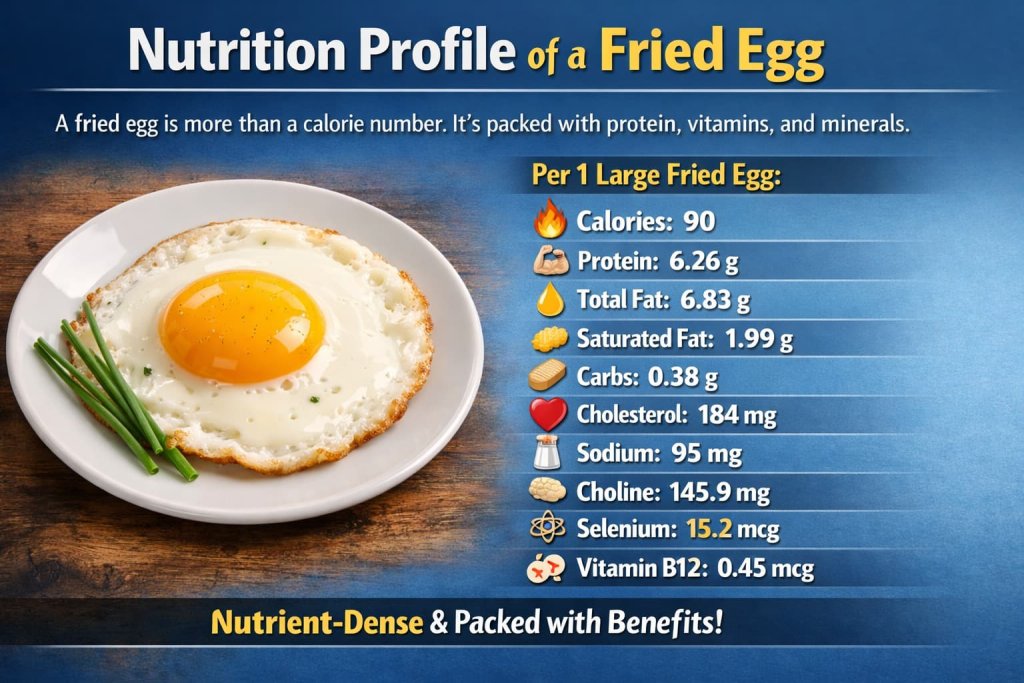
A fried egg is more than a calorie number. It is a compact source of protein and several vitamins and minerals.
Based on USDA nutrient tables, one large fried egg provides roughly:
- Calories: 90
- Protein: 6.26 g
- Total fat: 6.83 g
- Saturated fat: 1.99 g
- Carbohydrates: 0.38 g
- Cholesterol: 184 mg
- Sodium: 95 mg
- Choline: 145.9 mg
- Selenium: 15.2 mcg
- Vitamin B12: 0.45 mcg
These numbers show why eggs are often considered nutrient-dense. They give you meaningful nutrition for a relatively small serving.
Key Nutrients in a Fried Egg
Protein
The USDA National Agricultural Library lists a large fried egg at 6.26 grams of protein. Protein can help support fullness, which is one reason eggs are often included in balanced breakfasts.
Choline
The same USDA nutrient system shows a large fried egg provides about 145.9 mg of choline. Choline is important for normal cell function and brain and nerve health.
Selenium
USDA tables list about 15.2 mcg of selenium in one large fried egg. Selenium helps support important antioxidant processes and normal thyroid function.
Vitamin B12
A large fried egg provides about 0.45 mcg of vitamin B12 in USDA data. Vitamin B12 helps support red blood cells and nerve function.
Is a Fried Egg Good for Weight Management?
A fried egg can work well for weight management because it gives you protein for a fairly modest calorie cost. On its own, about 90 calories for one large fried egg is reasonable for many meal plans.
Still, whether it helps with weight management depends on the full plate, not just the egg. A fried egg is usually more weight-management-friendly when it is paired with foods such as:
- Vegetables
- Fruit
- Beans
- Plain yogurt
- Whole-grain toast in a sensible portion
It becomes less helpful when it is part of a heavier meal loaded with butter, refined bread, processed meat, or multiple high-calorie toppings.
A simple example:
- 1 plain fried egg with sautéed spinach: much lighter
- 1 fried egg sandwich with butter, cheese, and sausage: much higher in calories and saturated fat
So the better question is often not just “how many calories in a fried egg,” but also “what else is on the plate?”
Fried Egg vs Other Egg Cooking Methods
The calorie differences between egg cooking methods are usually small until extra fat is added.
Fried egg
About 90 calories for one large egg.
Boiled egg
A large hard-boiled egg is usually a little lower in calories because no cooking fat is added.
Poached egg
A poached egg is also usually close to boiled egg calories for the same reason.
Scrambled egg
Scrambled eggs can vary more because people often add milk, butter, oil, or cheese.
In practice, fried eggs are not automatically high in calories. The main issue is the amount of added fat used during cooking.
Who Should Be a Little More Careful?
Fried eggs can fit many healthy diets, but some people may want to pay closer attention to portion size and preparation.
People watching cholesterol intake
The American Heart Association says healthy people can include up to one whole egg per day in a heart-healthy dietary pattern, and older adults with healthy cholesterol levels can include up to two. But people with high LDL cholesterol or other cardiometabolic concerns may need more individualized advice.
People limiting saturated fat
A plain fried egg already contains about 1.99 grams of saturated fat, and frying it in butter or serving it with bacon or sausage increases that amount further.
People on lower-sodium eating plans
A plain fried egg is not very high in sodium at about 95 mg, but sodium can climb quickly if you add salted butter, cheese, processed meats, or restaurant sides.
Safety Notes for Fried Eggs
Food safety matters with eggs, especially for children, older adults, pregnant women, and people with weakened immune systems. The FDA advises keeping eggs refrigerated and cooking eggs until the yolk and white are firm.
The FDA also notes that shell eggs should be stored in the refrigerator at 40°F or below. If you prefer runny yolks, using pasteurized eggs may be a safer option for some households.
Best Ways to Keep Fried Egg Calories Reasonable
If you enjoy fried eggs but want to keep the calorie total more controlled, these habits help:
- Use a nonstick pan so you need less added fat
- Measure oil or butter instead of pouring freely
- Pair the egg with vegetables or fruit
- Skip extra cheese or processed meat when possible
- Watch the total meal, not just the egg
Small cooking choices can change the final calorie count more than most people realize.
FAQ
How many calories are in 2 fried eggs?
Two plain large fried eggs have about 180 calories before added oil or butter.
How many calories are in a fried egg with oil?
One large fried egg plus about 1 teaspoon of oil is roughly 130 calories.
How many calories are in a fried egg with butter?
One large fried egg plus about 1 teaspoon of butter is roughly 124 calories.
Is a fried egg healthier than scrambled eggs?
It depends on how each one is cooked. A plain fried egg can be very similar nutritionally to other cooked eggs, but scrambled eggs often end up higher in calories when milk, butter, or cheese is added.
The Bottom Line
A large plain fried egg has about 90 calories, along with protein, choline, selenium, and vitamin B12. That makes it a nutrient-dense option that can fit into a balanced diet and even a weight-management plan.
The biggest thing to watch is not usually the egg itself. It is the oil, butter, and side foods that can turn a light meal into a much heavier one. If you want the most practical answer, count the egg and the cooking fat together.
Sources/References
- USDA FoodData Central — FoodData Central
- USDA National Agricultural Library — Protein
- USDA National Agricultural Library — Choline
- USDA National Agricultural Library — Selenium
- USDA National Agricultural Library — Vitamin B-12
- USDA National Agricultural Library — Saturated Fat
- USDA National Agricultural Library — Cholesterol
- USDA National Agricultural Library — Sodium
- USDA Food and Nutrition Service — Vegetable Oil Nutrition Facts
- USDA Food and Nutrition Service — Butter, Salted Nutrition Facts
- American Heart Association — Here’s the latest on dietary cholesterol and how it fits in with a healthy diet
- FDA — What You Need to Know About Egg Safety