

A plain medium sweet potato has about 112 calories. That makes sweet potato a fairly moderate-calorie, nutrient-dense carbohydrate food that can fit well into many balanced eating patterns when portion size and toppings are kept in check. According to the USDA SNAP-Ed, a medium sweet potato weighing about 130 grams provides 112 calories, 26 grams of carbohydrate, 4 grams of fiber, and 2 grams of protein.
Understanding how many calories are in a sweet potato matters because preparation changes the nutrition picture quickly. A plain baked sweet potato is very different from sweet potato fries, candied sweet potatoes, or casserole made with butter and sugar. The sweet potato itself is nutrient-rich, but extras can raise calories, fat, sugar, and sodium fast.
How Many Calories Are in a Sweet Potato?
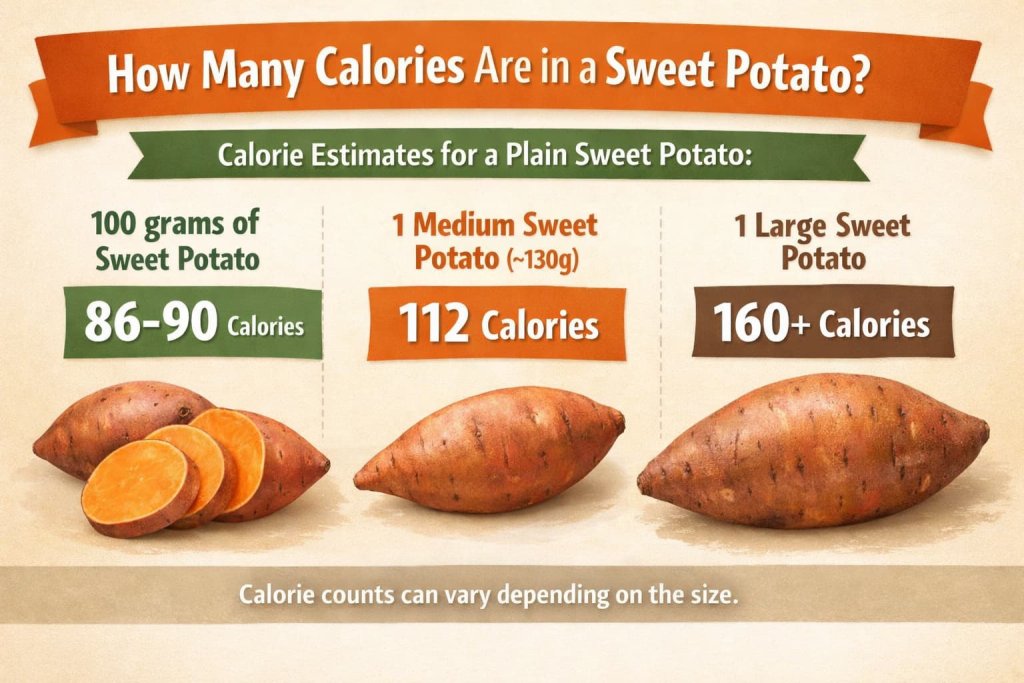
For a plain sweet potato, these are the most practical calorie estimates to know:
- 100 grams of sweet potato: about 86 to 90 calories
- 1 medium sweet potato (about 130 g): about 112 calories
- 1 large sweet potato: usually more than 160 calories, depending on size
The most reliable simple reference for everyday use is the USDA SNAP-Ed entry for one medium sweet potato at 112 calories. USDA food composition data also shows that sweet potatoes are mostly carbohydrate, with very little fat when eaten plain.
A quick note on raw vs cooked values: calorie numbers can look slightly different depending on whether the sweet potato is weighed raw or after cooking. That is mostly because cooking changes water content and weight, not because the potato suddenly becomes a different food. For readers, the easiest rule is to compare like with like: use raw values for raw portions, and cooked values for baked, steamed, or roasted portions.
How calories change by preparation
A sweet potato’s calories stay fairly moderate when it is:
- baked
- steamed
- microwaved
- roasted with very little oil
Calories rise more when it is turned into:
- fries
- chips
- casserole
- candied sweet potatoes
- heavily buttered or sweetened side dishes
That difference matters for readers who want a realistic calorie answer, because people often search for “how many calories in a sweet potato” but actually eat it with oil, butter, marshmallows, brown sugar, or syrup. USDA-based serving data supports using plain sweet potato values as the baseline, then separating higher-calorie versions clearly.
Plain sweet potato vs fries vs casserole
This is where calorie differences become much more important in real life:
- Plain baked or steamed sweet potato: usually the lightest option
- Sweet potato fries: usually much higher in calories because of added oil
- Sweet potato casserole or candied sweet potatoes: often much higher because of added butter, sugar, syrup, or marshmallows
For most readers, this is the most useful takeaway: if you want the benefits of sweet potato without a major calorie jump, plain baked, steamed, or lightly roasted sweet potato is usually the better choice.
Nutrition Profile of Sweet Potato
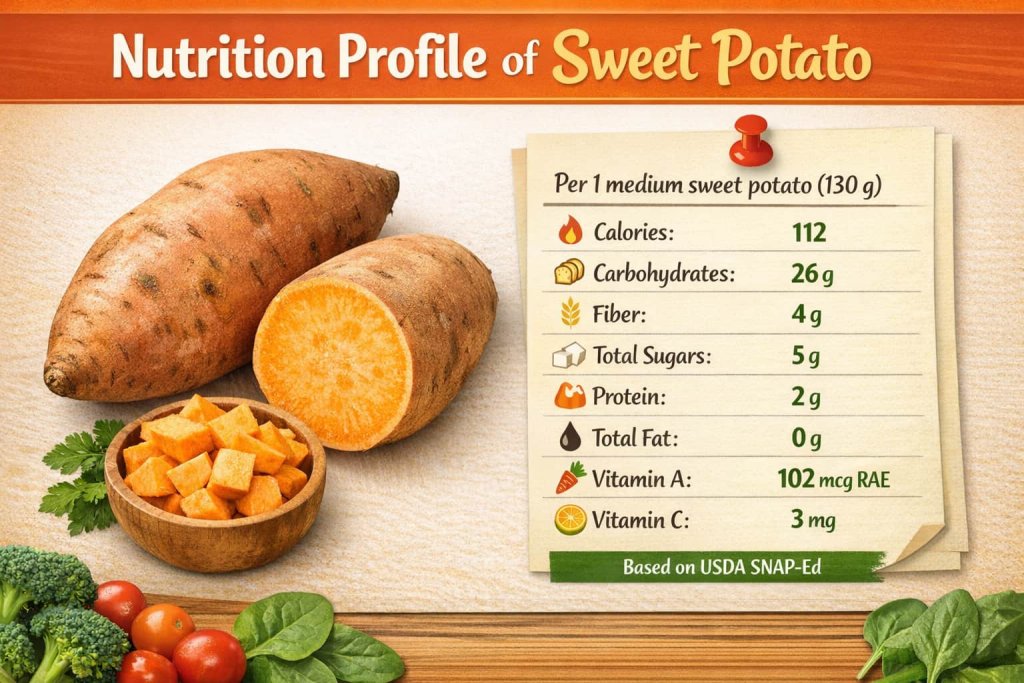
Here is a simple nutrition profile for 1 medium sweet potato (130 g) based on USDA SNAP-Ed:
| Nutrient | Amount |
|---|---|
| Calories | 112 |
| Carbohydrates | 26 g |
| Fiber | 4 g |
| Total sugars | 5 g |
| Protein | 2 g |
| Total fat | 0 g |
| Vitamin A | 102 mcg RAE |
| Vitamin C | 3 mg |
This profile shows why sweet potatoes are often considered a high-quality carbohydrate food. They provide energy, fiber, and useful micronutrients without much fat when eaten plain.
Is Sweet Potato Good for Weight Management?
Yes, sweet potato can be good for weight management when it is prepared simply and eaten in a sensible portion. A medium sweet potato gives you moderate calories, some fiber, and good volume, which can help make a meal feel more satisfying than a lower-fiber refined carb option.
Sweet potatoes may work especially well for weight management when you pair them with:
- lean protein
- non-starchy vegetables
- healthy fats in modest amounts
The American Diabetes Association notes that carbohydrate foods affect blood glucose, so portion size and overall meal balance matter more than labeling one carb as automatically good or bad. That same idea is useful for weight management too. Sweet potato can be part of a balanced meal, but oversized portions and calorie-heavy toppings can easily change the outcome.
Why sweet potato may support fullness
Sweet potatoes are not low-carb, but they do offer some features that can support a filling meal:
- Fiber: about 4 grams in a medium sweet potato
- Water content: helps with food volume
- Texture and density: often more satisfying than highly processed snacks
For many readers, the most practical takeaway is this: a plain baked sweet potato is often easier to fit into a calorie-conscious diet than sweet potato fries or sweet potato dessert dishes.
Key Nutrients in Sweet Potato
Vitamin A precursors
Sweet potatoes are best known for their orange color, which comes from carotenoids such as beta-carotene. The NIH Office of Dietary Supplements explains that provitamin A carotenoids from plant foods are converted by the body into vitamin A. Vitamin A is important for normal vision, immune function, and growth and development.
Potassium
Sweet potatoes also provide potassium. The NIH Office of Dietary Supplements states that potassium is needed for proper kidney and heart function, muscle contraction, and nerve transmission. That makes sweet potatoes a useful contributor to overall diet quality, even though they are not the only potassium-rich foods people should rely on.
Fiber
A medium sweet potato provides about 4 grams of fiber. Fiber can help with fullness and can make meals feel more satisfying, which is one reason sweet potatoes are often easier to work into a balanced eating plan than more refined carbohydrate sides.
Vitamin C
Sweet potatoes also contain some vitamin C. The amount is not extremely high compared with citrus fruit or peppers, but it still adds to the overall nutrition value of the food.
Who Should Be a Little More Careful?
People managing blood sugar
Sweet potatoes contain carbohydrate, so portion size matters. The American Diabetes Association explains that carbohydrates affect blood glucose and that carbohydrate awareness is an important part of meal planning. Sweet potatoes can still fit into a diabetes-friendly eating pattern, but the amount you eat and what you eat with it matter.
A practical example is choosing a plain baked sweet potato with protein and vegetables instead of sweet potato fries or a sugary casserole.
People with kidney disease or potassium restrictions
Because sweet potatoes provide potassium, people with chronic kidney disease or anyone told to limit potassium should be more careful. The NIH Office of Dietary Supplements notes that people at risk of high potassium should talk with their healthcare provider about how much potassium they can safely get from foods and supplements.
This matters most for people with chronic kidney disease, people on dialysis, and anyone who has been specifically told to limit potassium. In that situation, even nutritious foods can need portion control, so it is best to follow the guidance from your renal dietitian or clinician rather than assuming sweet potatoes are always a free choice.
People watching calories from toppings
Many sweet potato dishes are not just sweet potatoes. Butter, oil, marshmallows, pecans, syrup, brown sugar, and restaurant-style glazes can add a lot of extra calories quickly. For readers trying to keep calories under control, this is often the biggest issue. A plain sweet potato is one thing. A heavily sweetened or fried sweet potato dish is something else entirely.
Sweet Potato Calories by Common Serving Size
Here is a practical quick guide you can use:
- 100 g sweet potato: about 86 to 90 calories
- 1 medium sweet potato (130 g): 112 calories
- 2 medium sweet potatoes: about 224 calories
- Sweet potato fries: often much higher, depending on oil and portion size
- Sweet potato casserole: usually much higher because of added fat and sugar
This quick guide gives you the calorie numbers fast and helps you compare sweet potatoes with higher-calorie options like fries and casserole.
Is Sweet Potato Healthy Overall?
In most cases, yes. Sweet potatoes are a nutritious food that provides carbohydrate for energy, some fiber, and useful vitamins and minerals. They are especially valuable when eaten in minimally processed forms like baked, steamed, or roasted sweet potatoes. The strongest nutrition advantages are their fiber content and their carotenoid content, especially beta-carotene.
That said, healthy depends on context. A sweet potato covered in butter and sugar is very different from a plain roasted one served with a balanced meal. The food itself is nutritious, but the final dish can vary a lot.
Best Ways to Eat Sweet Potato for a Lighter Meal
If your goal is calorie awareness or weight management, the most practical options are:
- bake or microwave it plain
- season it with cinnamon, pepper, or a little salt instead of sugar-heavy toppings
- pair it with chicken, fish, beans, Greek yogurt, or another protein source
- keep added butter and oil moderate
- use it as a side, not the entire meal
This kind of meal structure can make sweet potatoes more filling and more useful in a balanced eating pattern. Guidance from the American Diabetes Association on pairing carbohydrate foods thoughtfully supports this general approach to meal balance.
FAQs
How many calories are in one sweet potato?
A medium plain sweet potato has about 112 calories, based on USDA SNAP-Ed data for a 130-gram sweet potato.
Is sweet potato lower in calories than regular potato?
They are fairly similar in calorie range depending on size and cooking method, so the bigger difference is usually portion size and toppings rather than the sweet potato automatically being much lower in calories. USDA food data is the best source for exact side-by-side comparisons by serving weight.
Is sweet potato good for weight loss?
Sweet potato can fit into a weight-loss diet because it offers moderate calories, fiber, and good meal volume. It is most helpful when eaten plain or lightly seasoned rather than fried or turned into dessert-style dishes.
Who should limit sweet potatoes?
People who need to monitor carbohydrate intake closely, or who have been told to limit potassium because of kidney issues, may need to be more careful with portion size and frequency.
The Bottom Line
Sweet potatoes are moderate in calories, filling, and rich in helpful nutrients, especially carotenoids and some fiber. For most people, a plain sweet potato can be a smart, satisfying part of a balanced diet. The main thing to watch is not the sweet potato itself, but the portion size and the toppings that come with it.
If you want the best balance of calories and nutrition, choose a plain baked or roasted sweet potato and build the rest of your meal around protein and vegetables.
Sources/References
- USDA SNAP-Ed — Sweet Potatoes & Yams
- USDA FoodData Central — Food Search
- NIH Office of Dietary Supplements — Vitamin A Fact Sheet for Consumers
- NIH Office of Dietary Supplements — Potassium Fact Sheet for Consumers
- American Diabetes Association — Get to Know Carbs
- American Diabetes Association — Carbs and Diabetes
- National Institute of Diabetes and Digestive and Kidney Diseases — Potassium and Your CKD Diet
- U.S. Food and Drug Administration — Reference Amounts Customarily Consumed: List of Products for Each Product Category