
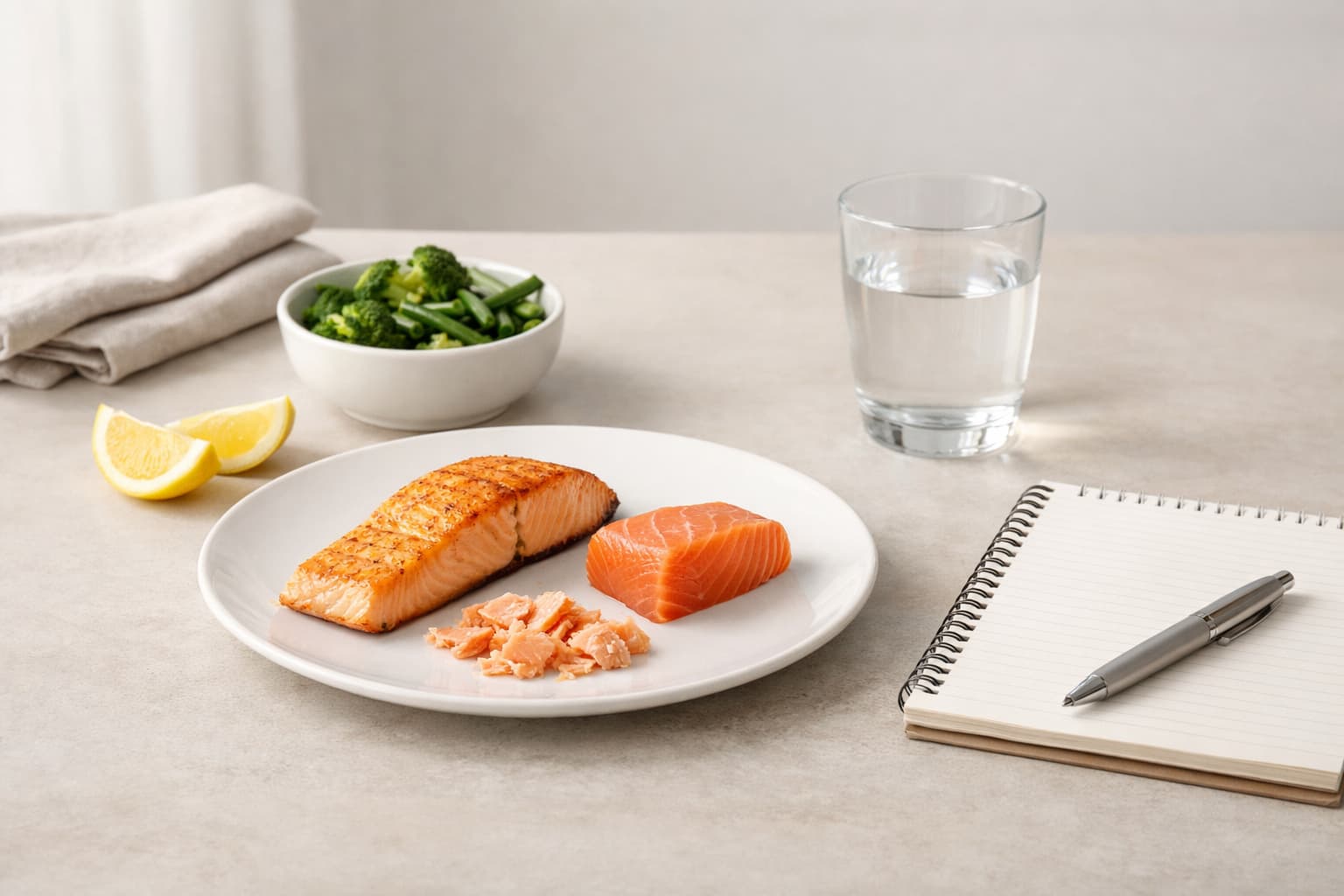
Salmon has about 131 to 206 calories per 100 grams, depending on the type and how it is prepared. In practical terms, a 3-ounce cooked serving often lands somewhere around 120 to 175 calories, but wild salmon is usually leaner than farmed salmon, and cooked salmon can look higher per 100 grams because cooking reduces water weight. According to USDA FoodData Central, calorie differences in salmon are mostly driven by fat content and moisture loss during cooking.
That matters because salmon is one of the most useful foods to understand if you are tracking calories, trying to eat more protein, or choosing filling foods for weight management. It also brings important nutrients like omega-3 fats, vitamin D, vitamin B12, and selenium, so calories alone do not tell the full story. American Heart Association guidance also highlights salmon as a fatty fish that is rich in omega-3 fatty acids.
How Many Calories Are in Salmon?
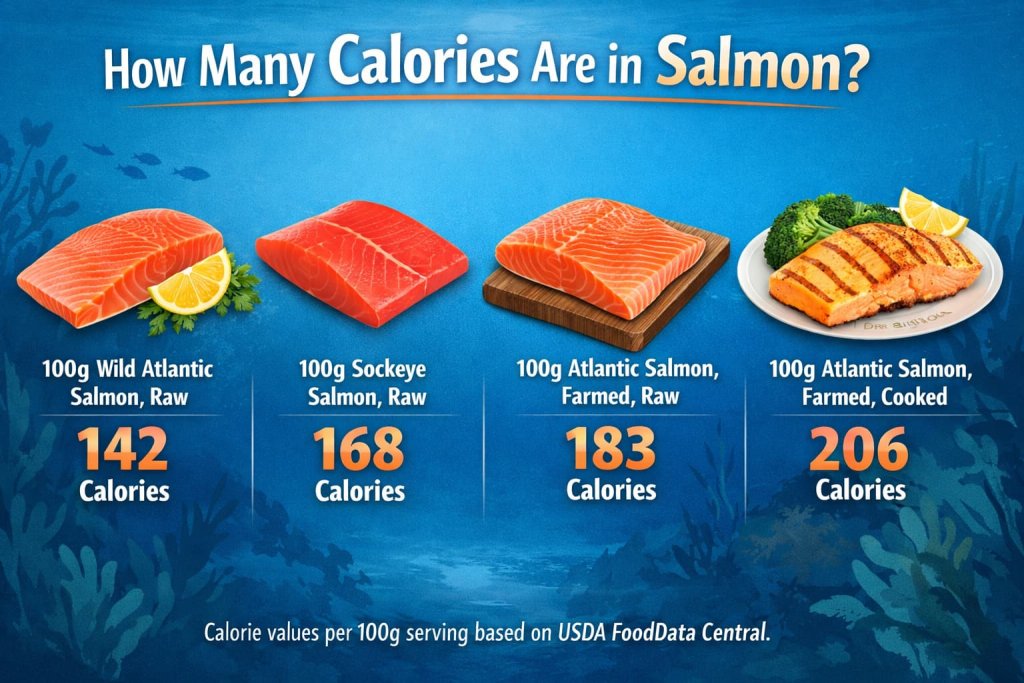
Here is the most practical calorie guide for plain salmon:
Keep in mind that “salmon” is not one single food entry. Atlantic, sockeye, coho, and king salmon can differ in fat content, and fattier portions can have more calories than leaner cuts. That is why calorie estimates work best as a range, not one exact number for every piece of salmon.
- 100 grams of wild Atlantic salmon, raw: about 142 calories
- 100 grams of sockeye salmon, raw: about 168 calories
- 100 grams of Atlantic salmon, farmed, raw: about 183 calories
- 100 grams of Atlantic salmon, farmed, cooked, dry heat: about 206 calories
These values come from USDA FoodData Central entries for different salmon types.
Calories in Salmon by Common Serving Size
For everyday use, these estimates are the most helpful:
- 3 ounces salmon: about 120 to 175 calories
- 4 ounces salmon: about 160 to 235 calories
- 6 ounces salmon: about 240 to 350 calories
- 1 average salmon fillet: often about 250 to 400+ calories, depending on size and whether it is wild or farmed
A serving can vary a lot because salmon fillets are not all the same size. The American Heart Association defines a fish serving as 3 ounces cooked, which is a useful benchmark for readers.
For a simple visual guide, a 3-ounce cooked serving of salmon is about the size of a deck of cards or the palm of your hand without the fingers. That can help readers estimate portions more realistically when they are not weighing food.
Why Salmon Calories Vary So Much
Salmon does not have one single calorie number because several things change the nutrition.
Wild vs. Farmed Salmon
Farmed salmon is often higher in calories because it usually contains more fat. USDA data show that raw farmed Atlantic salmon is higher in calories than leaner raw wild salmon types. USDA FoodData Central
Raw vs. Cooked Salmon
Cooked salmon can show more calories per 100 grams than raw salmon because cooking removes water. That makes the calories more concentrated in the same weight. This is why a cooked USDA entry may look noticeably higher than a raw one, even when it is the same fish. USDA FoodData Central
Cooking Method and Added Ingredients
Plain baked, grilled, broiled, poached, or air-fried salmon keeps calories more predictable. Breaded salmon, pan-frying in extra oil, creamy sauces, butter glazes, and sugary marinades can raise the calorie total quickly. This is a practical nutrition point based on how added fats and sugars change the final dish.
Nutrition Profile of Salmon
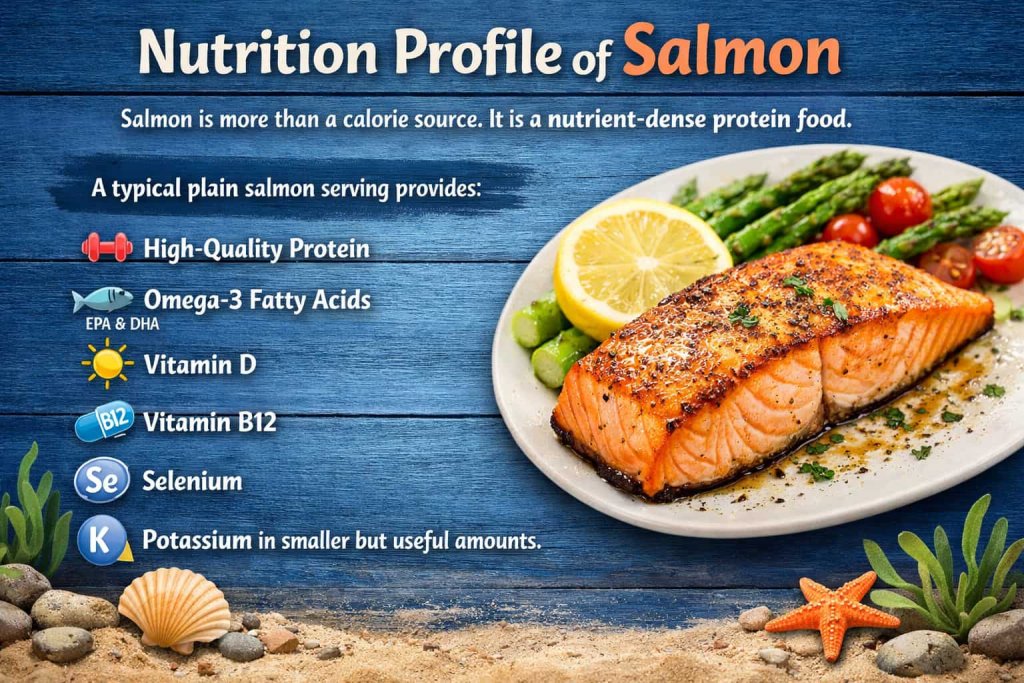
Salmon is more than a calorie source. It is a nutrient-dense protein food.
A typical plain salmon serving provides:
- High-quality protein
- Omega-3 fatty acids
- Vitamin D
- Vitamin B12
- Selenium
- Potassium in smaller but useful amounts
According to NIH Office of Dietary Supplements, salmon is one of the fish that is higher in EPA and DHA, the two main long-chain omega-3 fats. According to NIH Office of Dietary Supplements, 3 ounces of cooked Atlantic salmon provides 2.6 mcg of vitamin B12, or 108% of the Daily Value. NIH Office of Dietary Supplements also identifies fish as a good food source of selenium.
Typical Macronutrients in Salmon
Depending on type, salmon is typically:
- High in protein: often about 20 to 22 grams per 100 grams
- Very low in carbs: naturally 0 grams
- Moderate to high in fat: with more fat in farmed varieties than in leaner wild varieties
These patterns are consistent across USDA FoodData Central salmon entries.
Is Salmon Good for Weight Management?
Yes, salmon can be very good for weight management. It gives you a lot of protein for a moderate calorie cost, and protein can help meals feel more satisfying. Salmon also fits well into balanced eating patterns because it is naturally low in carbs and rich in beneficial fats. The American Heart Association recommends eating fish, especially fatty fish, at least twice a week.
Why Salmon Can Help With Weight Goals
Salmon may support weight management because it is:
- Protein-rich, which can help with fullness
- Convenient, making it easier to build a balanced meal
- Nutrient-dense, so you get more than just calories
- Versatile, working well with vegetables, grains, or salads
The most weight-management-friendly choices are usually:
- baked salmon
- grilled salmon
- broiled salmon
- poached salmon
- air-fried salmon without heavy breading
One important detail is that salmon can still become a high-calorie meal when the portion is large or when it is topped with a lot of oil, butter, creamy sauce, or sweet glaze. For weight management, the salmon itself is usually not the problem. The extras and the serving size often make the biggest difference.
Key Nutrients in Salmon
Omega-3 Fatty Acids
Salmon is especially known for EPA and DHA omega-3 fats. The NIH Office of Dietary Supplements notes that salmon is a fish higher in EPA and DHA and lower in mercury than many other options.
Vitamin D
Salmon is one of the better food sources of vitamin D. This is one reason salmon often stands out nutritionally compared with many other protein foods. NIH Office of Dietary Supplements
Vitamin B12
Vitamin B12 helps keep blood and nerve cells healthy and supports DNA production. As noted by the NIH Office of Dietary Supplements, vitamin B12 is an essential nutrient, and salmon is one of the foods that can contribute meaningful amounts.
Selenium
Selenium is an essential mineral involved in thyroid hormone metabolism, DNA synthesis, and protection from oxidative damage, according to the NIH Office of Dietary Supplements. Fish, including salmon, can help contribute to selenium intake.
Who Should Be a Little More Careful
Salmon is a strong choice for many people, but a few groups should pay closer attention to type, preparation, and portion size.
People Watching Calories Closely
Farmed salmon can be noticeably higher in calories than leaner wild salmon. That does not make it unhealthy, but it does mean portions matter more if you are tracking intake carefully. USDA FoodData Central
People on Sodium-Restricted Diets
Plain fresh salmon is usually not very high in sodium, but smoked salmon, cured salmon, canned salmon with added salt, and seasoned prepared salmon can contain much more sodium than plain fresh fillets.
People With Fish Allergies
Anyone with a fish allergy should avoid salmon unless a clinician says otherwise.
Pregnant or Breastfeeding Women and Young Children
Fish can be nutritious during pregnancy and breastfeeding, but the type and amount matter. The FDA advises choosing a variety of fish that are lower in mercury. The FDA also says adults should eat at least 8 ounces of fish per week, while those who are pregnant or breastfeeding should eat 8 to 12 ounces per week of lower-mercury fish. The NIH Office of Dietary Supplements specifically lists salmon as a fish that is higher in EPA and DHA and lower in mercury.
People Handling Raw Salmon at Home
Raw salmon needs careful handling to reduce food-safety risk. Keep it cold, avoid cross-contamination with ready-to-eat foods, and cook it thoroughly unless you are using a product specifically prepared for raw consumption from a trusted source.
Best Low-Calorie Ways to Eat Salmon
If your goal is to keep salmon meals lighter, these are some of the best options:
- Bake or grill salmon with lemon, herbs, garlic, or black pepper
- Pair it with roasted vegetables or a salad
- Use yogurt-based sauces instead of heavy cream sauces
- Watch oil, butter, honey glazes, and sweet teriyaki-style sauces
- Keep an eye on portion size, especially with fattier farmed cuts
A plain salmon fillet can fit very well into a balanced meal. The calorie total usually rises because of what is added around it, not because salmon itself is a poor choice.
Calories in Common Salmon Products
Not all salmon is sold or eaten the same way, so the nutrition label matters.
- Plain canned salmon: often stays fairly close to plain cooked salmon for calories, but sodium can vary by brand.
- Smoked salmon: usually is not extremely high in calories, but it can be much higher in sodium than fresh salmon.
- Salmon burgers, breaded fillets, or restaurant salmon dishes: these can be much higher in calories because of added oil, breadcrumbs, sauces, or larger portion sizes.
If you want the most accurate calorie number, check the package label or restaurant nutrition information instead of relying only on a general salmon estimate.
Salmon Calories Compared With Other Protein Choices
Salmon is not the lowest-calorie protein per ounce, but it offers a strong balance of calories, protein, and nutrients. Compared with very lean fish, salmon may be higher in calories because it contains more fat. But those fats include omega-3s, which are one reason salmon is so often recommended in healthy eating guidance. American Heart Association
Common Questions About How Many Calories in Salmon
How many calories are in 100 grams of salmon?
Usually about 131 to 206 calories, depending on whether the salmon is wild or farmed and whether it is raw or cooked. USDA FoodData Central
How many calories are in a 3-ounce serving of salmon?
A 3-ounce serving often has about 120 to 175 calories, depending on the specific salmon type. The American Heart Association uses 3 ounces cooked as a standard serving size.
Is salmon high in calories?
Not necessarily. Salmon is moderate in calories and high in nutrients. It is more calorie-dense than very lean white fish, but it is also richer in omega-3 fats and several vitamins and minerals.
Is salmon good for weight loss?
Salmon can fit very well into a weight-loss plan because it is high in protein and filling. The best approach is to keep portions realistic and avoid turning it into a very high-calorie dish with heavy sauces or breading.
Final Thoughts
Salmon is a smart food to know if you care about calories, protein, and overall nutrition. Most salmon has somewhere between 131 and 206 calories per 100 grams, but the exact number depends on the species, fat content, and cooking method. Wild salmon is often leaner, farmed salmon is often richer, and cooked salmon can show more calories per 100 grams because it contains less water.
If you want a satisfying, nutrient-rich protein that fits many eating styles, plain salmon is usually a very solid choice. Build it into simple meals, keep portions realistic, and pay attention to added sauces and oils to keep the calorie total where you want it.
Sources/References
- USDA FoodData Central — Salmon nutrition search
- American Heart Association — Fish and Omega-3 Fatty Acids
- FDA — Advice About Eating Fish
- NIH Office of Dietary Supplements — Omega-3 Fatty Acids Fact Sheet for Consumers
- NIH Office of Dietary Supplements — Vitamin B12 Fact Sheet for Health Professionals
- NIH Office of Dietary Supplements — Vitamin B12 Fact Sheet for Consumers
- NIH Office of Dietary Supplements — Selenium Fact Sheet for Health Professionals
- NIH Office of Dietary Supplements — Vitamin D content resource