
Watermelon is low in calories, with about 46 calories in 1 cup of diced watermelon. That makes it a refreshing fruit choice when you want something sweet, hydrating, and relatively light. According to the USDA, a 1-cup serving also provides carbohydrates, a small amount of fiber, and vitamin C.
Because watermelon is mostly water, it gives you a lot of volume for relatively few calories. That is one reason many people include it in snacks, summer meals, and lower-calorie dessert swaps.
How Many Calories Are in Watermelon by Serving Size?
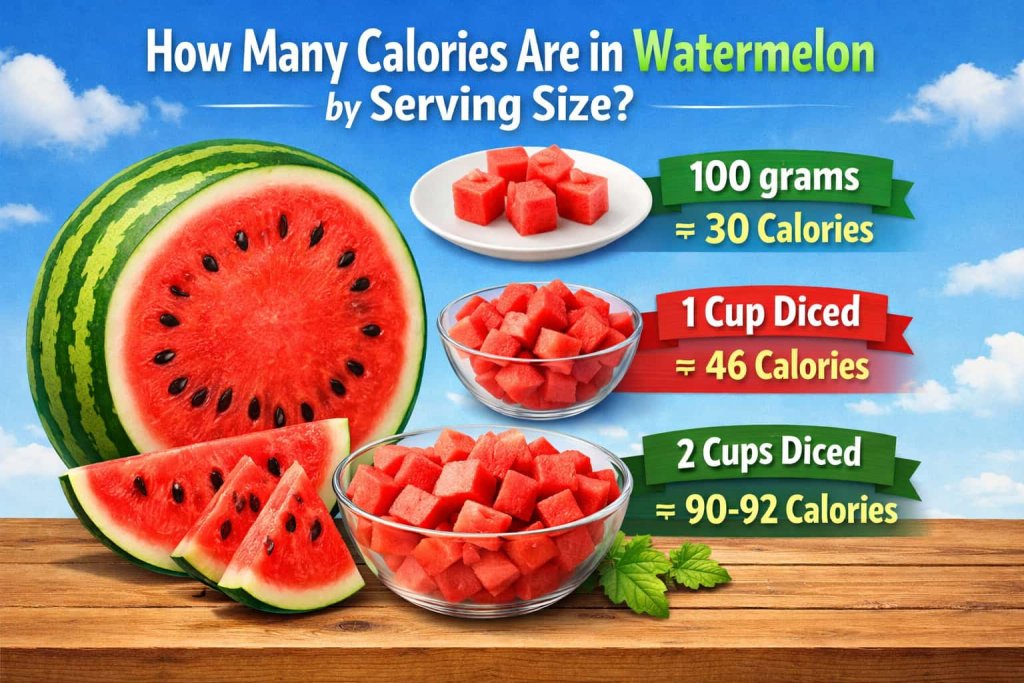
Here is a simple calorie breakdown for plain raw watermelon:
- 100 grams: about 30 calories
- 1 cup diced (152 g): about 46 calories
- 2 cups diced: roughly 90 to 92 calories, depending on the exact portion size used in the database
The biggest thing that changes the calorie count in watermelon is how much you eat. Watermelon itself is not a high-calorie fruit, but larger bowls and blended drinks can add up faster than many people expect.
Keep in mind that watermelon calorie counts can vary slightly depending on the variety, how much rind is trimmed away, and whether the serving is measured by weight or by loosely packed vs tightly packed diced pieces. That is why small differences between nutrition databases are normal.
Nutrition Profile of 1 Cup of Watermelon
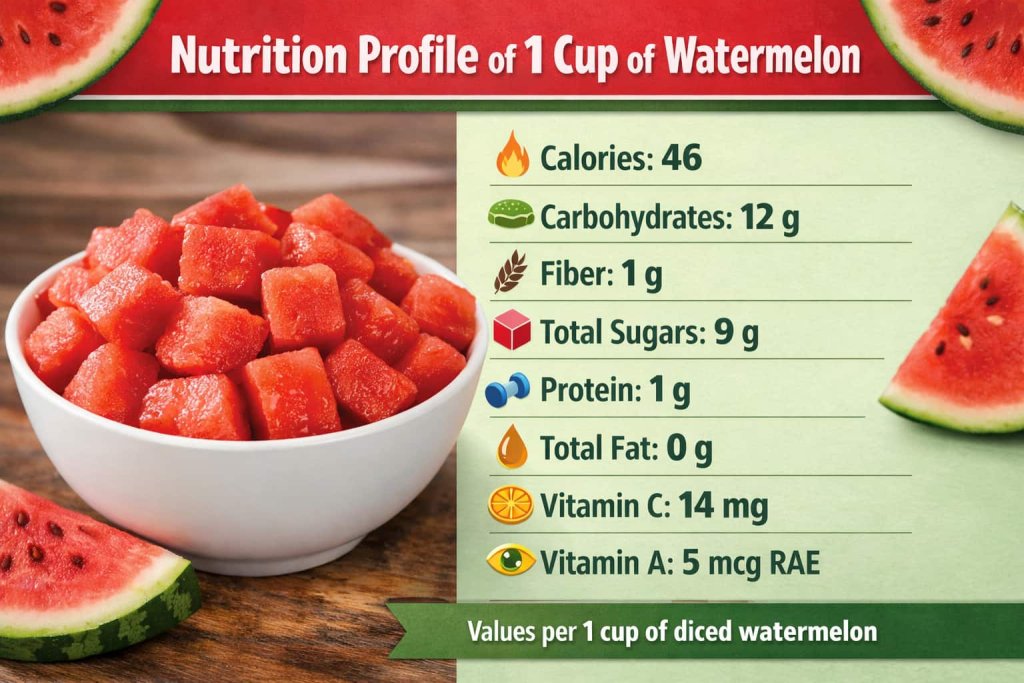
Here is a simple nutrition profile for 1 cup of diced raw watermelon:
| Nutrient | Amount |
|---|---|
| Calories | 46 |
| Carbohydrates | 12 g |
| Fiber | 1 g |
| Total sugars | 9 g |
| Protein | 1 g |
| Total fat | 0 g |
| Vitamin C | 14 mg |
| Vitamin A | 5 mcg RAE |
These numbers can vary slightly by variety and ripeness, but this is a solid everyday reference point for a plain serving of watermelon.
Why Watermelon Is Low in Calories
Watermelon is naturally low in calories because it has a high water content and a low fat content. A large portion of the fruit is water, which adds bulk without adding many calories. That is why watermelon often feels filling for its calorie level, especially compared with candy, pastries, or other sweet snacks.
It also has no added sugar when you eat it fresh and plain. That makes it a simple whole-fruit option when you want something sweet but lighter.
Is Watermelon Good for Weight Management?
Watermelon can be good for weight management when it fits into your overall eating pattern. It is low in calories for its volume, naturally sweet, and easy to use in place of more calorie-dense desserts or snacks. The CDC notes that fruits and vegetables can help with weight management, and it recommends choosing whole fruits over juices because whole fruit contains fiber that can help with fullness.
That said, watermelon is not a special fat-loss food. It works best as part of a realistic routine that includes balanced meals, enough protein, and attention to total calorie intake. In practical terms, watermelon may help with weight management when you use it as a fresh snack instead of sweets, a lighter dessert, part of a balanced breakfast or lunch, or a hydrating option during hot weather.
For many people, a practical portion is about 1 to 2 cups of diced watermelon at a time, depending on appetite, activity level, and the rest of the meal or snack. Pairing watermelon with a protein-rich food such as Greek yogurt, cottage cheese, or nuts can also make it more filling.
Key Nutrients in Watermelon
Watermelon is not just about low calories. It also provides a few useful nutrients.
Vitamin C
Watermelon provides vitamin C, which supports normal immune function and helps with collagen formation. A 1-cup serving provides about 14 mg.
Vitamin A Compounds
Watermelon contains vitamin A compounds, including carotenoids. The amount is not extremely high per cup, but it still contributes to overall fruit intake and nutrient variety.
Lycopene
Red watermelon contains lycopene, a carotenoid antioxidant also found in tomatoes. The USDA Agricultural Research Service has reported that watermelon can contain as much or more lycopene than raw tomatoes, although the exact amount varies by variety and growing conditions.
Water Content
Watermelon is well known for its high water content, which is one reason it feels refreshing and light. Foods with more water can make snacks and meals feel larger without raising calories as much.
Can Watermelon Fit Into a Healthy Diet?
Yes. Watermelon can fit easily into a healthy diet for most people. It counts toward fruit intake, it is naturally sweet, and it can help replace more heavily processed desserts and snacks. The CDC also notes that fresh, frozen, or canned fruit can all be good choices, as long as you watch for added sugars in packaged forms.
Simple ways to eat watermelon in a balanced way include:
- pairing it with Greek yogurt for a more filling snack
- serving it with cottage cheese or nuts
- adding it to a fruit bowl with berries
- using it as dessert after a meal instead of sugary treats
It is also worth checking the form you are buying. Plain fresh or frozen watermelon is the simplest option, but sweetened watermelon drinks, frozen bars, or fruit cups packed with syrup can have more added sugar and more calories than fresh watermelon alone.
Who Should Be a Little More Careful With Watermelon?
Watermelon is healthy for most people, but a few groups may need to pay more attention to portion size or symptoms.
People Counting Carbohydrates
If you have diabetes or closely track carbohydrate intake, portion size still matters. The American Diabetes Association notes that servings for most fresh berries and melons are about ¾ to 1 cup for roughly 15 grams of carbohydrate. Watermelon can still fit into a diabetes-friendly eating pattern, but it is smart to count the carbs in the portion you actually eat.
People With Kidney-Related Potassium Restrictions
Watermelon contains potassium, which is not a concern for most people but may matter for people who have been told to limit potassium because of kidney problems or certain medical conditions. If you follow a kidney diet, it is a good idea to ask your doctor or dietitian whether your portion of watermelon fits your plan.
People Choosing Juice Instead of Whole Fruit
Watermelon juice may be easier to drink quickly and in larger amounts than whole watermelon. The CDC recommends choosing whole fruit over juice because whole fruit retains fiber and is usually more filling.
People With Melon-Related Allergy Symptoms
Some people with pollen-related food reactions can notice itching or irritation in the mouth after eating melons. The AAAAI explains that people with certain pollen allergies may react to melons, including watermelon, as part of oral allergy syndrome.
Is Watermelon Better Than Other Sweet Snacks?
Watermelon is often a better everyday choice than candy, pastries, or sugary frozen desserts because it gives you sweetness with fewer calories and no added sugar when eaten fresh. It also adds water and some vitamins, which most dessert foods do not. That does not mean you have to avoid other treats completely, but watermelon is a smart option when you want something light and refreshing.
Easy Ways to Use Watermelon for Weight-Friendly Eating
Here are a few practical ideas:
- Keep cut watermelon in the fridge for a ready-made snack
- Use it as a dessert after dinner
- Pair it with protein for better staying power
- Add it to fruit salads instead of syrup-packed fruit cups
- Choose whole watermelon over watermelon juice more often
Whole watermelon is usually the better everyday choice than watermelon juice when fullness matters. A cup of cut watermelon gives you water, chewing volume, and a small amount of fiber, while juice is easier to drink quickly and can make it easier to consume more calories and carbohydrates without feeling as satisfied.
FAQ
How many calories are in 2 cups of watermelon?
Two cups of watermelon usually contain about 90 to 92 calories, depending on the exact serving weight used.
Is watermelon high in sugar?
Watermelon contains natural sugar, but a 1-cup serving has only about 9 grams of total sugar. That is one reason it can still fit into a balanced diet for many people.
Is watermelon fattening?
No single food is automatically fattening. Watermelon is relatively low in calories, so it can fit well into a weight-management plan when portions and overall eating habits make sense.
Is watermelon a good late-night snack?
It can be. Watermelon is light, hydrating, and lower in calories than many packaged snacks or desserts. Some people may still prefer a smaller portion late at night, especially if they do not want a very high-volume snack before bed.
The Bottom Line
Watermelon is a low-calorie fruit with about 46 calories per cup, plus water, vitamin C, and naturally sweet flavor. It can be a smart choice for weight management when you enjoy it in realistic portions and use it in place of more calorie-dense snacks or desserts. For most people, it is an easy fruit to include in a balanced diet.
Sources and References
- USDA — Watermelon
- CDC — Healthy Habits: Fruits and Vegetables to Manage Weight
- American Diabetes Association — Best Fruit Choices for Diabetes
- AAAAI — Oral Allergy Syndrome (OAS)
- USDA Agricultural Research Service — Watermelon Packs a Powerful Lycopene Punch