
Monk fruit sweetener warnings are mostly about what is in the product, how much you use, and how your body responds—not a broad claim that pure monk fruit extract is unsafe.
In the U.S., the FDA says it has not questioned GRAS conclusions for certain monk fruit extracts under their intended conditions of use.
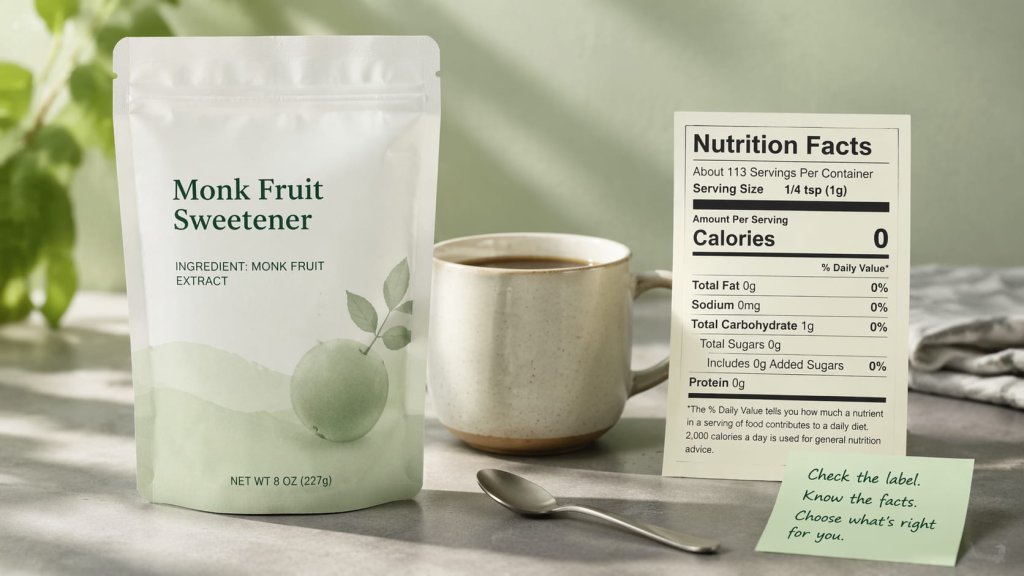
But not every product sold as “monk fruit sweetener” is the same.
The biggest real-world warnings involve:
- blends with sugar alcohols
- digestive side effects
- blood sugar assumptions
- overly strong weight-loss claims
Package wording can sound simpler than the ingredient list really is.
A product may contain monk fruit extract, but it may also include erythritol or other ingredients that change:
- taste
- recipe use
- tolerance
Cleveland Clinic notes that many products combine other sweeteners with monk fruit extract, even when the label sounds very clean.
What the Main Monk Fruit Sweetener Warnings Actually Are
The main warnings come down to three things: expectations, blends, and digestion.
The core concerns are:
- expectations may not match the finished product
- many products are blends, not pure extract
- some products can cause digestive side effects
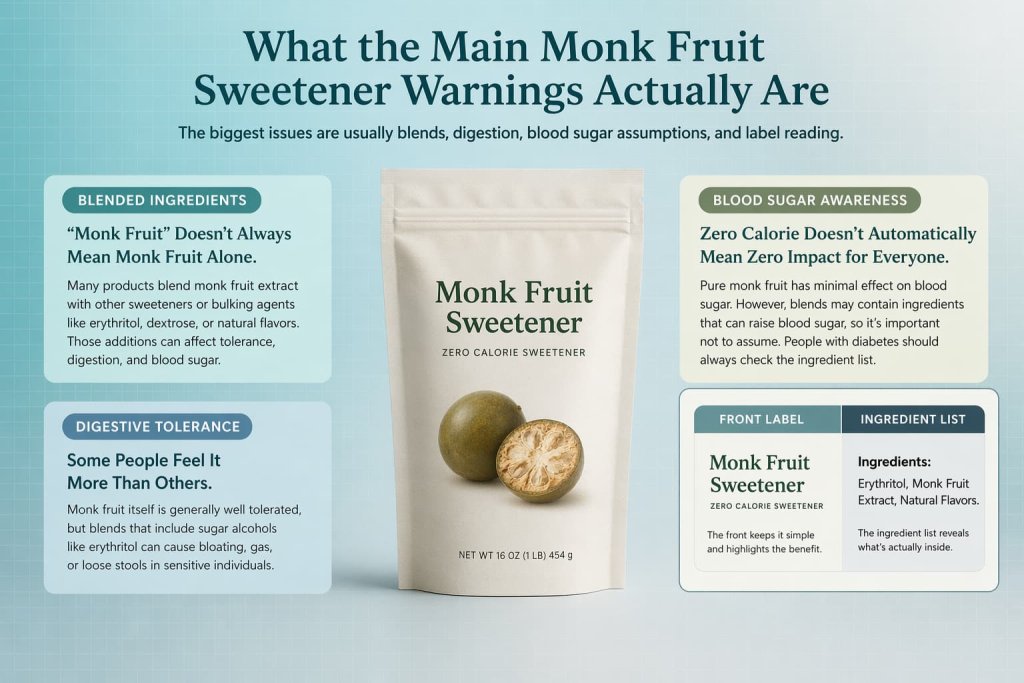
Here is what those warnings mean in practice:
- The FDA says monk fruit extract is a high-intensity sweetener.
- It generally contributes few or no calories.
- It generally does not raise blood sugar the way regular sugar does.
- That does not automatically describe every finished product made with monk fruit.
- Other ingredients in the same product can change the nutrition profile.
- Other ingredients can also change how your body responds.
- Many shoppers think “monk fruit sweetener” means pure monk fruit extract.
- That is often not the case.
- Retail products are commonly blended so they can measure, pour, and taste more like sugar.
- Mayo Clinic says sugar alcohols, stevia, and luo han guo can cause bloating, gas, and diarrhea in some people.
The key warning: the ingredient list matters more than the front label.
Pure Monk Fruit Extract vs. Monk Fruit Blends
The most important distinction in this topic is the difference between pure extract and blended products.
The FDA says monk fruit extract, also listed as Siraitia grosvenorii Swingle fruit extract, contains mogrosides that are responsible for its sweetness.
It is reported to be about 100 to 250 times sweeter than sugar and is intended for use as a general-purpose sweetener and as a tabletop sweetener.
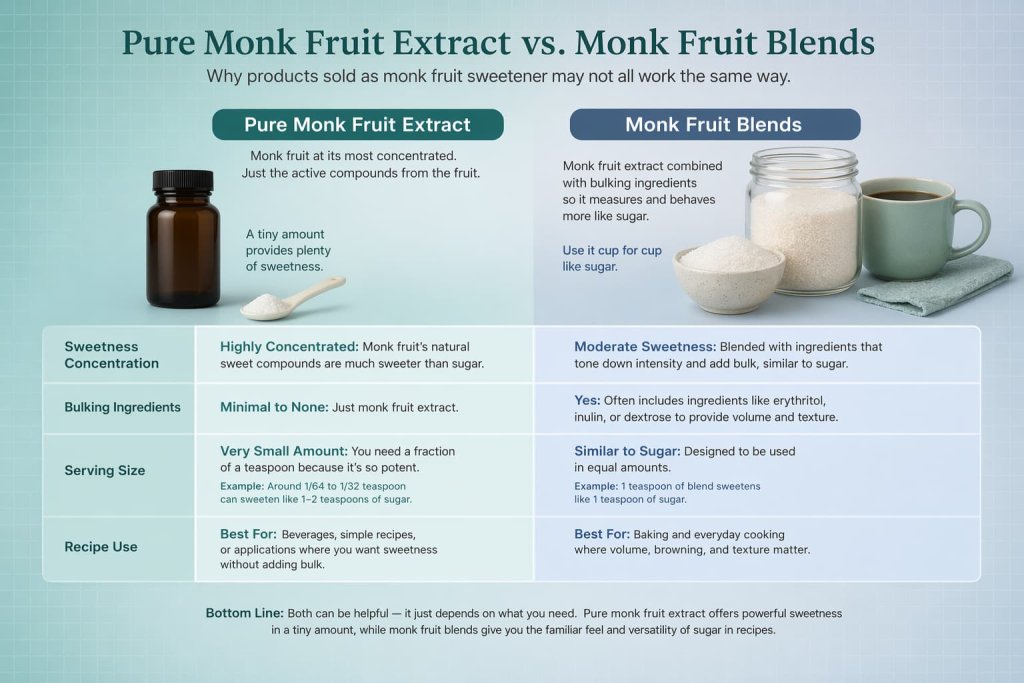
The main comparison looks like this:
- Pure monk fruit extract
- high-intensity sweetener
- Many store-bought monk fruit sweeteners
- blended products
- often include ingredients such as erythritol
- made to behave more like sugar in coffee, baking, and recipes
That does not make blended products unsafe by default.
But it does change the warning picture because these details may be different from pure monk fruit extract alone:
- side effects
- carb count
- serving size
Product format can change the experience too.
Here is the practical difference:
- Granulated or cup-for-cup monk fruit sweeteners
- usually need bulking ingredients
- made to measure more like sugar
- Liquid drops
- may be closer to concentrated sweetener
- usually have a much smaller serving size
Those differences can affect:
- baking performance
- carbohydrate intake
- digestive tolerance
Label reading is the fastest way to spot those differences.
The FDA says consumers can identify sweeteners by name in the ingredient list. That means the ingredient list should come first, followed by the Nutrition Facts panel.
If the product contains any of the following, the side effects and blood sugar effect may be different from what you expect from monk fruit alone:
- erythritol
- sorbitol
- mannitol
- xylitol
- maltitol
- other sugar alcohols
Digestive Side Effects Are One of the Clearest Monk Fruit Sweetener Warnings
The clearest day-to-day warning is that the blend, not always the monk fruit itself, may be what bothers your stomach.
Mayo Clinic says sugar alcohols, stevia, and luo han guo can cause bloating, gas, and diarrhea, and the amount that causes symptoms varies from person to person.

Digestive issues are more likely in these situations:
- suddenly adding several sugar-free drinks, snacks, desserts, or protein products in the same day
- already having a sensitive stomach
- reacting poorly to sugar alcohols
A simple way to test tolerance is to keep changes small.
A practical starting approach is:
- start with one small serving
- use it in one food or drink
- avoid changing several products at once
That makes it easier to tell whether symptoms are linked to the sweetener blend.
The FDA’s Interactive Nutrition Facts Label guide for sugar alcohols adds another practical warning.
It says sugar alcohols are:
- slowly and incompletely absorbed
- able to produce abdominal gas, bloating, and diarrhea
It also says foods containing sorbitol or mannitol must carry a label warning that excess consumption may have a laxative effect.
The digestive warning signs to watch for are:
- bloating
- gas
- diarrhea
- loose stools
- symptoms that get worse when you use several sweetened products in one day
Important takeaway: moderation still matters.
Mayo Clinic says it is safest to take in small amounts of sugar substitutes and to cut back if you use them several times a day.
Blood Sugar Warning: The Sweetener and the Product Are Not Always the Same Thing
The biggest blood sugar mistake is assuming every monk fruit product works like pure monk fruit extract.
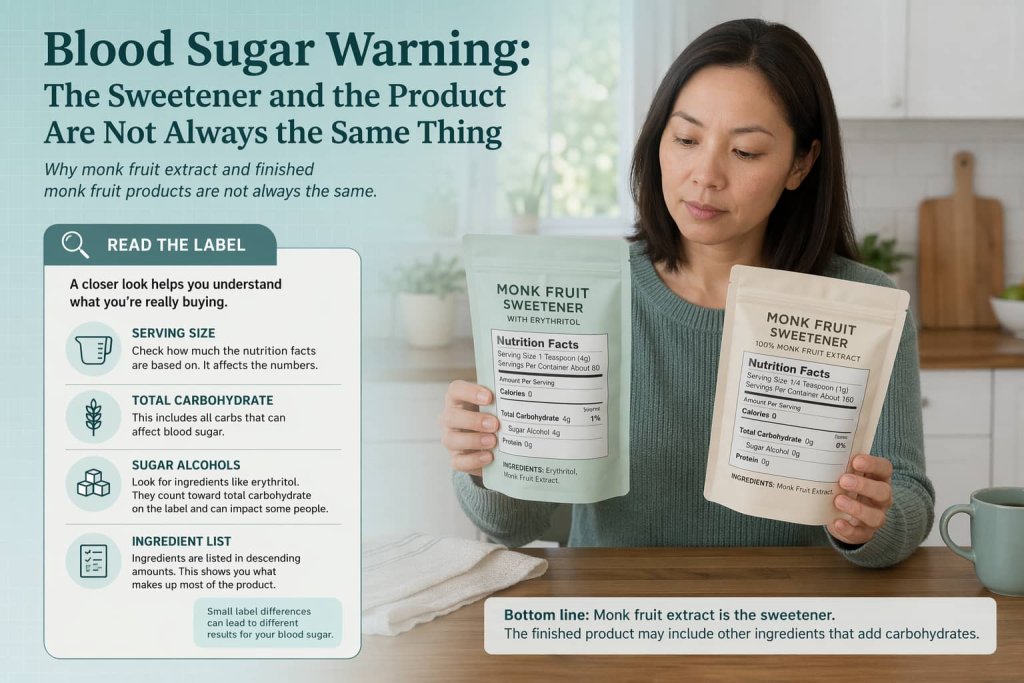
The more accurate version is:
- monk fruit extract itself generally does not raise blood sugar the way sugar does
- the full product still matters
- foods and drinks containing sweeteners may include other ingredients that affect blood sugar
On its diabetes FAQ page, Mayo Clinic’s guidance on artificial sweeteners and blood sugar explains that sweeteners themselves may not affect blood sugar, but foods and drinks containing them may include other ingredients that do.
It also notes that sugar alcohols are different because they can raise blood sugar for some people.
That is why people with diabetes or anyone closely tracking glucose should not rely on the product name alone.
A monk fruit packet for coffee can be very different from a monk fruit baking blend or a sweetened dessert topping.
The details that matter most are:
- total carbohydrate
- serving size
- the full ingredient list
Serving size can change the picture quickly.
A label may look very low in carbohydrates per tiny packet or teaspoon, but the numbers can add up if you use several servings across the day or use a cup-for-cup baking blend in larger amounts.
When checking a product for blood sugar reasons, focus on:
- the full ingredient list
- total carbohydrate
- serving size
- whether the product uses sugar alcohols
- how much you actually use in real life
The decision-making line: do not just ask, “Does this contain monk fruit?” Ask, “What am I actually consuming in the portion I use?”
Monk Fruit Sweetener Warnings for Weight Loss Claims
The main warning here is that monk fruit should not be framed as a direct fat-loss ingredient.
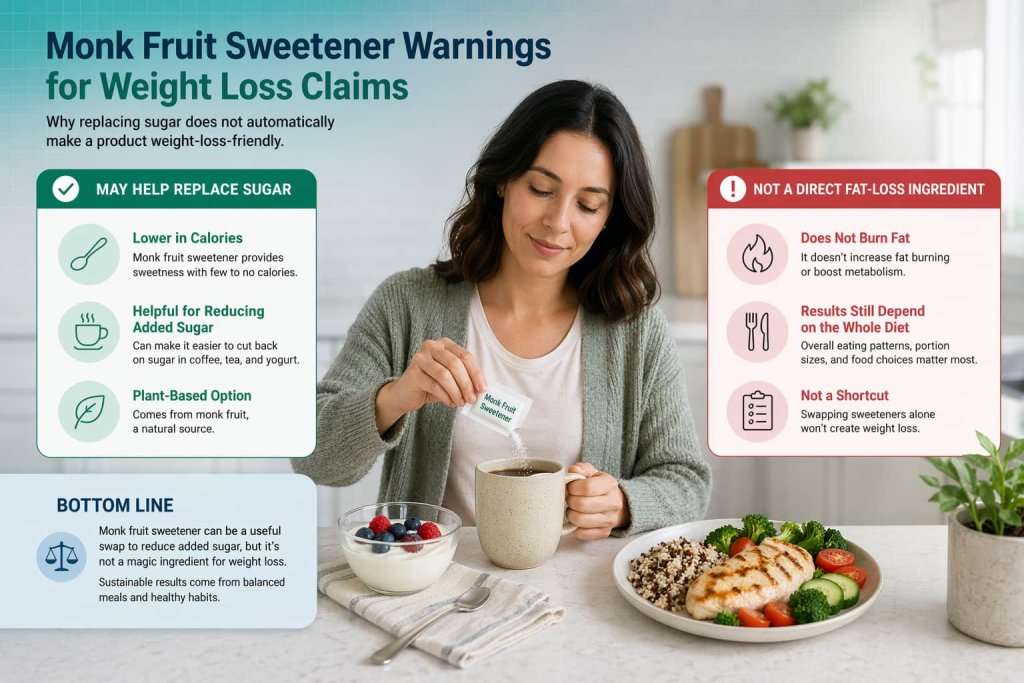
Monk fruit sweetener is sometimes marketed in a way that sounds like a weight-loss shortcut. That goes too far.
The World Health Organization recommends against using non-sugar sweeteners to control body weight or reduce the risk of noncommunicable diseases, based on evidence showing no clear long-term benefit for reducing body fat.
That does not mean monk fruit has no use in a lower-sugar eating pattern.
It may help some people replace sugar in:
- coffee
- tea
- yogurt
- recipes
The warning point is straightforward:
- replacing sugar with monk fruit does not automatically make a food weight-loss-friendly
- monk fruit should not be described as a direct fat-loss ingredient
Who Should Be Careful With Monk Fruit Sweetener?
The people who may need extra caution are mostly those with digestive sensitivity, very young children, or those who want to avoid erythritol.
The groups that may want to pay closer attention include:
- people with sensitive digestion
- people with bowel disease
- children under age 2
- people who prefer to avoid erythritol
Here is why those groups matter:
- Mayo Clinic says people with bowel disease may find that sugar substitutes make symptoms flare.
- Mayo Clinic also notes that digestive side effects vary from person to person.
- Mayo Clinic says the Dietary Guidelines for Americans advise adults not to give sugar substitutes to children under 2 years old.
- The FDA says it reviewed a 2023 paper about possible cardiovascular effects related to erythritol and concluded the observational studies cited did not establish a causal link.
- The FDA also says it will continue to monitor new information.
That does not settle the issue for every shopper, but it does mean ingredient transparency still matters.
How to Choose a Monk Fruit Sweetener With Fewer Warning Signs
The best starting point is simple: check the label before the marketing claims.
The FDA says consumers can identify sweeteners by name in the ingredient list, and that is usually the fastest way to tell whether the product is pure monk fruit extract or a blend with bulking sweeteners.
Front-of-pack wording can be misleading.
Terms worth being skeptical of include:
- “natural”
- “zero sugar”
- “keto-friendly”
Those claims do not tell you:
- whether the product contains sugar alcohols
- how it is sweetened overall
- whether the serving size matches how you actually use it
The ingredient list and Nutrition Facts panel are still the most useful parts of the package.
Before buying, check these points:
- whether the product is pure monk fruit extract or a blend with erythritol or other sugar alcohols
- the serving size and how that compares with the amount you actually use
- total carbohydrate and added sugars if you are using it for blood sugar management
- whether the product has caused bloating, gas, or diarrhea for you before
- whether the package includes a laxative-effect warning related to sugar alcohols such as sorbitol or mannitol
Frequently Asked Questions About Monk Fruit Sweetener Warnings
These are the quick questions readers usually have most often.
Is monk fruit sweetener safe every day?
For healthy adults, monk fruit extract used as intended appears broadly acceptable.
The FDA says it has not questioned GRAS conclusions for monk fruit extract under the intended conditions described in GRAS notices.
Mayo Clinic still advises moderation.
Its guidance is:
- use sugar substitutes in small amounts
- do not assume unlimited daily use is a good idea
Can monk fruit sweetener cause diarrhea?
Yes, it can—especially when the product contains sugar alcohols or when you consume large amounts.
Mayo Clinic says luo han guo and sugar alcohols can cause bloating, gas, and diarrhea, and the FDA says some sugar alcohols can require a laxative-effect warning on the label.
The main reasons this can happen are:
- the product contains sugar alcohols
- the amount consumed is large
- multiple sweetened products are used in the same day
Does monk fruit sweetener raise blood sugar?
Monk fruit extract itself generally does not raise blood sugar the way sugar does, but a finished product can still affect blood sugar depending on what else is in it.
Mayo Clinic says sugar alcohols can raise blood sugar, and foods made with sweeteners may include other ingredients that matter too.
The point to remember is:
- monk fruit extract and finished monk fruit products are not always the same thing
What is the biggest warning on monk fruit sweetener labels?
The biggest warning is that the product may not be pure monk fruit.
Many retail products are blends, so the most useful information is usually in the ingredient list and Nutrition Facts panel, not the front label.
The quickest label-check order is:
- ingredient list first
- Nutrition Facts panel second
- front-of-pack wording last
The bottom line is that monk fruit sweetener warnings are more about smart product choice and smart use than a major safety alarm on pure monk fruit extract.
The basics to remember are:
- read the label
- watch for sugar alcohol blends
- use modest amounts
- do not assume every monk fruit product works the same way
That one habit makes monk fruit much easier to use safely and realistically.
If you are comparing products, trust the ingredient list first and the marketing claims second. That simple step usually tells you far more than the front of the package.
This content is for informational purposes only and not medical advice.
References
- U.S. Food and Drug Administration — High-Intensity Sweeteners
- U.S. Food and Drug Administration — Interactive Nutrition Facts Label: Sugar Alcohols
- World Health Organization — WHO advises not to use non-sugar sweeteners for weight control in newly released guideline