
Mullein leaf extract for lungs is not a proven treatment for lung disease. The strongest official evidence supports mullein mainly as a traditional herbal product for sore throat linked with dry cough and cold, and the formal European monograph is for mullein flower rather than mullein leaf extract.
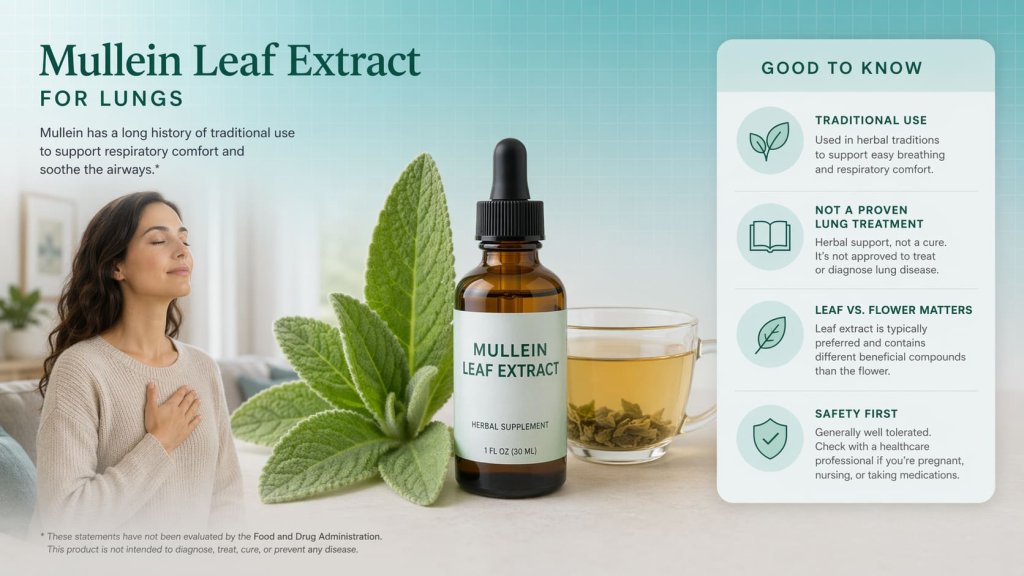
That distinction matters because many supplements and online claims treat “mullein” as if every plant part has the same evidence behind it. According to the European Medicines Agency, mullein flower is recognized only for traditional use, not as a clinically proven lung treatment.
If you are looking at mullein leaf extract for lungs, the most useful questions are simple: what it actually is, what official sources say it may help with, where the evidence stops, and when breathing symptoms need real medical care instead of supplement trial and error.
What Is Mullein Leaf Extract?
Mullein usually refers to Verbascum thapsus or related Verbascum species. Herbal products may be sold as tea, powder, capsules, tinctures, or liquid extract. In the United States, herbal products are generally sold as dietary supplements, not as FDA-approved drugs.
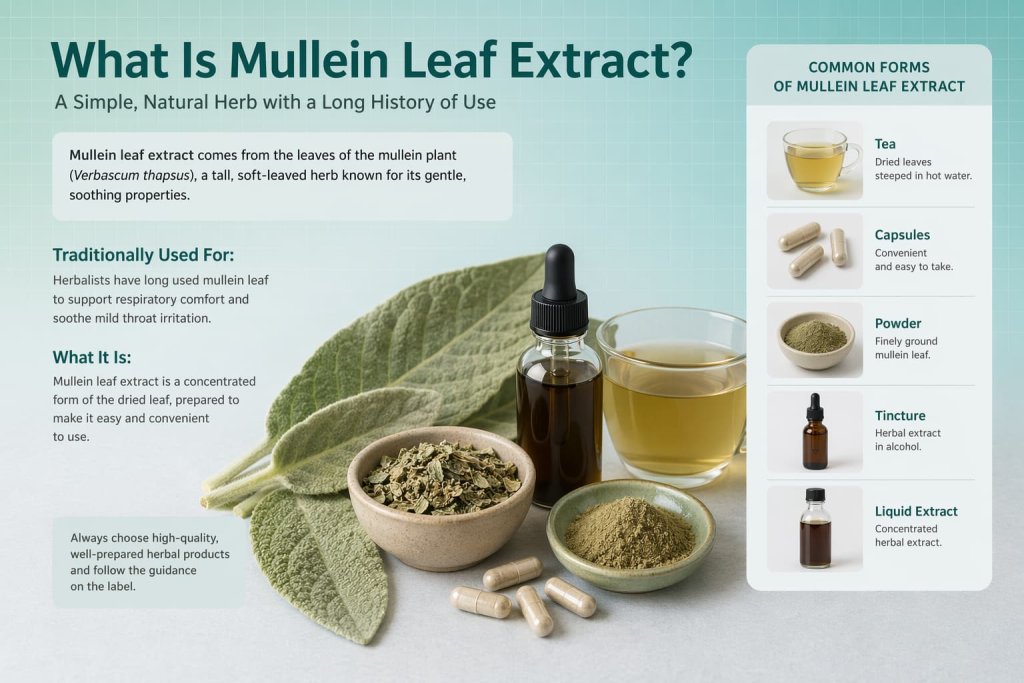
MedlinePlus explains that herbal medicines are a type of dietary supplement and may come as extracts, teas, powders, and dried plants.
One of the biggest problems with mullein products is plant-part confusion. The official European Medicines Agency herbal monograph is for mullein flower, while the related assessment report notes that both leaves and flowers have been used in folk medicine and that older British herbal monographs discussed mullein leaf. That means you should not automatically assume a leaf extract has the same level of support as a flower preparation.
Does Mullein Leaf Extract Help Lungs?
The careful answer is no, not in the way many marketing claims suggest. The European Medicines Agency monograph recognizes mullein flower as a traditional herbal medicinal product used to relieve symptoms of sore throat associated with dry cough and cold.
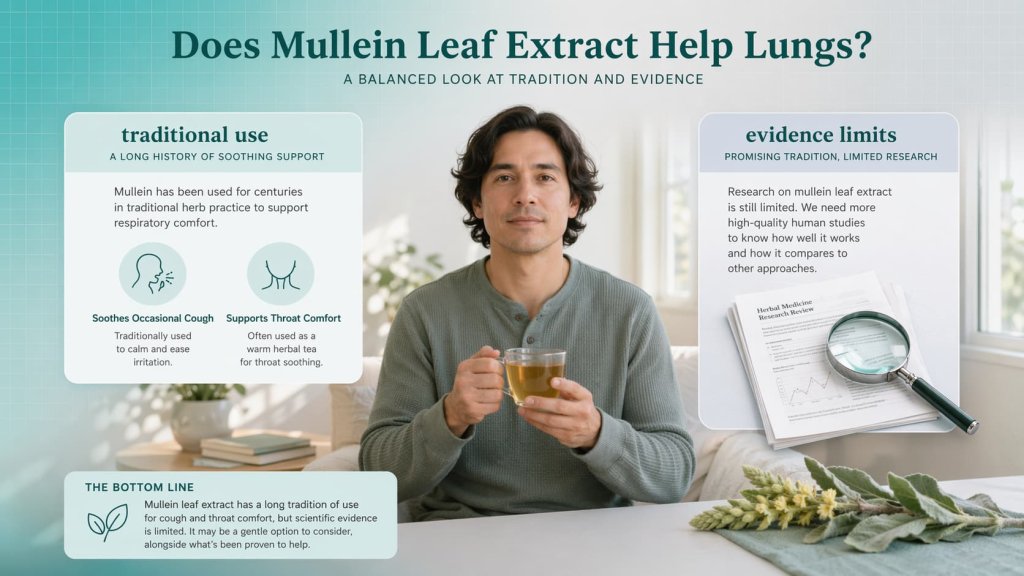
The related assessment report also states that there are no clinical data on efficacy, no clinical studies, and no basis for “well-established medicinal use.” In plain terms, official support is based on long-standing traditional use, not strong human trials showing that mullein improves lung function or treats lung disease.
That is why claims that mullein leaf extract “cleans the lungs,” “repairs the lungs,” or works as a proven remedy for chronic respiratory disease go beyond the evidence. A soothing herb for cough comfort is not the same thing as a treatment for asthma, pneumonia, COPD, or another condition that affects breathing and may need prompt medical care.
Why People Still Use Mullein for Respiratory Support
There is a reason mullein keeps showing up in cough and “lung support” products. Traditional herbal use has long associated it with dry cough, throat irritation, and mucus-related complaints, and the European Medicines Agency assessment report describes limited preclinical work on some mullein constituents.
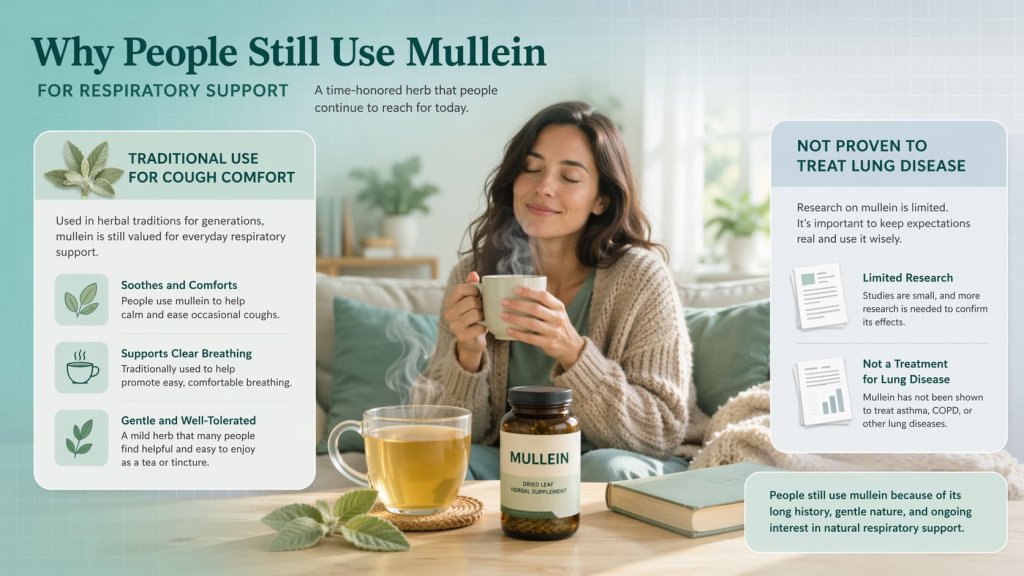
But the same report says the experimental support is limited and that there are no human efficacy data showing that mullein changes the course of respiratory disease.
A realistic way to think about mullein leaf extract is this: it may be used by some people as a traditional herbal option for cough or throat comfort, but it should not be presented as a proven lung therapy. That is the most accurate, evidence-based position.
Mullein Leaf vs. Mullein Flower: Why This Matters
This is where many articles get sloppy. The official European Medicines Agency monograph is specifically about mullein flower.
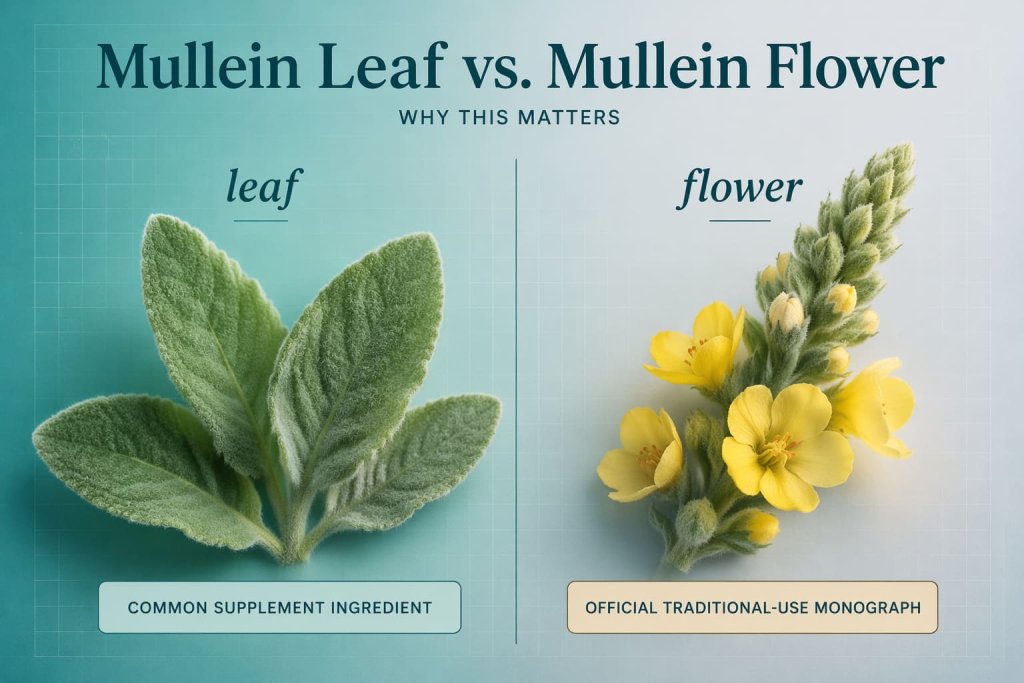
The assessment report says both leaves and flowers have appeared in folk medicine, and older references included mullein leaf, but the current official European herbal monograph does not establish clinical efficacy for mullein leaf extract for lungs.
So when a supplement label says only “mullein,” you should check whether it clearly says leaf, flower, or a blend. That detail changes how closely the product matches the official traditional-use documents.
Safety Box: When to Be Careful With Mullein Leaf Extract
Mullein is often marketed as gentle because it is plant-based, but “natural” does not always mean low-risk. NCCIH notes that many supplements are not reviewed by FDA for safety and effectiveness before they reach the market, and that natural products can still cause harm or interact with medical care.
Use extra caution in these situations:
- Shortness of breath, fever, or purulent sputum: the European Medicines Agency says these symptoms should be checked by a doctor or qualified healthcare professional.
- Symptoms that last more than 1 week: the European Medicines Agency monograph says persistent symptoms during use should prompt medical advice.
- Pregnancy or breastfeeding: official European Medicines Agency material says safety has not been established and use is not recommended.
- Children under 12: the European Medicines Agency says use is not recommended because adequate data are lacking.
- Allergy or hypersensitivity: the European Medicines Agency lists hypersensitivity to the active substance as a contraindication.
- Any supplement side effect: NCCIH advises stopping the supplement and contacting a healthcare professional if side effects occur.
How to Read a Mullein Supplement Label More Carefully
This is one of the most useful parts of the topic, because product labels often tell you more than the front-of-package claims.
Check these points first:
- Plant part: look for leaf, flower, or blend.
- Serving size: the U.S. Food and Drug Administration says serving size for supplements is not FDA-approved in advance and is set by the manufacturer.
- Supplement Facts: check the amount per serving instead of relying on the front label alone.
- Other ingredients: FDA says ingredients outside the Supplement Facts panel must appear in the “Other Ingredients” list.
- Disease-style promises: if a label sounds like it treats or prevents disease, treat that as a red flag. FDA explains that structure/function claims must carry the familiar disclaimer that the product is not intended to diagnose, treat, cure, or prevent disease.
- Manufacturer contact details: FDA recommends contacting the manufacturer directly if you need more information than the label provides.
Look for quality testing, not just marketing
Quality matters because supplements do not go through the same premarket approval process as drugs. The FDA requires dietary supplement manufacturers to follow current good manufacturing practice, but that does not mean every product on the market has been independently verified for identity or purity.
MedlinePlus guidance on herbal remedies suggests looking for third-party quality language such as USP Verified or ConsumerLab Approved Quality when available. That does not prove the product works for lungs, but it can help you avoid putting too much trust in a label that makes big claims with little transparency.
Can Mullein Leaf Extract Replace Inhalers or Other Lung Medicines?
No. That is one of the clearest takeaways. Supplements are not reviewed like prescription drugs before marketing, and official mullein documents do not show clinical efficacy for lung disease. If you have asthma or another breathing condition, do not use mullein leaf extract as a substitute for prescribed treatment.
This matters even more during worsening breathing symptoms. The National Heart, Lung, and Blood Institute says you should go to the emergency room if symptoms do not go away soon after at-home medicines or if you have a serious asthma attack. Delaying evidence-based care because a supplement is marketed as “lung support” is a bad trade.
Know the red flags that need urgent care
Do not rely on mullein leaf extract or any supplement if you have signs of a serious breathing problem.
Get urgent medical help for red flags such as:
- severe shortness of breath
- trouble speaking because you cannot catch your breath
- blue lips or fingertips
- confusion
- symptoms that do not improve quickly with prescribed rescue treatment
If breathing feels dangerous or rapidly worsens, treat that as a medical issue, not a supplement issue.
Who May Want Extra Caution Before Trying It
Mullein leaf extract deserves more caution if you:
- have asthma or another chronic lung condition
- are pregnant or breastfeeding
- are considering it for a child
- have known plant allergies
- take prescription medicines
- want to use it for ongoing or worsening respiratory symptoms rather than short-term self-care
The reason is not that mullein is proven dangerous. The issue is that leaf-extract evidence is limited, supplement regulation is lighter than drug regulation, and breathing symptoms can become serious quickly.
Is There a Standard Dose for Mullein Leaf Extract for Lungs?
There is no well-established, clinically proven standard dose of mullein leaf extract for lung health. Products vary widely by plant part, extract strength, serving size, and added ingredients, and the overall evidence base for mullein leaf extract in lung-related use is limited.
That means you should not assume that a higher dose is better or that different products are equivalent just because they all say “mullein” on the label. If you are considering regular use, especially alongside medicines, it is safer to review the product with a clinician or pharmacist first.
FAQs About Mullein Leaf Extract for Lungs
Does mullein leaf extract clear mucus from the lungs?
It has a traditional reputation as an expectorant-type herb, but there is not good human clinical evidence showing that mullein leaf extract clears the lungs or improves lung disease outcomes.
Is mullein leaf extract safe to take every day?
There is not a strong evidence base for long-term daily use of mullein leaf extract for lung health. Official safety material is limited, and ongoing respiratory symptoms should not be self-managed indefinitely with supplements.
Is mullein tea better than mullein extract for lungs?
Current evidence does not show that either form is a proven treatment for lung disease. The formal traditional-use monograph is for mullein flower tea-style use for sore throat linked with dry cough and cold, not for proving that leaf extract is superior.
Can you take mullein leaf extract with asthma medicine?
Specific mullein interaction data are limited, but that does not mean interactions are impossible. It is smarter to ask a clinician or pharmacist before combining supplements with asthma medicines, and you should never replace prescribed asthma treatment with mullein.
Conclusion
Mullein leaf extract for lungs sits in a common gray area: strong tradition, weak clinical proof, and lots of marketing. The best current evidence supports mullein more as a traditional herb used for cough or throat comfort than as a proven lung treatment. If you still want to try a mullein product, read the label carefully, check whether it is leaf or flower, and do not let supplement claims delay proper care for breathing symptoms.
This content is for informational purposes only and not medical advice.