
The best lat exercises at home are band pulldown and row variations that let you pull your elbows down and back, because that’s how the lats create back width. If you want a wider-looking back without a pull-up bar, you just need the right pulling angles, steady form, and simple progression (more tension, more control, or more sets).
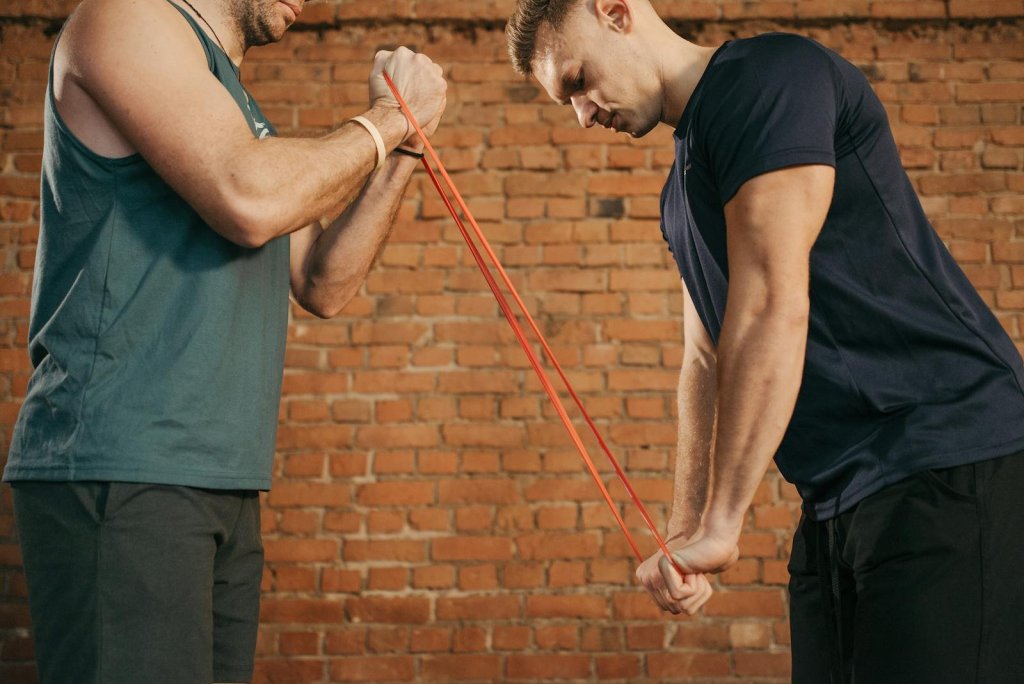
Your lats help move the upper arm into extension and adduction (think “elbows down toward your back pockets”), which is why pulldown- and row-style movements are the most reliable choices for width-focused training at home. If you want a quick anatomy refresher, Kenhub explains the lat’s main actions clearly.
What you need for lat exercises at home
You can do these with minimal gear:
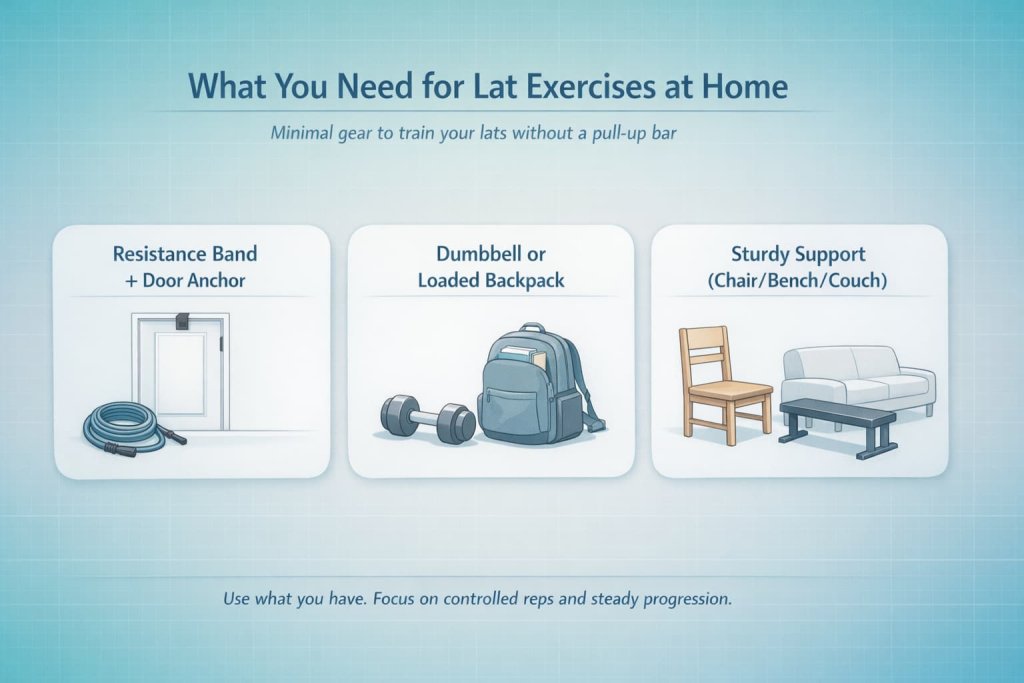
- A resistance band (ideally with a door anchor)
- Or a dumbbell (or backpack loaded with books)
- A sturdy chair/bench/couch for support
How to feel your lats during at-home lat exercises
Use these simple cues on every rep:
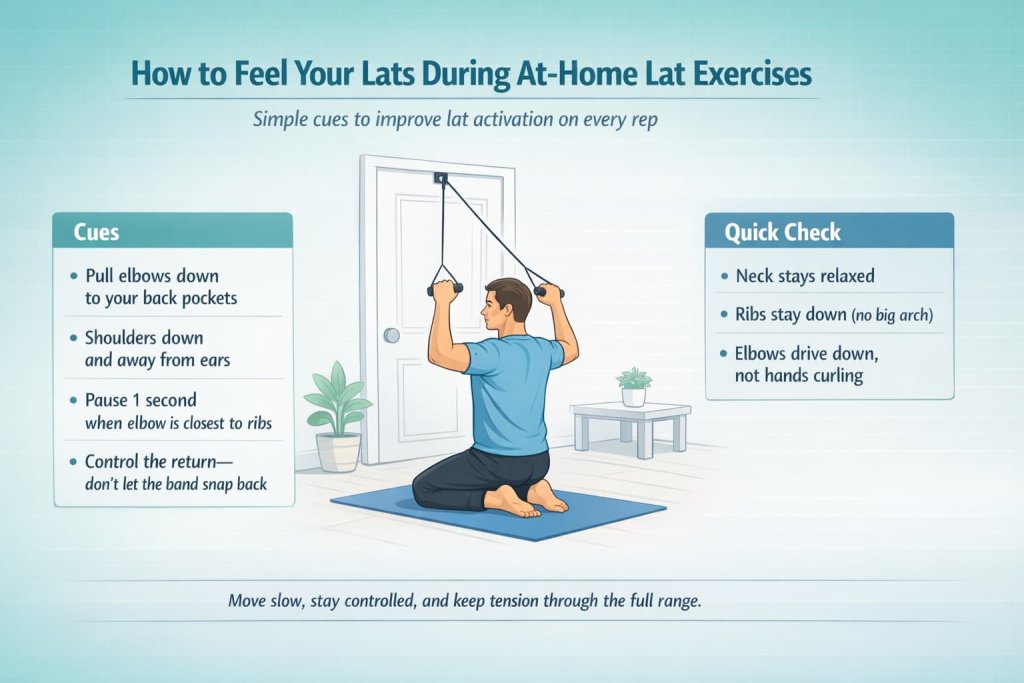
- “Pull elbows down to your back pockets.”
- “Shoulders down and away from ears.”
- “Pause for 1 second when your elbow is closest to your ribs.”
- “Control the return—don’t let the band snap you back.”
8 best lat exercises at home
Build back width at home with these 8 lat exercises using bands, dumbbells, or a backpack—no pull-up bar needed. Follow the weekly plan and progress gradually for stronger, wider lats.
1) Kneeling resistance band lat pulldown (door anchor)
How to do it:
- Anchor the band overhead in a closed door.
- Kneel facing the door, hold the band with both hands.
- Start with arms up, ribs down, core braced.
- Pull elbows down toward your sides until hands reach upper chest.
- Pause briefly, then return slowly.
Why it works:
It mimics the classic pulldown pattern without a machine, training the lats through shoulder extension and adduction.
Muscles worked:
Lats, mid-back, biceps, rear delts, core (for bracing).
Trainer Tip:
If you feel mostly arms, lighten tension and focus on driving elbows down first, not curling the hands.
2) Straight-arm band pulldown (lat “prayer” pulldown)
How to do it:
- Anchor band overhead.
- Stand tall, arms straight (soft elbows), hands shoulder-width.
- Pull the band down in an arc to your thighs.
- Pause at the bottom, then return slowly.
Why it works:
Keeping arms straighter reduces biceps help and makes the lats do more work.
Muscles worked:
Lats (primary), teres major, long head triceps (assist), core.
Trainer Tip:
Think “armpits to hips.” If shoulders shrug, step closer and reduce tension.
3) Banded lat pulldown with single-arm focus (alternating)
How to do it:
- Anchor band overhead.
- Grab with one hand, other hand can hold the anchor strap or band for control.
- Pull elbow down toward your ribs.
- Pause, then return with control.
- Do all reps one side, then switch (or alternate).
Why it works:
Single-arm work helps fix side-to-side strength and control differences and often improves lat “feel.”
Muscles worked:
Lats, mid-back stabilizers, biceps, core (anti-rotation).
Trainer Tip:
Keep hips square. If you twist, widen your stance and brace your abs harder.
4) One-arm dumbbell row (chair-supported)
How to do it:
- Place one hand and one knee on a chair/couch for support.
- Hold a dumbbell (or backpack) in the free hand.
- Row by pulling elbow toward your hip, not toward your shoulder.
- Pause near the top, then lower slowly.
Why it works:
The elbow-to-hip path lines up well with lat fiber direction for width emphasis.
Muscles worked:
Lats, rhomboids, mid/lower traps, biceps, rear delts.
Trainer Tip:
Don’t yank. A slow 2–3 second lower builds control and makes lighter weights effective.
5) Dumbbell pullover (floor version)
How to do it:
- Lie on the floor with knees bent.
- Hold one dumbbell with both hands above your chest.
- Lower the weight back slowly until upper arms are near the floor (comfortable range).
- Pull it back over your chest using lats, keeping ribs down.
Why it works:
It trains shoulder extension with a long range, a key motion the lats contribute to.
Muscles worked:
Lats, chest (assist), serratus anterior (assist), core.
Trainer Tip:
If your low back arches, shorten range and exhale as you bring the weight back up.
6) Backpack row (no dumbbells needed)
How to do it:
- Load a backpack with books (even weight).
- Hinge at hips, back flat, neck neutral.
- Row the backpack handles toward your lower ribs.
- Pause, then lower slowly.
Why it works:
It’s a scalable home row when you don’t have weights, and load can increase over time.
Muscles worked:
Lats, mid-back, biceps, hamstrings/glutes (isometric hinge).
Trainer Tip:
Keep your torso angle steady. If you stand up during the pull, the set turns into a body swing.
7) Band row to hip (lat-biased row)
How to do it:
- Anchor band at about chest height.
- Step back to create tension.
- Row with elbows tight and drive hands toward your belt line/hip area.
- Pause, then return slowly.
Why it works:
A lower rowing target often shifts more work toward the lats versus upper traps.
Muscles worked:
Lats, mid-back, biceps, rear delts.
Trainer Tip:
Avoid shrugging at the finish. Think “shoulder blades down, elbows back.”
8) Isometric lat pulldown hold (towel + band optional)
How to do it:
- If you have a band: anchor overhead and pull down to a mid position.
- Hold that position for 15–30 seconds with ribs down.
- If no band: pull down hard on a towel looped over a sturdy door (gentle, controlled effort).
- Rest and repeat.
Why it works:
Isometrics help you learn tension and positioning, which can improve control for your rows and pulldowns.
Muscles worked:
Lats, mid-back stabilizers, core.
Trainer Tip:
Aim for “strong and steady,” not maximal straining. Your neck should stay relaxed.
Quick safety checklist before you start
- Anchor bands to something stable (a door anchor on the hinge side is usually safest).
- Keep your ribs “stacked” (don’t flare your ribs to fake range of motion).
- Stop if you feel sharp pain, numbness, or tingling.
- If you have a current shoulder or back issue, consider getting form guidance from a qualified professional.
Best sets and reps for a wider back at home
A practical hypertrophy-friendly approach is:
- 3–4 exercises per session
- 2–4 sets each
- 8–15 reps (or 15–30 for band/isometrics)
- Finish most sets with about 1–3 reps left in the tank
If you want a research-based explanation of why different rep ranges can still build muscle (when effort is high and progression is consistent), this overview on PubMed Central is a solid reference.
Simple weekly plan (no pull-up bar)
Do this 2–3 days per week with at least one day between sessions.
A widely used baseline for overall fitness includes muscle-strengthening activities on 2 or more days per week, as outlined by the CDC.
Day A (Pulldown focus)
- Kneeling band lat pulldown: 3 x 10–15
- Straight-arm band pulldown: 3 x 12–20
- Dumbbell pullover: 2–3 x 8–12
Day B (Row focus)
- One-arm dumbbell row: 3 x 8–12/side
- Band row to hip: 3 x 10–15
- Isometric lat pulldown hold: 3 x 20–30 sec
How to progress your at-home lat exercises
Use one progression at a time:
- Add band tension (step farther back or use a thicker band)
- Add load (heavier dumbbell/backpack)
- Add a pause (1–2 seconds at the hardest point)
- Slow the lowering phase (3 seconds down)
- Add one set (only if form stays clean)
Common mistakes that stop lat growth
- Pulling with hands instead of elbows (turns into mostly arms)
- Shrugging shoulders up (steals work from lats)
- Over-arching the low back to “cheat” range
- Moving too fast (no control, no tension)
- Skipping progression (same load forever = same results)
Who Should Avoid or Get Guidance First
Skip these lat exercises and get guidance first if you have:
- Sharp or worsening shoulder/neck/back pain
- Numbness, tingling, or pain traveling into the arm or hand
- Recent shoulder, elbow, neck, or back surgery or you’re in rehab
- Shoulder instability (history of dislocations or “slipping” feeling)
- Big limits with overhead arm position (pulldowns feel pinchy or painful)
- Dizziness, unusual shortness of breath, or chest pressure during exercise
If you’re unsure, start with light resistance and controlled reps, and stop any movement that causes sharp pain.
Frequently asked questions
Can you build wider lats at home without a pull-up bar?
Yes. Band pulldowns, band rows, and dumbbell/backpack rows can train the lats effectively when you use good form and progressive overload.
Are resistance bands enough for lat exercises at home?
For many people, yes—especially if you have multiple band strengths and can anchor safely.
How often should I train lats for back width?
Most beginners do well with 2–3 sessions per week, allowing recovery between sessions.
What’s the best at-home lat exercise if I only pick one?
Start with the kneeling band lat pulldown. It’s simple, scalable, and directly targets the “elbows down” lat function.
Why do I feel rows in my traps instead of my lats?
Usually it’s shrugging, rowing too high toward the chest, or losing ribcage position. Aim your elbow toward your hip and keep shoulders down.
What rep range is best for lats?
A wide range can work. Many routines use 8–15 reps for controlled sets, and higher reps with bands can also be effective when effort is high.
Do I need to train to failure?
Not always. Many people make great progress stopping 1–3 reps short of failure, especially to keep form clean and recovery manageable.
Conclusion
Lat exercises at home can absolutely build a wider back—no pull-up bar required—if you stick to pulldown and row patterns, keep elbows moving down and back, and progress steadily over time. Choose 4–6 moves from the list, train 2–3 days per week, and track your reps or band tension so you’re improving week to week.
References
- World Health Organization – Physical Activity Recommendations
- PubMed – Dose-Response Relationship Between Weekly Resistance Training Volume and Muscle Growth
- PubMed Central – Systematic Review on Resistance Training Variables and Hypertrophy
- PubMed – Meta-Analysis: Training to Failure vs Not to Failure
- Sports Medicine (Springer) – Review on Proximity to Failure and Muscle Hypertrophy