
McKenzie neck exercises may help reduce neck pain and improve mobility for some people, especially when symptoms respond well to repeated movement and posture correction. They are most useful as part of an individualized, assessment-based approach rather than a one-size-fits-all routine. The McKenzie Institute explains that the McKenzie Method is built around self-treatment, repeated movements, and learning which directions of movement help your symptoms settle instead of flare up.
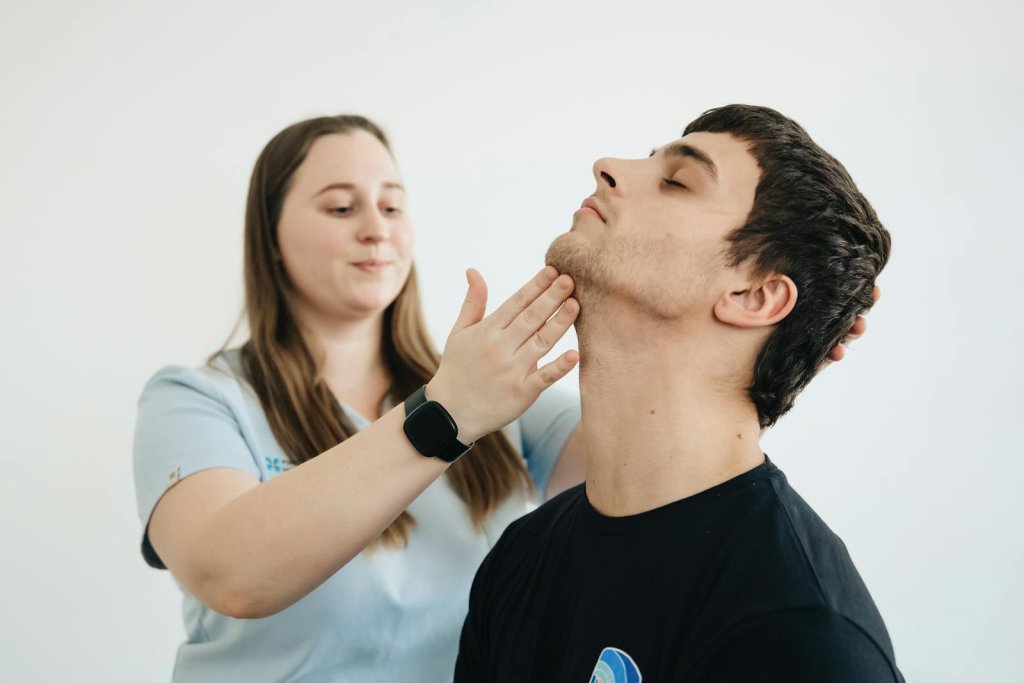
Understanding this matters because not every sore neck needs the same movement. Some people do better with retraction and extension, while others need a gentler range-of-motion or strength-focused plan. The Journal of Orthopaedic & Sports Physical Therapy clinical practice guideline also supports exercise-based care, including neck range-of-motion work, strengthening, endurance exercise, and scapulothoracic training, depending on the type and stage of neck pain.
What Are McKenzie Neck Exercises?
McKenzie neck exercises are repeated neck movements and posture-based drills drawn from Mechanical Diagnosis and Therapy, or MDT. The goal is to assess how your symptoms respond to specific movements, then use the most helpful pattern to support pain reduction, better motion, and self-management. The McKenzie Method is described as assessment-driven, individualized, active, and focused on patient empowerment and self-treatment.
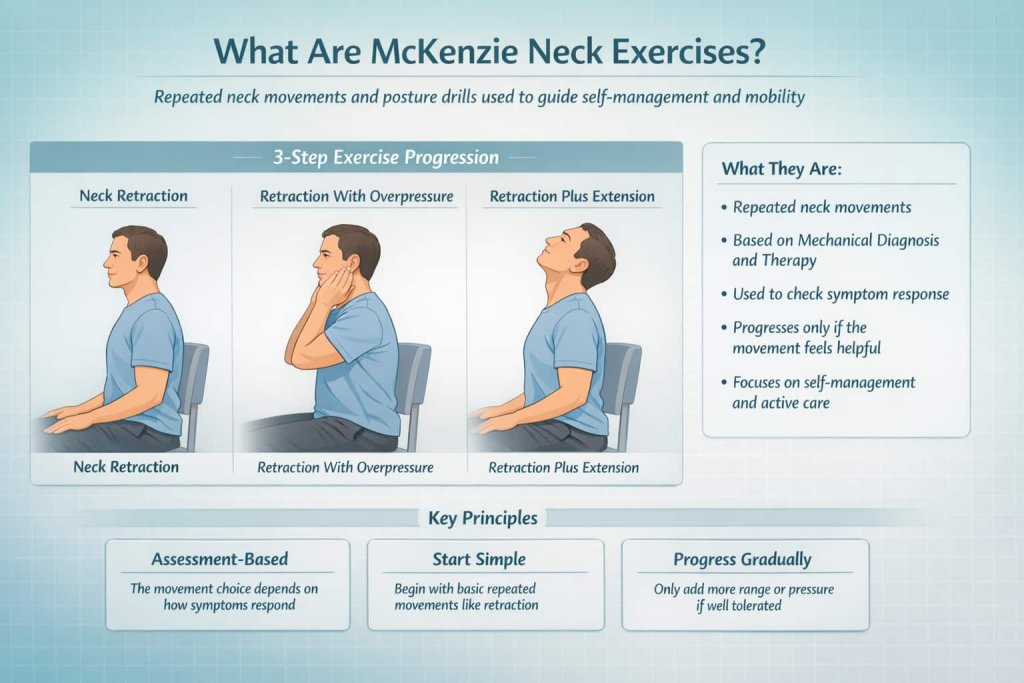
In practice, that usually means starting with simple repeated movements such as neck retraction, then progressing only if the movement feels helpful or becomes easier over time. A 2024 PubMed-listed trial describing McKenzie neck exercise progression showed examples such as neck retraction, retraction with overpressure, and retraction plus extension.
Who McKenzie Neck Exercises May Help Most
These exercises are commonly used for mechanical or nonspecific neck pain, especially when posture, desk work, or repeated positions seem to affect symptoms. A 2024 ScienceDirect systematic review and meta-analysis found that McKenzie MDT produced a small but statistically significant improvement in neck pain versus control treatments, with stronger effects in people with moderate to severe pain, although disability outcomes were not significantly different overall.
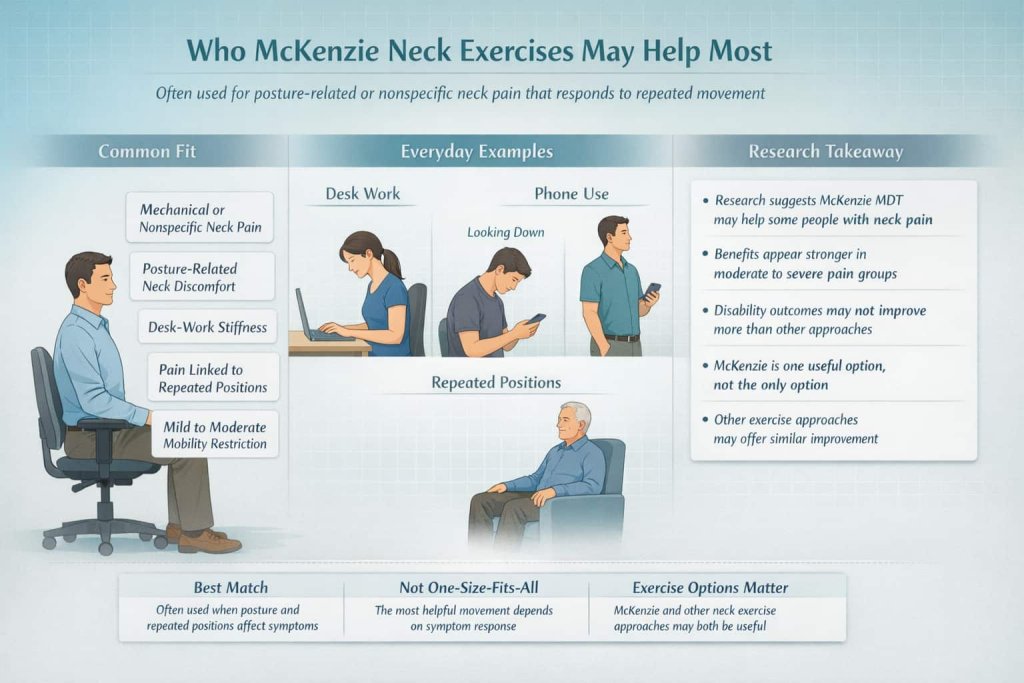
That said, McKenzie exercises are not the only useful option. Another 2024 trial found that McKenzie exercise and craniocervical flexion exercise produced similar improvements in pain, disability, forward-head posture measures, and deep neck flexor performance over six weeks.
Before You Start McKenzie Neck Exercises
Start gently. NHS Inform advises building exercise gradually, beginning with only 2 to 3 repetitions at a time, practicing small amounts through the day, and aiming to keep discomfort in an acceptable range. Their guidance suggests keeping pain during exercise at 0 to 5 out of 10, reducing reps or speed if symptoms rise above that, and stopping if exercises create new pain or clearly worsen symptoms.
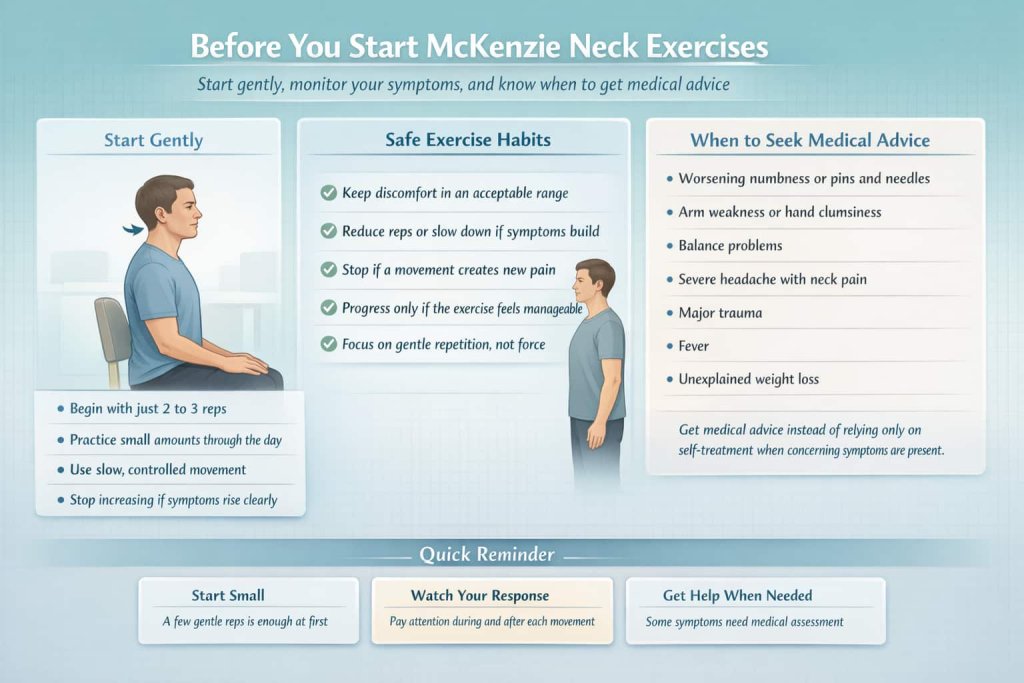
Do not rely on self-treatment alone if you have worsening numbness, pins and needles, arm weakness, hand clumsiness, balance problems, severe headache with neck pain, major trauma, fever, or unexplained weight loss. These can be warning signs that need medical assessment. NHS and NHS Inform neck problem guidance both recommend seeking medical help when symptoms include neurological changes or other concerning features.
8 Best McKenzie Neck Exercises for Neck Pain Relief
These McKenzie neck exercises may help reduce stiffness, improve posture, and support better neck mobility when done with control. Start with gentle movements, pay attention to symptom response, and stop if any exercise clearly makes your pain worse.
1. Neck Retraction
This is the most recognized McKenzie-style neck movement. You sit or stand tall, then glide your head straight backward as if making a “double chin,” without tipping your head up or down. The 2024 trial on McKenzie neck exercise progression specifically identifies neck retraction as a core exercise.
Why it may help
Neck retraction can reduce the forward-head position many people fall into during phone or computer use. It is often used first because it is simple, controlled, and helps test whether symptoms improve with a more neutral head position. The McKenzie approach emphasizes using repeated movement to assess symptom response and guide progression.
How to do it
- Sit tall and look straight ahead.
- Gently draw your head straight backward.
- Keep your chin level rather than pointing it down.
- Pause briefly, then relax.
- Start with 2 to 3 reps and repeat through the day if it feels helpful.
2. Neck Retraction With Overpressure
This is a progression from basic retraction. After you glide the head backward, you add a small amount of extra pressure with your fingers or hand to move a little farther into the same direction. The 2024 McKenzie neck exercise trial included retraction with overpressure as part of the exercise progression.
Why it may help
This variation is sometimes used when plain retraction helps but no longer creates enough movement change. It should feel controlled, not forced. In McKenzie-style progression, overpressure is added only after the simpler version is tolerated well.
How to do it
- Perform a regular neck retraction first.
- At the end of the motion, use your fingers to apply very light additional backward pressure.
- Hold briefly, then release.
- Stop if symptoms spread, sharpen, or feel clearly worse afterward.
3. Neck Retraction Plus Extension
This exercise combines a straight-back glide with a gentle backward look. In the 2024 trial, neck retraction and extension exercise was presented as a later progression after retraction-based work.
Why it may help
Some people with mechanical neck pain respond better when extension is added after retraction. This may be useful when sitting posture and prolonged flexed positions seem to aggravate symptoms. Still, this is not universal, so it should be used only if your symptoms respond well to it.
How to do it
- Start with a neck retraction.
- From that position, gently tilt your head backward.
- Return to neutral in control.
- Use small, pain-limited repetitions rather than pushing into sharp discomfort.
4. Seated Cervical Extension
This is a simpler extension drill without emphasizing the full retraction sequence every rep. It can be helpful for people whose neck feels stiff after long periods of looking down. Exercise-based neck care guidelines support restoring movement and using progressive exercise based on symptom presentation.
Why it may help
Extension-based movement can temporarily unload tissues stressed by constant forward-head or downward-looking posture. It is often better tolerated when started gently and only repeated if the response is favorable.
How to do it
- Sit tall with your chest relaxed and shoulders down.
- Slowly look upward as far as comfortable.
- Pause briefly, then return to neutral.
- Keep the movement smooth and avoid dropping quickly into the end range.
5. Rotation After Retraction
Turning the head right and left is not the most classic McKenzie first step, but it is often added after central positioning improves. This can help people who feel most limited when checking blind spots, reversing a car, or turning to one side. General neck exercise guidance supports gradual rotation work for mobility.
Why it may help
Retraction first may improve alignment enough that rotation feels smoother afterward. This sequence can be useful for people whose stiffness is more noticeable in daily turning tasks than in straight-ahead posture.
How to do it
- Do 1 to 2 gentle neck retractions first.
- Turn your head slowly to one side within comfort.
- Return to center, then repeat to the other side.
- Stay within a manageable range and avoid forcing the tighter side.
6. Side Bending After Retraction
This movement involves bringing your ear toward your shoulder after first setting a better head position. It is often used when the neck feels tight along one side. NHS Inform guidance on cervical spondylosis exercises includes side-tilt style movement as part of neck mobility work.
Why it may help
Side bending can address asymmetrical stiffness, especially if one side of the neck feels more guarded than the other. Doing it after retraction may help you move from a more centered starting point.
How to do it
- Begin with a gentle neck retraction.
- Slowly bring one ear toward the same-side shoulder.
- Return to center and repeat on the other side.
- Do not shrug the shoulders to cheat the range.
7. Cervical Flexion Only When It Clearly Helps
Flexion is not the standard starting point in many McKenzie-style neck routines, because many posture-related neck problems worsen in bent-forward positions. Still, MDT is direction-specific, which means flexion can be appropriate if it is the direction that clearly improves symptoms for you. That is why McKenzie care is assessment-led, not exercise-by-template.
Why it may help
For some people, especially those whose symptoms ease with gentle forward movement rather than extension, flexion may be the preferred movement direction. This is one reason formal assessment can be useful when self-testing is unclear.
How to do it
- Sit tall and keep your shoulders relaxed.
- Slowly bring your chin toward your chest.
- Return to neutral.
- Only continue if the movement feels clearly relieving or easier over time.
8. Posture Reset With Scapular Set
This is not a pure McKenzie repeated movement, but it fits well with the larger evidence base for neck pain. The clinical practice guideline recommends exercise approaches that include scapulothoracic and upper-extremity strengthening or endurance work in several neck pain categories. A 2024 PMC study also found that adding stabilization exercises to McKenzie work improved pain and cervical range of motion more than McKenzie exercise alone.
Why it may help
Better shoulder-blade control can reduce the postural load on the neck during desk work and daily activity. This is especially relevant if your pain is linked to sustained sitting, rounded shoulders, or poor tolerance for long periods at a computer.
How to do it
- Sit or stand tall.
- Gently draw your shoulder blades back and slightly down.
- Keep your neck long and relaxed.
- Hold for a few seconds, then relax.
- Repeat for brief, easy holds rather than hard squeezing.
Best McKenzie Neck Exercises at a Glance
| Exercise | Best for | Typical starting dose |
|---|---|---|
| Neck retraction | Posture-related neck pain, desk stiffness | 2 to 3 reps, several times daily |
| Retraction with overpressure | When plain retraction helps but feels limited | 2 to 3 reps |
| Retraction plus extension | People who improve with backward movement | 2 to 3 reps |
| Seated cervical extension | Extension tolerance and upper-neck stiffness | 2 to 3 reps |
| Rotation after retraction | Turning stiffness that improves after central positioning | 2 to 3 reps each side |
| Side bending after retraction | Lateral neck tightness | 2 to 3 reps each side |
| Flexion only when prescribed | Cases where flexion is the helpful direction | 2 to 3 reps |
| Posture reset with scapular set | Posture control and symptom prevention | 5 to 10 brief holds |
The repetition range above reflects conservative self-management guidance rather than a rigid protocol. NHS Inform recommends starting small and increasing gradually as symptoms allow.
How Often Should You Do McKenzie Neck Exercises?
A good starting point is small, frequent practice rather than one long session. NHS Inform recommends starting with 2 to 3 repetitions at a time, spreading them through the day, then building gradually toward around 10 repetitions as tolerated. Their guidance also suggests reducing reps, speed, or frequency if symptoms rise above an acceptable level.
For ongoing neck pain, consistency matters more than intensity. A 2024 trial on chronic neck pain had participants perform home exercise daily over six weeks, and both McKenzie-based exercise and craniocervical flexion work improved pain, disability, and neck-related measures over that period.
Common Mistakes to Avoid
Going too hard too soon
More range is not always better. Early exercise should feel controlled and repeatable, not aggressive. NHS Inform specifically recommends gradual loading and staying within an acceptable pain range.
Using the wrong movement direction
If a movement clearly makes symptoms spread, intensify, or feel worse the next morning, it may not be the right choice for you. McKenzie care depends on symptom response, not on copying the same drill from someone else.
Ignoring posture and strength
Repeated movement can help, but it is not the whole picture. Clinical guidelines and recent research both support combining neck exercise with endurance, stabilization, and scapulothoracic work where appropriate.
When to Stop and Get Medical Advice
Stop the exercise and get assessed if you notice worsening weakness, worsening numbness or pins and needles, new balance issues, severe headache with neck pain, fever, unexplained weight loss, recent trauma, or symptoms that continue to worsen despite reducing the exercises. These concerns appear in NHS guidance as reasons to seek further help rather than relying only on self-care.
Also consider professional guidance if your symptoms are not improving after several weeks. NHS Inform notes that if neck pain has not improved within 6 weeks of following self-management advice, it is a good idea to talk to a healthcare professional.
Frequently Asked Questions
Are McKenzie neck exercises good for all types of neck pain?
No. They may help some people with mechanical or nonspecific neck pain, but they are not right for every neck condition. The McKenzie Method is assessment-based, which means the useful movement direction varies from person to person.
What is the most common McKenzie neck exercise?
Neck retraction is the most commonly recognized starting exercise. Recent McKenzie neck exercise research also shows retraction, retraction with overpressure, and retraction plus extension as key progressions.
How many reps should I do?
A conservative starting point is 2 to 3 repetitions at a time, repeated in small amounts through the day. As symptoms allow, you can gradually build toward around 10 repetitions.
Can McKenzie neck exercises improve posture?
They may help improve posture awareness, especially movements like neck retraction and posture reset work. In research, McKenzie exercise has also been associated with improvements in measures related to forward-head posture over time.
Is McKenzie better than other neck exercises?
Not always. A 2024 trial found McKenzie exercise and craniocervical flexion exercise produced similar improvements in chronic neck pain outcomes, while another study found McKenzie plus stabilization worked better than McKenzie alone for some outcomes.
Should I do extension if looking up hurts?
Not necessarily. McKenzie care is direction-specific. If extension clearly worsens symptoms, it may not be the right movement for you. Start with the gentlest option and pay close attention to how your symptoms respond during and after exercise.
How long does it take to notice a difference?
That depends on the cause of your neck pain and whether the chosen movement matches your symptom pattern. Some people notice short-term changes quickly, while research on home-based exercise programs often tracks meaningful changes over several weeks.
Conclusion
McKenzie neck exercises can be a useful self-management option when your symptoms respond well to the right movement direction. Start with gentle repeated movements, monitor how your neck feels during and after exercise, and combine posture work with mobility and strength-based support when needed.
For the best results, use these exercises thoughtfully rather than aggressively. If symptoms are worsening, spreading, or not improving, get advice from a qualified healthcare professional before continuing.