
The seated cable row is a back-focused pulling exercise that mainly trains the lats, rhomboids, and trapezius while also challenging the rear shoulders, biceps, and core to stay controlled. It matters because a well-performed horizontal pull can help balance pressing-heavy workouts, build practical pulling strength, and support a more complete upper-body program.
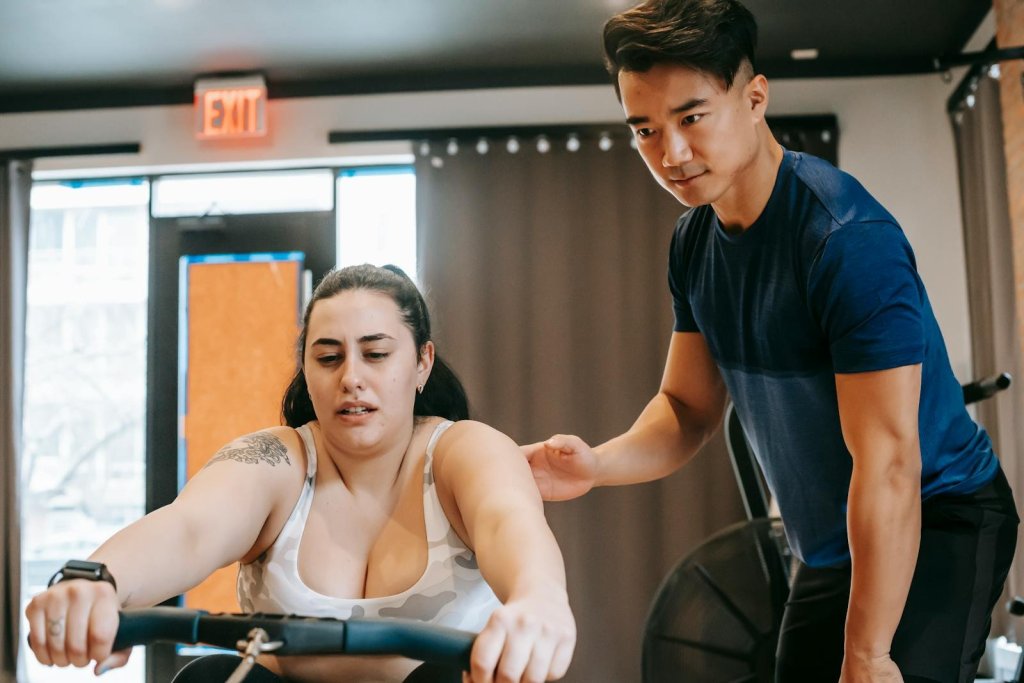
The American Council on Exercise describes the movement as a seated cable pull done with a straight back, chest lifted, and elbows driven back close to the rib cage, while the CDC recommends muscle-strengthening work for all major muscle groups on 2 or more days each week.
What Is the Seated Cable Row?
The seated cable row is a horizontal rowing exercise done on a cable machine, usually with a close-grip handle. You sit with your feet braced, hold the handle with straight arms, keep your torso tall, and pull the handle toward your midsection under control. According to the American Council on Exercise, the goal is to keep the spine straight, lift the chest, pull the elbows back, and return the weight slowly instead of letting it yank you forward.
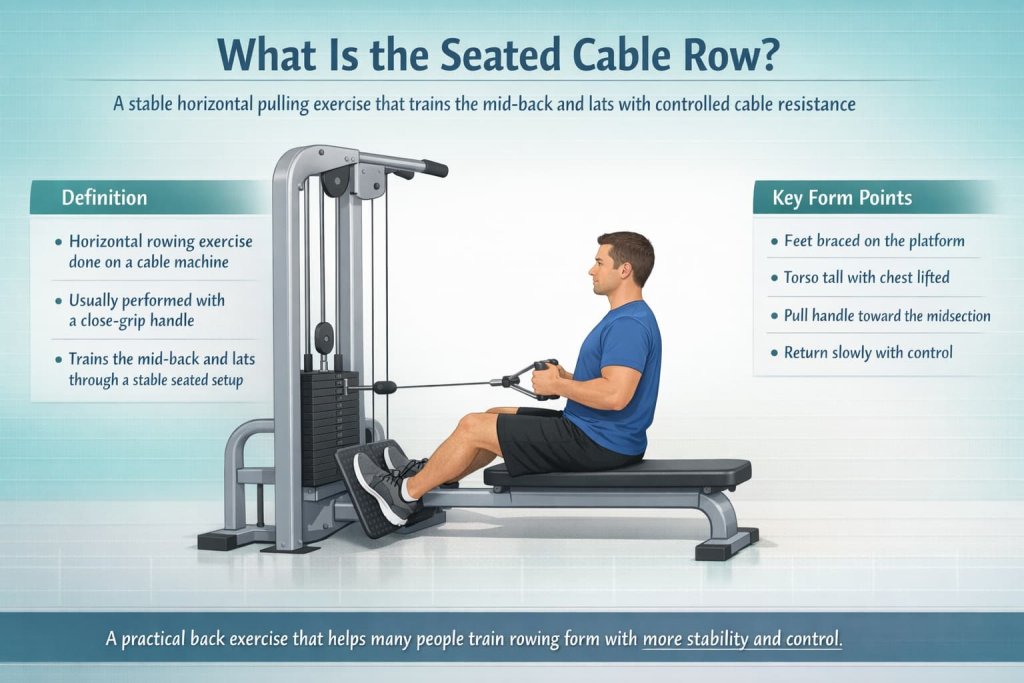
In simple terms, it is one of the most practical gym exercises for training your mid-back and lats through a stable setup. That stability can make it easier for many people to focus on technique compared with unsupported row variations. This is a coaching inference based on the supported seated setup and the American Council on Exercise movement description.
How to Do the Seated Cable Row Properly
Using proper form matters more than using extra weight. A cleaner rep usually gives you better back training and less unnecessary strain.
Step-by-step seated cable row form
- Sit at the cable row station and place your feet securely on the platform.
- Grab the handle and sit tall with your chest lifted.
- Keep your spine neutral and your shoulders from rounding forward.
- Start with your arms extended, but do not let your body collapse toward the machine.
- Pull the handle toward the lower ribs or front of the torso by driving your elbows back.
- Pause briefly when the handle reaches your body.
- Slowly extend your arms again and control the return.
- Repeat without jerking the weight or leaning far back.
These points match the technique described by the American Council on Exercise, which emphasizes a straight back, lifted chest, elbows close to the rib cage, and a slow return to the start.
Seated Cable Row Muscles Worked
The seated cable row mainly trains the muscles that pull the shoulder blades and upper arms backward.
Primary muscles worked
The main muscles involved are:
- Latissimus dorsi
- Rhomboids
- Middle trapezius
- Rear deltoids
- Biceps and brachialis as assisting muscles
The American Council on Exercise found that the seated row was one of the better exercises for recruiting the middle trapezius, and a peer-reviewed EMG study available through PubMed Central reported that the seated row recruited the middle trapezius and rhomboid region more than the pulldown variations compared in that study.
Seated Cable Row Grip Options and Variations
Grip and setup can change how the seated cable row feels, even though the basic movement pattern stays similar. Some variations make it easier to learn control, while others shift more emphasis toward the upper back, lats, or trunk stability.
1. Close-Grip Seated Cable Row
Why it works:
This is the standard seated cable row variation most people start with. A close neutral grip usually feels comfortable on the wrists and shoulders, and it often makes it easier to keep the elbows close to the body. That can help many lifters create a smooth, controlled pulling path and focus on the mid-back and lats without overcomplicating the setup.
Muscles worked:
The close-grip seated cable row mainly works the latissimus dorsi, rhomboids, middle trapezius, rear deltoids, and biceps. The trunk also helps stabilize the body so the torso stays tall during the pull.
How to do it:
- Attach a close neutral-grip handle to the cable row station.
- Sit tall with your feet braced on the platform.
- Grab the handle with your palms facing each other.
- Start with your arms extended and your chest lifted.
- Pull the handle toward your lower ribs or upper waist while driving your elbows back close to your sides.
- Pause briefly at the end of the pull without shrugging.
- Return to the start slowly and under control.
Trainer Tip:
Think about pulling your elbows back instead of yanking the handle with your hands. That cue often helps keep the row smooth and back-focused.
2. Wide-Grip Seated Row
Why it works:
A wider grip changes the line of pull and often makes the exercise feel more upper-back dominant. Many people notice more work through the rhomboids, middle traps, and rear delts when they use a wider handle and keep the elbows moving out a bit more. It can be a useful option when you want some variety without changing the exercise completely.
Muscles worked:
This version still trains the lats, but it often places more noticeable emphasis on the rhomboids, middle trapezius, rear deltoids, and other upper-back muscles. The biceps still assist, and the trunk stays active to support posture.
How to do it:
- Use a straight bar or a wider cable attachment.
- Sit tall with your feet planted and your spine neutral.
- Take a grip wider than shoulder width or slightly outside shoulder width, depending on the handle.
- Begin with your arms extended and shoulders set down and back.
- Pull the handle toward your upper waist or lower chest while letting the elbows travel out more naturally.
- Pause briefly with the chest lifted.
- Slowly return to the starting position without letting the shoulders roll forward.
Trainer Tip:
Do not force extra range just because the grip is wider. If your shoulders round forward, shorten the range and focus on control.
3. Single-Arm Cable Row
Why it works:
The single-arm cable row lets you train one side at a time, which can help you notice strength or control differences between sides. It also adds a light anti-rotation challenge because your trunk has to resist twisting as you pull. That makes it useful for people who want a little more focus and control than they get from a two-arm row.
Muscles worked:
This variation trains the lats, rhomboids, middle trapezius, rear deltoids, and biceps on the working side. The obliques and other trunk stabilizers also work harder to keep the body from rotating.
How to do it:
- Attach a single handle to the cable row station.
- Sit or stand in a stable position, depending on the setup you are using.
- Hold the handle with one hand and keep your torso square.
- Start with your arm extended and your chest tall.
- Pull the handle toward your side while driving the elbow back.
- Keep your shoulders level and avoid twisting through the torso.
- Pause briefly, then return the handle slowly.
- Complete all reps on one side before switching.
Trainer Tip:
Keep your rib cage and hips facing forward. If your body rotates too much, lower the weight and make the rep cleaner.
4. Chest-Supported Row Machine
Why it works:
This is not the same as a seated cable row, but it is a helpful alternative for people who want more support. The chest pad reduces how much you need to stabilize the torso on your own, which can make it easier to focus on the pulling muscles. It can be a practical option for beginners, people who struggle to stay upright during rows, or lifters who want extra support while training the back.
Muscles worked:
The chest-supported row machine mainly works the lats, rhomboids, middle trapezius, rear deltoids, and biceps. Because the torso is supported, the trunk usually has less stabilizing demand than in a standard seated cable row.
How to do it:
- Adjust the seat and chest pad so your chest stays supported comfortably.
- Place your feet securely on the platform or floor.
- Grab the handles and begin with your arms extended.
- Keep your chest against the pad and your shoulders from rounding forward.
- Pull the handles back by driving your elbows behind you.
- Pause briefly at the end of the movement.
- Return the handles slowly and with control.
Trainer Tip:
Do not let the chest lift away from the pad just to move more weight. Let the back do the work instead of turning it into a momentum-based rep.
Proper Form Mistakes to Avoid
A seated cable row can look simple, but a few common mistakes can make it less effective.
Rounding the shoulders forward
Letting the shoulders roll forward at the start often reduces position quality. The American Council on Exercise specifically notes not to round the shoulders forward when setting up.
Leaning too far back
A small natural torso movement can happen, but turning the exercise into a big backward rock usually shifts tension away from a controlled row. The movement should stay deliberate rather than momentum-driven. This is a coaching inference based on the American Council on Exercise straight-back row description.
Jerking the handle
If the weight snaps forward on the return or you yank the first part of each rep, you lose control of the movement. The American Council on Exercise emphasizes a slow return, which supports keeping both phases controlled.
Shrugging through the rep
Many lifters pull the shoulders up toward the ears instead of keeping the upper body organized. While every body moves a little differently, most people do better when they keep the neck relaxed and avoid excessive shrugging during standard row reps.
Benefits of the Seated Cable Row
Builds upper-back strength
The biggest benefit is straightforward: the seated cable row helps strengthen major back muscles involved in pulling. That makes it useful in general strength programs and balanced upper-body training. The American Council on Exercise exercise library and research both support it as a back-focused row pattern.
Trains horizontal pulling
Many people do a lot of pressing, pushing, and front-of-body work. The seated cable row adds a horizontal pulling pattern that can make a program more balanced. The CDC guidance to work all major muscle groups also supports including back exercises regularly.
Helps reinforce scapular control
The row pattern teaches you to pull with the upper back and arms while controlling shoulder-blade movement. The PubMed Central study showing strong middle trapezius and rhomboid activity helps explain why rows are often included in upper-back training.
Beginner-friendly machine setup
Because the cable station offers a guided resistance path and a seated position, the exercise is often easier to learn than some unsupported row variations. That does not mean it is automatically perfect for everyone, but it is usually accessible for general gym users when the load is kept appropriate.
Seated Cable Row Benefits for Different Goals
For muscle building
The seated cable row is useful for hypertrophy because it lets you accumulate controlled pulling volume with consistent resistance. Many lifters can also adjust handle choice, grip width, and load easily from set to set.
For general fitness
It is a practical choice for people who want one dependable back exercise in a simple routine. Since adults are advised to include muscle-strengthening work at least 2 days weekly, a seated cable row can fit well into full-body or upper-body sessions, as supported by the CDC.
For posture-focused training
No single exercise “fixes” posture by itself, but a well-rounded program that includes upper-back pulling can support better strength through the muscles that retract the shoulder blades. That is a reasonable training inference from the row’s mechanics and muscle recruitment evidence discussed by the American Council on Exercise.
Who Should Use Caution With the Seated Cable Row?
The seated cable row is a common gym exercise, but not every version fits every person.
Use extra caution or get qualified guidance if you have:
- shoulder pain during pulling movements
- a recent back injury
- pain that worsens as you row
- numbness, tingling, or weakness
- uncertainty about safe exercise after surgery or rehab
In those cases, a physical therapist or other qualified clinician can help decide whether the exercise, load, range of motion, or setup should be modified. This is general safety guidance, not a diagnosis.
Quick Programming Tips
For general strength or muscle building, many people place the seated cable row in the middle of an upper-body or pull workout.
Common starting ideas include:
- 2 to 4 sets
- 8 to 15 controlled reps
- 1 to 3 times per week depending on the rest of your program
- a load that lets you keep your torso stable and your rep quality clean
These are practical programming ranges, not official medical or regulatory standards. The best choice depends on training age, goals, recovery, and total weekly volume.
Seated Cable Row vs Other Row Variations
Seated cable row vs bent-over row
The seated cable row usually offers more external stability, while the bent-over row often demands more full-body positioning and hip hinge control. Neither is automatically better in every case.
Seated cable row vs machine row
A chest-supported machine row may feel more stable for some people. A cable row often gives a slightly different feel because the line of pull and handle choices are easy to adjust.
Seated cable row vs lat pulldown
The seated cable row is a horizontal pull. The lat pulldown is a vertical pull. Both can belong in a balanced back program.
FAQ About the Seated Cable Row
Is the seated cable row good for back strength?
Yes. It is a useful back-strength exercise because it trains major pulling muscles of the upper and mid-back under controlled resistance. The American Council on Exercise lists it as a back exercise, and its research also found strong middle trapezius recruitment.
What muscles does the seated cable row work the most?
The main muscles are the lats, rhomboids, and trapezius, with help from the rear deltoids and arm flexors. EMG research in PubMed Central also supports strong middle trapezius and rhomboid involvement.
Where should I pull the handle on a seated cable row?
For most standard versions, pulling toward the lower ribs or front of the torso works well. The bigger priority is keeping the rep controlled and not rounding the shoulders or jerking the load. The American Council on Exercise describes pulling until the handle touches the front of the stomach.
Is the seated cable row good for beginners?
Often, yes. The seated setup and cable resistance make it approachable for many beginners, especially when the weight is light enough to keep form clean. It still needs good instruction and sensible loading.
Should I lean back during seated cable rows?
A small natural torso shift can happen, but large backward swinging usually turns the rep into a momentum exercise. Most people should aim for a tall torso and controlled motion.
How often should I do seated cable rows?
That depends on your overall routine, but it often fits well 1 to 3 times per week as part of a broader strength program. The CDC recommends muscle-strengthening activities on 2 or more days each week for all major muscle groups.
Can seated cable rows improve posture?
They can support a more balanced program by strengthening upper-back pulling muscles, but no single exercise can guarantee posture changes on its own. Consistent training, daily habits, and total exercise balance all matter.
Conclusion
The seated cable row is one of the most practical back exercises for building horizontal pulling strength, training the lats and upper back, and improving overall workout balance. Keep the setup simple, stay tall through the torso, pull with control, and avoid turning the rep into a swing. If you are adding more back work to your plan, the seated cable row is a strong place to start.