
The shoulder press machine is one of the most efficient and joint-friendly ways to build bigger, stronger, and broader shoulders.
Unlike free weights, it provides a fixed range of motion, reducing the need for balance and lowering the risk of injury. This makes it ideal for beginners, those recovering from injury, and experienced lifters looking for safe overload.
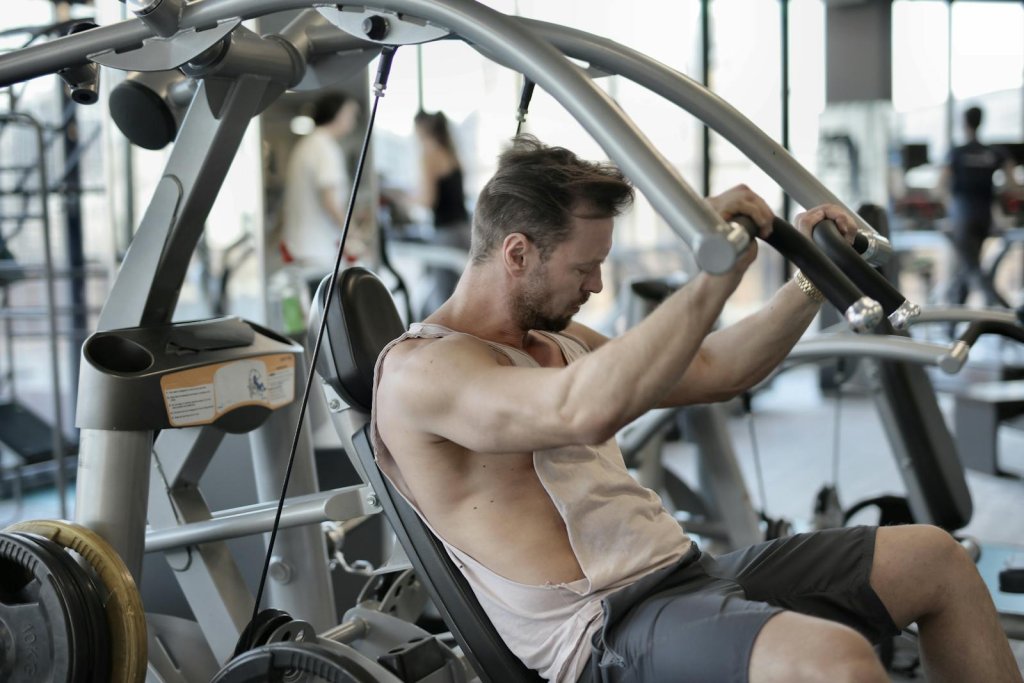
In this guide, we’ll cover proper form, muscles worked, benefits, common mistakes, alternatives, trainer tips, FAQs, and how to use it in your workout for maximum shoulder growth.
How to Use the Shoulder Press Machine with Perfect Form
Getting your form right on the shoulder press machine is crucial—not just for results, but also for protecting your shoulders and spine.
Step-by-Step Setup
- Adjust the Seat Height
- The handles should be at shoulder height when seated. If they’re too high, you’ll put unnecessary stress on your shoulder joints. Too low, and you’ll shift work to your chest.
- Trainer Tip: Use a mirror or ask a gym buddy to check your alignment.
- Select Your Weight
- Start with 50–60% of your 1-rep max (1RM) to master technique before adding more load.
- For hypertrophy, aim for 8–12 reps per set; for strength, 4–6 reps.
- Body Positioning
- Sit tall with your back, head, and hips firmly against the back pad.
- Feet flat on the ground, slightly wider than hip-width.
- Grip the handles slightly wider than shoulder width with either pronated (palms forward) or neutral (palms facing in) grip.
- The Press
- Exhale and push the handles upward until your arms are almost fully extended—do not lock your elbows.
- Keep your wrists straight and elbows under your wrists for better force transfer.
- The Lowering Phase
- Inhale as you slowly bring the handles back to shoulder height, maintaining tension in your delts.
- Lowering should take about twice as long as pressing up for maximum muscle activation.
Real-World Example:
Research shows that emphasizing a slow, controlled lowering (eccentric) phase in pressing exercises can significantly enhance muscle growth compared to faster, momentum-driven reps.
Benefits of the Shoulder Press Machine
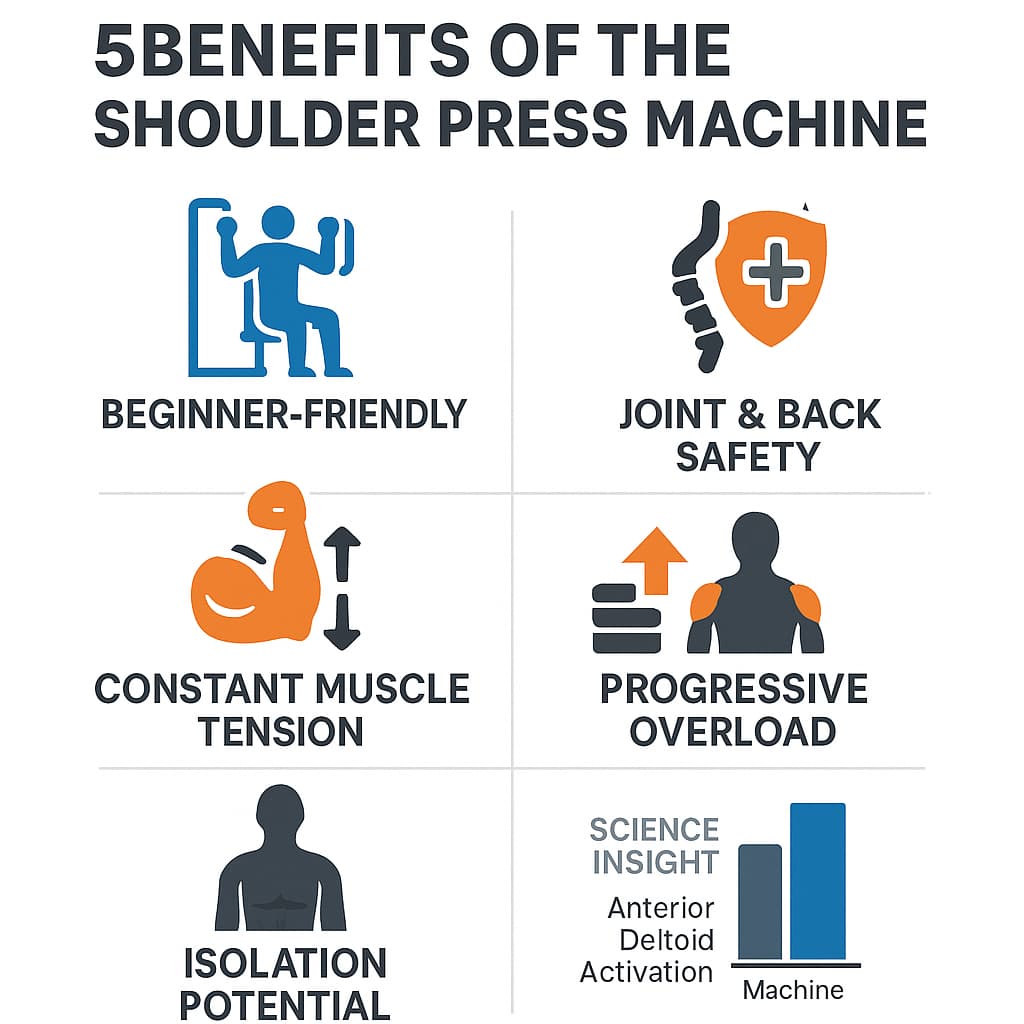
- Beginner-Friendly
- The fixed path allows new lifters to focus on building muscle without worrying about balance.
- Joint and Back Safety
- Less strain on the lower back compared to standing barbell presses.
- Constant Muscle Tension
- The machine resists throughout the full range of motion, enhancing hypertrophy.
- Progressive Overload Made Easy
- Just move the weight pin or add plates for consistent progression.
- Isolation Potential
- Allows you to hit shoulders without fatiguing stabilizers too early.
Science Insight:
An EMG study (American Council on Exercise, 2021) found that machine overhead presses activate the anterior delts nearly as much as free weights, but with reduced engagement of the core and stabilizers—making them less fatiguing for accessory muscles.
Muscles Worked
Primary Muscles
- Anterior Deltoid – The front head of the shoulder, responsible for pressing movements.
- Lateral Deltoid – The middle head that contributes to shoulder width.
Secondary Muscles
- Triceps Brachii – Assist during the pressing phase.
- Upper Pectorals – Especially activated with a slight incline seat adjustment.
- Trapezius (Upper) – Stabilizes the shoulder girdle.
- Rotator Cuff Muscles – Stabilize the humeral head during pressing.
Common Mistakes to Avoid
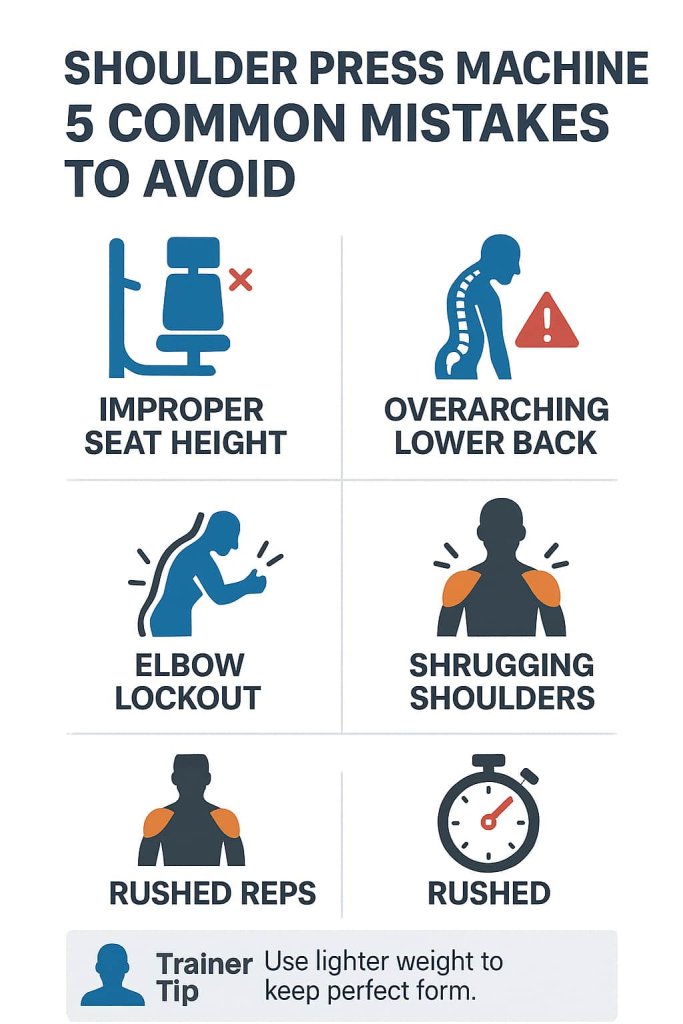
- Improper Seat Height – Can shift emphasis to other muscles or strain joints.
- Overarching the Lower Back – A sign you’re using too much weight or lacking core stability.
- Elbow Lockout – Puts excess stress on elbow joints, especially under heavy load.
- Shrugging Shoulders – Engages traps too much and reduces delt activation.
- Rushed Reps – Limits time under tension and reduces growth potential.
Trainer Tip: If you can’t maintain good posture and a controlled pace, reduce the weight until you can.
Alternatives to the Shoulder Press Machine
1. Dumbbell Shoulder Press
How to do it
- Sit or stand holding a dumbbell in each hand at shoulder height
- Palms face forward or slightly inward
- Brace your core and press the dumbbells overhead until arms are extended
- Lower the weights back to shoulder level in a slow, controlled manner
Why it works
Each arm moves independently, which increases stabilizer demand and allows a more natural shoulder path than fixed machines. This helps improve shoulder control, mobility, and balanced strength development.
Muscles worked
Anterior and lateral deltoids, triceps, upper chest, and core stabilizers.
Trainer Tip
If shoulder mobility is limited, stop just short of full lockout and focus on keeping the ribs down to avoid lower-back arching.
2. Barbell Overhead Press
How to do it
- Position the barbell at upper-chest height
- Grip the bar slightly wider than shoulder width
- Press the bar straight overhead while tightening your glutes and core
- Lower the bar back to the starting position under control
Why it works
This compound lift trains the shoulders to generate force while the entire body stabilizes the load. It builds foundational pressing strength with strong carryover to real-world lifting tasks.
Muscles worked
Anterior and lateral deltoids, triceps, upper chest, upper back stabilizers, core, and glutes.
Trainer Tip
Keep the bar close to your face on the way up to maintain an efficient bar path and reduce shoulder stress.
3. Arnold Press
How to do it
- Start with dumbbells in front of the shoulders, palms facing you
- Press upward while rotating the palms forward
- Finish with the arms extended overhead
- Reverse the rotation as you lower the weights
Why it works
The rotational movement increases time under tension and challenges the deltoids through multiple angles, promoting more complete shoulder development.
Muscles worked
All three deltoid heads, triceps, and upper chest.
Trainer Tip
Use lighter loads than standard presses and prioritize smooth, controlled rotation over heavy weight.
4. Push Press
How to do it
- Hold the barbell at shoulder height
- Perform a short dip by bending the knees slightly
- Explosively drive upward and press the bar overhead
- Lower the bar back to the shoulders with control
Why it works
Leg drive allows heavier loads and trains power output, making this exercise effective for improving athletic pressing strength beyond strict shoulder work.
Muscles worked
Deltoids, triceps, quadriceps, glutes, calves, and core.
Trainer Tip
Keep the dip shallow and vertical—too deep of a dip reduces power transfer and turns it into a different movement.
5. Front Raises
How to do it
- Hold dumbbells in front of the thighs with palms facing down
- Raise the weights straight in front to shoulder height
- Pause briefly, then lower slowly
- Maintain a slight bend in the elbows
Why it works
Front raises isolate the anterior deltoids without assistance from the legs or chest, making them ideal for targeted shoulder work and finishing sets.
Muscles worked
Anterior deltoids, with minor involvement from the upper chest.
Trainer Tip
Use lighter weights and slow tempo to avoid momentum and keep constant tension on the shoulders.
Who Should Use It
- Beginners – Learn pressing mechanics safely.
- Lifters with Shoulder Mobility Issues – Guided path reduces injury risk.
- Bodybuilders – Ideal for isolation work after compound lifts.
- Rehabilitation Clients – With doctor/trainer approval, it’s safer than free-weight presses.
Trainer Tips for Best Results
- Tempo Control: Use a 2–3 second eccentric phase to maximize hypertrophy.
- Volume Guidelines: 3–4 sets, 8–12 reps for size; 4–6 reps for strength.
- Grip Variation: Switch between neutral and pronated grips every few weeks to target different fibers.
- Superset Strategy: Pair with lateral raises for complete shoulder activation.
- Pre-Exhaust Method: Do lateral raises first to fatigue delts before pressing.
FAQs
Q: Is the shoulder press machine better than dumbbells?
A: It’s safer and more stable, making it great for beginners, but dumbbells build more stabilizer strength.
Q: How often should I use it?
A: 1–2 times per week, depending on your program and recovery.
Q: Can it replace the overhead press?
A: Not entirely—use it as a complement to free-weight pressing, not a complete replacement.
Conclusion
The shoulder press machine is a powerful, safe, and efficient tool for building strong, broad shoulders. Its fixed movement path allows you to load the deltoids heavily without compromising form, making it suitable for beginners, intermediate, and advanced lifters.
When combined with free-weight variations and progressive overload, it can help produce noticeable gains in shoulder size and strength. Focus on proper form, avoid common errors, and mix it with other pressing variations for complete shoulder development.