
Deltoid exercises are strength-training movements that target the shoulder muscles to improve strength, stability, and upper-body shape. Training your deltoids correctly helps support daily arm movements, improves posture, and contributes to balanced upper-body development.
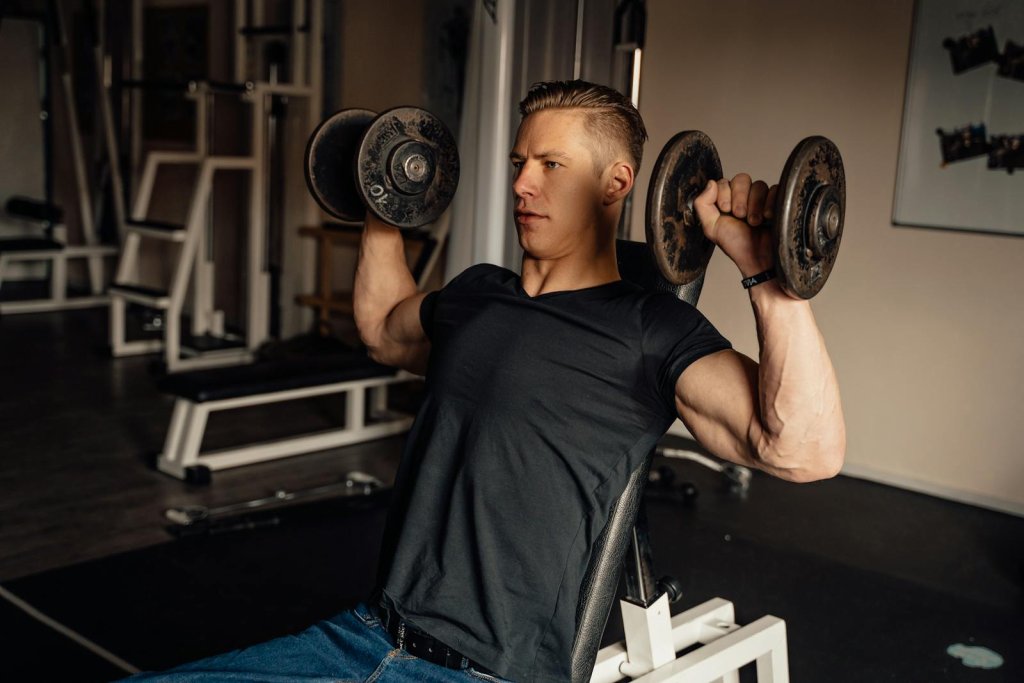
Understanding how to train the shoulders properly matters because the deltoids work closely with the rotator cuff and upper-back muscles. A smart approach reduces unnecessary joint stress while supporting long-term shoulder health. This guide explains the best deltoid exercises, how they work, and how to perform them safely.
What Are the Deltoid Muscles?
The deltoids are a group of three muscles that cover the shoulder joint. Each head plays a distinct role in arm movement and stability.
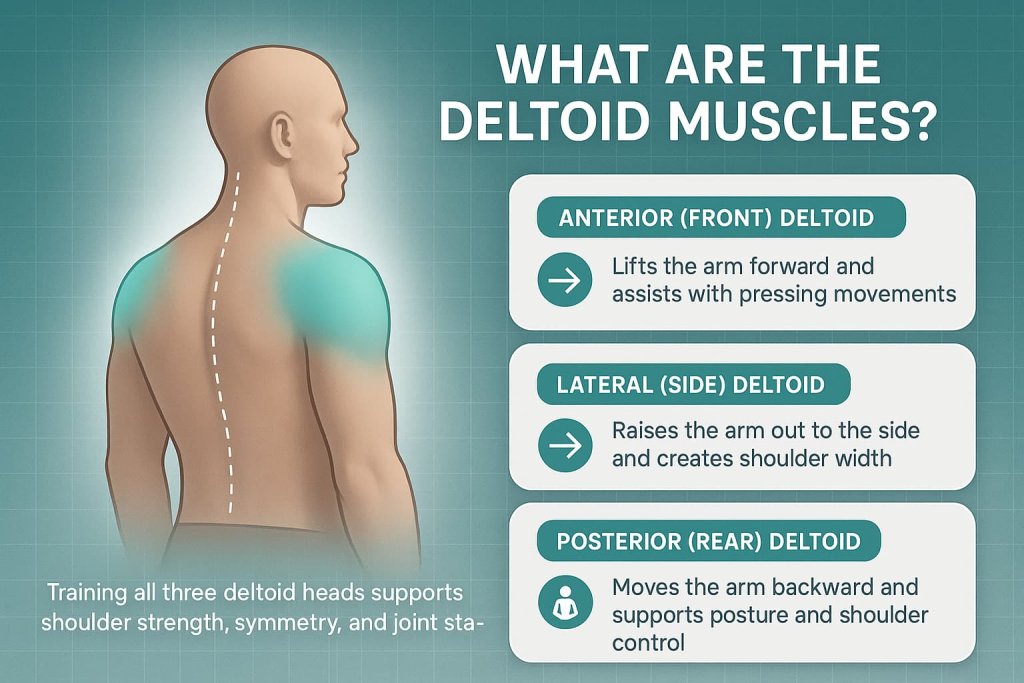
- Anterior (front) deltoid – lifts the arm forward and assists with pressing movements
- Lateral (side) deltoid – raises the arm out to the side and creates shoulder width
- Posterior (rear) deltoid – moves the arm backward and supports posture and shoulder control
Effective deltoid exercises should train all three heads to support strength, symmetry, and joint stability.
Why Deltoid Exercises Matter
Well-designed deltoid exercises may help support:

- Stronger and more stable shoulders
- Improved posture and upper-body alignment
- Better performance in pushing and pulling movements
- Reduced strain on the neck and upper back
- Balanced muscle development around the shoulder joint
According to ACSM resistance-training guidelines, major muscle groups such as the shoulders should be trained at least twice per week using controlled technique and appropriate loads.
12 Best Deltoid Exercises
Train all three deltoid heads (front, side, rear) with a smart mix of presses, raises, and rear-delt pulls to build stronger, broader shoulders. These 12 deltoid exercises cover shoulder strength, stability, and balanced development using controlled, joint-friendly technique.
1. Dumbbell Shoulder Press
Why it works:
The dumbbell shoulder press is a foundational compound movement that challenges the anterior deltoids through shoulder flexion while also recruiting the lateral delts for stabilization. Using dumbbells allows each shoulder to work independently, helping reduce side-to-side strength imbalances and encouraging more natural joint movement compared to fixed bars.
Muscles worked:
Anterior deltoid, lateral deltoid, triceps, upper stabilizers
How to do it:
- Sit on a bench with back support or stand with feet shoulder-width apart
- Hold dumbbells at shoulder height, palms facing forward or slightly inward
- Press the dumbbells upward until arms are nearly fully extended
- Pause briefly at the top without locking elbows
- Lower slowly back to shoulder level under control
Trainer tip:
Brace your core and ribs down to prevent excessive lower-back arching, especially when standing.
2. Barbell Overhead Press
Why it works:
The barbell overhead press allows for greater external loading, making it highly effective for building overall shoulder strength. Because both arms move together, it also challenges trunk stability and coordinated force production.
Muscles worked:
Anterior deltoid, lateral deltoid, triceps, upper chest, core stabilizers
How to do it:
- Set the barbell at upper-chest height in a rack
- Grip the bar just outside shoulder width
- Press the bar straight overhead while keeping it close to your face
- Finish with the bar over mid-foot
- Lower the bar slowly back to the starting position
Trainer tip:
Start with lighter loads and focus on smooth, pain-free motion before increasing weight.
3. Dumbbell Lateral Raise
Why it works:
This isolation exercise directly targets the lateral deltoids, which are responsible for shoulder width and side-to-side arm movement. Because loading is lighter, it places minimal stress on the shoulder joint when performed with control.
Muscles worked:
Lateral deltoid
How to do it:
- Stand tall holding dumbbells at your sides
- Slightly bend your elbows
- Raise arms out to the sides until they reach shoulder height
- Pause briefly at the top
- Lower slowly back to your sides
Trainer tip:
Think about lifting the elbows outward rather than lifting the weights up.
4. Cable Lateral Raise
Why it works:
Cables provide continuous resistance throughout the entire range of motion, keeping the lateral deltoids under constant tension and improving muscular control.
Muscles worked:
Lateral deltoid
How to do it:
- Attach a handle to a low cable pulley
- Stand sideways to the machine holding the handle with the outside arm
- Lift the handle outward to shoulder height
- Pause briefly
- Lower slowly to the starting position
Trainer tip:
Maintain a slow tempo and avoid leaning away from the cable.
5. Front Raise
Why it works:
Front raises isolate the anterior deltoids, which are heavily involved in pushing movements and daily activities like reaching forward. Using moderate loads helps limit unnecessary shoulder strain.
Muscles worked:
Anterior deltoid
How to do it:
- Hold dumbbells or a weight plate in front of your thighs
- Lift the weight forward until arms reach shoulder height
- Keep palms facing down or neutral
- Lower slowly back to the start
Trainer tip:
Avoid swinging the weight—control the lift and descent.
6. Arnold Press
Why it works:
The Arnold press adds shoulder rotation to a pressing motion, increasing time under tension and recruiting both the anterior and lateral deltoids through multiple movement planes.
Muscles worked:
Anterior deltoid, lateral deltoid, triceps
How to do it:
- Start with dumbbells at shoulder height, palms facing you
- Press upward while rotating palms to face forward
- Finish with arms extended overhead
- Reverse the rotation as you lower
Trainer tip:
Move slowly during the rotation phase to maintain joint control.
7. Rear Delt Fly (Dumbbell)
Why it works:
This exercise strengthens the posterior deltoids, which are often undertrained but essential for shoulder balance, posture, and pulling mechanics.
Muscles worked:
Posterior deltoid, upper back muscles
How to do it:
- Hinge forward at the hips with a neutral spine
- Let dumbbells hang below your shoulders
- Raise arms outward and slightly back
- Squeeze shoulder blades briefly
- Lower slowly
Trainer tip:
Use lighter weights and focus on controlled movement rather than momentum.
8. Reverse Pec Deck
Why it works:
The reverse pec deck provides external stability, allowing you to isolate the rear delts without worrying about balance or posture breakdown.
Muscles worked:
Posterior deltoid
How to do it:
- Sit facing the pec deck machine
- Adjust handles to shoulder height
- Pull handles outward and back
- Pause briefly at full contraction
- Return slowly
Trainer tip:
Keep shoulders relaxed and avoid shrugging during the movement.
9. Face Pull
Why it works:
Face pulls promote balanced shoulder development by strengthening the posterior deltoids and rotator cuff while supporting healthy scapular movement.
Muscles worked:
Posterior deltoid, upper back, rotator cuff
How to do it:
- Attach a rope to a high cable pulley
- Grip the rope with thumbs pointing back
- Pull the rope toward your face
- Keep elbows high and wide
- Return slowly
Trainer tip:
Focus on squeezing the upper back, not just pulling with the arms.
10. Upright Row (Modified)
Why it works:
When performed with a wider grip and limited range, the upright row can emphasize the lateral delts while reducing unnecessary shoulder stress.
Muscles worked:
Lateral deltoid, upper trapezius
How to do it:
- Hold barbell or dumbbells with a wide grip
- Pull the weight up toward the upper chest
- Keep elbows below shoulder height
- Lower under control
Trainer tip:
If shoulder discomfort appears, reduce range or choose an alternative exercise.
11. Landmine Press
Why it works:
The angled pressing path of the landmine press reduces overhead joint stress while still effectively training the deltoids, making it a shoulder-friendly option.
Muscles worked:
Anterior deltoid, lateral deltoid, core stabilizers
How to do it:
- Place one end of a barbell into a landmine attachment
- Hold the free end at shoulder height
- Press upward and slightly forward
- Lower slowly back to start
Trainer tip:
Keep ribs down and core engaged throughout the movement.
12. Resistance Band Lateral Raise
Why it works:
Resistance bands provide gradual tension and low joint stress, making this exercise ideal for beginners, rehabilitation-style training, or home workouts.
Muscles worked:
Lateral deltoid
How to do it:
- Stand on the center of the band
- Hold handles or band ends at your sides
- Raise arms outward to shoulder height
- Lower slowly under tension
Trainer tip:
Maintain constant band tension and avoid rushing the movement.
How Often Should You Train Deltoids?
Most guidelines recommend training shoulders 2–3 times per week, allowing at least 48 hours between sessions. Volume and intensity should match your experience level and recovery capacity.
Common Mistakes During Deltoid Exercises
Several technique errors can reduce effectiveness and increase unnecessary shoulder strain during deltoid exercises.
Common mistakes include:
- Using excessive weight and relying on momentum
- Raising the arms beyond comfortable shoulder range
- Shrugging the shoulders instead of isolating the delts
- Arching the lower back during overhead presses
- Neglecting rear deltoid and stability exercises
Focusing on controlled movement, proper posture, and balanced exercise selection helps support shoulder health and long-term progress.
How the Deltoids Work During Shoulder Movements
The deltoids work together to control arm movement and stabilize the shoulder joint during daily activities and exercise. Each head contributes differently depending on the direction and load of movement.
- Anterior deltoid is most active during forward arm lifts and pressing movements, such as overhead presses and front raises.
- Lateral deltoid plays a primary role when lifting the arms out to the side, contributing to shoulder width and controlled abduction.
- Posterior deltoid assists with pulling the arms backward, supporting posture, scapular control, and balanced shoulder mechanics.
During compound shoulder exercises, the deltoids work alongside the rotator cuff and upper-back muscles to maintain joint alignment and movement efficiency. Balanced training helps distribute stress more evenly across the shoulder complex.
Who Should Modify or Avoid Deltoid Exercises?
You may need modifications if you have:
- Ongoing shoulder pain
- A recent shoulder injury or surgery
- Limited overhead mobility
The American Academy of Orthopaedic Surgeons advises stopping exercises that cause pain and consulting a qualified professional if symptoms persist.
Frequently Asked Questions
Are deltoid exercises enough for shoulder health?
Deltoid exercises are important, but balanced programs should also include rotator cuff and upper-back training.
Can beginners train deltoids?
Yes. Beginners should start with lighter weights and prioritize form.
Are machines better than free weights?
Both are effective. Free weights improve control, while machines offer stability.
How many reps are best?
Most people benefit from 8–15 controlled reps per set.
Do deltoid exercises improve posture?
Posterior deltoid and face pull exercises may help support better posture.
Can I train delts at home?
Yes. Resistance bands and dumbbells are effective options.
Conclusion
Deltoid exercises play a key role in building strong, stable, and well-balanced shoulders. By training all three deltoid heads and using proper technique, you can support long-term shoulder health and upper-body performance.
If you’re ready to build stronger shoulders, choose a balanced mix from these 12 deltoid exercises and progress gradually.
References
- ACE Research: Dynamite Delts (Top Shoulder Exercises)
- Different Shoulder Exercises Affect Deltoid Activation in Resistance-Trained Individuals (PubMed, 2020)
- EMG Analysis of Lateral Raise Variations and Frontal Raise (MDPI, 2020)
- Physical Activity Guidelines for Americans, 2nd Edition (health.gov PDF)
- AAOS Rotator Cuff and Shoulder Conditioning Program (Web Page)
- CDC Physical Activity Guidelines for Adults
- ACSM Position Stand: Progression Models in Resistance Training for Healthy Adults (PubMed)Resistance Exercise Training for Health (AHA Scientific Statement, 2024)