
Squat exercises for women are one of the most effective ways to strengthen and shape the legs and glutes while supporting overall lower-body function. Squats train multiple large muscle groups at once, making them efficient, scalable, and suitable for beginners through advanced lifters.
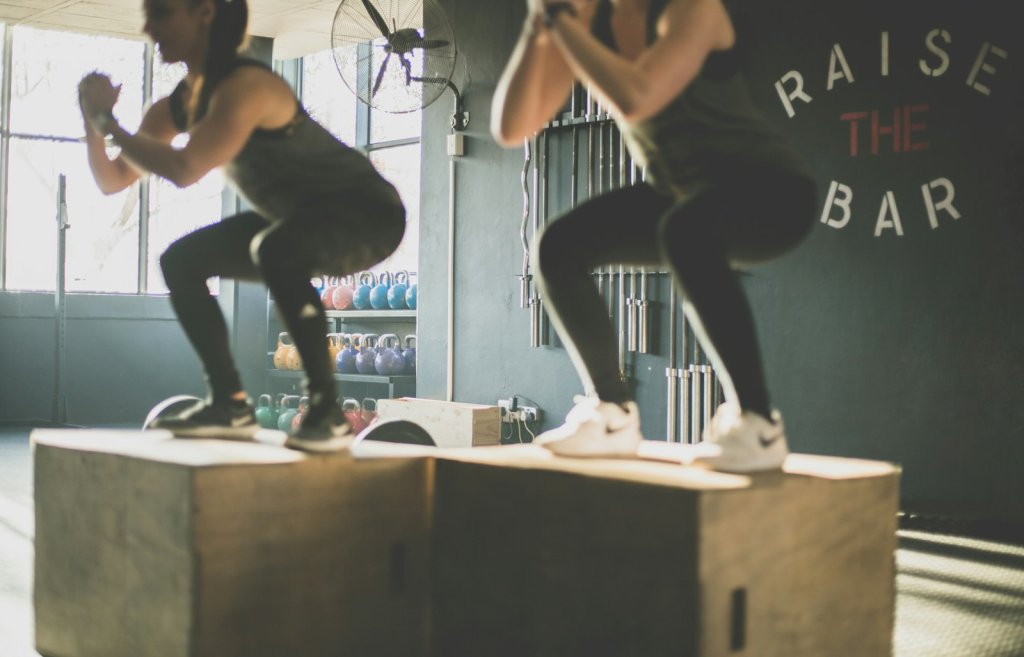
Understanding how different squat variations work helps you target the thighs, glutes, and hips more effectively, improve movement quality, and follow evidence-based fitness guidelines that recommend regular muscle-strengthening activity for long-term health.
Below is a practical, science-informed guide to the 10 best squat exercises for women, with clear instructions, benefits, and safety-focused tips.
What Are Squat Exercises for Women?
Squat exercises for women are lower-body movements that involve bending the hips, knees, and ankles to lower the body and then standing back up with control. They primarily train the glutes and quadriceps, while also engaging the hamstrings, calves, and core for stability.
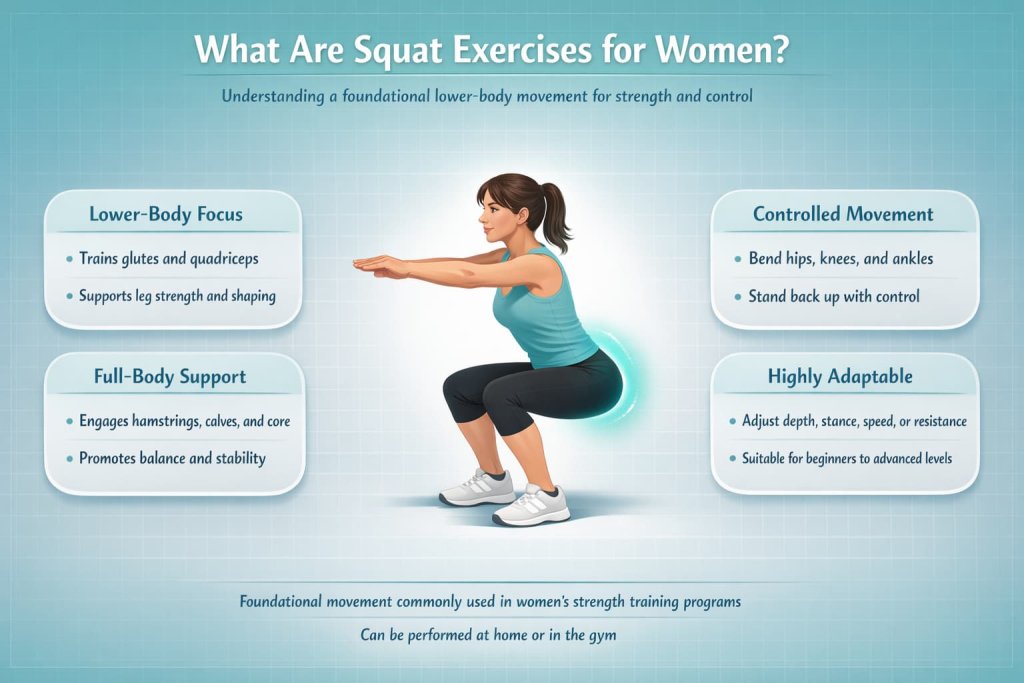
Because squats are adaptable in depth, stance, speed, and resistance, they can be tailored to different fitness levels, goals, and comfort needs—making them a foundational movement in women’s strength training programs.
10 Best Squat Exercises for Women
These 10 squat exercises are designed to help women strengthen and shape the legs and glutes using a mix of bodyweight, controlled tempo, unilateral, and dynamic movements. Together, they support lower-body strength, muscle engagement, and functional movement for beginners through advanced fitness levels.
1. Bodyweight Squat
A foundational squat that builds technique, control, and confidence.
How to do it
- Stand with feet about shoulder-width apart and toes slightly turned out
- Brace your core and sit the hips back as you bend the knees
- Lower until thighs are about parallel to the floor (or comfortable depth)
- Keep the chest tall and spine neutral throughout
- Push through the heels to return to standing
Why it works
The bodyweight squat teaches proper squat mechanics without external load, allowing you to develop coordination, joint control, and muscle engagement safely. It forms the foundation for all loaded squat variations.
Muscles worked
Glutes, quadriceps, hamstrings, core
Trainer Tip
Slow the descent and control the bottom position to reinforce good movement patterns.
2. Goblet Squat
A squat variation using a single dumbbell or kettlebell held at the chest.
How to do it
- Hold a dumbbell or kettlebell close to your chest with both hands
- Stand with feet shoulder-width apart
- Sit down into a squat while keeping elbows inside the knees
- Maintain an upright torso as you descend
- Drive through the heels to stand up
Why it works
Holding the weight in front helps counterbalance the body, encouraging an upright posture and deeper squat depth while increasing core and glute engagement.
Muscles worked
Glutes, quadriceps, core, upper back
Trainer Tip
If you feel your chest collapsing forward, reduce the weight and focus on posture first.
3. Sumo Squat
A wide-stance squat that emphasizes the inner thighs and glutes.
How to do it
- Take a wide stance with toes turned slightly outward
- Brace the core and sit straight down between the hips
- Keep the knees tracking in line with the toes
- Push through the heels to return to standing
Why it works
The wider stance increases hip involvement and places greater emphasis on the inner thighs and glutes compared to a standard squat.
Muscles worked
Glutes, inner thighs (adductors), quadriceps
Trainer Tip
Think about pushing the knees outward slightly as you stand to maintain proper alignment.
4. Split Squat
A stationary, single-leg squat that builds balance and lower-body strength.
How to do it
- Stand in a staggered stance with one foot forward and one foot back
- Lower straight down by bending both knees
- Keep the torso upright and core engaged
- Push through the front heel to stand back up
Why it works
Split squats improve unilateral strength, helping correct side-to-side imbalances while placing strong demand on the glutes and thighs.
Muscles worked
Glutes, quadriceps, hamstrings
Trainer Tip
Keep your front foot flat and avoid pushing off the back leg excessively.
5. Bulgarian Split Squat
An elevated rear-foot squat that increases intensity and muscle demand.
How to do it
- Place the back foot on a bench or sturdy chair
- Step the front foot far enough forward for balance
- Lower into a squat on the front leg
- Drive through the front heel to return to standing
Why it works
Elevating the rear foot increases range of motion and load on the front leg, making this one of the most effective glute- and quad-building squat variations.
Muscles worked
Glutes, quadriceps, hamstrings
Trainer Tip
Start with bodyweight and master balance before adding external resistance.
6. Box Squat
A squat variation that uses a box or chair for depth control.
How to do it
- Stand in front of a box or chair with feet shoulder-width apart
- Sit the hips back until you lightly touch the box
- Pause briefly without fully relaxing
- Drive through the heels to stand back up
Why it works
Box squats help control squat depth, reinforce proper hip movement, and reduce stress on the knees, making them beginner- and joint-friendly.
Muscles worked
Glutes, quadriceps, hamstrings
Trainer Tip
Avoid bouncing off the box—use it as a depth guide, not a rest point.
7. Pulse Squat
A squat variation that keeps constant tension on the muscles.
How to do it
- Lower into a squat position
- Perform small, controlled pulses near the bottom
- Keep tension in the legs throughout
- Stand up fully after completing the pulses
Why it works
Pulse squats increase time under tension, which may enhance muscle engagement and endurance in the glutes and thighs.
Muscles worked
Glutes, quadriceps
Trainer Tip
Keep pulses shallow and controlled to reduce unnecessary knee stress.
8. Jump Squat
A dynamic squat that adds explosive power.
How to do it
- Lower into a controlled squat
- Explosively jump upward
- Land softly with bent knees
- Immediately transition into the next repetition
Why it works
Jump squats combine strength and power, increasing lower-body explosiveness while adding a cardiovascular element.
Muscles worked
Glutes, quadriceps, calves
Trainer Tip
Only include jump squats if you can land quietly and with full control.
9. Front Squat
A squat variation where the weight is held in front of the body.
How to do it
- Hold a barbell or dumbbells at shoulder height
- Keep elbows lifted and chest upright
- Sit down into a squat with control
- Drive through the heels to stand
Why it works
Front-loaded resistance shifts more emphasis to the quadriceps while requiring strong core engagement to maintain posture.
Muscles worked
Quadriceps, glutes, core
Trainer Tip
Use lighter weights than back squats until balance and mobility improve.
10. Tempo Squat
A slow squat variation focused on control and technique.
How to do it
- Lower into a squat over 3–5 seconds
- Pause briefly at the bottom
- Stand up smoothly and under control
Why it works
Slowing the movement improves muscle control, stability, and awareness while reinforcing proper squat mechanics.
Muscles worked
Glutes, quadriceps, core
Trainer Tip
Reduce the load and focus on perfect form rather than speed or weight.
How Often Should Women Do Squat Exercises?
Most public-health guidelines recommend performing lower-body strength exercises, including squats, at least two non-consecutive days per week. This allows muscles time to recover while still providing enough stimulus for strength and shaping benefits.
Combining squat workouts with walking, mobility work, and upper-body training supports balanced fitness.
Benefits of Squat Exercises for Women
Regularly performing squat exercises may help support:
- Stronger, more defined glutes and thighs
- Improved hip and knee stability during daily activities
- Better posture and lower-body coordination
- Increased calorie expenditure compared with single-joint exercises
- Functional strength for lifting, climbing stairs, and sitting down
Research consistently shows that multi-joint lower-body exercises like squats are efficient for building strength and muscle engagement across the legs and hips.
Common Squat Mistakes to Avoid
Even simple squat exercises can lose effectiveness or increase joint stress when form breaks down. Paying attention to these common issues helps keep squats safe and productive.
- Allowing knees to collapse inward can increase stress on the knees and reduce glute engagement. Focus on keeping knees aligned with the toes.
- Rounding or over-arching the lower back may place unnecessary strain on the spine. Maintain a neutral spine throughout the movement.
- Rising onto the toes shifts load away from the glutes and heels. Keep weight evenly distributed through the mid-foot and heels.
- Cutting depth too short can limit muscle activation. Lower only as far as comfort and mobility allow while staying controlled.
- Moving too fast without control reduces muscle engagement and increases the risk of poor positioning.
Who Should Be Cautious or Seek Professional Guidance
Squat exercises are widely used, but certain individuals should approach them with added care or seek professional instruction.
- People with current knee, hip, or lower-back pain
- Those recovering from surgery or injury affecting the lower body
- Beginners unfamiliar with proper squat technique
- Pregnant individuals or those returning to exercise postpartum
- Anyone experiencing pain, instability, or discomfort during squats
A qualified fitness professional or healthcare provider can help modify squat depth, stance, or load to suit individual needs.
Can Squat Exercises Be Done at Home?
Yes. Many squat exercises for women can be performed safely and effectively at home with little to no equipment.
- Bodyweight, box, pulse, and tempo squats require only floor space or a sturdy chair
- Dumbbells or household items can be used for goblet squats if desired
- Home-based squats allow flexible scheduling and consistent practice
As with any exercise, focus on proper technique, adequate warm-up, and gradual progression to support safe at-home training.
Safety Tips for Squat Exercises for Women
- Warm up hips, knees, and ankles before squatting
- Keep the spine neutral and chest lifted
- Avoid pain or sharp discomfort during movement
- Progress load and volume gradually
- Seek guidance if you have joint issues or are returning from injury
Frequently Asked Questions (FAQs)
Are squat exercises good for women?
Yes. Squat exercises effectively train the legs and glutes and support functional strength for daily activities.
Can beginners do squat exercises?
Yes. Bodyweight and box squats are beginner-friendly and can be progressed over time.
How many squats should women do?
This depends on fitness level, but many programs use 2–4 sets of 8–15 controlled repetitions.
Do squats help shape glutes?
Squats strongly engage the glutes, especially when performed with good depth and progressive resistance.
Can squat exercises be done at home?
Yes. Many squat variations require no equipment and are suitable for home workouts.
Are squats safe for knees?
When done with proper form and within a comfortable range of motion, squats are generally considered safe for healthy knees.
Conclusion
Squat exercises for women are a versatile, evidence-based way to strengthen and shape the legs and glutes while supporting everyday movement and long-term health. By using a mix of squat variations and progressing gradually, you can build strength safely and effectively.
If you are new to strength training or managing joint concerns, consider starting with bodyweight variations and consulting a qualified fitness professional.
References
- World Health Organization (WHO) – Physical activity recommendations
- CDC – Adult physical activity guidelines (includes 2 days/week strength training)
- Physical Activity Guidelines for Americans (2nd Edition PDF) – Official HHS guidance
- Mayo Clinic – Squat exercise video (form basics)
- International Journal of Sports Physical Therapy – Biomechanical review of the squat (Straub & Powers, 2024)
- Muscle activation with different squat ranges of motion in women (Cabral et al., 2023)
- EMG comparison of front vs full vs parallel squats in resistance-trained females (Contreras et al., 2016)
- Gluteus maximus activation during common strength exercises: systematic review (Neto et al., 2020)