
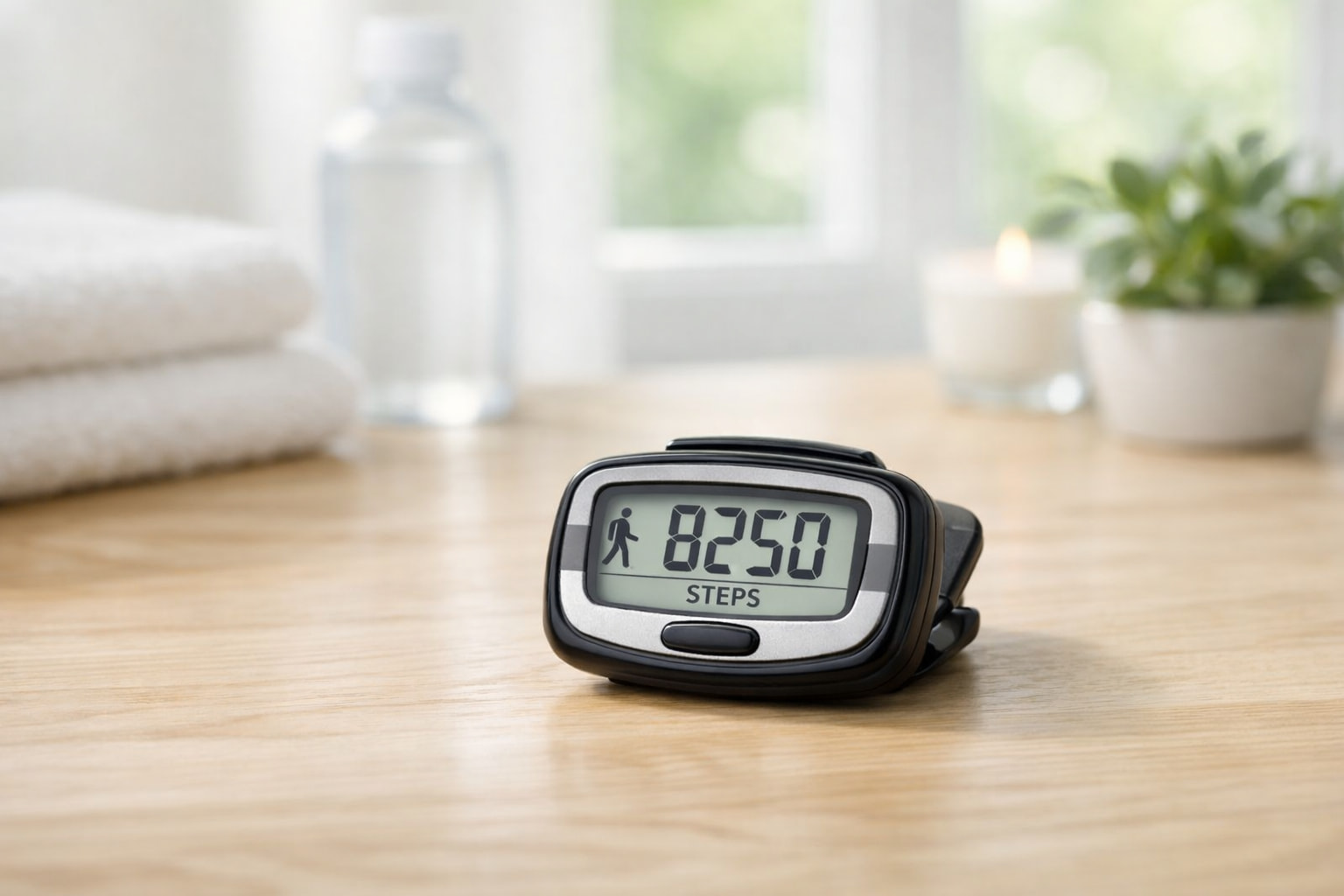
A good pedometer for walking is a simple, reliable way to track daily steps, stay motivated, and build healthier movement habits—without needing a smartphone or wearable tech. For many walkers, especially seniors and beginners, a basic clip-on pedometer is easier to use, more affordable, and less distracting than smartwatches or fitness bands. This guide focuses on straightforward, US-available pedometers designed specifically for walking accuracy, ease of use, and long-term reliability.
How We Selected These Pedometers
We selected these pedometers based on US Amazon availability, consistent user feedback, and suitability for walking-focused use. Priority was given to devices with 3D tri-axis sensors, large easy-to-read displays, long battery life, and simple one-button operation. We also evaluated brand reliability, warranty coverage, and whether each model avoids unnecessary features like apps or Bluetooth that many walkers don’t need.
Comparison Table
Below is a quick overview of the pedometers reviewed in this guide, highlighting their core strengths and ideal use cases.
| Model | Key Features | Ideal For | Buy on Amazon |
|---|---|---|---|
| 1. TAZUZFLA CR-707S | 3D sensor, carabiner clip, steps-only | Minimalist walkers | View on Amazon |
| 2. PINGKO PK-793 | Steps, distance, calories | Walkers wanting basic metrics | View on Amazon |
| 3. NESKLA 838 (Large Display) | Large LCD, clip + lanyard | Seniors, easy readability | View on Amazon |
| 4. TAZUZFLA W802 | Compact, 10-step error filter | Lightweight carry | View on Amazon |
| 5. 3DActive 3DFitBud A420S | Extra-large display, 2-year warranty | Daily reliability | View on Amazon |
| 6. Beroziyesi Bero-P03 | Budget-friendly, large digits | Simple step tracking | View on Amazon |
All models above are steps-first pedometers designed for walking, not running or advanced fitness tracking.
Meta description:
Discover the best pedometer for walking with simple, accurate step counters for seniors and everyday walkers. Compare features, accuracy, and buying tips.
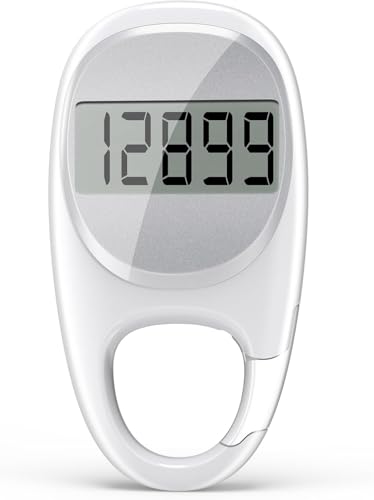
1. TAZUZFLA CR-707S Simple Pedometer — Best for No-Frills Daily Walking
Key Specs
- Brand: TAZUZFLA
- Sensor: 3D Tri-Axis pedometer
- Display: 1.2-inch LCD
- Connectivity: None (no Bluetooth or app)
- Battery Life: Up to 1 year (auto sleep/wake)
- Warranty: 1-year limited
Why We Picked It
This pedometer strips tracking down to the essentials. The tri-axis sensor improves accuracy while the no-Bluetooth design keeps setup and daily use effortless.
Performance Notes
- Reliable step counts during casual and brisk walks without phone pairing
- Lightweight ABS body with a built-in carabiner for easy belt or bag carry
- One-button long-press reset keeps operation intuitive
Who Should (and Shouldn’t) Buy This
✓ For:
- Walkers and seniors who want simple, distraction-free step tracking
- Anyone who prefers clip-on convenience over wrist wearables
✕ Not For:
- Users who want distance, calories, or app syncing
- Those needing backlit screens or advanced metrics
Pros and Cons
| ✔️ Pros | ✘ Cons |
|---|---|
| Accurate 3D tri-axis counting | Steps-only tracking |
| Carabiner—no clip or lanyard | No Bluetooth/app |
| Long battery life | Small display in low light |
Setup & Care Notes: Hold the CLEAR button 3–5 seconds to reset; auto-sleep conserves battery.
Verdict: A dependable, budget-friendly step counter that does exactly what most walkers need—count steps accurately, without fuss.
2. PINGKO PK-793 Multi-Function Pedometer — Best for Simple All-in-One Walking Metrics

Key Specs
- Brand: PINGKO
- Tracking: Steps, distance (miles/km), calories, time
- Display: 0.96-inch LCD
- Connectivity: None (no Bluetooth or app required)
- Power: Alkaline button battery (included)
- Warranty: 18-month limited
Why It Stands Out
This compact pedometer goes beyond basic step counting by adding distance and calorie tracking—without introducing apps or pairing hassles. It’s designed to be approachable for all ages.
Performance Notes
- Detects movement reliably when clipped upright at the waistband
- Lightweight, pocket-friendly build with a clear multi-function display
- Auto sleep/wake conserves battery during inactivity
Who Should (and Shouldn’t) Buy This
✓ For:
- Walkers who want steps, distance, and calories in one simple device
- Users who prefer pocket or clip-on trackers over wearables
✕ Not For:
- Anyone needing app sync, Bluetooth, or detailed analytics
- Users sensitive to audible activation sounds
Pros and Cons
| ✔️ Pros | ✘ Cons |
|---|---|
| Tracks steps, distance, calories | Requires correct upright positioning |
| No smartphone setup needed | Audible sound when starting |
| Lightweight and portable | Small screen for low-light viewing |
Setup & Care Notes: Clip upright near the waist for best accuracy; long-press the reset button to clear data.
Verdict: A friendly, no-app pedometer that delivers core walking stats in a lightweight, easy-to-use package.
3. NESKLA 3D Pedometer Model 838 — Best for Large, Easy-Read Step Tracking

Key Specs
- Brand: NESKLA
- Sensor: 3D Tri-Axis pedometer
- Display: 1.73-inch LCD
- Connectivity: None (no Bluetooth or app)
- Battery Life: Up to 12 months (auto sleep/wake)
- Warranty: 1-year limited
Why We Picked It
This pedometer prioritizes clarity and simplicity. The oversized display and one-button reset make it especially user-friendly for anyone who just wants accurate step counts without tech distractions.
Performance Notes
- Consistent step tracking during steady walking
- Large, high-contrast numbers are easy to read at a glance
- Auto sleep helps extend battery life
Who Should (and Shouldn’t) Buy This
✓ For:
- Seniors, kids, and adults who want steps-only tracking
- Users who prefer clip-on or lanyard carry
✕ Not For:
- Anyone needing distance, calories, or app syncing
- Very slow or irregular walkers
Pros and Cons
| ✔️ Pros | ✘ Cons |
|---|---|
| Large, easy-read display | Steps only |
| Simple one-button operation | Requires consistent walking |
| Clip and lanyard included | No advanced metrics |
Verdict: A clean, no-nonsense pedometer that delivers clear, reliable step counts with zero setup.
4. TAZUZFLA W802 Simple 3D Pedometer — Best for Lightweight, Steps-Only Tracking

Key Specs
- Brand: TAZUZFLA
- Sensor: 3D Tri-Axis pedometer with 10-step error prevention
- Display: 0.75-inch LCD
- Connectivity: None (no Bluetooth or app)
- Battery Life: Up to 12 months (CR2032, replaceable)
- Warranty: 1-year limited
Why We Picked It
This pedometer is built for simplicity. It focuses entirely on accurate step counting, avoiding apps, syncing, or extra settings that can complicate daily use.
Performance Notes
- Consistent step tracking during steady, continuous walking
- Compact and lightweight for pocket, clip, or lanyard carry
- Auto sleep after inactivity helps preserve battery life
Who Should (and Shouldn’t) Buy This
✓ For:
- Seniors and walkers who want distraction-free step tracking
- Users who prefer clip-on or pocket pedometers over wearables
✕ Not For:
- Anyone wanting distance, calories, or smartphone integration
- Users who need a large or backlit display
Pros and Cons
| ✔️ Pros | ✘ Cons |
|---|---|
| Accurate 3D sensor with error filtering | Steps only |
| Clip and lanyard included | Small screen |
| Long battery life | No advanced metrics |
Verdict: A clean, ultra-simple pedometer that delivers reliable step counts with minimal setup.
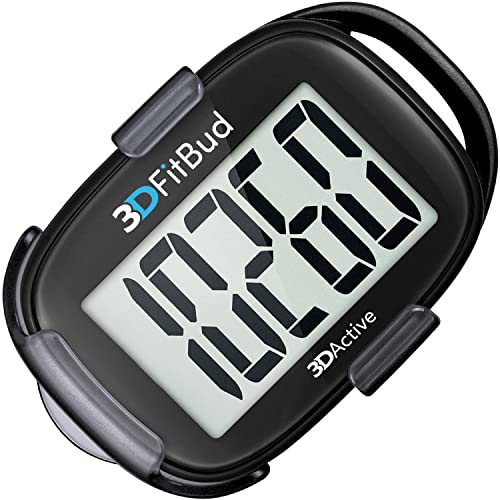
5. 3DActive 3DFitBud A420S — Best for Large Display and Everyday Reliability
Key Specs
- Brand: 3DActive
- Sensor: 3D Tri-Axis sensor
- Display: 1.7-inch LCD (extra-large)
- Connectivity: None (no Bluetooth or app)
- Battery Life: Up to 12 months (CR2032 included)
- Warranty: 2-year manufacturer warranty
Why We Picked It
The 3DFitBud A420S nails the basics with standout readability and dependable accuracy. It’s ready to use out of the box and avoids any setup friction, making it ideal for consistent daily step tracking.
Performance Notes
- Accurate step counts in multiple positions (clip, pocket, lanyard)
- Large, high-contrast numbers are easy to read at a glance
- Auto sleep/wake preserves battery life during inactivity
Who Should (and Shouldn’t) Buy This
✓ For:
- Seniors, kids, and adults who want clear, steps-only tracking
- Walkers who prefer clip-on or lanyard carry over wearables
✕ Not For:
- Users who want distance, calories, or smartphone syncing
- Those seeking ultra-compact or wrist-based trackers
Pros and Cons
| ✔️ Pros | ✘ Cons |
|---|---|
| Very large, readable display | Steps only |
| Accurate 3D tri-axis sensor | No app or extra metrics |
| Long battery life + 2-year warranty | Slightly larger body |
Verdict: One of the most readable and dependable pedometers for no-fuss daily walking.
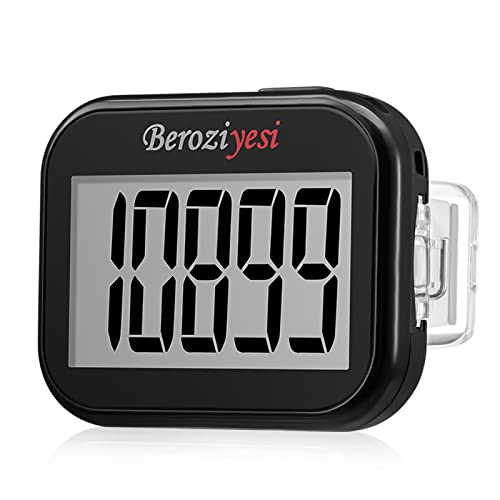
6. Beroziyesi Bero-P03 3D Pedometer — Best for Budget-Friendly, Large-Display Step Tracking
Key Specs
- Brand: Beroziyesi
- Sensor: 3D Tri-Axis step sensor
- Display: 1.7-inch LCD (large digits)
- Connectivity: None (no Bluetooth or app)
- Battery Life: Up to 12 months (CR2032)
- Warranty: Manufacturer limited warranty
Why We Picked It
This pedometer delivers accurate, steps-only tracking with a large, easy-to-read display at a very accessible price point. It’s designed for users who want simplicity without sacrificing visibility.
Performance Notes
- Counts steps reliably during steady, continuous walking
- 10-step error correction helps filter false movement
- Auto sleep/wake conserves battery when inactive
Who Should (and Shouldn’t) Buy This
✓ For:
- Walkers who want a basic, no-app step counter
- Seniors or kids who benefit from a large screen
✕ Not For:
- Users who want distance, calories, or syncing
- Very slow walkers or irregular movement patterns
Pros and Cons
| ✔️ Pros | ✘ Cons |
|---|---|
| Large, clear display | Steps only |
| Simple one-button reset | Needs consistent walking |
| Clip and lanyard included | No advanced metrics |
Verdict: A straightforward, affordable pedometer that focuses on clear, accurate step counting with zero setup.
Space, Placement, and Accuracy Checklist (Before You Buy)
Pedometer accuracy depends heavily on how and where you wear it. Most models perform best when clipped upright at the waist or beltline. Pocket or bag carry can work with tri-axis sensors, but consistency matters. Avoid placing pedometers where they swing freely, as irregular motion can create false steps. Very slow walking, shuffling, or use with mobility aids may reduce accuracy on most consumer pedometers.
Who Should Use a Pedometer (and When Accuracy May Vary)
Pedometers are well suited for seniors and casual walkers who want a simple way to stay active without apps, charging, or complex settings. Their ease of use and large displays make them especially accessible for everyday movement tracking.
Accuracy may vary for very slow walkers or people with a shuffling gait, as most consumer pedometers require a consistent walking rhythm to register steps reliably. In these cases, step counts may be lower than expected.
When used with walkers, canes, or on uneven terrain, movement patterns can differ from natural arm or hip motion, which may reduce counting accuracy. This is a limitation of most non-medical pedometers.
Step counts can also differ from treadmills or smartwatches because pedometers rely on motion sensors rather than belt speed or wrist movement, and each device uses its own detection algorithms.
Battery Replacement, Maintenance, and Long-Term Use
Most walking pedometers use coin-cell batteries (commonly CR2032) that last between 6 and 12 months, depending on usage and auto-sleep features. Models with replaceable batteries generally offer better long-term value.
Some pedometers have non-replaceable batteries, meaning the device must be replaced once the battery reaches the end of its life. This is important to consider for long-term ownership.
A pedometer should be replaced if step counts become inconsistent, the display fades, or buttons stop responding even after a battery change. These are common signs of sensor or internal wear.
For maintenance, keep the device clean and dry, wipe it occasionally with a soft cloth, and store it away from extreme heat or moisture to preserve sensor accuracy and display clarity.
Buying Guide: How to Choose the Best Pedometer for Walking
- Steps-only vs multi-metric: Steps-only pedometers are simpler and often more accurate for walking. Multi-metric models add distance and calories but require correct placement.
- Sensor type: Look for 3D tri-axis sensors, which count steps more reliably than older single-axis designs.
- Display size: Large LCD screens are especially important for seniors or anyone with vision concerns.
- Wear options: Clips, lanyards, and carabiners offer flexibility for different clothing and comfort needs.
- Battery life: Most good pedometers last 6–12 months. Auto sleep/wake features extend battery life.
- Ease of use: One-button reset and no setup requirements reduce frustration and improve long-term use.
- Warranty and support: A longer warranty and established brand can signal better durability and customer support.
Warranty, Returns, and Long-Term Ownership Considerations
Most pedometers in this category include a 1-year limited warranty, with some offering extended coverage. Check whether the battery is replaceable, as this affects long-term value. Amazon’s return window can be helpful for testing accuracy and comfort, but wearables may have stricter return conditions once used. For daily walkers, durability and ease of replacement matter more than advanced features.
How We Scored
We weighted accuracy (40%), ease of use (25%), display readability (15%), battery life (10%), and warranty/support (10%). Models designed specifically for walking, with minimal setup and consistent step counting, scored highest. Extra features were not rewarded unless they added real value for walkers.
FAQs
What is the most accurate pedometer for walking?
Pedometers with 3D tri-axis sensors tend to be the most accurate for walking, especially when worn consistently at the waist.
Are pedometers better than fitness trackers for walking?
For basic walking goals, pedometers are often simpler, cheaper, and easier to use than fitness trackers that require apps and charging.
Do pedometers work for seniors?
Yes. Many pedometers are designed specifically for seniors, featuring large displays, simple controls, and clip-on designs.
How should I wear a pedometer for best results?
Clip it upright at the waist or beltline. Consistent placement improves accuracy more than switching positions.
Do pedometers count steps indoors?
Yes. Pedometers measure motion, not GPS, so they work equally well indoors and outdoors.
Final Verdict
If your goal is simple, consistent step tracking, a dedicated pedometer remains one of the best tools available. The best pedometer for walking is one you’ll actually use every day—easy to read, easy to reset, and reliable over time. For most walkers, especially seniors and beginners, a no-app, steps-only pedometer offers the best balance of accuracy, simplicity, and value.
Disclosure
As an Amazon Associate, I earn from qualifying purchases.