
Spinal stenosis exercises for seniors focus on gentle, pain-aware movements that support mobility, posture, and daily function without aggravating symptoms. Most older adults with lumbar spinal stenosis feel better with controlled movement—especially positions that reduce spinal compression and improve tolerance for walking and standing.
Understanding which exercises are appropriate matters because the wrong movements can worsen discomfort, while the right ones can help you stay active, confident, and independent. This guide explains safe, senior-friendly options commonly recommended by physical therapists and reputable medical organizations.
What Is Spinal Stenosis in Seniors?
Spinal stenosis is a condition where the spaces within the spine narrow, which can place pressure on nerves. In older adults, this narrowing most often affects the lower back (lumbar spine) and develops gradually due to age-related changes.
Common symptoms may include:
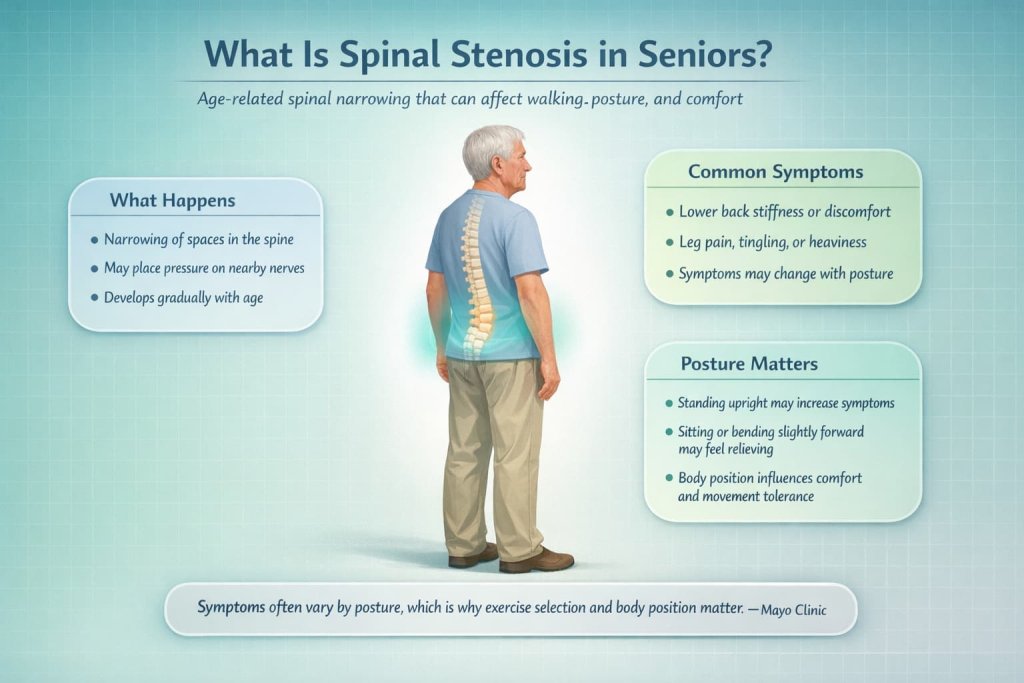
- Lower-back discomfort or stiffness
- Leg pain, tingling, or heaviness when standing or walking
- Relief when sitting or bending slightly forward
According to guidance from the Mayo Clinic, symptoms often vary by posture, which is why exercise selection and body position are so important.
8 Best Spinal Stenosis Exercises for Seniors
Below are commonly recommended spinal stenosis exercises for seniors. These movements emphasize control, support, and symptom-guided range of motion.
1. Knee-to-Chest Stretch
How to do it:
- Lie on your back on a firm but comfortable surface
- Bend both knees with feet flat on the floor
- Slowly bring one knee toward your chest using your hands behind the thigh
- Hold briefly, then lower with control
- Repeat on the other side or bring both knees in if comfortable
Why it works:
This gentle flexion-based movement places the lumbar spine in a position that many people with spinal stenosis find relieving. It may help reduce stiffness, ease pressure sensitivity, and promote comfortable spinal motion without loading the joints.
Muscles worked:
Lower back stabilizers, hip flexors (lightly), and abdominal support muscles.
Trainer Tip:
If pulling the knee causes discomfort, use a towel behind the thigh instead of clasping the knee.
2. Posterior Pelvic Tilt
How to do it:
- Lie on your back with knees bent and feet flat
- Gently tighten your abdominal muscles
- Flatten your lower back into the floor without lifting your hips
- Hold for a few seconds, then relax
Why it works:
This exercise improves awareness and control of pelvic positioning. It encourages gentle spinal flexion and core engagement without movement through a painful range, making it especially suitable for seniors.
Muscles worked:
Deep abdominal muscles, pelvic stabilizers, and lower-back support muscles.
Trainer Tip:
Breathe normally—avoid holding your breath while tightening your core.
3. Seated Forward Bend
How to do it:
- Sit upright in a sturdy chair with feet flat on the floor
- Slowly hinge forward from the hips
- Let your hands slide toward your knees or shins
- Pause briefly, then return to upright with control
Why it works:
The chair provides balance support while allowing the spine to move into a flexed position that may reduce symptoms. This makes it accessible and safe for seniors with limited mobility or balance concerns.
Muscles worked:
Lower back muscles, hamstrings (gently), and trunk stabilizers.
Trainer Tip:
Keep your neck relaxed and avoid forcing the stretch deeper than feels comfortable.
4. Cat-Cow (Modified Range)
How to do it:
- Sit upright with hands resting on thighs or perform on hands and knees if able
- Slowly round your back slightly (cat position)
- Return to a neutral spine (not a deep arch)
- Repeat in a slow, controlled rhythm
Why it works:
This movement promotes spinal mobility while staying within a safe, pain-free range. Limiting the extension phase helps avoid positions that may aggravate spinal stenosis symptoms.
Muscles worked:
Spinal stabilizers, abdominal muscles, and postural muscles.
Trainer Tip:
Move gently and smoothly—this exercise is about mobility, not range or speed.
5. Glute Bridge (Supported)
How to do it:
- Lie on your back with knees bent and feet hip-width apart
- Gently tighten your core
- Lift your hips a small distance off the floor
- Lower slowly with control
Why it works:
Strengthening the glutes helps support the pelvis and spine during standing and walking. Keeping the lift low reduces stress on the lower back while still building useful strength.
Muscles worked:
Glute muscles, hamstrings, and core stabilizers.
Trainer Tip:
Stop lifting as soon as your lower back begins to arch.
6. Standing Hip Abduction (Support Hold)
How to do it:
- Stand beside a chair or counter and hold for support
- Shift weight onto one leg
- Slowly lift the other leg out to the side
- Lower with control and repeat
Why it works:
This exercise improves hip stability, which plays a major role in balance and walking mechanics. It strengthens the hips without placing direct stress on the spine.
Muscles worked:
Hip abductors (especially gluteus medius), stabilizing leg muscles.
Trainer Tip:
Keep toes pointing forward to avoid turning the movement into a hip flexion exercise.
7. Sit-to-Stand From Chair
How to do it:
- Sit near the front of a sturdy chair
- Place feet flat and shoulder-width apart
- Lean slightly forward and stand up using your legs
- Slowly sit back down with control
Why it works:
This functional movement builds strength needed for everyday activities like getting up from chairs or toilets. It reinforces safe movement patterns for daily life.
Muscles worked:
Quadriceps, glutes, hamstrings, and core stabilizers.
Trainer Tip:
Use armrests or place hands on thighs if extra support is needed.
8. Stationary Cycling (Upright or Recumbent)
How to do it:
- Adjust the seat so knees are slightly bent at the bottom of the pedal stroke
- Sit comfortably with relaxed shoulders
- Pedal at an easy, steady pace
- Stop if symptoms increase
Why it works:
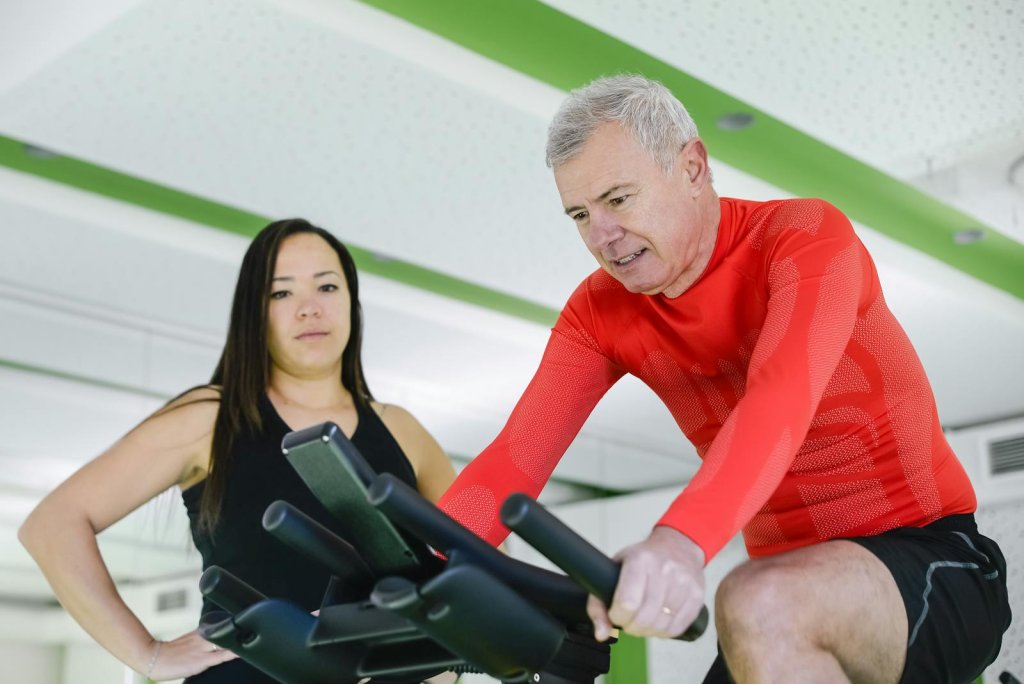
Cycling is a low-impact aerobic activity that often feels comfortable for people with spinal stenosis because it places the spine in a slightly flexed position while promoting circulation and endurance.
Muscles worked:
Quadriceps, hamstrings, glutes, and cardiovascular system.
Trainer Tip:
Short, frequent sessions are often better tolerated than long workouts.
Why Exercise Matters for Seniors With Spinal Stenosis
Regular, appropriate exercise may help seniors:
- Maintain walking ability and leg strength
- Support balance and coordination
- Improve posture and movement confidence
- Reduce stiffness from prolonged sitting
Professional organizations such as the American College of Sports Medicine emphasize that older adults benefit from safe strength, flexibility, and balance training when performed within a comfortable range.
How Often Should Seniors Do Spinal Stenosis Exercises?
There is no single schedule that fits everyone, but most senior-focused programs recommend short, consistent sessions rather than long workouts. According to physical therapy and aging-exercise guidelines, gentle movement performed regularly tends to be better tolerated than infrequent, intense sessions.
General frequency guidelines:
- Mobility and stretching exercises: most days of the week
- Strength-focused exercises: 2–3 nonconsecutive days per week
- Low-impact cardio (e.g., cycling): several short sessions weekly
Rest days are important. Exercises should support daily function, not cause lingering soreness or fatigue. Seniors should adjust frequency based on how their body responds rather than following rigid schedules.
Safety Guidelines Before Starting Spinal Stenosis Exercises
Spinal stenosis exercises for seniors should always prioritize comfort, control, and symptom awareness. Because nerve sensitivity varies from person to person, exercises should never be forced or performed through pain. Guidance from the Mayo Clinic and other medical authorities emphasizes conservative, symptom-guided movement for older adults with spinal conditions.
Key safety principles include:
- Exercise only within a pain-free or pain-reducing range
- Stop immediately if symptoms increase, spread into the legs, or cause numbness
- Avoid holding your breath; maintain steady, relaxed breathing
- Use chairs, walls, or rails for balance support
- Progress gradually—more is not always better
If symptoms change suddenly or daily activities become more difficult, professional guidance is strongly advised.
Exercises Seniors With Spinal Stenosis Should Avoid or Modify
Not all exercises are appropriate for seniors with spinal stenosis. Certain movements may place the spine in positions that increase nerve compression or discomfort. Educational resources from the American Academy of Orthopaedic Surgeons highlight the importance of avoiding aggravating postures.
Exercises commonly avoided or modified include:
- Prolonged or repeated spinal extension (deep back bends)
- High-impact activities such as jumping or running on hard surfaces
- Fast, forceful twisting movements
- Heavy lifting with poor posture
- Exercises that require holding painful positions
This does not mean these movements are harmful for everyone—but for many seniors with spinal stenosis, they are better modified, limited, or replaced with more comfortable alternatives.
When to Seek Professional Guidance
Resources like ChoosePT note that individualized programs are especially important if you experience:
- Numbness or weakness
- Changes in walking ability
- Pain that does not improve with rest
A physical therapist can tailor exercises to your needs and abilities.
Frequently Asked Questions
Are spinal stenosis exercises safe for seniors?
Yes, when exercises are gentle, controlled, and approved by a healthcare professional.
Should seniors avoid all back extension exercises?
Many seniors with lumbar stenosis feel worse with extension, but tolerance varies by individual.
How often should these exercises be done?
Most programs recommend short sessions several times per week, based on comfort.
Can exercise replace surgery for spinal stenosis?
Exercise does not reverse narrowing but may help manage symptoms and function.
Is walking good for seniors with spinal stenosis?
Walking is beneficial for many, especially when done in short intervals with posture breaks.
Can balance exercises help spinal stenosis?
Yes. Balance training supports safer movement and fall prevention.
Conclusion
Spinal stenosis exercises for seniors are about safe movement, not pushing through pain. When chosen carefully, these exercises may help support mobility, independence, and confidence in daily life. Start slowly, listen to your body, and seek professional guidance when needed.
If staying active and comfortable matters to you, a well-planned exercise routine is one of the most practical tools available.
References
- Mayo Clinic: Spinal stenosis – Diagnosis and treatment
- Mayo Clinic: Spinal stenosis – Symptoms and causes
- AAOS OrthoInfo: Lumbar Spinal Stenosis
- ChoosePT (APTA): Physical Therapy Guide to Spinal Stenosis
- NHS Inform: Spinal stenosis
- CDC: Physical activity guidelines for older adults
- NIH National Institute on Aging: Exercise and physical activity
- ACSM: Physical Activity Guidelines (adult/older adult activity recommendations)