
Hip external rotation exercises help strengthen the muscles that rotate the thigh outward, supporting hip mobility, joint stability, and efficient lower-body movement. These exercises are especially important for walking, squatting, balance, athletic performance, and reducing unnecessary strain on the knees and lower back.
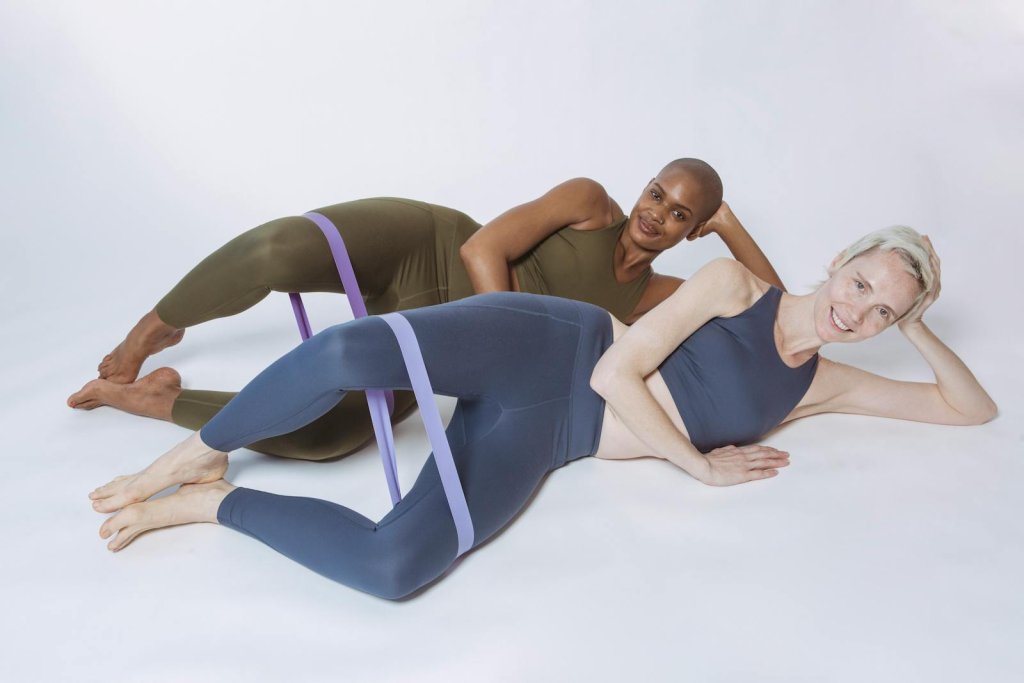
Understanding how to train hip external rotation properly can improve movement quality, support daily function, and lower injury risk. This guide breaks down the best exercises, how to perform them safely, and how to program them effectively.
What Are Hip External Rotation Exercises?
Hip external rotation exercises are movements that train the muscles responsible for rotating the femur (thigh bone) outward within the hip socket. This motion plays a key role in:
- Pelvic and hip joint stability
- Proper knee tracking during squats and lunges
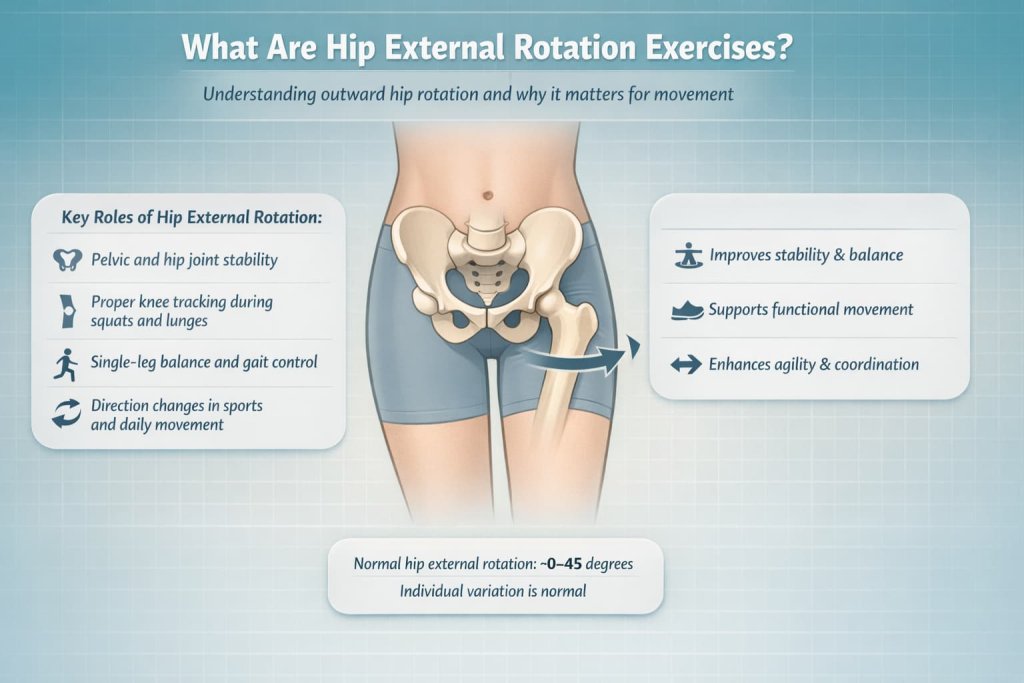
- Single-leg balance and gait control
- Direction changes in sports and daily movement
Clinical references commonly describe normal hip external rotation range of motion as approximately 0–45 degrees, with individual variation.
6 Best Hip External Rotation Exercises
These hip external rotation exercises target key stabilizing muscles that support mobility, balance, and proper hip alignment. They’re suitable for beginners and can be progressed to build long-term hip strength and control.
1. Clamshell Exercise
Why it works:
The clamshell targets hip external rotation in a side-lying position, which minimizes compensation from the lower back and pelvis. This makes it especially effective for improving neuromuscular control of the hip while reinforcing pelvic stability. It is widely used in rehab and beginner programs because it allows precise, low-load activation of the external rotators.
How to do it:
- Lie on your side with hips and knees bent, feet stacked
- Keep your spine neutral and pelvis steady
- Slowly lift the top knee while keeping feet together
- Avoid rolling backward or arching the lower back
- Lower the knee with full control
Muscles worked:
Gluteus medius, deep hip external rotators
Trainer Tip:
Lift only as high as you can without pelvic movement—control matters more than range.
2. Side-Lying Hip Abduction with External Rotation
Why it works:
This variation adds a slight external rotation to traditional hip abduction, increasing activation of the posterior glute fibers. It strengthens lateral hip support, which is essential for balance, gait control, and knee alignment during single-leg activities.
How to do it:
- Lie on your side with the bottom knee bent for support
- Keep the top leg straight and gently rotated outward
- Lift the top leg upward in line with your body
- Pause briefly at the top
- Lower slowly with control
Muscles worked:
Gluteus medius, gluteus maximus
Trainer Tip:
Imagine pressing the heel back slightly to avoid lifting the leg too far forward.
3. Banded Clamshell
Why it works:
Adding resistance increases the demand on the hip external rotators, making this exercise ideal for strength progression. The band also provides constant tension, improving muscular endurance and control through the full range of motion.
How to do it:
- Place a resistance band just above the knees
- Lie on your side with hips and knees bent
- Keep feet together and pelvis stable
- Open the top knee against the band
- Slowly return to the start position
Muscles worked:
Gluteus medius, deep external rotators
Trainer Tip:
If you feel tension in your lower back, reduce band resistance or slow the tempo.
4. Standing Hip External Rotation (Band)
Why it works:
Training hip external rotation in a standing position improves functional carryover to walking, stair climbing, and athletic movements. This exercise challenges both hip strength and postural control while reinforcing upright stability.
How to do it:
- Anchor a resistance band at ankle height
- Stand sideways to the anchor point
- Keep your torso upright and core engaged
- Rotate the working leg outward against the band
- Return slowly to the starting position
Muscles worked:
Gluteus maximus, deep hip external rotators
Trainer Tip:
Hold a wall or chair lightly for balance—avoid rotating through the trunk.
5. Fire Hydrant Exercise
Why it works:
The fire hydrant trains hip external rotation and abduction simultaneously while requiring core and pelvic stability. It reinforces controlled hip movement under bodyweight load, making it valuable for injury prevention and movement retraining.
How to do it:
- Start on hands and knees with a neutral spine
- Brace your core and keep hips level
- Lift one knee out to the side
- Stop before the pelvis shifts
- Lower the knee slowly
Muscles worked:
Gluteus medius, gluteus maximus
Trainer Tip:
Think “long spine, quiet hips” to prevent excessive weight shifting.
6. Seated Hip External Rotation
Why it works:
This exercise isolates hip external rotation without balance demands, making it suitable for beginners, seniors, or early-stage rehab. It promotes joint awareness and controlled movement at the hip.
How to do it:
- Sit upright on a chair with knees bent
- Keep feet planted and pelvis steady
- Rotate one knee outward slowly
- Return to the starting position
- Alternate sides
Muscles worked:
Deep hip external rotators
Trainer Tip:
Sit tall and move slowly—avoid using momentum or leaning sideways.
How Often Should You Do Hip External Rotation Exercises?
General strength-training guidance from the American College of Sports Medicine recommends training major muscle groups at least two days per week. For hip external rotation:
- 2–3 sessions per week
- 2–3 sets per exercise
- 8–15 controlled repetitions
Quality and control matter more than resistance.
Muscles Involved in Hip External Rotation
Hip external rotation exercises primarily target:
- Gluteus maximus
- Gluteus medius (posterior fibers)
- Deep external rotators (piriformis, obturators, gemelli)
These muscles work together to control hip rotation, stabilize the pelvis, and guide proper leg alignment.
Common Mistakes to Avoid
- Using momentum instead of muscle control
- Rotating the pelvis or lower back
- Choosing resistance that compromises form
- Skipping warm-up or mobility work
Who Should Be Cautious?
- Individuals with recent hip surgery or acute injury
- Those with persistent hip or groin pain
- People diagnosed with structural hip conditions
In these cases, consult a qualified professional before starting.
When to Seek Professional Guidance
According to orthopedic recommendations from the American Academy of Orthopaedic Surgeons, you should seek guidance if:
- Pain worsens during or after exercise
- You experience sharp hip or groin discomfort
- Strength or mobility fails to improve over time
A physical therapist can help tailor exercise selection and progression.
Frequently Asked Questions
What causes weak hip external rotators?
Prolonged sitting, low activity levels, and lack of targeted strength training commonly contribute.
Can hip external rotation exercises help knee pain?
They may help support better knee alignment by improving hip control, but results vary by individual.
Are bands or bodyweight better?
Both are effective. Bodyweight builds control; bands help with strength progression.
How long does it take to see improvement?
Many people notice better control and stability within 3–6 weeks of consistent training.
Can seniors do hip external rotation exercises?
Yes, when performed with appropriate intensity and support.
Should these exercises be painful?
No. Mild muscle effort is expected, but pain is not.
Conclusion
Hip external rotation exercises play a vital role in maintaining strong, stable, and mobile hips. When performed consistently with proper technique, they support better movement quality, balance, and long-term joint health.
Start with controlled movements, progress gradually, and prioritize form. If symptoms persist, consult a qualified professional for personalized guidance.
References
- CDC Physical Activity Guidelines for Adults (Strength Training 2+ Days/Week)
- Boren et al. (2011) EMG Analysis of Gluteus Medius/Maximus During Rehab Exercises (PMC)
- Sidorkewicz et al. (2014) Hip Orientation Effects on Clamshell and Hip Abduction Activation (ScienceDirect)
- Physiopedia: Goniometry Hip External Rotation (ROM Reference)
- Ford et al. (2015) Evidence-Based Review of Hip-Focused Neuromuscular Exercise Interventions