
Lumbar spinal stenosis exercises are gentle, targeted movements that may help reduce discomfort and support walking and daily mobility by improving flexibility, core support, and posture. For many people, symptoms feel better with controlled, spine-supported movement rather than aggressive stretching or high-impact activity.
Below are five widely used, evidence-informed exercises commonly included in physical therapy programs for lumbar spinal stenosis.
Why Exercise Matters for Lumbar Spinal Stenosis
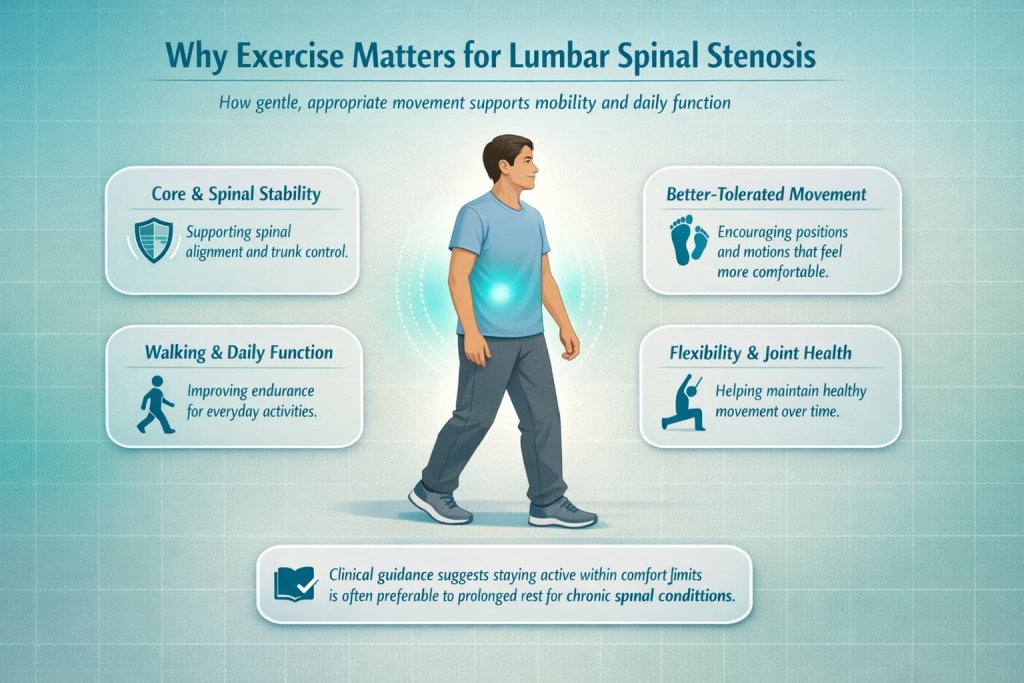
Regular, appropriate exercise may help people with lumbar spinal stenosis by:
- Supporting spinal and core stability
- Encouraging movement patterns that are often better tolerated
- Improving walking endurance and daily function
- Helping maintain flexibility and joint health
Clinical guidance from sources such as the Mayo Clinic notes that staying active—within comfort limits—is often preferable to prolonged rest for most people with chronic spinal conditions.
5 Best Lumbar Spinal Stenosis Exercises
These five lumbar spinal stenosis exercises focus on gentle spinal flexion, core support, and controlled movement to help reduce discomfort and support daily mobility. They are commonly used in conservative care programs and are designed to be safe, manageable, and adaptable to individual tolerance levels.
1. Posterior Pelvic Tilt
How to do it
- Lie on your back with your knees bent and feet flat on the floor, hip-width apart
- Gently draw your belly button inward as if tightening a belt
- Slowly flatten your lower back into the floor by tilting your pelvis backward
- Hold the position for a few seconds while breathing normally
- Relax and return to the starting position before repeating
Why it works
This exercise encourages gentle lumbar flexion and improves awareness of pelvic and spinal positioning. It is commonly introduced early in rehabilitation programs because it allows spinal control without loading the spine or moving into painful ranges.
Muscles worked
The transverse abdominis and other deep abdominal stabilizers, with light assistance from the gluteal muscles.
Trainer Tip
Focus on slow, controlled movement rather than pressing hard into the floor. If you feel strain in your neck or hips, reduce the intensity and shorten the hold.
2. Single Knee-to-Chest Stretch
How to do it
- Lie on your back with both knees bent and feet resting on the floor
- Gently bring one knee toward your chest using your hands
- Keep the opposite foot flat on the floor to maintain stability
- Hold the position briefly, then return the foot to the floor
- Repeat on the opposite side
Why it works
This stretch promotes mild lumbar flexion and may temporarily ease pressure sensations in the lower back by reducing compressive forces around sensitive spinal structures.
Muscles worked
Lower back muscles, gluteals, and hip extensors through a gentle stretching action.
Trainer Tip
The stretch should feel comfortable, not forced. If pulling the knee causes discomfort, reduce the range or support the leg with a towel or strap.
3. Seated Forward Bend (Chair Flexion)
How to do it
- Sit upright in a sturdy chair with your feet flat on the floor
- Place your hands on your thighs for support
- Slowly hinge forward from your hips, allowing your upper body to lean forward
- Keep the movement controlled and pain-free
- Return to an upright seated position with steady control
Why it works
Seated flexion allows spinal movement without full bodyweight loading. This makes it easier to control range of motion and is often better tolerated by individuals with lumbar spinal stenosis.
Muscles worked
Spinal extensor muscles through a gentle stretch, along with the hips and trunk stabilizers.
Trainer Tip
Move slowly and avoid collapsing into the stretch. The goal is controlled mobility, not maximum depth.
4. Abdominal Bracing
How to do it
- Lie on your back or sit upright with your spine in a neutral position
- Gently tighten your abdominal muscles as if preparing to cough
- Keep your spine still and avoid flattening or arching your lower back
- Continue breathing normally while holding the brace
- Relax and repeat
Why it works
Abdominal bracing builds core support without moving the spine. This type of stability is essential for everyday tasks such as standing, walking, and changing positions safely.
Muscles worked
The transverse abdominis and other deep core stabilizing muscles.
Trainer Tip
Think of creating gentle support rather than a hard contraction. You should be able to breathe comfortably throughout the exercise.
5. Recumbent or Stationary Cycling
How to do it
- Adjust the seat so your knees remain slightly bent at the bottom of each pedal stroke
- Sit comfortably with your back supported (recumbent bike) or upright without strain
- Pedal at a steady, moderate pace
- Stop immediately if symptoms increase or discomfort appears
Why it works
Cycling keeps the body active in a slightly flexed position, which is often better tolerated than upright walking for some people with lumbar spinal stenosis. It also supports cardiovascular fitness without impact loading.
Muscles worked
Quadriceps, hamstrings, gluteal muscles, and the cardiovascular system.
Trainer Tip
Start with short sessions and build gradually. Consistency matters more than duration when managing symptoms.
How Often Should You Do Lumbar Spinal Stenosis Exercises?
Exercise frequency should be based on comfort, tolerance, and overall activity level rather than strict schedules.
General guidance includes:
- Performing gentle exercises several times per week
- Using short, manageable sessions instead of long workouts
- Allowing rest days if symptoms feel aggravated
- Adjusting frequency based on how your body responds over time
Consistency matters more than intensity. Exercises should support daily movement and mobility without increasing symptoms.
Safety Guidelines Before Starting Lumbar Spinal Stenosis Exercises
Before beginning any lumbar spinal stenosis exercise program, prioritize comfort, control, and gradual progression. Exercises should support movement tolerance—not provoke symptoms.
Key safety points to follow:
- Move only within a pain-free or symptom-tolerable range
- Avoid forcing positions that increase leg pain, numbness, or tingling
- Progress slowly; intensity and volume should increase gradually over time
- Maintain steady breathing and avoid holding your breath during exercises
- Stop exercising if symptoms significantly worsen or feel different than usual
If you are unsure whether an exercise is appropriate for you, seek guidance from a qualified healthcare or rehabilitation professional before continuing.
Who Should Be Cautious With These Exercises?
While many people can perform gentle lumbar spinal stenosis exercises safely, extra caution is advised if you:
- Have severe or rapidly worsening leg pain, weakness, or numbness
- Experience new balance problems or frequent falls
- Recently had spinal surgery or spinal injections
- Have not received a confirmed diagnosis for your symptoms
- Notice symptoms that do not improve with rest or position changes
In these situations, individualized guidance is important to ensure exercises are safe and appropriate for your condition.
Frequently Asked Questions
Can exercise cure lumbar spinal stenosis?
No. Exercise does not cure spinal stenosis, but it may help manage symptoms and support function.
Are flexion exercises always better for stenosis?
Many people tolerate flexion-based movements well, but responses vary. Exercise selection should be individualized.
How often should I do these exercises?
Many programs suggest gentle exercise several times per week, depending on tolerance and professional guidance.
Should I avoid walking if I have spinal stenosis?
Not necessarily. Some people benefit from short, paced walks, especially with rest breaks.
Is cycling better than walking for lumbar spinal stenosis?
For some individuals, cycling is more comfortable due to the flexed posture, but this varies person to person.
When should I stop exercising?
Stop if pain, numbness, or weakness increases significantly, and consult a healthcare professional.
Conclusion
Lumbar spinal stenosis exercises focus on safe movement, core support, and comfort-based progression, not pushing through pain. The five exercises above are commonly used in conservative care programs and may help support daily mobility when performed consistently and cautiously.
If symptoms persist or worsen, consider working with a licensed physical therapist or healthcare provider for individualized guidance.
References
- NIAMS (NIH) – Spinal Stenosis: Diagnosis, Treatment, and Steps to Take
- AAOS OrthoInfo – Lumbar Spinal Stenosis
- Mayo Clinic – Spinal Stenosis: Diagnosis and Treatment
- North American Spine Society (NASS) – Clinical Guideline: Degenerative Lumbar Spinal Stenosis (PDF)
- Mass General Brigham – Rehabilitation Guidelines for Conservative Management of Lumbar Spinal Stenosis (PDF)
- Clinical Rehabilitation (PMC) – Exercise Treatments for Lumbar Spinal Stenosis: Systematic Review and Component Analysis
- BMJ Open – Non-Operative Treatment for Lumbar Spinal Stenosis With Neurogenic Claudication: Systematic Review (PDF)
- The Journal of Pain – Clinical Practice Guideline: Non-Surgical Interventions for Lumbar Spinal Stenosis With Neurogenic Claudication