
Yoga exercises for scoliosis can support posture, mobility, breathing, and body awareness—but they do not correct spinal curves. Understanding how to practice yoga safely is important so you gain benefits without increasing discomfort or risk.
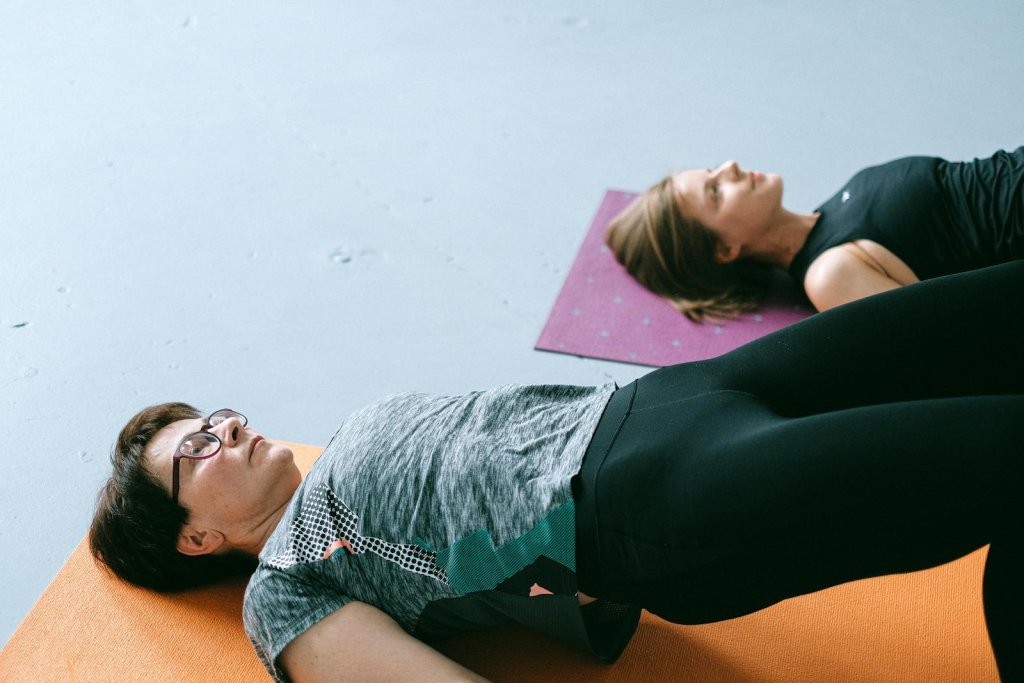
Scoliosis is a three-dimensional spinal condition, and most medical guidelines emphasize observation, bracing, or surgery depending on curve size and age. Supportive movement approaches like yoga may help improve comfort, balance, and postural control when practiced carefully and with realistic expectations.
This guide explains what the evidence says, how yoga fits into scoliosis care, and the 5 best yoga exercises for scoliosis commonly recommended for safe spinal support.
What Are Yoga Exercises for Scoliosis?
Yoga exercises for scoliosis are modified yoga poses practiced with an emphasis on:
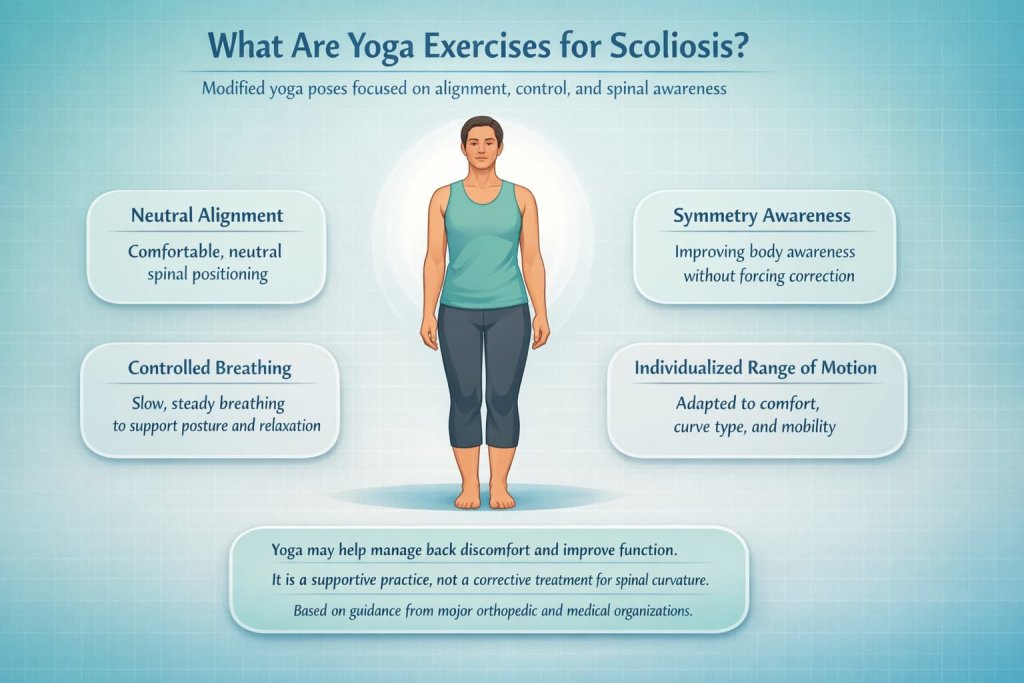
- Neutral spinal alignment
- Controlled breathing
- Symmetry awareness
- Individualized range of motion
According to guidance from organizations such as the Mayo Clinic and the American Academy of Orthopaedic Surgeons, yoga may be used as a supportive activity to help manage back discomfort and improve function, but it is not a treatment for correcting spinal curvature.
Can Yoga Help Scoliosis?
Yoga may help support:
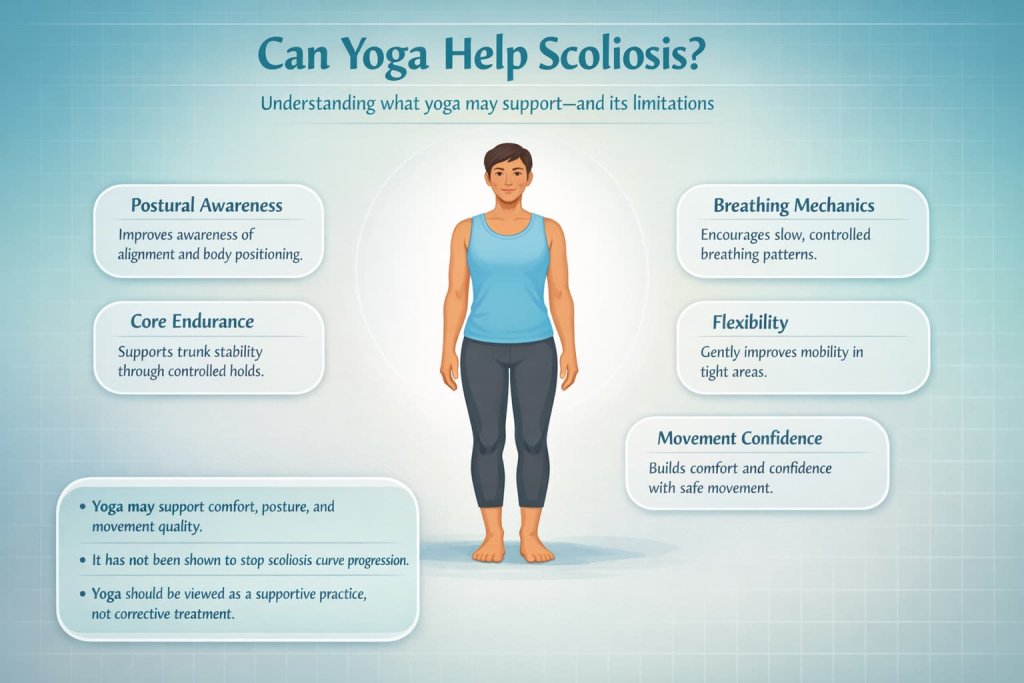
- Postural awareness
- Core endurance
- Breathing mechanics
- Flexibility in tight areas
- Confidence with movement
However, the Scoliosis Research Society states that alternative approaches such as yoga have not been shown to stop curve progression.
5 Best Yoga Exercises for Scoliosis
These poses are commonly included in scoliosis-friendly yoga programs because they emphasize stability, control, and spinal awareness rather than deep twisting or extreme backbending.
1. Side Plank (Modified)
How to do it
- Lie on your side with knees bent and hips stacked
- Place your elbow directly under your shoulder
- Gently lift your hips until your body forms a straight line from knees to shoulders
- Keep your neck neutral and gaze forward
- Breathe slowly and hold the position with control
- Lower down smoothly and switch sides if appropriate
Why it works
Side plank trains the body’s ability to resist side-bending forces, which is especially relevant for spinal stability. Rather than moving the spine, it encourages controlled core engagement, helping improve awareness and endurance of muscles that support upright posture.
Muscles worked
This exercise activates the obliques and deep core stabilizers, along with the shoulder stabilizers and hip abductors that assist in maintaining lateral balance.
Trainer tip
Side plank is sometimes used selectively for lumbar or thoracolumbar curves, but it is not suitable for all scoliosis patterns. Curve type, direction, and symptoms matter—professional guidance is strongly recommended before making it a regular exercise.
2. Mountain Pose (Tadasana)
How to do it
- Stand upright with feet hip-width apart and weight evenly distributed
- Lengthen through the crown of the head without forcing the spine straight
- Gently engage the core and glutes
- Let the shoulders relax down and back
- Breathe slowly while maintaining tall, relaxed posture
Why it works
Mountain Pose reinforces postural awareness and symmetry. It teaches the body how “neutral alignment” feels, which can carry over into daily activities like standing, walking, and sitting.
Muscles worked
Postural muscles along the spine, glutes, and deep core stabilizers work together to maintain upright alignment.
Trainer tip
Practicing in front of a mirror or near a wall can help reinforce even weight distribution and alignment cues without forcing correction.
3. Cat–Cow Pose
How to do it
- Start on hands and knees with wrists under shoulders and knees under hips
- Inhale as you gently extend the spine and lift the chest
- Exhale as you round the back and draw the chin slightly toward the chest
- Move slowly between positions
- Stay within a comfortable, pain-free range
Why it works
Cat–Cow encourages gentle spinal movement and improves body awareness without prolonged loading. The controlled motion supports mobility and coordination rather than strength or endurance.
Muscles worked
This movement engages spinal extensors, abdominal muscles, and neck stabilizers in a coordinated, low-stress pattern.
Trainer tip
Focus on smooth transitions and breathing rhythm rather than how far you move the spine.
4. Child’s Pose (Supported)
How to do it
- Kneel on the floor and gently sit back toward your heels
- Rest your torso on your thighs or a bolster
- Place arms forward or alongside the body
- Allow the head and neck to relax
- Breathe deeply into the back and sides of the rib cage
Why it works
Child’s Pose promotes relaxation and reduces muscular tension around the spine. When supported, it allows the body to decompress without forcing flexion or stretch.
Muscles worked
Lower back muscles, hips, shoulders, and upper-back musculature are gently lengthened and relaxed.
Trainer tip
Using pillows, bolsters, or folded blankets can significantly improve comfort and reduce strain, especially for those with stiffness or discomfort.
5. Bridge Pose (Gentle)
How to do it
- Lie on your back with knees bent and feet flat on the floor
- Place arms alongside your body with palms down
- Press through the feet and lightly lift the hips
- Keep ribs down and spine long
- Lower slowly with control and rest
Why it works
A gentle bridge strengthens the posterior chain and encourages awareness of spinal positioning. When performed conservatively, it supports hip and trunk control without excessive spinal arching.
Muscles worked
Glutes, hamstrings, and spinal stabilizers contribute to controlled hip extension and trunk support.
Trainer tip
Avoid lifting too high or holding for long periods. Focus on smooth, controlled movement rather than depth or intensity.
Yoga Exercises for Scoliosis: What to Avoid
Certain movements may increase stress on an asymmetrical spine, especially when done forcefully or repetitively.
Be cautious with:
- Deep spinal twists
- Extreme backbends
- Fast-flow classes without modification
- Long holds that increase pain or fatigue
The National Institute of Arthritis and Musculoskeletal and Skin Diseases emphasizes pain-free, controlled movement for spine conditions.
Important Safety Guidelines Before Practicing Yoga for Scoliosis
Yoga exercises for scoliosis should be used as supportive movement, not as a way to correct spinal curves. Because scoliosis varies by curve type and severity, poses must be individualized.
Key safety points:
- Practice only pain-free movements
- Avoid forcing the spine into “straight” positions
- Adolescents and progressing curves need professional guidance
- Yoga should not replace medical monitoring or prescribed treatment
Guidance from the Scoliosis Research Society and the American Academy of Orthopaedic Surgeons supports symptom-guided, individualized exercise.
How Often Should You Practice Yoga for Scoliosis?
For most people:
- 2–4 sessions per week
- Short, focused sessions (15–30 minutes)
- Emphasis on consistency over intensity
Yoga should complement—not replace—medical follow-up or prescribed exercise programs.
When to Seek Professional Guidance
Consult a healthcare or movement professional if:
- Pain increases during or after yoga
- You have a moderate-to-severe curve
- You are still growing (adolescents)
- You have been prescribed bracing or therapy
Scoliosis-specific exercise methods such as Schroth-based programs are typically guided by trained professionals and differ from general yoga classes.
Frequently Asked Questions
Can yoga straighten scoliosis?
No. Current evidence does not support yoga as a method to correct spinal curvature.
Is yoga safe for scoliosis?
Yoga is generally safe when modified and pain-free, but poses must be individualized.
Which yoga style is best for scoliosis?
Gentle, alignment-focused styles such as restorative or therapeutic yoga are often better tolerated.
Can teens with scoliosis do yoga?
Yes, with supervision and medical guidance, especially during growth phases.
Should I do yoga instead of physical therapy?
No. Yoga may complement care but should not replace prescribed treatment.
How long before I notice benefits?
Many people notice improved comfort and awareness within a few weeks of consistent practice.
Conclusion
Yoga exercises for scoliosis can be a valuable supportive practice for posture, comfort, and body awareness when used responsibly. The key is choosing controlled, spine-friendly poses and avoiding movements that force the spine beyond its safe limits.
If you want to practice yoga for scoliosis, start gently, stay consistent, and work alongside qualified professionals for the safest and most effective approach.
References
- Nonsurgical Treatment Options for Scoliosis (AAOS OrthoInfo)
- Scoliosis: Symptoms and Causes (Mayo Clinic)
- Scoliosis in Children and Teens: Diagnosis, Treatment, and Steps to Take (NIAMS)
- 2016 SOSORT Guidelines: Orthopaedic and Rehabilitation Treatment of Idiopathic Scoliosis During Growth (PMC Full Text)
- Physiotherapy Scoliosis-Specific Exercises (PSSE): Comprehensive Review (Berdishevsky et al., 2016)
- Serial Case Reporting: Yoga (Side Plank) for Idiopathic and Degenerative Scoliosis (Fishman et al., 2014, PMC)