
The Dead Bug exercise is one of the safest and most effective ways to build core strength, improve stability, and protect your lower back.
This exercise targets your deep abdominal and spinal stabilizers without placing stress on your neck or spine — making it ideal for beginners, athletes, and anyone recovering from back discomfort.
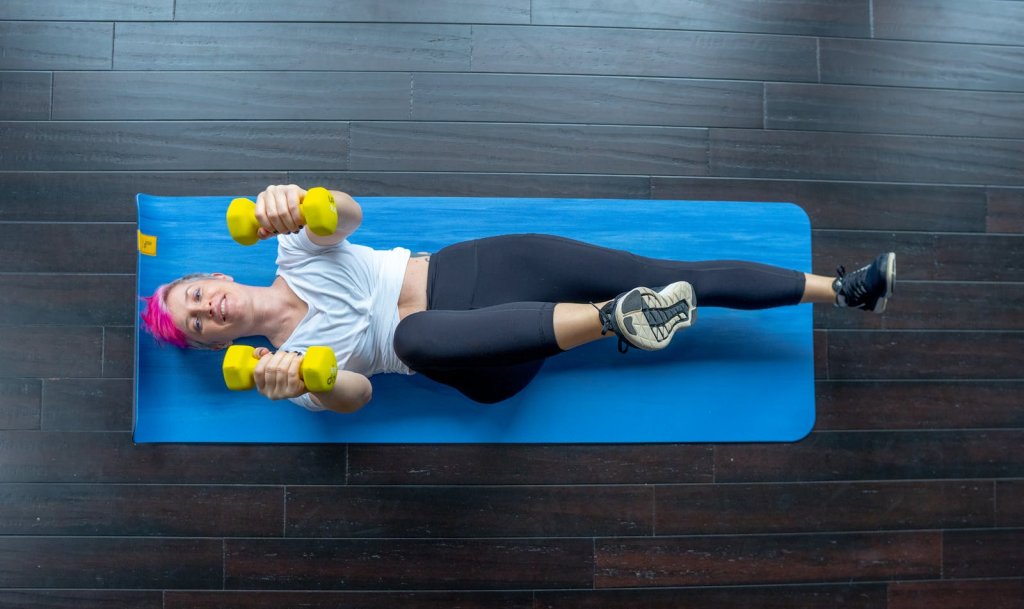
Understanding how to perform the Dead Bug correctly helps you improve posture, balance, and coordination — all essential for pain-free daily movement. In this guide, you’ll learn exactly what the Dead Bug is, its key benefits, proper form, variations, and the science behind why it works.
What Is the Dead Bug Exercise?
The Dead Bug is a core-stability exercise where you lie on your back and move opposite limbs in a controlled motion while keeping your spine stable. Despite its odd name, it’s one of the most therapeutically recommended moves for strengthening your deep core muscles — particularly the transverse abdominis, obliques, rectus abdominis, and hip flexors.
It’s called “Dead Bug” because your position resembles a bug lying on its back, arms and legs in the air — but the control and coordination involved make it one of the smartest functional core moves available.
How to Do the Dead Bug Exercise
- Start Position:
- Lie on your back with arms extended toward the ceiling.
- Bend your knees 90 degrees, keeping shins parallel to the floor.
- Engage Core:
- Flatten your lower back gently into the mat.
- Brace your abs as if preparing for a gentle punch — no holding breath.
- Move Opposite Limbs:
- Slowly lower your right arm and left leg until just above the floor.
- Keep your back pressed flat and abs tight.
- Return to Start:
- Bring your limbs back to center, then switch sides.
Variations of the Dead Bug Exercise
1. Bent-Arm Dead Bug (Beginner)
Why it works:
This beginner-friendly version reduces leverage on the limbs, allowing you to focus on maintaining spinal stability and proper breathing. It teaches correct bracing mechanics without overloading your core — perfect for learning foundational control.
How to do it:
- Lie flat on your back with knees bent at 90 degrees and arms bent so elbows are above your shoulders.
- Flatten your lower back gently against the mat and engage your core.
- Slowly lower one arm and the opposite leg toward the floor, keeping elbows bent.
- Return to the start and repeat on the other side.
Trainer Tip:
If your lower back arches, reduce your range of motion or lift your legs higher — focus on maintaining tension, not depth.
2. Weighted Dead Bug (Advanced)
Why it works:
Adding dumbbells increases resistance and activates shoulder stabilizers, forcing your core to work harder to maintain a neutral spine. This version improves total-body coordination and strength under tension.
How to do it:
- Hold a light dumbbell in each hand while lying on your back, arms extended toward the ceiling.
- Lift both legs to a tabletop position.
- Lower your right arm and left leg simultaneously until they hover above the floor.
- Return slowly, then switch sides.
Trainer Tip:
Use light weights (2–5 lbs) to maintain form. Keep shoulders anchored and avoid arching your back — slow tempo increases effectiveness.
3. Stability Ball Dead Bug
Why it works:
Squeezing a stability ball between your knees and hands increases core engagement through isometric tension. This variation enhances coordination, balance, and anterior core activation.
How to do it:
- Lie on your back and hold a stability ball between your hands and knees.
- Press the ball gently to engage your core and flatten your back.
- Lower one arm and the opposite leg while keeping pressure on the ball with the other side.
- Return to the starting position and alternate sides.
Trainer Tip:
Maintain gentle pressure on the ball throughout — it’s the key to keeping deep core muscles active and your spine supported.
4. Resistance Band Dead Bug
Why it works:
The band adds continuous tension, challenging both your shoulders and abs to stabilize simultaneously. It enhances core endurance and anti-extension control — vital for sports and posture.
How to do it:
- Anchor a resistance band securely above your head and grab one end in each hand.
- Lie flat, raise legs into tabletop position, and pull the band slightly to create tension.
- Lower one arm and opposite leg slowly toward the floor, keeping the other arm and leg steady.
- Return and switch sides.
Trainer Tip:
Keep your rib cage down and band tension constant — it prevents shoulder shrugging and maximizes core stability.
Benefits of the Dead Bug Exercise
1. Builds Core Strength Without Straining the Spine
Unlike crunches or sit-ups, the Dead Bug keeps your spine in a neutral position.
A 2019 Strength & Conditioning Journal study reported that the Dead Bug “promotes lumbopelvic stability while minimizing spinal compression.”
2. Improves Postural Control
By coordinating opposite limbs, the Dead Bug strengthens deep stabilizers that keep your torso upright and balanced — improving posture and reducing slouching.
3. Enhances Lower-Back Health
A 2025 BMC Sports Science review found that controlled core exercises like the Dead Bug activate the lumbar multifidus, a key muscle for spinal stability, reducing the risk of low-back pain.
4. Boosts Coordination and Balance
A 2024 International Journal of Health Sciences Research study showed that 4 weeks of Dead Bug training improved dynamic balance and agility in young athletes.
5. Suitable for All Levels
It’s adaptable for beginners and scalable with weights, resistance bands, or tempo control for advanced users.
Muscles Worked in the Dead Bug Exercise
| Primary Muscles | Supporting Muscles |
|---|---|
| Rectus abdominis | Hip flexors |
| Transverse abdominis | Lower back (erector spinae, multifidus) |
| Internal & external obliques | Shoulders and glutes |
These muscles work together to resist spinal movement — the foundation of true core stability.
Common Mistakes to Avoid
- Arching the lower back: Keep it pressed into the floor to engage your core.
- Rushing the motion: Slow movement ensures proper activation.
- Holding your breath: Maintain steady, deep breathing throughout.
- Using momentum: Lift and lower with control, not swinging limbs.
Who Should Do the Dead Bug Exercise
The Dead Bug is ideal for beginners, athletes, and anyone wanting better core control without back strain.
Best for:
- Beginners learning safe core activation
- People with mild back pain or posture issues
- Older adults improving balance and coordination
- Athletes enhancing core stability for performance
Avoid or modify if you have acute back pain, recent surgery, or can’t keep your spine neutral. Always consult a professional if unsure.
When to Add Dead Bugs to Your Routine
Do Dead Bugs 2–4 times per week as part of your core or warm-up routine.
Best times to include:
- Warm-up: Activates stabilizers before lifting or cardio
- Core circuit: Pair with planks or glute bridges
- Rehab or recovery: Builds safe core control post-injury
Start slow, focus on form, and progress to weighted or banded variations once you can perform 3 sets of 12 with ease.
Safety & Precautions
- Avoid if you experience acute lower-back pain — consult a physical therapist first.
- Start slow; prioritize form over reps.
- If you feel your lower back lifting off the mat, reduce your range of motion.
The Dead Bug is generally safe for most people, including those in postural rehab, but consult your doctor before starting any new core routine if you have spinal or pelvic conditions.
FAQ
1. What is the main purpose of the Dead Bug exercise?
To build core stability and coordination while keeping the spine protected.
2. Is the Dead Bug exercise better than crunches?
Yes — it strengthens deeper stabilizers and reduces spinal pressure, making it safer and more functional.
3. Can beginners do the Dead Bug exercise?
Absolutely. Start with smaller limb movements or bent knees to maintain control.
4. How often should I do the Dead Bug exercise?
2–4 times per week, as part of your core or warm-up routine.
5. What equipment do I need?
Just a yoga mat. Advanced variations can include dumbbells or resistance bands.
6. Can it help with lower back pain?
It may help by improving spinal support — but consult your doctor or physical therapist first.
7. What’s the best breathing technique?
Inhale as you lower your limbs, exhale as you return to center, keeping abs braced throughout.
Conclusion
The Dead Bug exercise is a low-risk, high-reward movement that strengthens your core, stabilizes your spine, and enhances daily movement efficiency. Whether you’re new to fitness or rebuilding strength after injury, mastering this exercise is one of the smartest ways to bulletproof your midsection.
Start incorporating the Dead Bug into your routine today — your spine, posture, and performance will thank you.
References
- Mullane M, Turner A, Bishop C. “Exercise Technique: The Dead Bug.” Strength & Conditioning Journal (2019).
- George SZ, et al. “Interventions for the Management of Acute and Chronic Low Back Pain: Clinical Practice Guideline.” JOSPT (2021).
- Qaseem A, et al. “Noninvasive Treatments for Acute, Subacute, and Chronic Low Back Pain.” Annals of Internal Medicine (ACP Guideline, 2017).
- Huang H, et al. “Effects of dynamic neuromuscular stabilization vs conventional core exercises in chronic low back pain: RCT.” BMC Musculoskeletal Disorders (2025).
- Wong S, Ma L. “Effect of Dead Bug Exercises on Dynamic Balance and Agility in Adolescent Badminton Players: Experimental Study.” International Journal of Health Sciences Research (2024).