
Isometric exercises may help lower resting blood pressure when practiced consistently (often just a few short sessions per week). Understanding how to do them safely matters because static holds can temporarily raise blood pressure during the contraction, especially if you hold your breath or strain. A research-backed approach focuses on short holds, steady breathing, and repeatable weekly sessions, alongside your clinician’s guidance when needed.
Evidence snapshot: A large 2023 network meta-analysis of 270 randomized controlled trials (15,827 participants) found isometric training produced the largest average reductions in resting blood pressure among exercise modes (about 8 mm Hg systolic and 4 mm Hg diastolic), according to research indexed on PubMed.
Isometric exercises to lower blood pressure: what the research shows
Isometric exercise involves contracting muscles without moving the joint (static holds). In blood pressure research, the most studied formats are short, repeatable efforts (for example, 4 sets of 2-minute holds, about 3 days per week) done at a moderate effort level rather than “maxing out.” Randomized trials and pooled analyses repeatedly show meaningful resting BP improvements after several weeks of consistent practice, as summarized in large analyses available through PubMed.
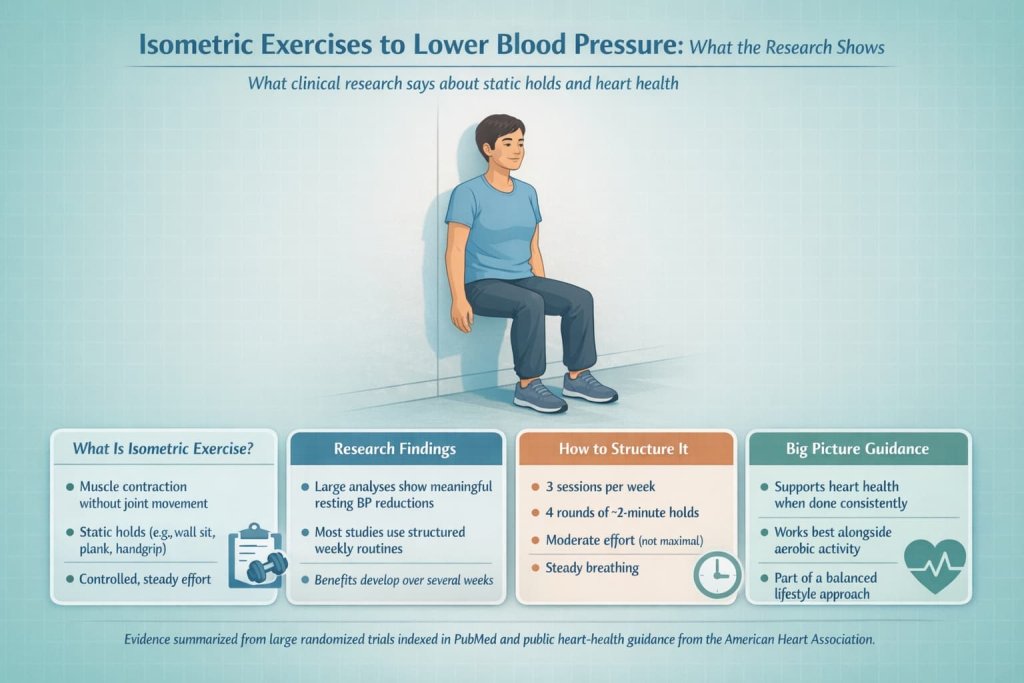
It’s also worth keeping perspective: major heart-health guidance still emphasizes a well-rounded plan (aerobic activity plus resistance training), and isometrics can be a time-efficient add-on rather than the only tool, as explained by the American Heart Association.
Quick safety checklist before you start
Isometrics can be safe for many people, but they should be done with smart guardrails.
- If you have uncontrolled high blood pressure, heart disease, chest pain, or you feel unsure, ask a clinician before starting (especially for high-effort holds), as noted by UCLA Health.
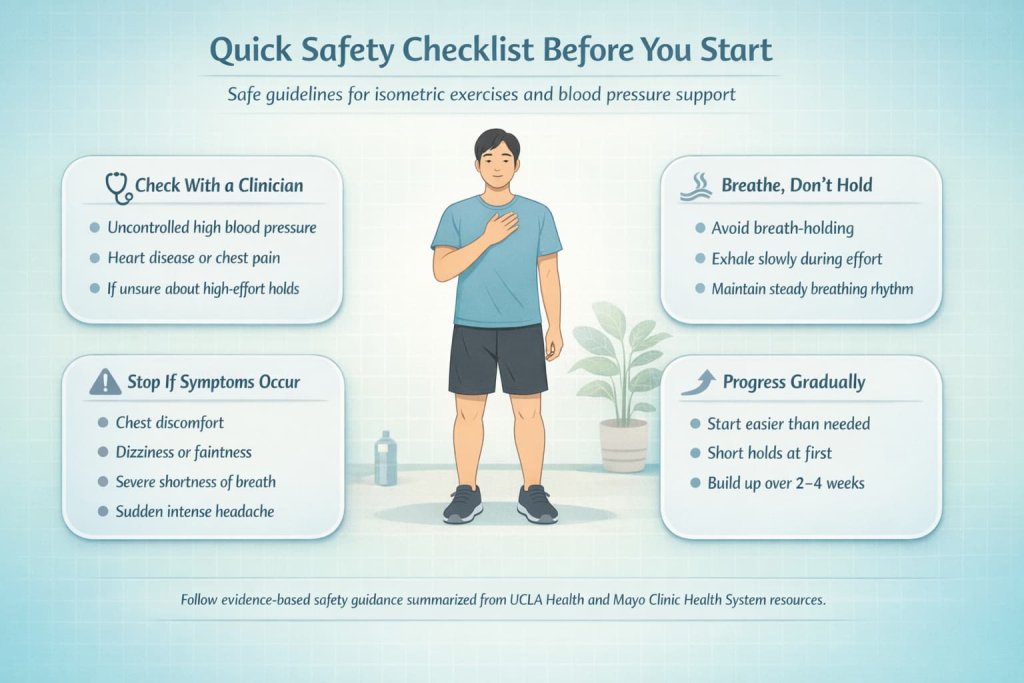
- Do not hold your breath. Breathe steadily through every hold (exhale slowly during the hardest part), a safety reminder highlighted by Mayo Clinic Health System.
- Stop if you feel chest pain, faintness, severe shortness of breath, or a sudden pounding headache, and seek medical care.
- Start easier than you think you need, then build up over 2–4 weeks.
5 best isometric exercises that may help lower blood pressure naturally
Improve heart health with these research-backed isometric exercises that may help support healthy blood pressure levels.
These simple static holds are beginner-friendly, time-efficient, and easy to do at home.
1) Wall Sit (Wall Squat Hold)
How to do it:
- Stand with your back against a wall, feet about 1–2 steps forward.
- Slide down until your knees are comfortably bent (start higher than a “deep” sit).
- Keep your ribs stacked over your hips and your back gently pressed to the wall.
- Hold while breathing slowly through your nose and mouth.
- Rest, then repeat for multiple rounds.
Why it works:
Wall sits recruit large lower-body muscles in a steady hold, which is one reason they’re commonly used in blood pressure research and public-health summaries of isometric training.
Muscles worked:
Quads, glutes, calves, core stabilizers.
Trainer Tip:
Aim for steady effort, not shaking. If you can’t breathe calmly, slide a bit higher or shorten the hold.
2) Isometric Handgrip Squeeze (Using a Handgrip or Soft Ball)
How to do it:
- Hold a handgrip device or a tennis ball in one hand.
- Squeeze to a moderate intensity (not maximal).
- Keep shoulders relaxed and breathe steadily.
- Hold, rest, then repeat; switch hands if you’re alternating.
Why it works:
Isometric handgrip training is one of the most studied isometric methods in blood pressure research, using short repeated holds several times per week.
Muscles worked:
Forearm flexors, grip muscles, wrist stabilizers.
Trainer Tip:
Avoid breath-holding. A simple cue: inhale for 3–4 seconds, exhale for 4–6 seconds throughout the hold.
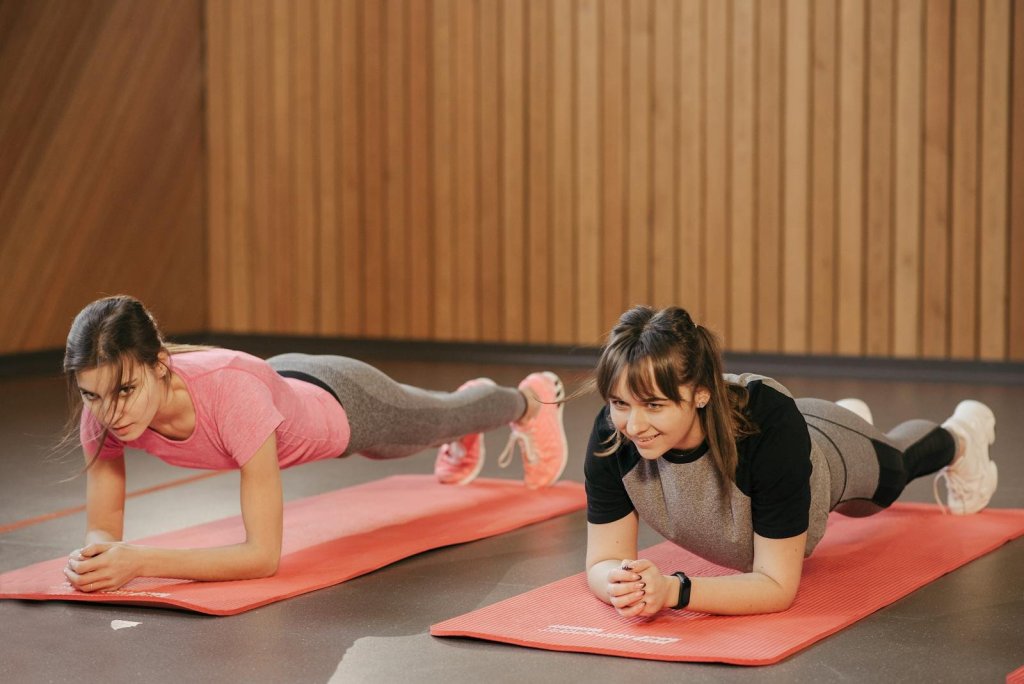
3) Forearm Plank Hold
How to do it:
- Place forearms on the floor, elbows under shoulders.
- Step feet back and create a straight line from head to heels.
- Lightly brace your core and squeeze your glutes.
- Hold with slow, steady breathing; stop before form breaks.
Why it works:
Planks build full-body tension and trunk stability without joint movement, making them a convenient isometric option for home routines.
Muscles worked:
Core (deep abdominals), shoulders, glutes, upper back.
Trainer Tip:
If your low back sags, switch to a knee plank or elevate your forearms on a bench.
4) Split Squat Hold (Static Lunge Hold)
How to do it:
- Step one foot forward and one foot back into a split stance.
- Lower slightly until both knees are comfortably bent (keep it shallow at first).
- Keep your torso tall and hips squared forward.
- Hold while breathing smoothly; rest and switch sides.
Why it works:
This hold loads large leg muscles unilaterally and challenges balance and posture control, which makes it easy to scale from beginner to advanced.
Muscles worked:
Quads, glutes, hamstrings, calves, core stabilizers.
Trainer Tip:
Use a wall or chair for light support until the position feels steady.
5) Glute Bridge Hold
How to do it:
- Lie on your back with knees bent and feet flat.
- Press through your heels and lift your hips until your torso forms a straight line.
- Keep your ribs down (avoid over-arching your back).
- Hold while breathing slowly, then lower with control.
Why it works:
The bridge builds steady tension through the hips and posterior chain with a low-impact setup, which can be helpful if wall sits or lunges bother your knees.
Muscles worked:
Glutes, hamstrings, core, lower-back stabilizers.
Trainer Tip:
If you feel it mostly in your low back, bring feet slightly closer and focus on squeezing glutes gently upward.
How Isometric Exercises May Help Lower Blood Pressure
Isometric exercises may help lower resting blood pressure by improving how blood vessels function over time. Although blood pressure can briefly rise during a hold, consistent training appears to support better vascular relaxation and circulation at rest.
Research suggests isometric training may:
- Improve endothelial (blood vessel) function
- Support healthier arterial stiffness markers
- Reduce resting sympathetic nervous system activity
- Improve overall vascular responsiveness
These benefits typically develop gradually after several weeks of consistent practice.
Who Should Be Careful With Isometric Exercises
Some individuals should consult a healthcare professional before starting isometric training.
Talk to a clinician first if you:
- Have uncontrolled high blood pressure
- Have a history of heart attack or stroke
- Experience chest pain, dizziness, or shortness of breath with activity
- Are pregnant and managing blood pressure concerns
Because isometric holds can temporarily increase blood pressure during contraction, medical guidance is important for higher-risk individuals.
Common Mistakes That May Limit Results
Simple mistakes can reduce effectiveness or increase strain.
Avoid:
- Holding your breath
- Straining at maximal effort
- Using painful joint angles
- Skipping rest between rounds
- Training inconsistently
Focus on steady breathing, moderate effort, and gradual progression for best results.
A sample weekly plan you can follow
Use this as a simple starting point (adjust hold times to your level):
3 days per week (example: Mon/Wed/Fri)
- Wall sit: 4 rounds x up to 2 minutes (rest 1–2 minutes)
- Handgrip squeeze: 4 rounds x up to 2 minutes total per hand
- Plank OR glute bridge: 3–4 rounds x 20–60 seconds
Progression idea:
- Week 1–2: Shorter holds (20–40 seconds)
- Week 3–4: Increase toward 60–120 seconds
- Week 5+: Maintain or progress gradually while breathing calmly
When to talk to a clinician first
Get medical guidance before starting isometric training if you:
- Have uncontrolled high blood pressure
- Have known heart disease, chest pain, or a history of stroke
- Feel dizzy or unwell with exertion
- Are pregnant and have blood pressure concerns
Isometrics can raise blood pressure during the hold, even if they help reduce resting blood pressure over time, a point discussed by UCLA Health.
Conclusion
Isometric exercises are a simple, equipment-light way that may help support healthier blood pressure over time, especially when you follow a research-style routine: short holds, moderate effort, steady breathing, and consistent weekly practice. Start easy, progress gradually, and pair isometrics with your broader lifestyle plan. If you have uncontrolled blood pressure or heart-related symptoms, get medical guidance before you begin.
References
- Edwards, J. J., et al. (2023). Exercise training and resting blood pressure: A large-scale pairwise and network meta-analysis of randomised controlled trials. British Journal of Sports Medicine. British Journal of Sports Medicine
- Edwards, J. J., et al. (2023). Exercise training and resting blood pressure: A large-scale pairwise and network meta-analysis of randomised controlled trials (PubMed record). PubMed
- Carlson, D. J., et al. (2014). Isometric exercise training for blood pressure management: A systematic review and meta-analysis. Mayo Clinic Proceedings. ScienceDirect
- Whelton, P. K., et al. (2018). 2017 ACC/AHA guideline for the prevention, detection, evaluation, and management of high blood pressure in adults. Hypertension. American Heart Association Journals
- American College of Sports Medicine. (2019, February 27). Exercise for the Prevention and Treatment of Hypertension. ACSM