
The best 12 fun mindfulness exercises are simple activities that help you feel calmer, more focused, and more present — without needing long meditation sessions. These quick practices turn everyday moments into opportunities for relaxation and awareness.
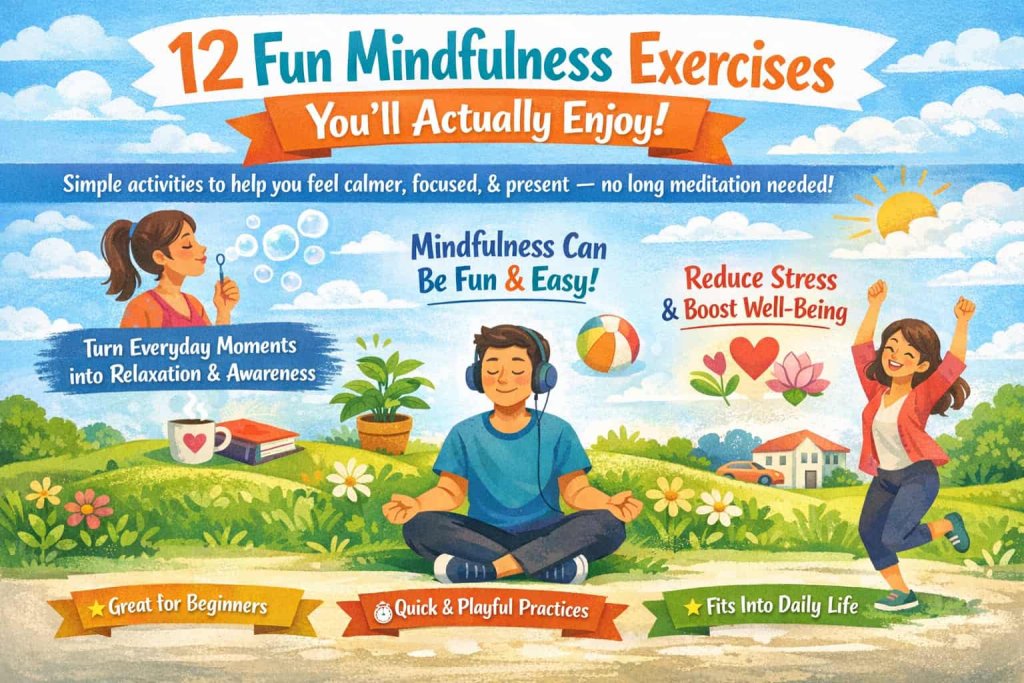
Understanding fun mindfulness activities is important because playfulness makes it easier to stay consistent. Whether you’re new to mindfulness or looking for ways to enjoy it more, these exercises support emotional well-being, help reduce stress, and fit easily into daily life.
Below you’ll find 12 enjoyable, beginner-friendly mindfulness exercises, plus tips, FAQs, and research-backed insights to help you get started.
Why Mindfulness Exercises Matter
Mindfulness exercises matter because they help you stay aware of the present moment, which may support emotional balance, focus, and overall well-being. Major health organizations such as the Mayo Clinic and the American Psychological Association note that mindfulness practices can help people manage stress, improve attention, and respond more calmly to daily challenges.
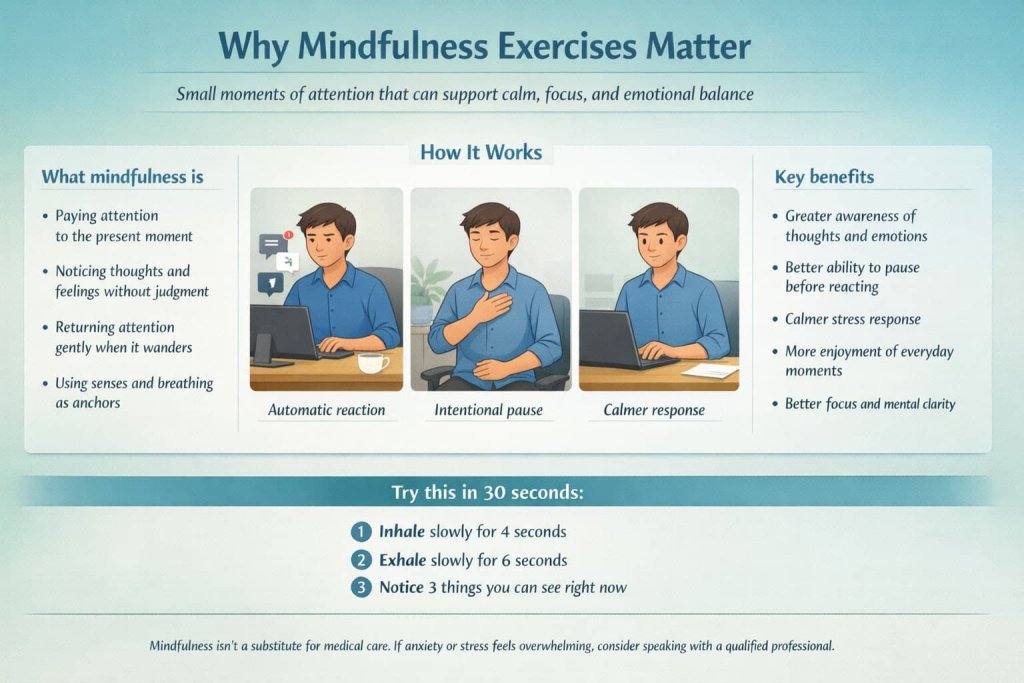
These exercises work by shifting your attention away from automatic reactions and toward intentional awareness. Even brief activities—such as mindful breathing, sensory grounding, or single-task focus—may help you feel more settled and centered throughout the day.
Key benefits of practicing mindfulness include:
- Greater awareness of thoughts and emotions
- Improved ability to pause before reacting
- Calmer stress response
- More enjoyment of everyday moments
- Better focus and mental clarity
Mindfulness is flexible, accessible, and can be practiced anywhere, making it a useful tool for people with busy schedules.
12 Fun Mindfulness Exercises That Bring Instant Calm
These simple, enjoyable mindfulness activities make it easier to stay present, reduce stress, and feel more grounded throughout your day. Each exercise takes only a minute or two, making them perfect for beginners or anyone with a busy schedule.
1. Mindful Breathing Bubble Game
A playful breathing exercise that turns slow exhaling into a relaxing game.
Why It Works
Slow, controlled exhalation may activate the parasympathetic nervous system, which supports a calmer stress response. Visualizing a floating bubble helps keep attention steady, making the exercise easier and more enjoyable.
How to Do It
- Sit comfortably and relax your shoulders.
- Inhale gently through your nose.
- Exhale slowly as if blowing a delicate bubble without popping it.
- Keep your breath smooth and steady for each round.
- Repeat for 5–8 cycles.
Trainer Tip
Imagine the bubble drifting away with each exhale—this helps mentally release tension and deepens the relaxing effect.
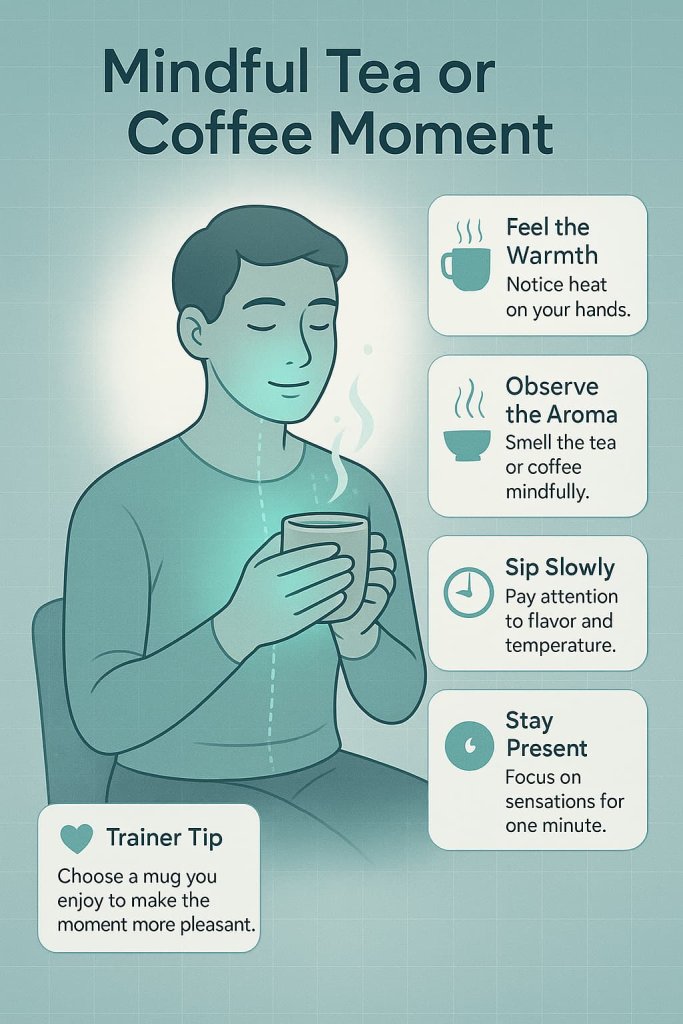
2. Mindful Tea or Coffee Moment
A warm, sensory-based mindfulness exercise built into your daily routine.
Why It Works
Savoring warm beverages engages multiple senses at once, helping anchor your attention in the present moment. This may reduce racing thoughts and create a brief, peaceful pause during your day.
How to Do It
- Hold your cup and notice the warmth against your hands.
- Observe the aroma, color, and steam rising.
- Take slow, intentional sips.
- Focus on flavor and temperature.
- Stay present for at least one minute.
Trainer Tip
Choose a mug you enjoy—pleasant sensory cues make the exercise easier to repeat consistently.
3. Gratitude Walk
A simple outdoor exercise that blends movement with appreciation.
Why It Works
Pairing gentle movement with gratitude may shift attention away from stress and toward positive emotional states. Walking also encourages rhythmic breathing, which supports relaxation.
How to Do It
- Walk at a relaxed pace.
- Observe your surroundings without rushing.
- Identify three things you appreciate.
- Repeat them silently as you continue walking.
Trainer Tip
Use different themes each day—nature, relationships, comfort, achievements—to keep gratitude fresh and meaningful.
4. Five-Senses Treasure Hunt
A fun sensory game for instant grounding.
Why It Works
This exercise reduces mental overload by bringing your attention to sensory input. It encourages presence and may help interrupt looping thoughts or emotional overwhelm.
How to Do It
- Notice 5 things you can see.
- Notice 4 things you can feel.
- Notice 3 things you can hear.
- Notice 2 things you can smell.
- Notice 1 thing you can taste.
Trainer Tip
Use this technique anytime you feel distracted—it’s fast, grounding, and works in nearly any environment.
5. Cloud Watching Mindfulness
A peaceful outdoor activity that encourages calm observation.
Why It Works
Observing clouds teaches non-judgmental awareness. Watching slow movement helps your mind settle and shifts focus away from internal stress.
How to Do It
- Sit or lie comfortably outdoors.
- Look at the clouds moving across the sky.
- Notice shapes, movement, and texture.
- Avoid labeling anything as “good” or “bad.”
- Stay with the observation for 1–3 minutes.
Trainer Tip
Try pairing cloud watching with 3–5 slow breaths for a deeper calming effect.
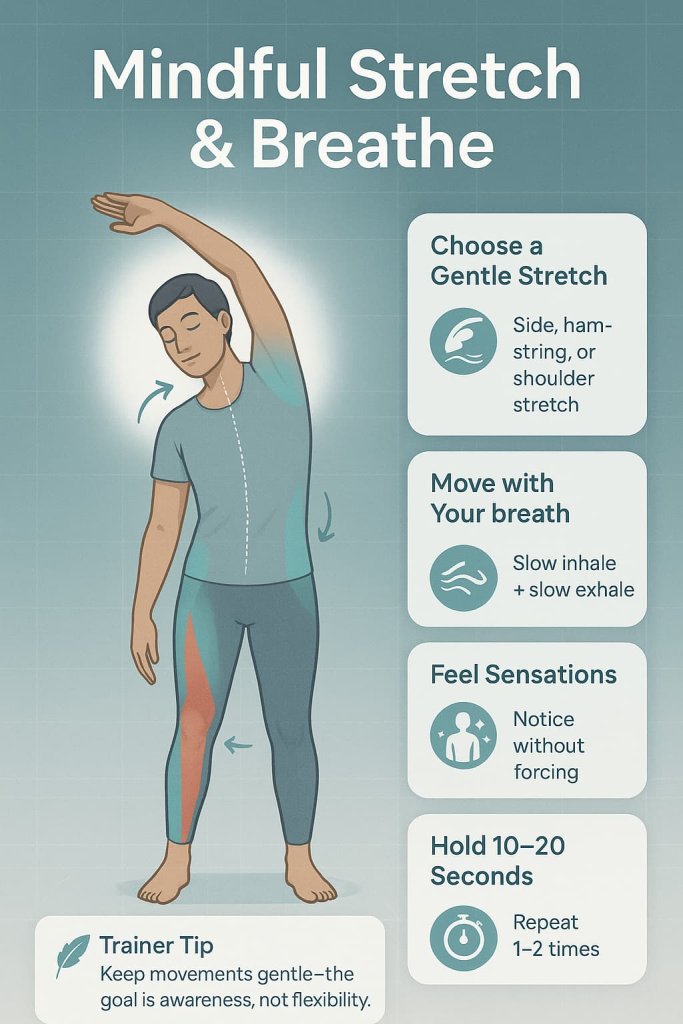
6. Mindful Stretch & Breathe
A gentle, guided stretch that builds awareness.
Why It Works
Slow, intentional stretching increases proprioception—the awareness of where your body is in space. Pairing stretching with breath may enhance relaxation and help release mild tension.
How to Do It
- Choose a light stretch (side stretch, hamstring stretch, or shoulder roll).
- Move slowly as you inhale and exhale.
- Notice how each area feels without forcing a deeper stretch.
- Hold for 10–20 seconds and repeat.
Trainer Tip
Keep movements gentle. The goal is awareness—not flexibility.
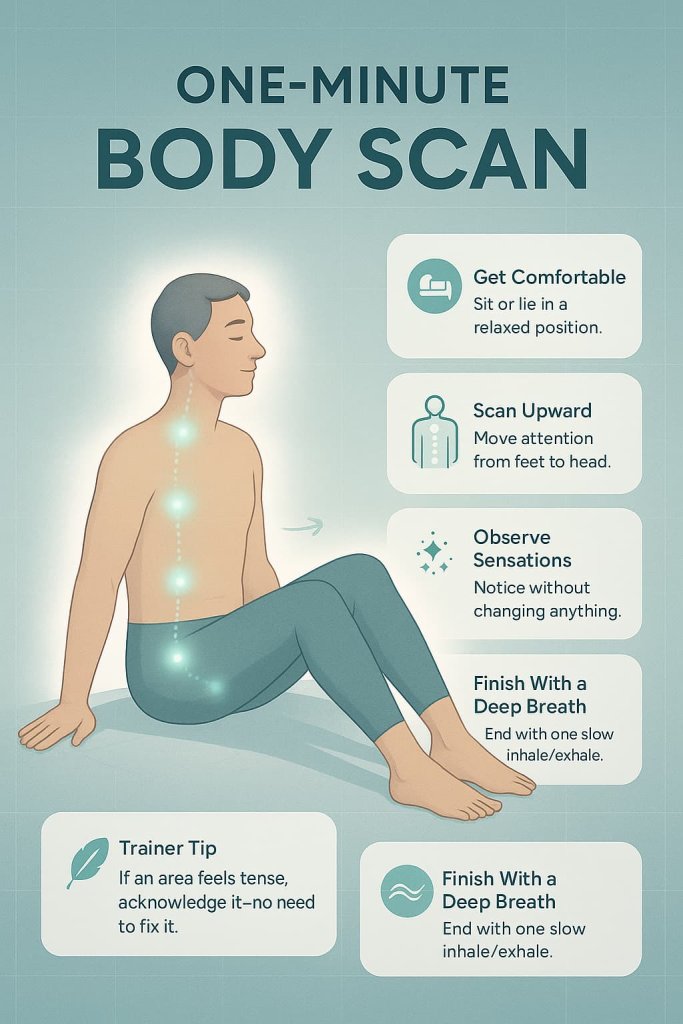
7. One-Minute Body Scan
A quick, accessible version of a traditional body scan meditation.
Why It Works
Shifting attention through different parts of the body may reduce stress and reconnect you with physical sensations, which supports grounding and calm.
How to Do It
- Sit or lie in a comfortable position.
- Start by noticing your feet.
- Move your attention upward to legs, torso, shoulders, and head.
- Observe sensations without trying to change them.
- Finish with one slow, deep breath.
Trainer Tip
If a certain area feels tense, simply acknowledge it—resisting the urge to fix it is part of the practice.
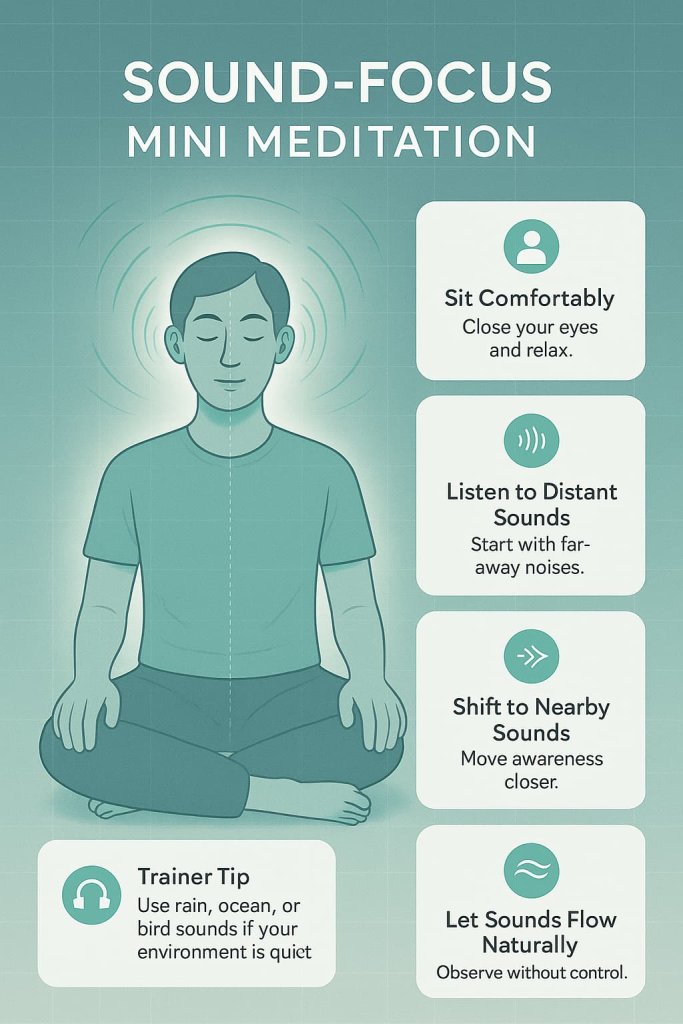
8. Sound-Focus Mini Meditation
Great for anyone who responds well to auditory cues.
Why It Works
Listening closely to sound trains selective attention. This may help reduce internal noise, improve focus, and create a sense of calm.
How to Do It
- Sit comfortably and close your eyes.
- Listen for distant sounds first.
- Slowly shift awareness to closer sounds.
- Let each sound come and go naturally.
- Continue for 1–2 minutes.
Trainer Tip
Use a soundscape (rain, ocean, birds) if your environment is very quiet—it can enhance consistency.
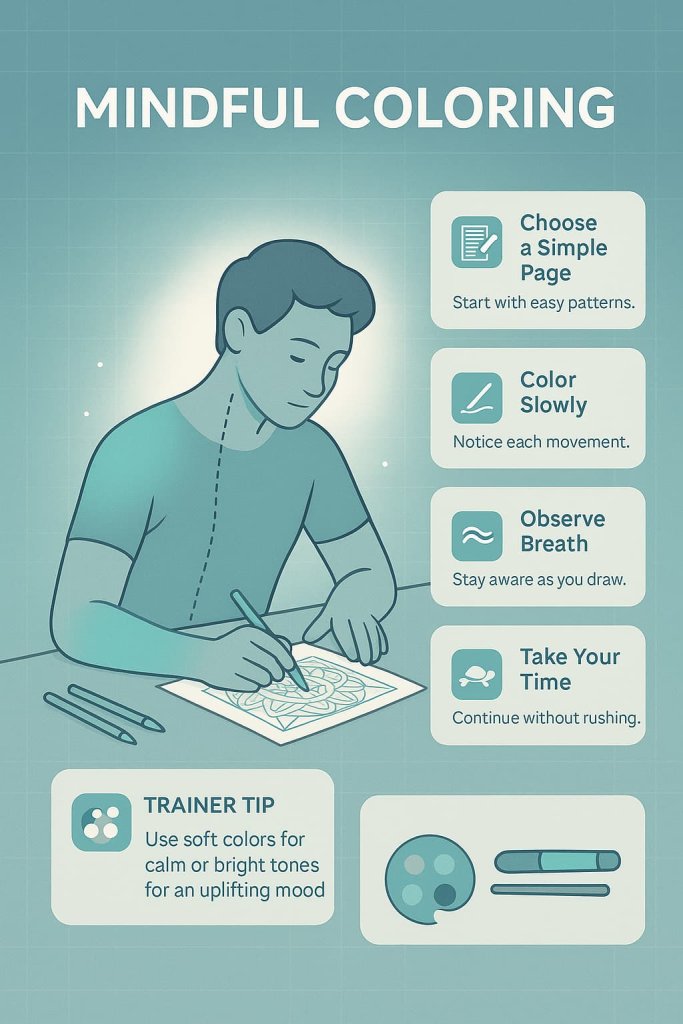
9. Mindful Coloring
A creative, calming way to practice mindfulness.
Why It Works
Coloring requires gentle concentration and repetitive motion, which can help settle the mind and redirect attention from stress.
How to Do It
- Choose a simple coloring page or pattern.
- Color slowly, noticing stroke direction and color changes.
- Stay aware of your breathing as you draw.
- Continue for several minutes without rushing.
Trainer Tip
Use soft, muted colors for a more calming experience—or bright colors if you want a mood boost.
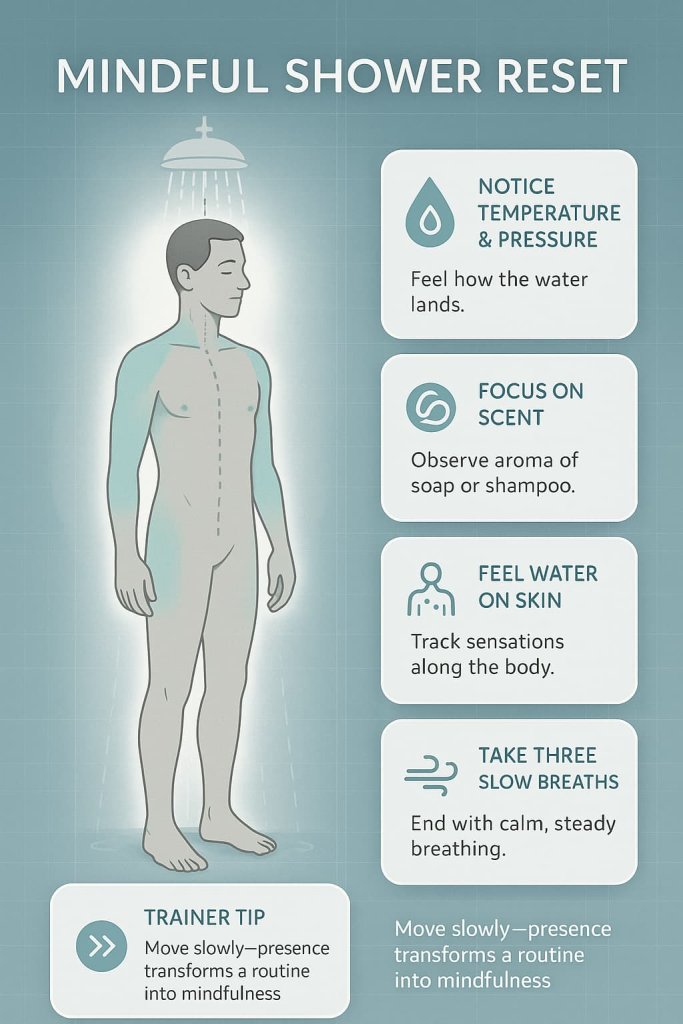
10. Mindful Shower Reset
Turn a routine shower into a relaxing ritual.
Why It Works
Shifting attention to sensory details—water, temperature, sounds—helps anchor the mind in the present moment. This may reduce mental clutter and create a sense of reset.
How to Do It
- Notice the water’s temperature and pressure.
- Pay attention to the scent of soap or shampoo.
- Feel water as it runs over your skin.
- Take three slow breaths before finishing.
Trainer Tip
Keep the pace slow. Rushing turns the shower into a chore; presence turns it into mindfulness.
11. Single-Task Mindfulness
A simple practice for improving focus.
Why It Works
Performing one task at a time helps train your brain to stay centered instead of multitasking. This supports better attention, calmer thinking, and more efficient daily routines.
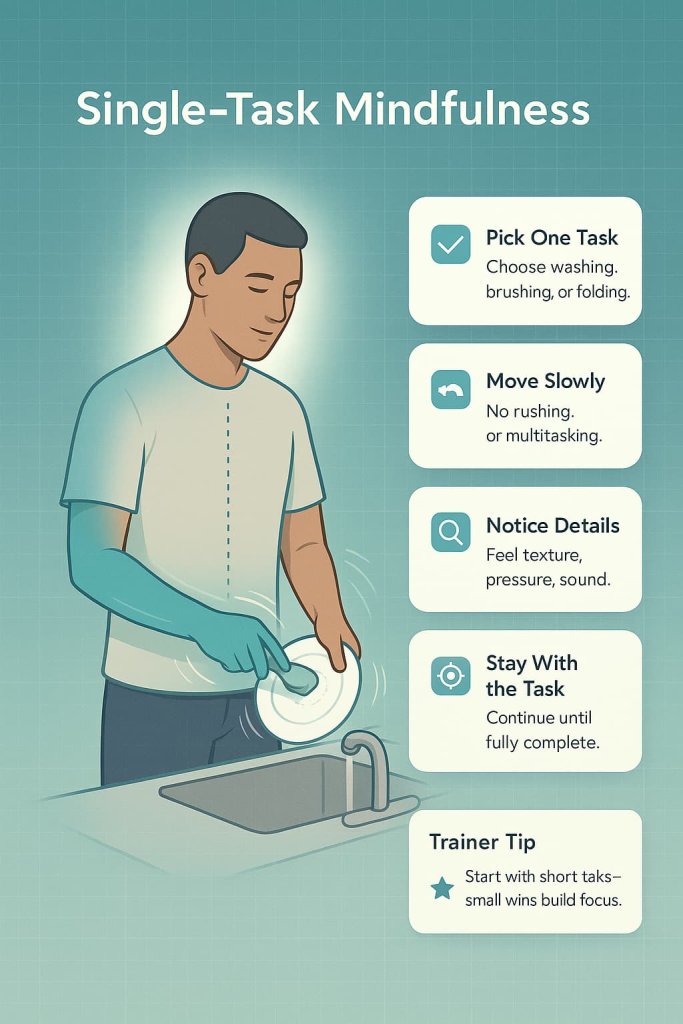
How to Do It
- Choose one task (washing a dish, brushing teeth, folding laundry).
- Do it slowly without multitasking.
- Notice movement, texture, pressure, and sound.
- Stay with the task until it’s finished.
Trainer Tip
Start with short, simple tasks. Small wins help build stronger focus habits.
12. Thought-Labeling Mini Practice
A quick practice to build emotional clarity.
Why It Works
Labeling a thought as “thinking,” “worrying,” or “planning” may create distance between you and your thoughts. This encourages calmer responses and reduces emotional reactivity.
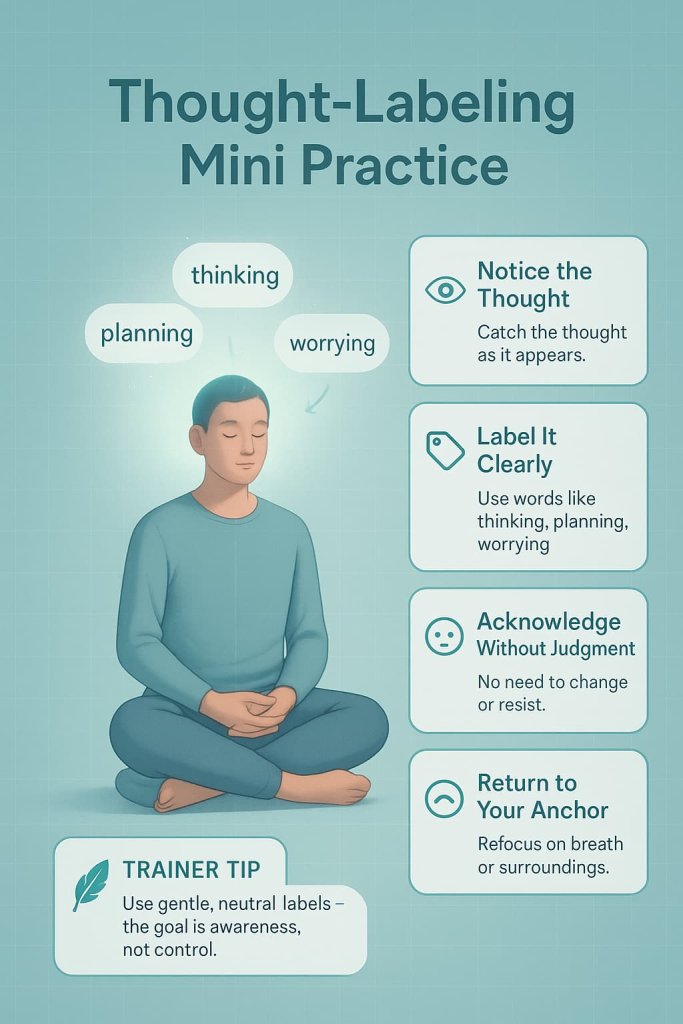
How to Do It
- Notice a thought as soon as it appears.
- Label it gently (e.g., “thinking,” “planning”).
- Acknowledge it without judgment.
- Return attention to your breath or surroundings.
Trainer Tip
Use soft, neutral labels. The goal is awareness, not controlling the thought.
Safety Guidelines Before You Begin
Mindfulness is generally gentle, but following simple safety guidelines helps ensure a comfortable and positive experience. These recommendations support emotional safety and mindful awareness—especially for beginners.
Before starting, keep these points in mind:
- Practice in a quiet, comfortable space whenever possible.
- Choose exercises that feel safe and manageable for you.
- Avoid forcing deep emotional exploration; stay within your comfort zone.
- If any technique makes you feel anxious or overwhelmed, pause and switch to a simpler exercise like mindful breathing.
- Stay seated or supported if you feel lightheaded during breathing practices.
- Remember that mindfulness complements—NOT replaces—professional mental health care.
These guidelines help create a stable foundation for building a consistent, enjoyable mindfulness routine.
Benefits of Fun Mindfulness Exercises
Making mindfulness enjoyable increases consistency and positive outcomes. These exercises may support:
- Reduced stress and emotional overload
- Improved focus, attention, and clarity
- Increased sense of calm and well-being
- Better self-awareness
- Enhanced day-to-day enjoyment
- Stronger mind-body connection
Authoritative sources like Mayo Clinic and the American Psychological Association highlight mindfulness as a helpful tool for emotional regulation, stress management, and improved focus.
How Long Should You Practice Mindfulness?
Short sessions work surprisingly well. You can:
- Start with 1–3 minutes
- Try longer 5–10 minute sessions when comfortable
- Repeat multiple times throughout the day
- Use fun practices (tea, walking, stretching) anytime you feel tense
Consistency matters more than session length. Even very brief exercises may help support emotional well-being.
Frequently Asked Questions (FAQs)
1. What is the easiest mindfulness exercise for beginners?
Mindful breathing or the one-minute body scan are the simplest places to start.
2. How often should I practice mindfulness?
Even 1–2 minutes daily may be helpful. More frequent practice often brings greater benefits.
3. Can mindfulness exercises help reduce stress?
They may support stress reduction, according to major health organizations, though individual experiences vary.
4. Do I need to meditate to practice mindfulness?
No — many mindfulness exercises, such as walking, stretching, and coloring, are active and enjoyable.
5. Can children or teens do these mindfulness exercises?
Yes. Many of these fun exercises (like the bubble game or sensory treasure hunt) work well for all ages.
6. What if my mind wanders during mindfulness practice?
Mind wandering is normal. Gently returning focus is part of the exercise.
7. How long until I notice benefits?
People often feel calmer after just one session, while consistent practice may support well-being over time.
Conclusion
12 Fun mindfulness exercises make it easy to practice presence, reduce stress, and enjoy simple daily moments. Whether you’re sipping tea, coloring, stretching, or watching clouds, each activity offers a small reset for your mind and body.
Try a few exercises today and choose the ones that feel most enjoyable. Consistency — even in small amounts — can make a meaningful difference.