
Simple mindfulness exercises can help you feel calmer, more focused, and more grounded in just a few minutes a day. These easy practices support better stress management, emotional balance, and overall well-being without requiring special equipment or long sessions.
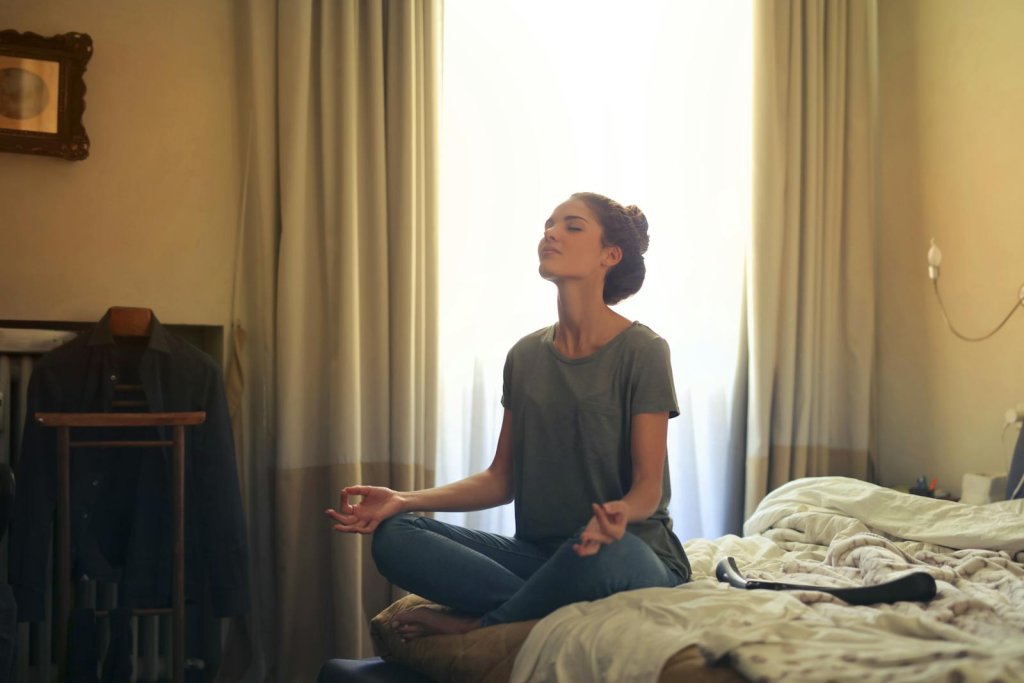
Understanding simple mindfulness exercises matters because most people struggle with constant distractions, stress, and racing thoughts. These short exercises fit seamlessly into your daily routine—at home, at work, or even during breaks. They’re also recommended by trusted health organizations such as Harvard Health and the American Psychological Association for their ability to support mental well-being.
In this guide, you’ll find 15 simple exercises, step-by-step instructions, benefits, tips, safety notes, and expert-backed insights to help you practice mindfulness confidently.
What Are Simple Mindfulness Exercises?
Simple mindfulness exercises are short practices that help you bring awareness to the present moment without judgment. They may involve breathing, body awareness, gentle movement, or mindful attention to everyday tasks.
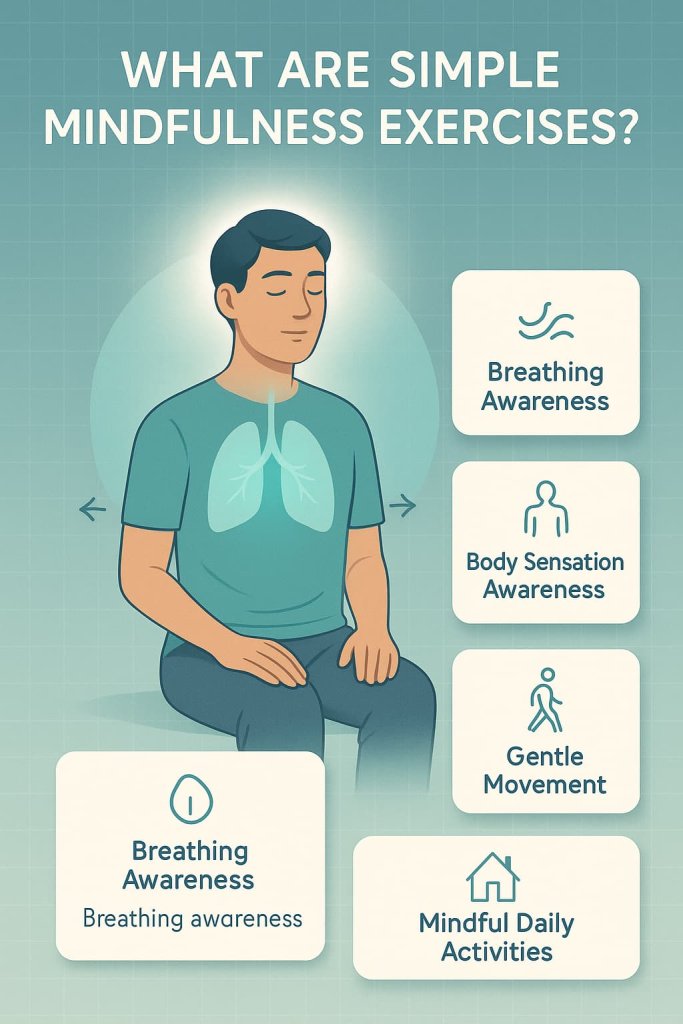
These exercises typically take 2–10 minutes, making them ideal for beginners or anyone with a busy schedule. They form the foundation of programs like Mindfulness-Based Stress Reduction (MBSR) and Mindfulness-Based Cognitive Therapy (MBCT), often recommended to support stress reduction and emotional regulation.
15 Simple Mindfulness Exercises Anyone Can Do Daily
Developing mindfulness doesn’t require long sessions or special equipment—just a few minutes of intentional awareness each day. These 15 simple exercises make it easy to build calm, focus, and emotional balance right into your daily routine.
1. Mindful Breathing
A foundational practice used in nearly all mindfulness programs.
Why it works:
Mindful breathing helps calm the nervous system by shifting your attention from racing thoughts to steady, controlled breaths. This may support reduced stress and greater emotional balance.
How to do it:
- Sit comfortably and relax your shoulders.
- Breathe in slowly through your nose.
- Notice the rise and fall of your chest or belly.
- When your mind wanders, gently guide attention back to your breath.
Trainer Tip:
Place a hand on your belly to help feel the movement of each breath.
2. Three Mindful Breaths
A quick micro-exercise for busy schedules.
Why it works:
Taking three intentional breaths interrupts stress loops and offers a fast grounding reset during hectic moments.
How to do it:
- Pause whatever you’re doing.
- Take three slow, deep breaths.
- Focus fully on each inhale and exhale.
Trainer Tip:
Use this technique before meetings, calls, or transitions.
3. Box Breathing (4–4–4–4 Method)
Used by therapists, athletes, and first responders.
Why it works:
This structured breathing rhythm may help regulate the stress response and support mental clarity.
How to do it:
- Inhale for 4 seconds.
- Hold for 4 seconds.
- Exhale for 4 seconds.
- Pause for 4 seconds.
Trainer Tip:
Imagine drawing a box in your mind to help maintain the rhythm.
4. Body Scan (Short Version)
A technique used in therapeutic mindfulness programs.
Why it works:
The body scan builds awareness of physical sensations and may help reduce tension by improving mind–body connection.
How to do it:
- Sit or lie down comfortably.
- Bring attention to your feet.
- Slowly move awareness up to legs, torso, arms, and head.
- Notice sensations without changing them.
Trainer Tip:
If you lose focus, gently return to the last body part you remember.
5. Five-Senses Exercise
A fast grounding technique.
Why it works:
Engaging the senses anchors you in the present moment and may help reduce anxious or racing thoughts.
How to do it:
- Identify 5 things you can see.
- Identify 4 things you can touch.
- Identify 3 things you can hear.
- Identify 2 things you can smell.
- Identify 1 thing you can taste.
Trainer Tip:
Use this tool during sudden stress or overwhelm.
6. Mindful Walking
A gentle movement-based mindfulness practice.
Why it works:
Slow walking paired with awareness supports calm focus and can be easier than seated meditation.
How to do it:
- Walk slowly and naturally.
- Feel each foot contacting the ground.
- Notice posture and rhythm of steps.
Trainer Tip:
Synchronize walking with your breath for deeper focus.
7. Mindful Eating
A widely recommended daily-life practice.
Why it works:
Mindful eating builds awareness around hunger cues and may help reduce distracted or automatic eating habits.
How to do it:
- Eat slowly without screens or multitasking.
- Notice smell, taste, and texture of food.
- Pause between bites to sense fullness cues.
Trainer Tip:
Try starting the first 3 bites of any meal mindfully.
8. Mindful Listening
A practice for better communication and connection.
Why it works:
Deep listening fosters presence and helps reduce reactive thinking during conversations.
How to do it:
- Focus on the sounds or person speaking.
- Notice tone, pacing, and pauses.
- Avoid planning your response while listening.
Trainer Tip:
Use a soft mental reminder: “Just listen.”
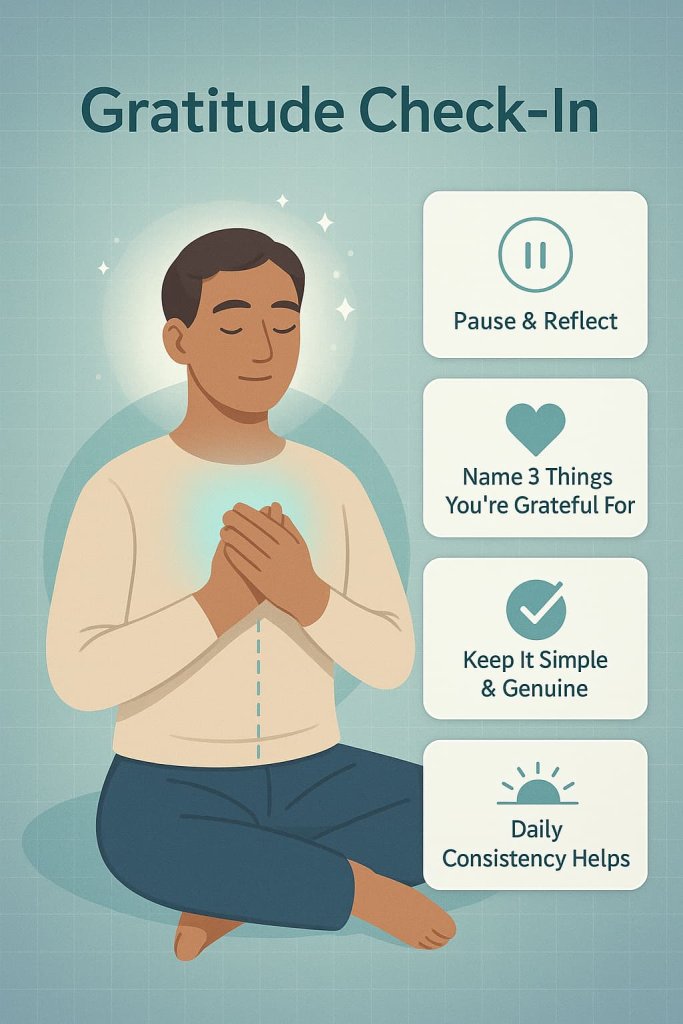
9. Gratitude Check-In
A quick exercise for mood support.
Why it works:
Acknowledging gratitude may encourage emotional balance and a more positive outlook.
How to do it:
- Pause for a moment.
- Think of 3 things you’re grateful for today.
- Keep choices simple and genuine.
Trainer Tip:
Repeat at the same time daily to build consistency.
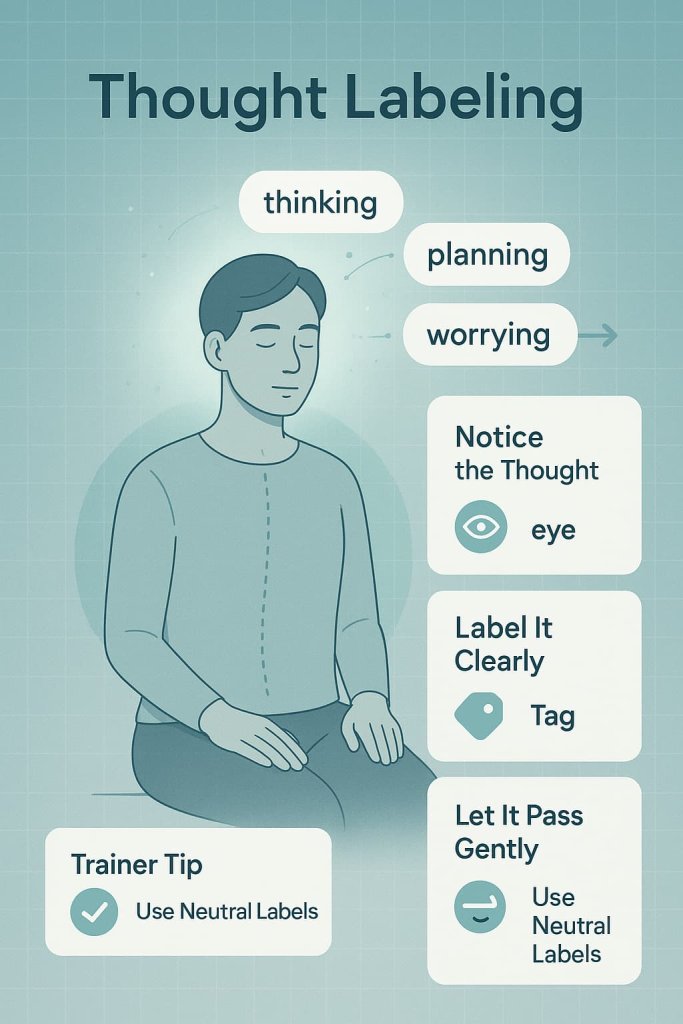
10. Thought Labeling
A gentle cognitive-awareness practice.
Why it works:
Labeling thoughts helps create space between you and your thinking patterns, reducing automatic reactions.
How to do it:
- Notice a thought as it appears.
- Label it: “thinking,” “planning,” or “worrying.”
- Let it pass without judgment.
Trainer Tip:
Use neutral labels to avoid emotional reactions.
11. Mindful Stretching
Soft movement paired with awareness.
Why it works:
Mindful stretching helps release physical tension and improves awareness of posture and breathing.
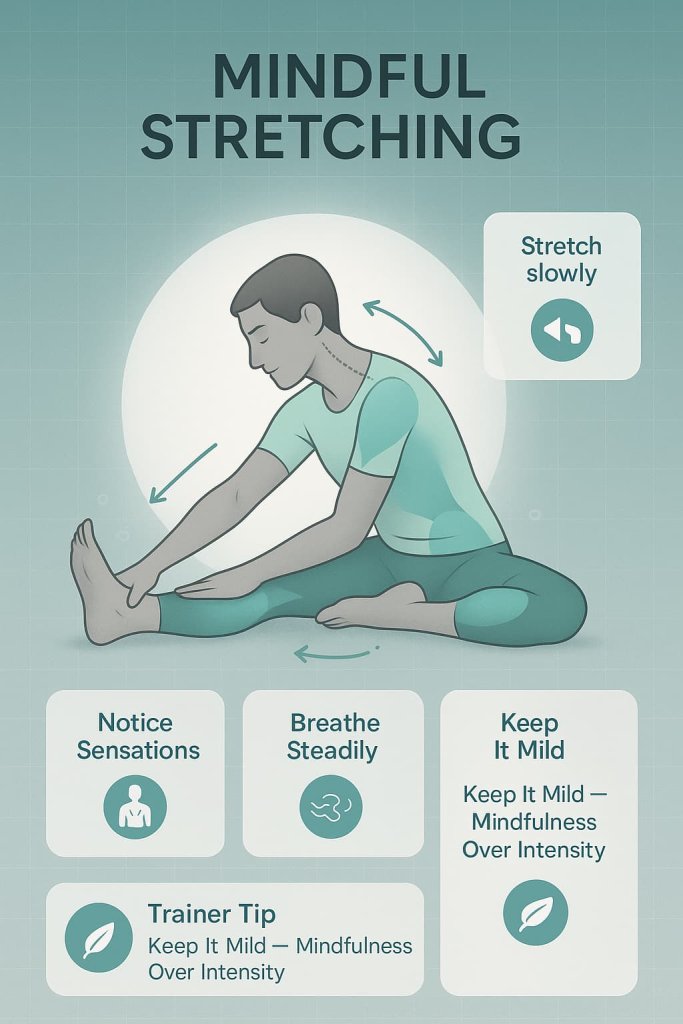
How to do it:
- Move into gentle stretches slowly.
- Notice sensations in muscles and joints.
- Breathe steadily throughout.
Trainer Tip:
Keep stretches mild—mindfulness is the goal, not deep flexibility.
12. Mindful Journaling
A simple self-reflection tool.
Why it works:
Journaling increases clarity by helping you observe thoughts and feelings without judgment.
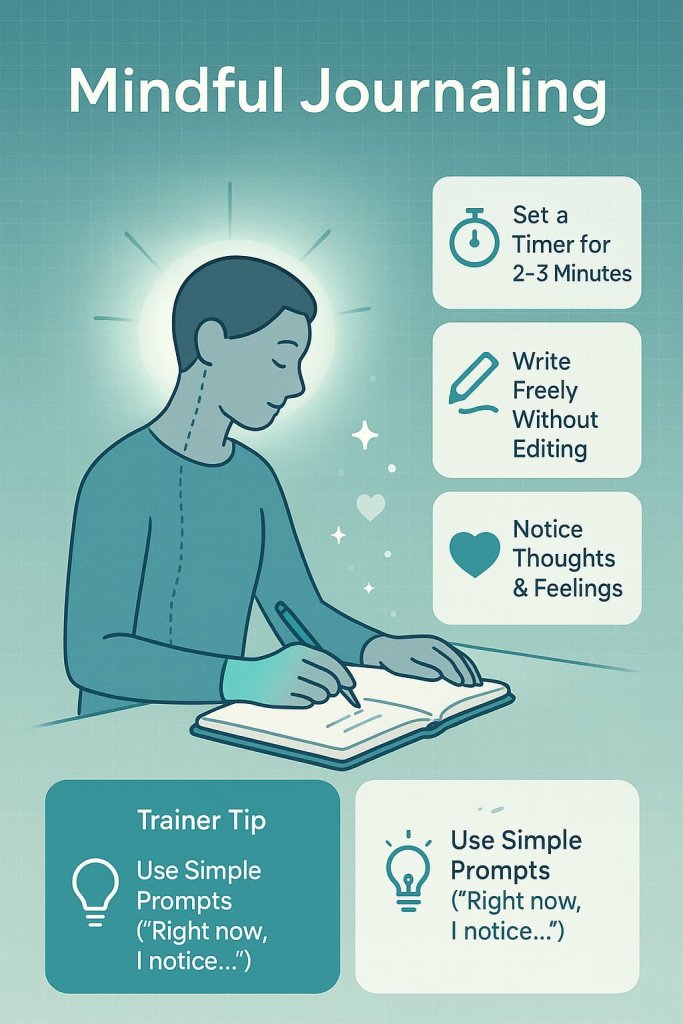
How to do it:
- Set a timer for 2–3 minutes.
- Write freely without editing.
- Focus on current thoughts or feelings.
Trainer Tip:
Use prompts like “Right now, I notice…” to get started.
13. Mindful Pausing (The 1-Minute Reset)
A time-efficient mindfulness break.
Why it works:
A short pause interrupts automatic stress responses and helps reset attention.
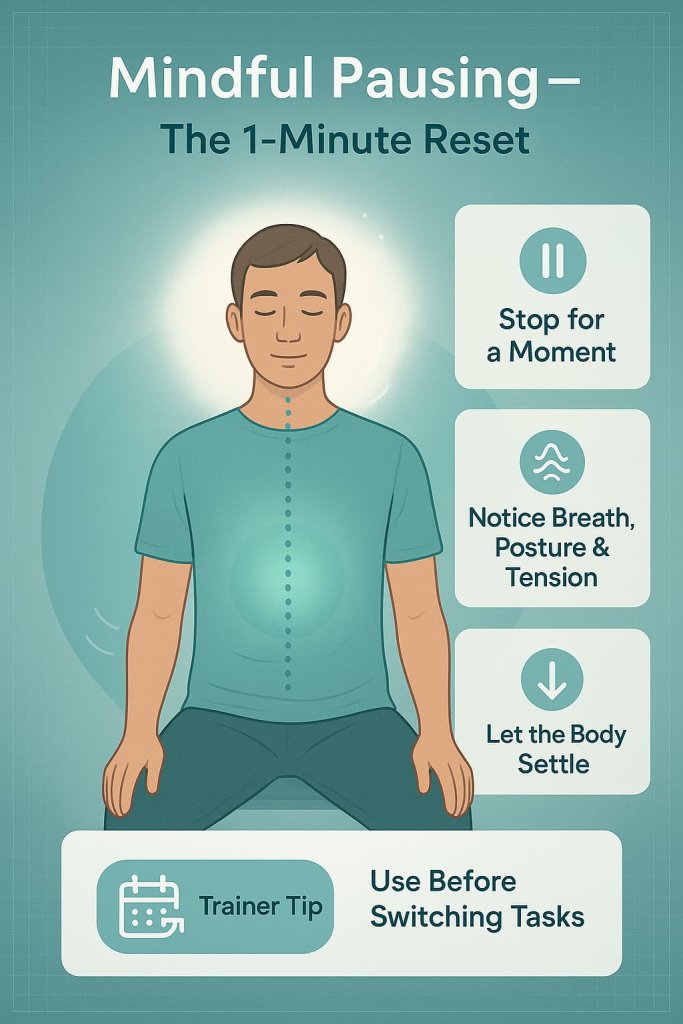
How to do it:
- Stop whatever you’re doing.
- Notice breathing, posture, and tension.
- Let everything settle before continuing.
Trainer Tip:
Use this reset before switching tasks.
14. Mindful Observation
A focus-building practice.
Why it works:
Observing a single object helps train calm attention and reduces mental noise.
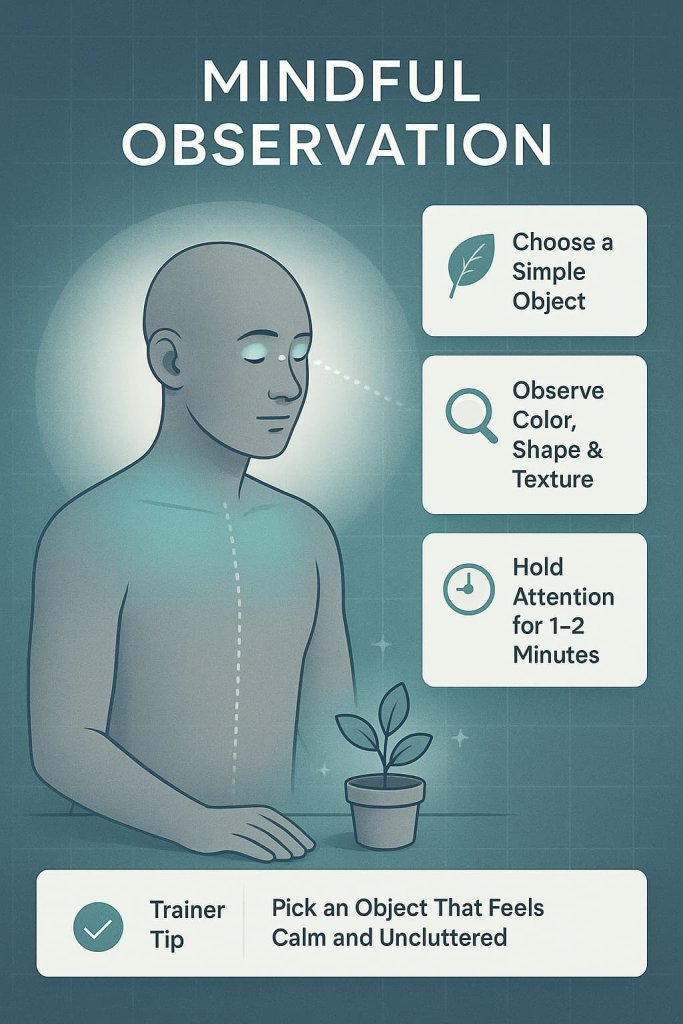
How to do it:
- Choose an object (plant, candle flame, cup).
- Observe its color, shape, and texture.
- Keep attention steady for 1–2 minutes.
Trainer Tip:
Choose a simple, non-distracting object for best results.
15. Mindful Daily Activities
A practical way to build mindfulness into everyday life.
Why it works:
Turning routine tasks into mindful moments helps strengthen consistency and present-moment awareness.
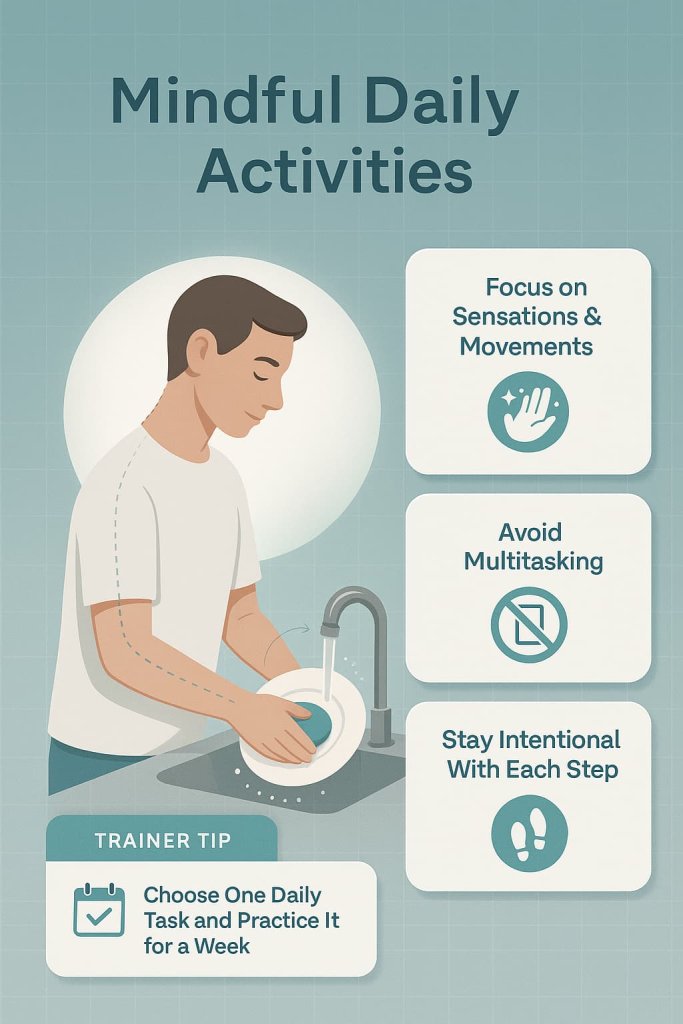
How to do it:
- Focus on sensations and movements involved in the task.
- Avoid multitasking or device use.
- Keep attention on each step intentionally.
Trainer Tip:
Pick one daily task to practice mindfully for an entire week.
How Long Should You Practice Mindfulness Each Day?
Most health organizations recommend starting with:
- 2–5 minutes daily, then
- Gradually increasing to 10–15 minutes as it becomes comfortable.
Even short sessions may support improved focus, better stress coping, and emotional balance.
Why Mindfulness Exercises Matter
Mindfulness exercises matter because they help you stay present, reduce daily stress, and build better awareness of your thoughts and emotions. Even a few minutes a day may support improved focus, emotional balance, and overall well-being.
Key reasons they matter:
- Support calmer responses to stress
- Improve focus and attention
- Build emotional awareness without judgment
- Fit easily into everyday routines
- Require no equipment or long sessions
Mindfulness is not a treatment for medical or mental health conditions, but it may support a sense of calm and clarity alongside professional care when needed.
Safety Guidelines Before You Begin
While simple mindfulness exercises are generally safe, keep these points in mind:
- If you feel overwhelmed, stop and return to normal breathing.
- Choose comfortable, safe positions (sitting, lying, or walking).
- People managing trauma, severe anxiety, or certain mental health conditions should practice with guidance from a qualified therapist.
- Mindfulness supports well-being but does not replace professional mental health care.
When to Seek Professional Support
Consider reaching out to a licensed mental health professional if:
- Mindfulness increases emotional discomfort
- You experience intrusive thoughts or flashbacks
- Stress or anxiety significantly interferes with daily life
- You need personalized support for mental health concerns
Frequently Asked Questions (FAQs)
1. Do I need special equipment for mindfulness exercises?
No. Most exercises require only your breath and attention.
2. Is 5 minutes of mindfulness enough?
Yes—research shows even a few minutes may support reduced stress and improved focus.
3. Should I sit cross-legged to meditate?
No. You can sit in a chair, lie down, or walk mindfully.
4. Can mindfulness replace therapy?
No. It may support mental well-being but should not replace professional care.
5. What time of day is best for mindfulness?
Any time works. Morning, breaks, and bedtime are common.
6. Is mindfulness a religious practice?
Modern mindfulness exercises are secular and widely used in healthcare and education.
7. How fast can I see benefits?
Many people feel calmer immediately; deeper changes build with consistent practice.
Conclusion
Simple mindfulness exercises offer an accessible way to support calm, focus, and emotional balance each day. Start with just a few minutes and choose exercises that feel natural for your lifestyle. Consistency matters far more than duration. When practiced daily, these techniques may help you feel more grounded, centered, and resilient.
Try one exercise today and build your mindfulness routine step by step.