
Beet juice side effects are usually mild, but some people should avoid it or check with a clinician first—especially anyone with kidney stones (oxalate stones), low blood pressure, or chronic kidney disease that requires potassium limits. If you’re using beet juice for blood pressure or workout performance, it’s smart to know what’s normal (like red urine) versus what’s a red flag.
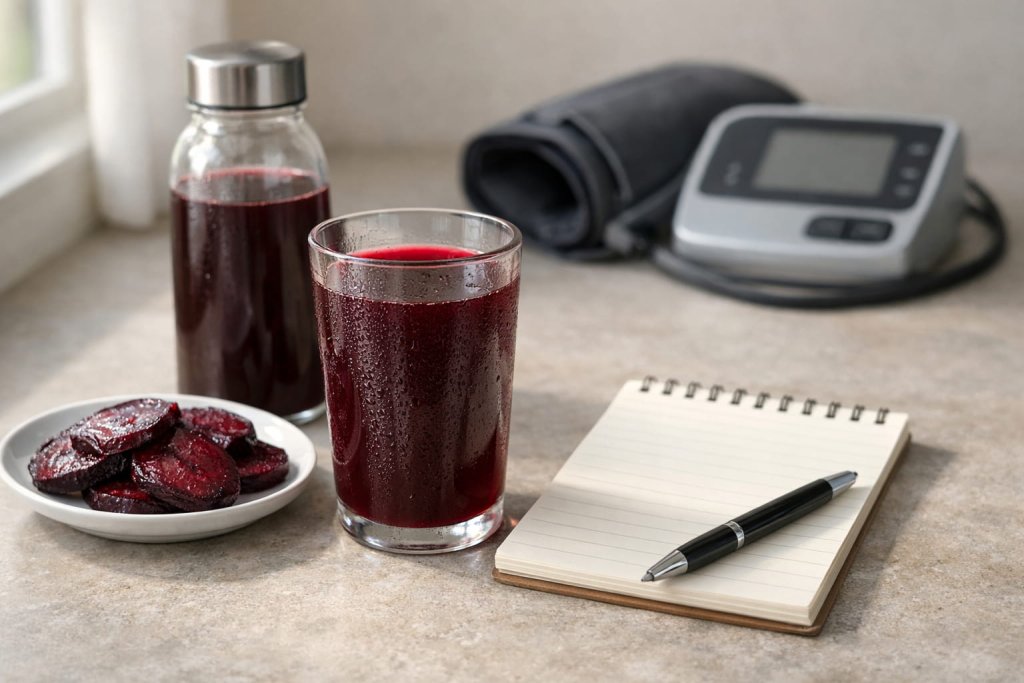
Beet juice side effects you might notice most often
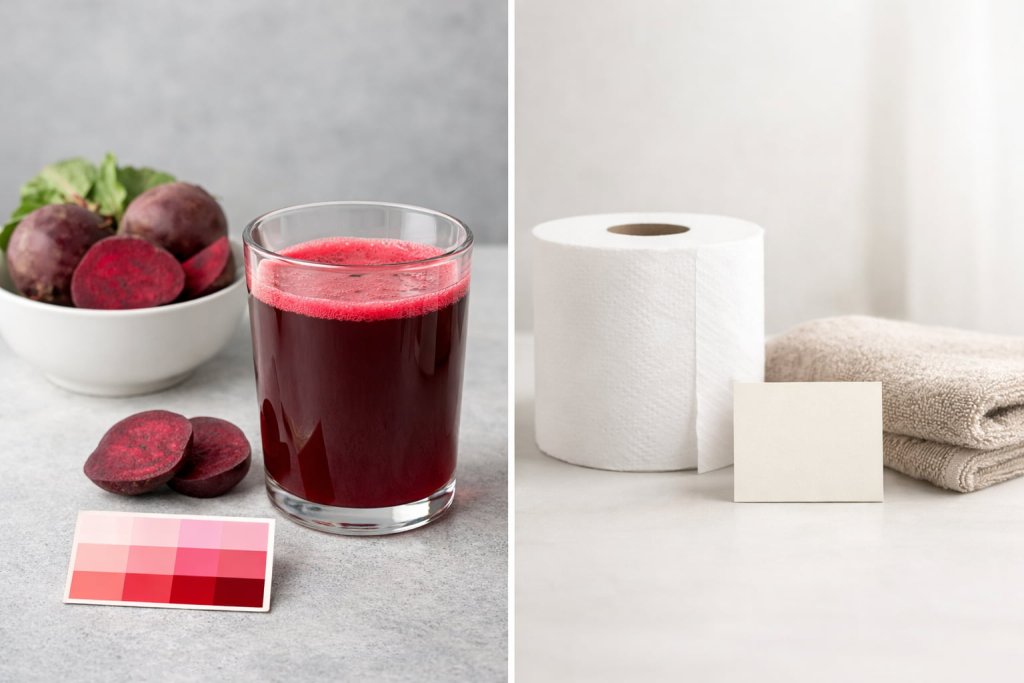
Red or pink urine and stool (beeturia)
This is the classic one. Beet pigments can temporarily change the color of urine or stool.
According to the NIH, beeturia affects about 10%–14% of people and can range from pink to deep red. It’s typically harmless and goes away after the pigments clear your system.
When to be careful:
- If the red color continues after you stop beets
- If you also have pain, fever, burning, or trouble urinating
Those signs can point to something unrelated to beets, so it’s worth medical advice.
Digestive discomfort (bloating, gas, loose stool)
Beet juice is concentrated and can bother sensitive stomachs—especially if you drink a large amount quickly. This is more likely if you’re prone to IBS-type symptoms or you’re new to higher-fiber foods.
A noticeable drop in blood pressure (lightheadedness)
Beets are naturally high in dietary nitrate, which can increase nitric oxide and relax blood vessels—one reason beetroot juice is studied for blood pressure support.
A systematic review and meta-analysis in Frontiers in Nutrition found beetroot juice nitrate is associated with blood-pressure lowering effects in research settings. For some people, that can feel like:
- Dizziness when standing up
- Weakness or a “woozy” feeling
- Headache (sometimes)
If you already run low, beet juice can push you into “too low” territory.
Beet juice side effects table: what it means and what to do
| Side effect | Why it happens | What to do |
|---|---|---|
| Red/pink urine or stool | Beet pigments | Usually harmless. Stop for 24–48 hours and confirm it resolves. |
| Bloating/gas/loose stool | Concentrated drink; sensitivity | Reduce serving size, take with food, or stop if symptoms persist. |
| Dizziness/lightheadedness | Blood pressure may drop | Avoid before driving/workouts until you know your response; talk to a clinician if you use BP meds. |
| Kidney stone concern | Beets can be high in oxalates | If you form calcium oxalate stones, avoid or limit—especially beet juice concentrates. |
Who should avoid beet juice
People with kidney stones (especially calcium oxalate stones)
Beets are commonly listed among higher-oxalate foods for people who form calcium oxalate stones.
The National Kidney Foundation lists beets among foods to limit due to oxalate content for stone-prone individuals.
The Mayo Clinic notes that for people who tend to form calcium oxalate stones, clinicians may recommend limiting oxalate-rich foods, which can include beets.
Practical takeaway:
- If you’ve had stones, beet juice (especially concentrated shots/powders) is often a bigger issue than small servings of whole beets because it’s easy to get a lot at once.
- If you’re unsure what type of stone you had, ask your clinician—prevention advice depends on stone type.
People with low blood pressure or frequent dizziness
If you already have low blood pressure, beet juice can make symptoms worse. This matters even more if you:
- Get lightheaded easily
- Have fainting episodes
- Are dehydrated
- Are starting a new blood pressure medication
People taking blood pressure medications
Because beetroot juice can lower blood pressure, combining it with antihypertensive medication may increase the chance of your BP dropping too low. If you’re taking BP meds, it’s safest to discuss beet juice as part of your plan with your prescribing clinician—especially if you’re using it daily.
People taking nitrate heart medicines or erectile dysfunction drugs
Beet juice can add to blood-pressure lowering. That’s especially important if you take:
- Nitrates for chest pain/angina (such as nitroglycerin or isosorbide)
- Erectile dysfunction medications (PDE5 inhibitors such as sildenafil, tadalafil, or vardenafil)
These combinations can increase the risk of a dangerous blood pressure drop (dizziness, fainting, and falls). The American Heart Association and the American College of Cardiology warn that PDE5 inhibitors and nitrates should not be used together because of hypotension risk.
If you take nitrates, use ED medications, or have heart disease symptoms, treat beet juice like a supplement—ask your clinician first.
People with chronic kidney disease who must limit potassium
Some people with CKD are told to restrict potassium depending on labs and stage. Beet juice can add to daily potassium intake.
According to the NIDDK, some adults with CKD may need to adjust potassium intake and portion sizes based on their lab results and care plan.
For context, USDA FoodData Central lists raw beets as a potassium-containing food (potassium content varies by serving size and preparation). If your clinician has you monitoring potassium, treat beet juice like a “countable” potassium source—not an unlimited health drink.
Beet juice safety box
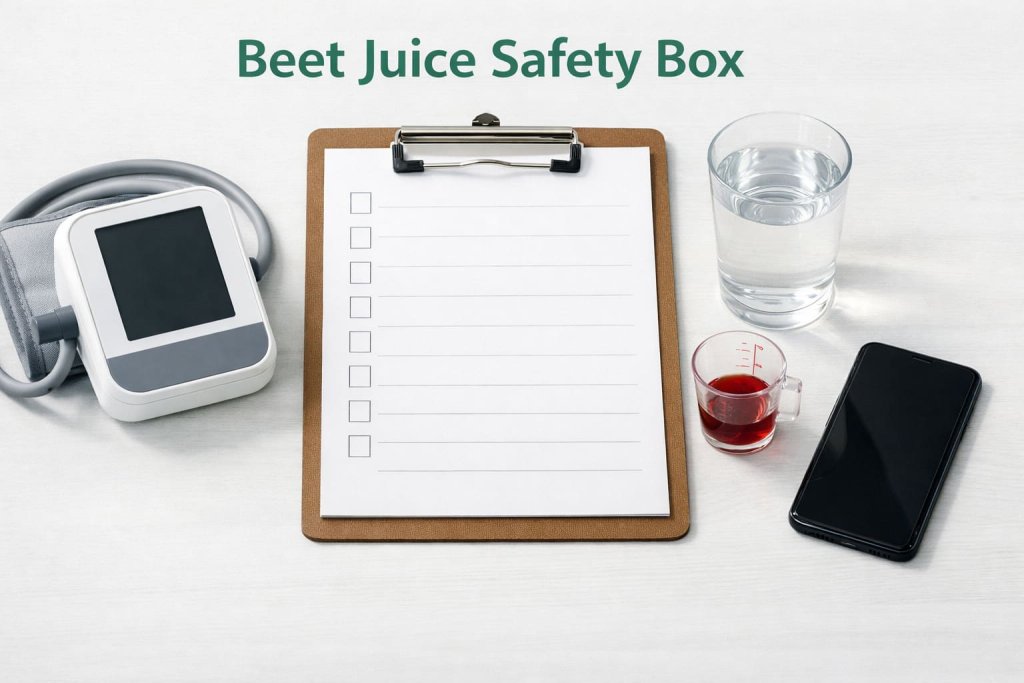
How to use beet juice more safely if you’re not in an “avoid” group
- Start small so you can see how your body reacts (especially for stomach comfort and dizziness).
- Don’t try it for the first time right before a long drive, a hard workout, or an important event.
- If you’re using beet juice for blood pressure support, track home readings and watch for symptoms of low blood pressure.
Stop and get medical advice if:
- Red urine/stool doesn’t resolve after stopping beets
- You have urinary pain, fever, or persistent symptoms
- You develop repeated dizziness or near-fainting
- You have kidney stone symptoms (severe flank pain, nausea/vomiting, blood in urine)
- You have signs of an allergic reaction (hives, swelling of lips/face, wheezing, or trouble breathing). Beet allergy is rare, but serious reactions have been reported in medical case literature.
How much beet juice is too much?
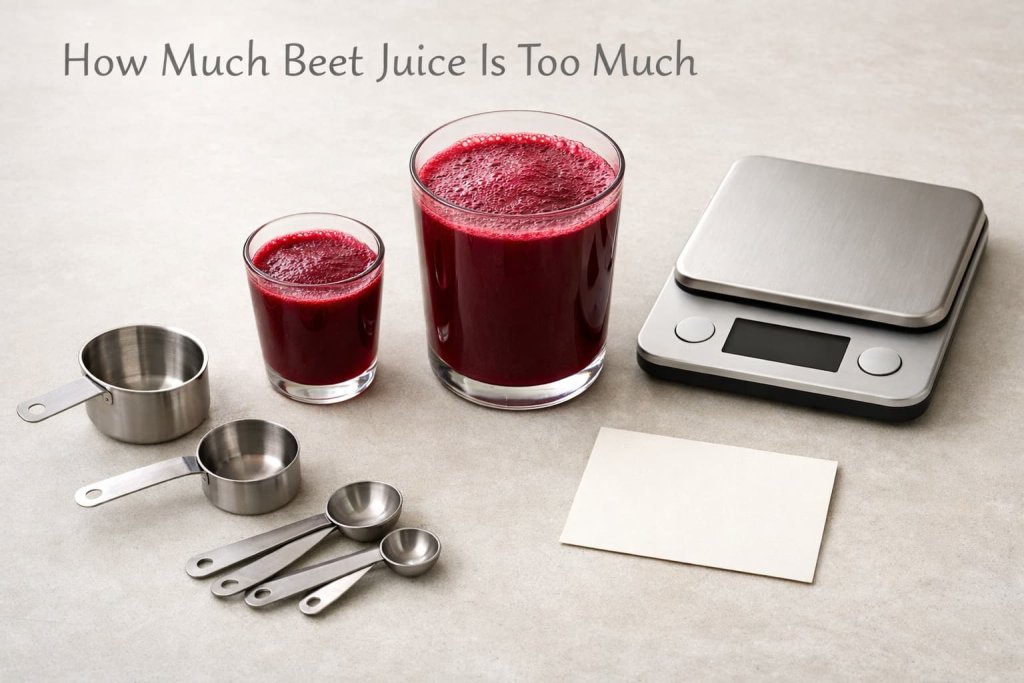
There’s no single perfect dose because products vary widely (fresh juice vs. concentrated shots vs. powders). But one safety concern is total nitrate intake from all sources.
The European Food Safety Authority set an acceptable daily intake (ADI) for nitrate at 3.7 mg per kg of body weight per day. Some beet juice concentrates can push nitrate intake high quickly, especially if you use them daily.
Practical way to reduce risk:
- Prefer smaller servings and increase only if you tolerate it well.
- Avoid stacking multiple nitrate-heavy products (beet shots + nitrate powders).
- If you have dizziness, headaches, or frequent low BP readings, cut back or stop.
FAQs
Is beet juice safe to drink every day?
It can be safe for many healthy adults, but daily use isn’t a fit for everyone. The biggest reasons to avoid daily beet juice are kidney stone risk (oxalates), low blood pressure, medication interactions, and potassium restrictions in CKD.
Why does beet juice make you pee red?
It’s usually beet pigments passing through your system (beeturia), which the NIH describes as affecting roughly 10%–14% of people. It’s typically harmless and temporary.
Can beet juice cause kidney stones?
For people prone to calcium oxalate stones, beet products can be a concern. The National Kidney Foundation and Mayo Clinic both include beets among foods that may be limited for oxalate stones.
Can beet juice lower blood pressure too much?
Yes—especially if you already have low blood pressure or take blood pressure medicine. Research summarized in Frontiers in Nutrition supports BP-lowering effects of beetroot juice nitrate, which is why some people feel dizzy or lightheaded.
Is beet powder riskier than beet juice?
Powders and “shots” can be more concentrated, making it easier to consume a high dose quickly—especially relevant for oxalate concerns and blood-pressure drops.
What are the most common beet juice side effects?
The most common are red urine/stool (beeturia), mild digestive upset, and possible lightheadedness if blood pressure drops.
How long does beeturia last?
For most people it’s temporary and resolves after the pigments clear—often within a day or two after stopping beet intake.
Should I stop beet juice if I feel dizzy?
Yes—pause it and see if symptoms resolve. If dizziness is frequent, severe, or you take blood pressure medication, talk with a clinician.
Can I drink beet juice if I’ve had kidney stones?
If you’ve had calcium oxalate stones, beet juice is often best avoided or used only with clinician guidance because beets are commonly listed as high-oxalate.
Does cooking beets reduce side effects compared with beet juice?
Whole beets are less concentrated than juice, so some people tolerate them better. For stone-prone individuals, the key issue is total oxalate exposure and the prevention plan your clinician recommends.
Can beet juice be unsafe with kidney disease?
It depends on your labs and dietary plan. If you must restrict potassium, beet juice can add meaningful potassium and should be discussed with your renal clinician/dietitian.
When should I seek medical care after drinking beet juice?
Seek care if you have persistent red urine after stopping beets, urinary pain/fever, severe dizziness, fainting, symptoms consistent with kidney stones, or signs of an allergic reaction.
Conclusion
Beet juice can be a useful option for some goals, but beet juice side effects aren’t one-size-fits-all. If you’re prone to kidney stones, run low blood pressure, take BP medications, use nitrates or erectile dysfunction drugs, or have CKD with potassium limits, beet juice may not be a good fit—or may need clinician guidance. If you’re otherwise healthy, start small, watch how you feel, and treat “red urine” as a normal pigment effect unless it persists or comes with symptoms.
This content is for informational purposes only and not medical advice.