

Brown eggs vs white eggs comes down to one main fact: shell color does not make one egg meaningfully healthier, safer, or higher quality than the other. In the U.S., shell color is mainly determined by the breed of the hen, and the USDA says nutrient levels are not significantly different between brown-shell and white-shell eggs. Knowing that can help you shop more confidently and focus on what matters more, like grade, freshness, labeling claims, and safe handling. According to the USDA AskUSDA, shell color is not a shortcut for better nutrition.
Brown Eggs vs White Eggs: The Short Answer
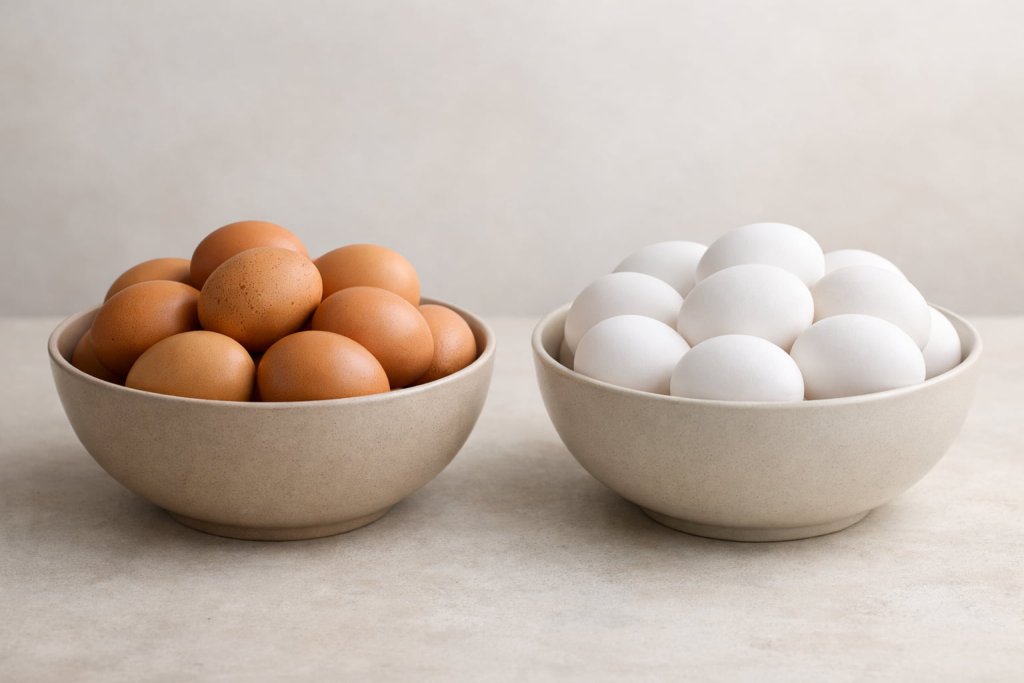
If you are choosing between brown eggs and white eggs, shell color alone is mostly a cosmetic difference. The USDA says shell color is not a factor in U.S. standards for shell egg grades, and it does not determine nutrition or quality. That means a white egg and a brown egg can be equally good choices when they come from similar production systems and are equally fresh. The USDA Agricultural Marketing Service makes this clear in its shell egg guidance.
Brown Eggs vs White Eggs at a Glance
| Factor | Brown Eggs | White Eggs |
|---|---|---|
| Shell color | Brown | White |
| Main reason for color | Hen breed | Hen breed |
| Nutrition | Not significantly different by shell color alone | Not significantly different by shell color alone |
| Taste | No consistent difference from shell color alone | No consistent difference from shell color alone |
| Quality grade | Can be AA, A, or B | Can be AA, A, or B |
| Food safety | No special safety advantage | No special safety advantage |
| Price | Often costs more | Often costs less |
| What matters more | Grade, freshness, label claims, and storage | Grade, freshness, label claims, and storage |
This quick comparison shows what the evidence says: shell color is mostly a breed trait, while grade, freshness, storage, and production labels are usually more useful when choosing eggs.
Why Are Some Eggs Brown and Others White

Shell color is mostly about genetics and hen breed, not added nutrition. USDA explains that the breed of the hen determines whether the shell is white or brown. That is why brown eggs are common in some brands and white eggs are common in others. It is a breed trait, not a built-in health advantage.
Are Brown Eggs More Nutritious Than White Eggs
No. The USDA says the nutrient levels in white-shell and brown-shell eggs are not significantly different. So if two eggs are otherwise similar, shell color should not be treated as a nutrition shortcut.
What can change nutrition more than shell color is the specific product or feeding approach. For example, some cartons may advertise omega-3 enrichment or other nutrition claims, but those are separate from whether the shell is brown or white. The USDA AMS label approval guidance notes that nutrient content claims require supporting documentation.
Yolk Color Is Not the Same as Shell Color

Another common misunderstanding is that brown eggs must have darker yolks or better nutrition. In reality, yolk color and shell color are separate things. Shell color comes mainly from the hen’s breed, while yolk color is influenced more by what the hen eats.
That means you can find brown eggs with lighter yolks and white eggs with deeper yellow or orange yolks. A darker yolk does not automatically mean the egg is healthier overall. It may simply reflect differences in feed. For shoppers, this is another reason not to use shell color alone as a shortcut for nutrition or quality.
Do Brown Eggs Taste Different
Most people will not notice a reliable taste difference based on shell color alone. USDA does not identify shell color as a quality factor, and taste is more likely to vary because of freshness, feed, storage, and cooking method than because the shell is brown or white. USDA grading standards focus on shell condition and interior quality, not shell color.
Do Brown Eggs and White Eggs Cook Differently
In everyday cooking, brown eggs and white eggs perform the same when they are equally fresh and the same size. For frying, scrambling, boiling, or baking, shell color does not create a meaningful performance difference.
What does affect results is freshness and size. Fresher eggs often hold their shape better for frying or poaching, while egg size matters in baking because recipes are usually built around standard large eggs. So if your cake, muffins, or custard matters, matching the recipe’s egg size is more useful than worrying about brown vs white shells.
Why Brown Eggs Usually Cost More
Brown eggs often cost more because they typically cost more to produce, not because they are automatically better for you. USDA says brown eggs are generally larger on average due to the breed of hen, and that higher production cost is usually reflected in the retail price per dozen.
That means a higher price on brown eggs should not be assumed to mean higher nutrition, better safety, or better quality. In many stores, you are paying for breed-related production differences or for separate claims on the carton, not for shell color itself.
What Matters More Than Shell Color
Egg Grade
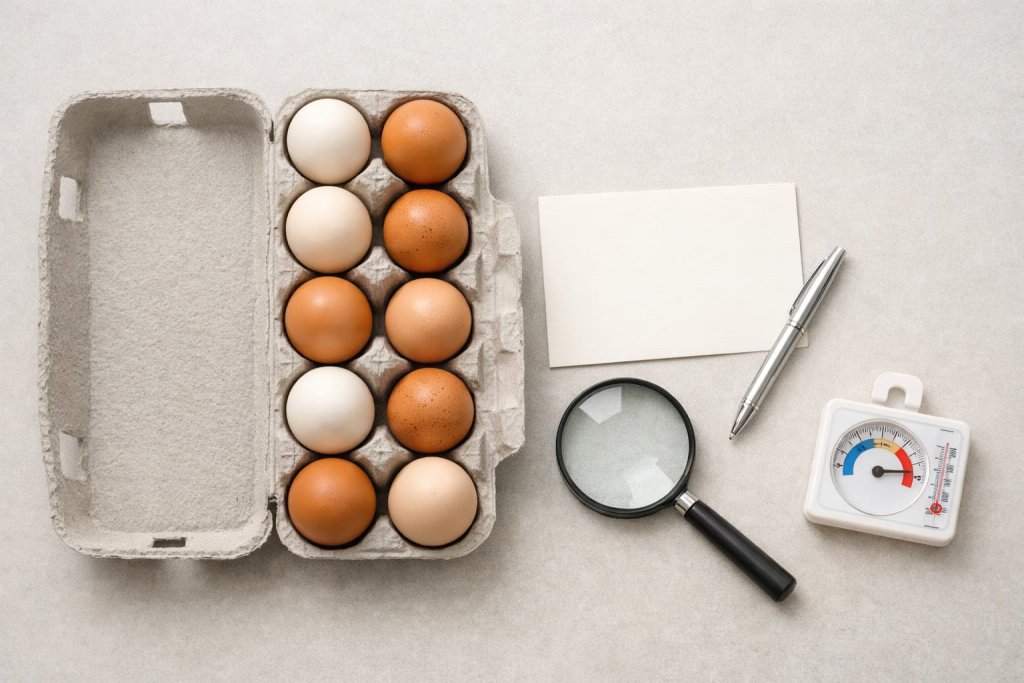
If you want better quality clues, start with the grade. USDA says shell color is not part of grading, while grade reflects quality factors such as shell condition and the condition of the yolk and white. U.S. Grade AA and Grade A are the grades most commonly sold in stores.
Freshness
Freshness matters more than color for texture and performance in the kitchen. Eggs that are fresher usually have firmer whites and a more centered yolk, which can matter for frying, poaching, and baking. USDA grading standards emphasize interior quality rather than shell color.
Production Labels
If you care about how hens were raised, read the carton closely. Terms like cage-free, free-range, and organic are separate claims and are not determined by shell color. USDA says cage-free eggs come from hens able to roam inside indoor houses with food and water, while free-range eggs must also have continuous access to the outdoors during their laying cycle. USDA also says only foods produced according to USDA organic standards can display the USDA organic seal. The USDA Organic program explains these standards.
How to Read an Egg Carton More Effectively
If you want to make a smarter choice at the store, the carton usually tells you more than shell color does.
Check the Grade
USDA grade tells you about quality, not shell color. Grade AA and Grade A are the grades most shoppers see most often. A higher grade generally means firmer whites and a yolk that stands up better when the egg is broken open.
Check the Size
Egg size also matters, especially for baking. Common carton sizes include medium, large, and extra-large. Most U.S. recipes are written for large eggs, so choosing the right size can matter more in the kitchen than choosing brown or white shells.
Check the Carton Dates
A carton may show a sell-by date or a pack date. Those details can help you judge freshness along with how the eggs have been stored. Choosing a clean, refrigerated carton with no cracks is usually more important than choosing a shell color.
Brown Eggs vs White Eggs and Food Safety
Shell color does not make eggs safer. The USDA and FDA both warn that even clean, uncracked eggs can carry bacteria such as Salmonella. The FDA says eggs should be stored promptly in a clean refrigerator at 40°F or below, and the USDA Food Safety and Inspection Service says to keep eggs refrigerated and cook them until yolks and whites are firm.
FDA also says shell eggs are best used within about 3 weeks for best quality, while the FDA refrigerator and freezer storage chart lists 3 to 5 weeks of refrigerator storage for fresh shell eggs. Those storage recommendations apply to eggs regardless of whether they are brown or white.
A useful real-world reminder came from the 2025 FDA outbreak investigation linked to recalled eggs. The agency reported illnesses connected to brown cage-free eggs and brown certified organic eggs, showing that shell color is not a safety guarantee. The FDA outbreak investigation page reported 134 illnesses, 38 hospitalizations, and 1 death in that outbreak before it was declared over.
How to Choose Eggs Smartly
A practical way to shop is to ignore shell color at first and focus on these questions:
- Is the carton clean and uncracked?
- What is the grade?
- Does the label include a claim you actually care about, such as cage-free or organic?
- Are you paying extra only for shell color or for a separate feature?
- Will you use the eggs soon enough to keep quality high?
Those questions align better with USDA and FDA guidance than assuming brown eggs are better.
Which Eggs Should You Buy
For most people, the best choice is the carton that fits your budget, freshness needs, and preferred production method. If brown and white eggs are otherwise similar, choosing the less expensive option is usually reasonable because USDA says shell color does not meaningfully change nutrition or quality.
You may decide to spend more for certified organic, cage-free, or free-range eggs, but that is a decision about farming practices and labeling standards, not a simple brown-versus-white decision.
When Paying More for Eggs May Make Sense
Paying more can make sense when the extra cost is tied to something specific you value, rather than shell color alone.
You may decide a higher price is worth it if you want:
- a specific production standard, such as organic or cage-free
- a specialty product, such as omega-3 enriched eggs
- a preferred brand with consistent quality and freshness
- eggs from a local producer you trust
The key point is that you should be paying for a defined feature or standard, not assuming that brown shells alone mean better eggs. If two cartons are otherwise similar, the lower-priced option is often the better value.
Common Myths About Brown Eggs vs White Eggs
Myth: Brown eggs are healthier
USDA says nutrient levels are not significantly different between brown and white eggs.
Myth: Brown eggs are more natural
Shell color reflects hen breed. It does not automatically mean organic, pasture-raised, cage-free, or free-range.
Myth: Brown eggs are safer
FDA and USDA food safety guidance applies to both. Either type can carry foodborne bacteria if mishandled.
Myth: White eggs are lower quality
USDA grading standards do not use shell color as a quality factor.
FAQs
Are brown eggs better for you than white eggs?
No. USDA says nutrient levels are not significantly different between brown-shell and white-shell eggs.
Why are brown eggs more expensive?
USDA says brown eggs usually cost more to produce, and that higher cost is often reflected at retail.
Do brown eggs have more protein?
Not in any meaningful way because of shell color alone. USDA says brown and white eggs do not differ significantly in nutrient levels.
Are white eggs lower quality?
No. USDA says shell color is not a factor in grading standards for shell egg quality.
Are brown eggs organic?
Not necessarily. Organic is a separate USDA-regulated claim. Only foods produced according to USDA organic standards can display the USDA organic seal.
Which eggs are safer, brown or white?
Neither shell color has a safety advantage. FDA and USDA safe-handling recommendations apply to both.
How long do eggs last in the refrigerator?
FDA says eggs should be stored at 40°F or below, used within about 3 weeks for best quality, and the FDA storage chart lists 3 to 5 weeks in the refrigerator for fresh shell eggs.
Conclusion
Brown eggs and white eggs are much more alike than many shoppers think. Shell color does not tell you which egg is healthier, safer, or higher quality. A better approach is to check grade, freshness, label claims, and safe storage. That will help you make a smarter choice than relying on color alone. The next time you buy eggs, read the carton first and let your priorities, not the shell shade, guide the decision.