
The best oil for cooking for most daily meals is a liquid plant oil that is high in unsaturated fat and lower in saturated fat, especially olive oil or canola oil. These oils fit current heart-health guidance, work well in many home kitchens, and are better everyday choices than butter, lard, or tropical oils such as coconut and palm oil. According to the American Heart Association, liquid plant oils are the preferred choice for healthy cooking.
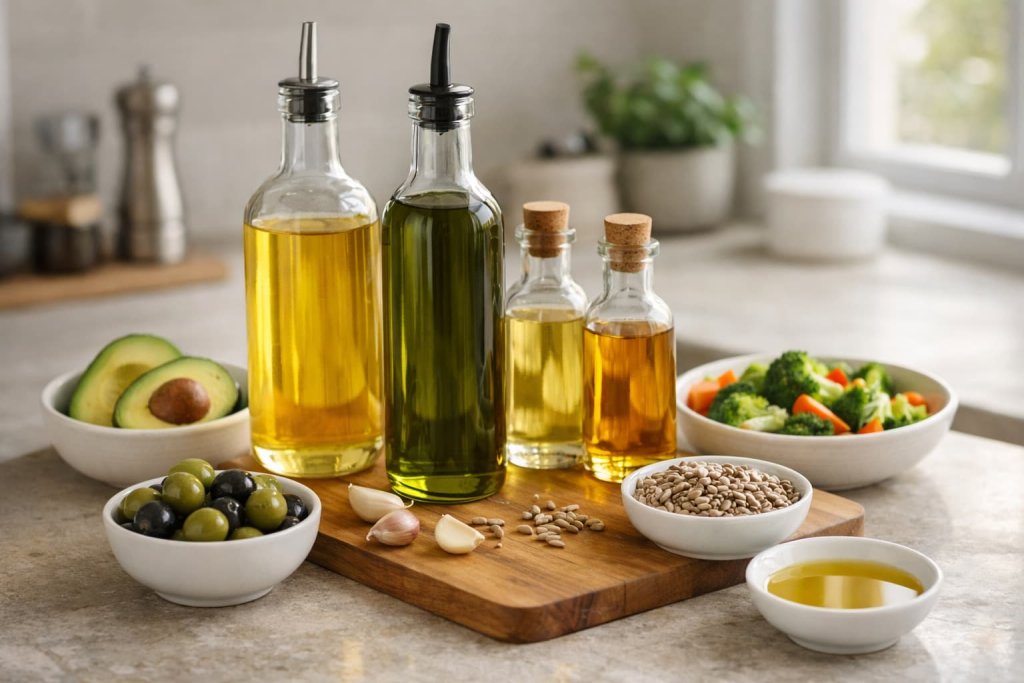
Knowing which oil to use matters because the type of fat you cook with can affect your overall diet quality, heart health, and how well a meal holds up to heat. The good news is that you do not need a complicated system. For most people, a small group of practical oils covers nearly everything: olive oil for many everyday dishes, canola oil for all-purpose cooking, and a few other liquid vegetable oils when price, flavor, or availability makes more sense.
What Makes an Oil a Good Choice for Cooking
A good cooking oil is not just about smoke point. For everyday use, the bigger issue is the oil’s fat profile. Current guidance from the American Heart Association, World Health Organization, U.S. Food and Drug Administration, and Dietary Guidelines for Americans all point in the same direction: choose oils higher in monounsaturated and polyunsaturated fats, and keep saturated fat lower overall.
In practical terms, that means:
- Favor liquid plant oils over solid fats
- Use oils with less saturated fat per tablespoon when possible
- Avoid partially hydrogenated oils and trans fat
- Think about how you actually cook: sautéing, roasting, baking, or light pan-frying
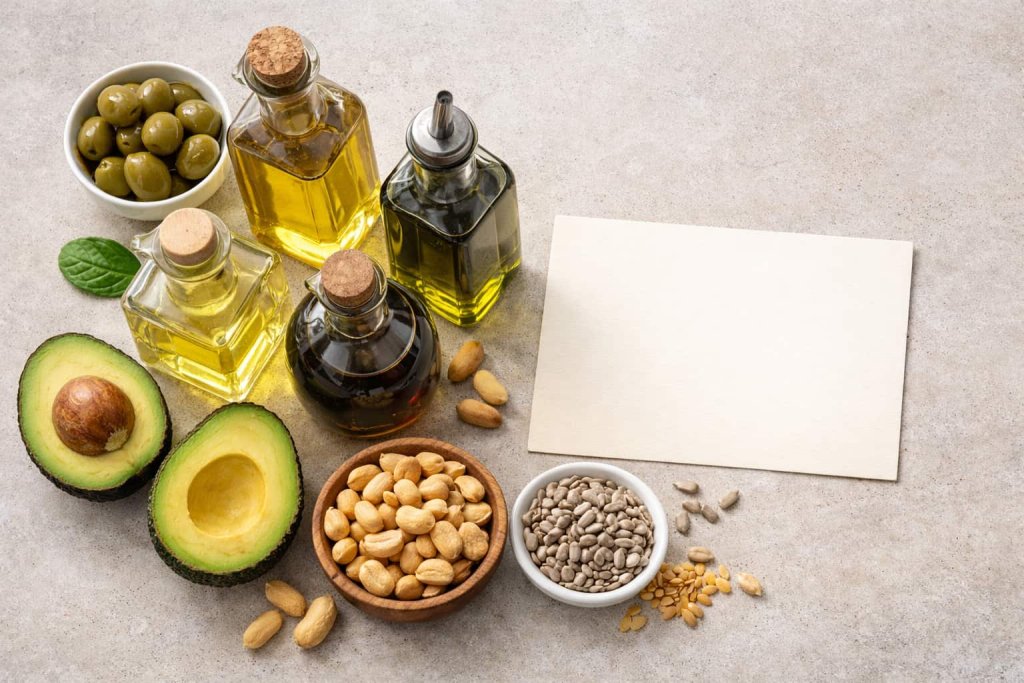
Best Oil for Cooking for Everyday Use
For most kitchens, these are the strongest choices.
Quick Comparison: Best Oils for Common Cooking Needs
| Cooking need | Best oil choices | Why they work well |
|---|---|---|
| Everyday cooking | Olive oil, canola oil | Good unsaturated fat profile and useful for many meals |
| Neutral-flavor cooking | Canola oil, soybean oil, vegetable-oil blend | Mild taste that does not overpower food |
| Roasting vegetables | Olive oil, canola oil | Practical, widely available, and easy to use |
| Baking | Canola oil, soybean oil | Neutral flavor and easy to mix into batters |
| Higher-heat cooking | Canola oil, peanut oil, sunflower oil | Common practical choices for hotter cooking without strong flavor |
| Flavor finishing | Extra-virgin olive oil, sesame oil | Best when taste is part of the dish |
This table is a quick starting point, not a strict rule. The healthiest everyday choice is usually a liquid plant oil that is higher in unsaturated fat and lower in saturated fat.
Olive Oil
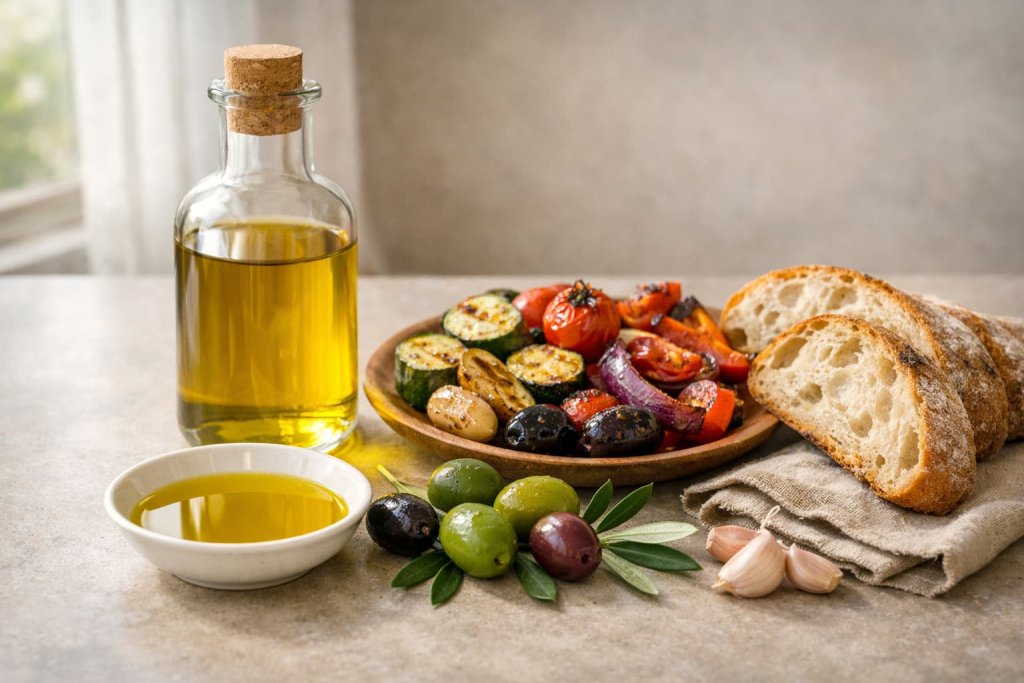
Olive oil is one of the best everyday options because it is rich in monounsaturated fat and is consistently included in major healthy eating guidance. It works especially well for sautéing, roasting, drizzling, and many medium-heat cooking jobs. Extra-virgin olive oil offers more olive flavor, while refined olive oil has a more neutral taste. Both can fit a healthy diet. The American Heart Association also highlights evidence linking olive oil intake with lower cardiovascular risk in overall dietary patterns.
Canola Oil
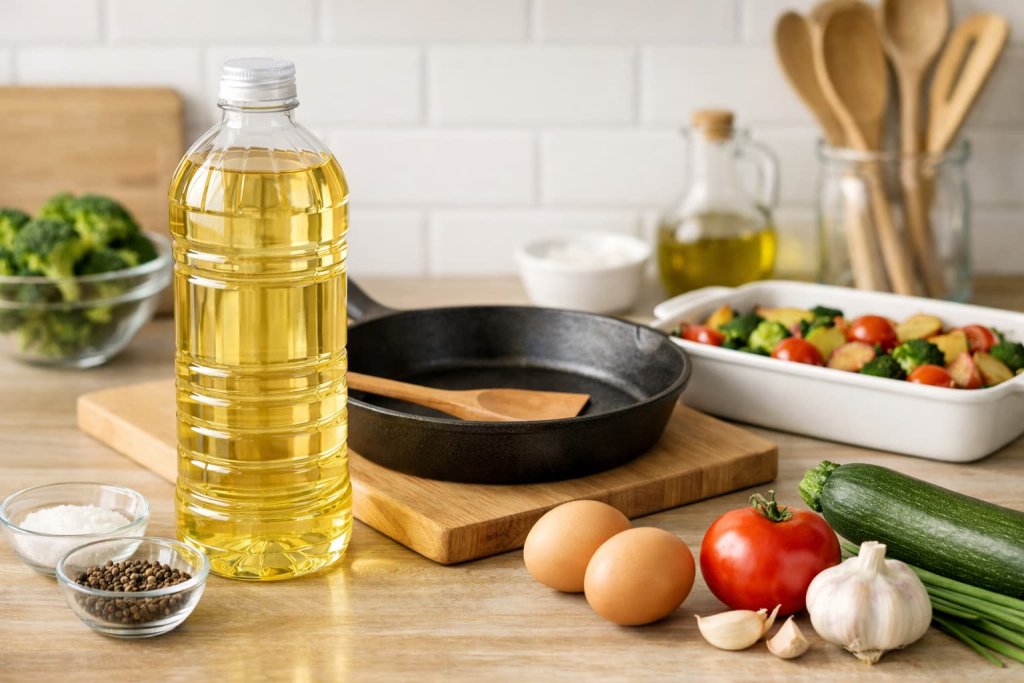
Canola oil is one of the best all-purpose choices if you want a mild flavor and wide kitchen versatility. It is specifically named by the World Health Organization and the FDA as a preferable unsaturated oil, and it is often more affordable than olive oil in larger bottles. It is useful for stir-fries, baking, roasting, and general pan cooking when you do not want the oil to add much flavor.
Avocado Oil
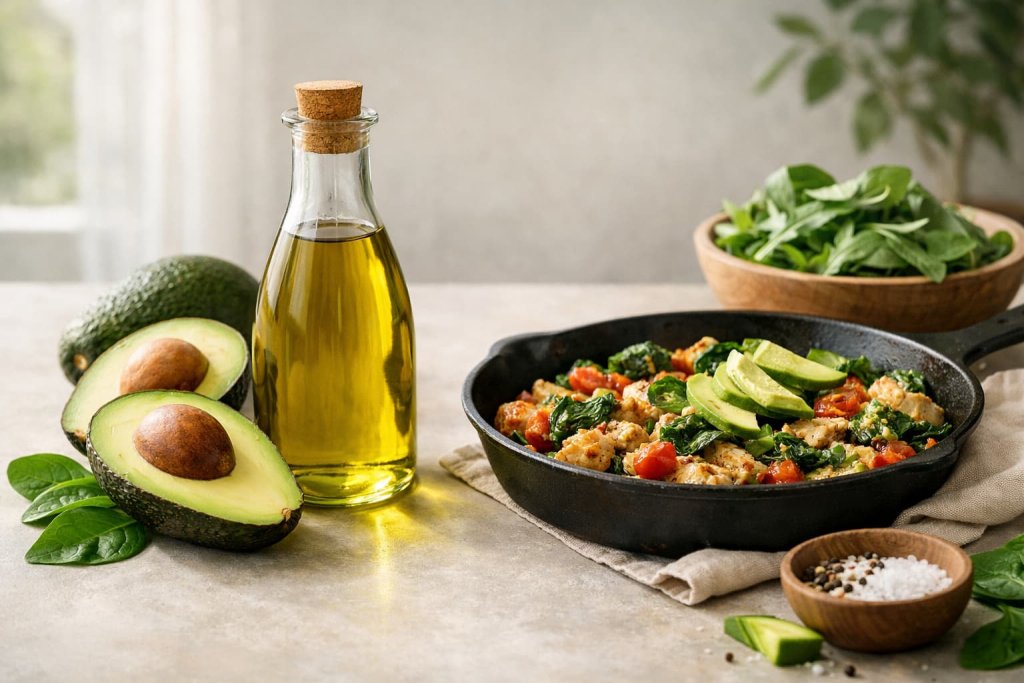
Avocado oil can also be a good cooking choice, especially for people who want a mild flavor and a liquid oil rich in unsaturated fat. The American Heart Association includes avocado oil among healthy cooking oil options. It is often more expensive than olive or canola oil, so for many households it works best as an optional upgrade rather than a pantry essential.
Other Good Oils for Cooking
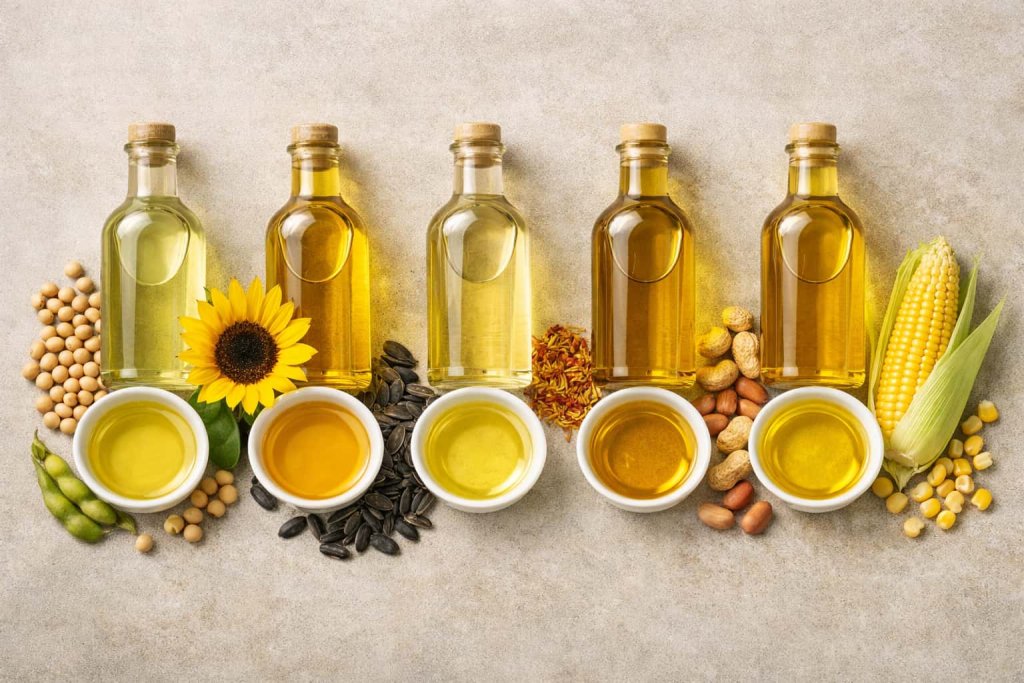
Several other liquid plant oils also fit current healthy-fat guidance, including soybean, sunflower, safflower, peanut, and corn oil. These can all be reasonable choices for daily cooking, depending on cost, taste, and the type of dish you are making. Peanut oil can be useful when you want a slightly nutty flavor. Sunflower or safflower oil can work well when you prefer a lighter taste. Soybean and vegetable-oil blends are often economical household staples.
Best Oil for Cooking by Cooking Method
There is no single perfect oil for every task. Choosing by cooking method makes daily decisions easier.
Best Oil for Sautéing and Pan Cooking
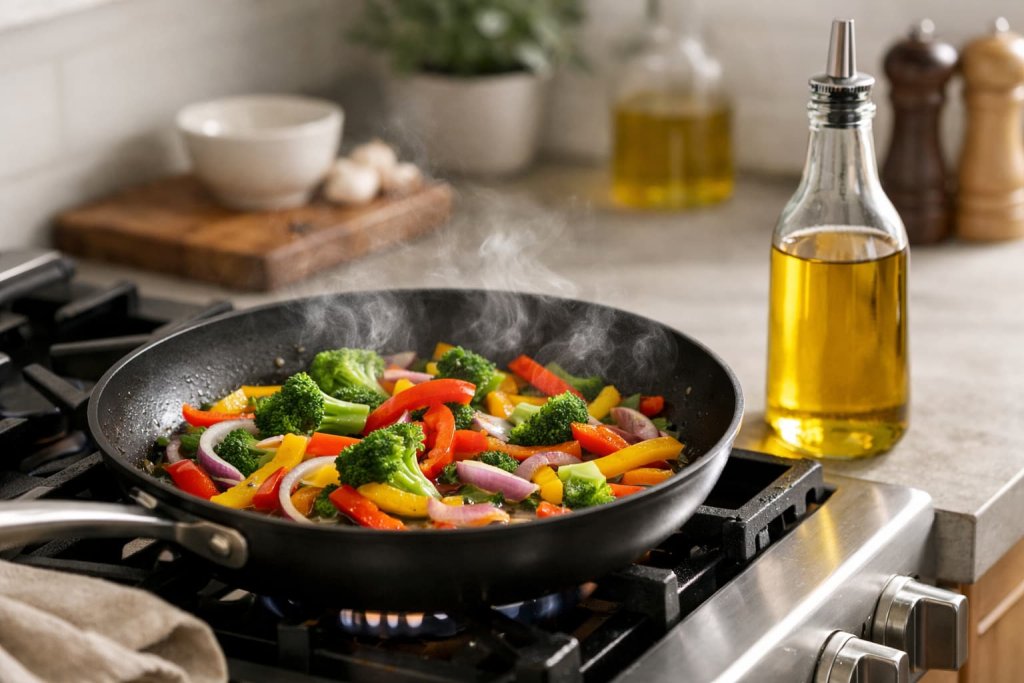
Olive oil and canola oil are both strong choices for sautéing and general stovetop cooking. Olive oil is great when flavor matters. Canola oil is helpful when you want a neutral result. For quick vegetable dishes, eggs, beans, fish, or chicken, either can work well.
Best Oil for Roasting
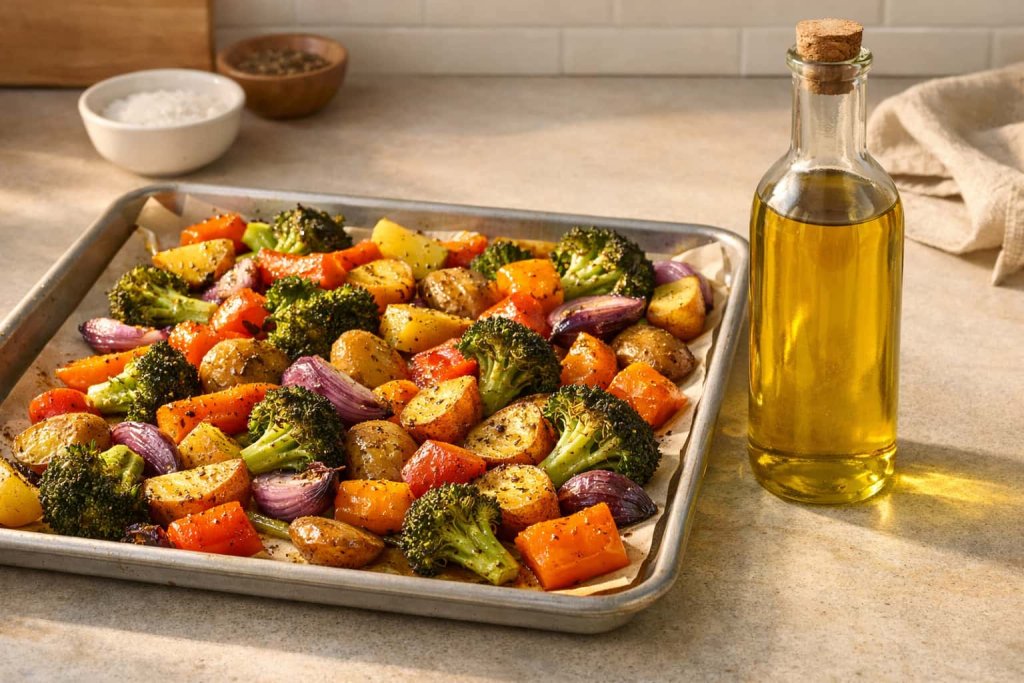
Olive oil, canola oil, and similar liquid vegetable oils are all practical for roasting vegetables, potatoes, fish, or chicken. The main goal is to coat food lightly rather than use more oil than needed. A modest amount goes a long way.
Best Oil for Baking
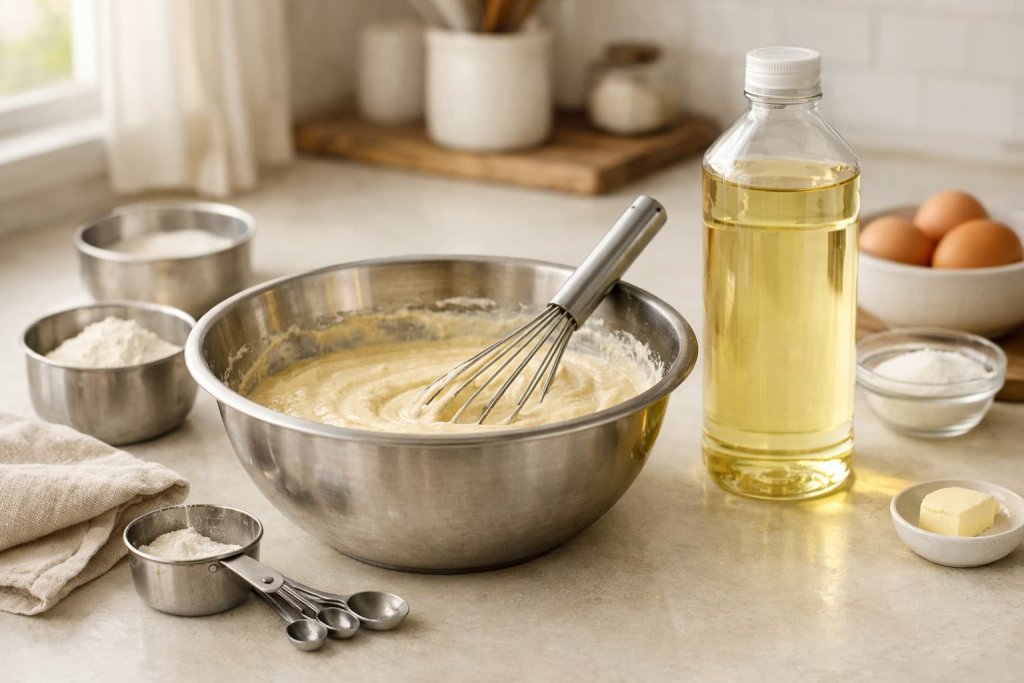
Canola oil, soybean oil, and other neutral liquid oils are often the easiest swap in baking because they blend into batters and do not dominate flavor. From a health perspective, replacing some solid fats with liquid unsaturated oils can help reduce saturated fat intake.
Best Oil for Higher-Heat Cooking
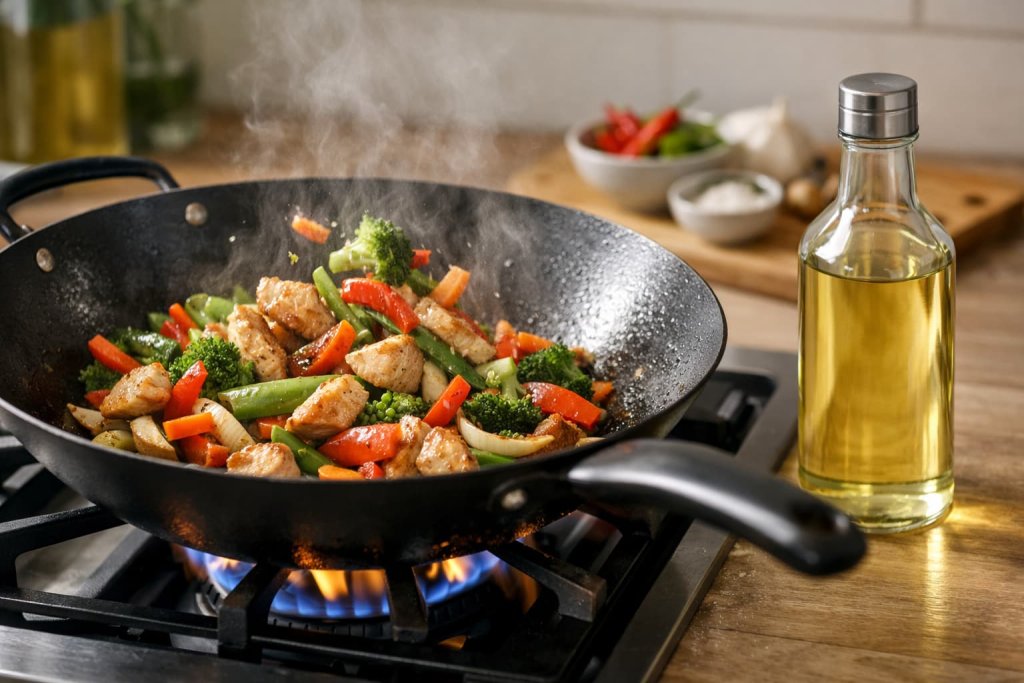
The American Heart Association notes that recommended healthy oils are generally safe even at higher temperatures. What matters most is not overheating them. If an oil starts to smoke, it is breaking down and should not be used. For higher-heat cooking at home, canola, peanut, sunflower, and other refined liquid vegetable oils are often practical choices.
Oils to Limit for Daily Cooking
Some fats are better kept occasional rather than daily staples.
Butter, Lard, and Shortening
These are higher in saturated fat than most liquid plant oils. The Dietary Guidelines recommend keeping saturated fat to less than 10% of daily calories starting at age 2, and a USDA fact sheet notes that on a 2,000-calorie diet, that is about 20 grams per day. Using liquid oils more often instead of butter, lard, or shortening can help keep total saturated fat lower.
Coconut Oil and Palm Oil
Coconut oil and palm oil are also less favorable as everyday cooking oils because they are higher in saturated fat. That does not mean they can never be used, but they are not the best foundation for daily cooking if your goal is to follow current heart-health guidance. The World Health Organization and the FDA both place oils like olive, canola, soybean, and sunflower in the preferable unsaturated category, while coconut and palm oils fall on the higher-saturated-fat side.
Is Smoke Point the Most Important Thing
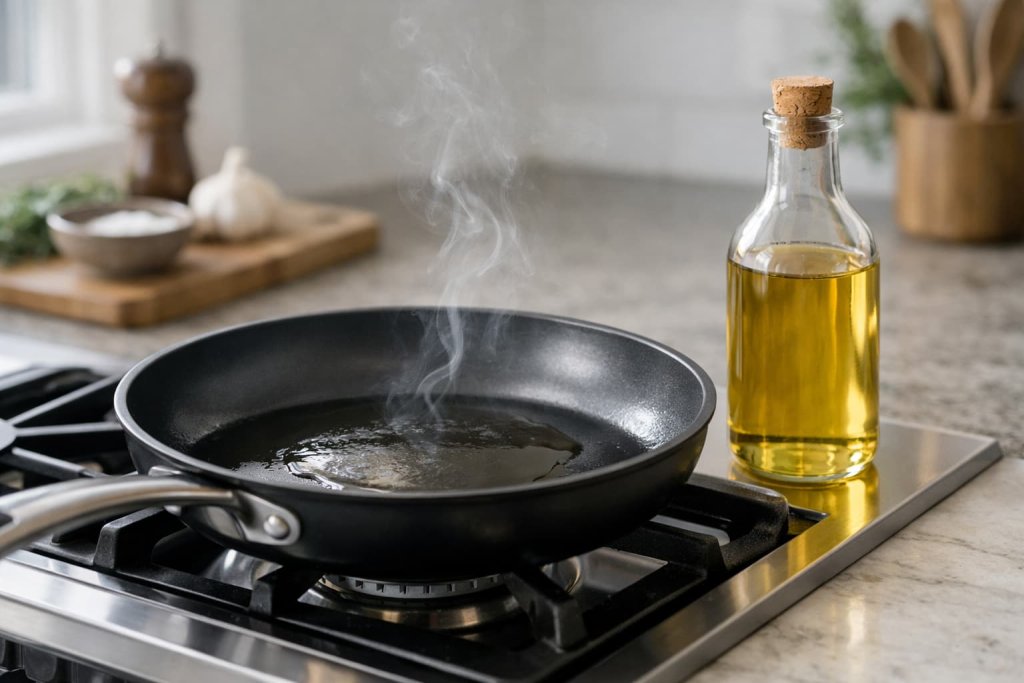
Not usually. Smoke point matters, but it should not be the only factor. Many people choose oils based only on a chart online, but the overall fat profile still matters more for long-term health. An oil that is rich in unsaturated fat and used properly in normal home cooking is usually a smarter everyday choice than a higher-saturated-fat fat source chosen only because it tolerates heat.
The simplest rule is this: use an oil that suits the recipe, but do not keep heating it until it smokes. If it smokes, discard it and start again.
Refined vs Unrefined Oils: Which Is Better for Cooking
Readers often assume that terms like “extra virgin,” “cold-pressed,” or “unrefined” always mean a better cooking oil. In reality, the best choice depends on how you plan to use it.
Unrefined oils usually have more natural flavor and aroma. Extra-virgin olive oil is a good example. It works well for dressings, dipping, drizzling, and many everyday cooked dishes where you want the oil to add taste.
Refined oils usually have a milder flavor and can be more practical when you want the oil to stay in the background. That can make them useful for baking, stir-fries, or recipes where you do not want a strong taste.
For daily cooking, this is the simplest approach:
- Use extra-virgin olive oil when you want more flavor
- Use canola oil or another neutral liquid oil when you want versatility
- Do not assume a more expensive bottle is automatically healthier for every recipe
The main health priority is still the overall fat profile. A liquid plant oil that is high in unsaturated fat is usually the better everyday choice, whether it is refined or unrefined.
Are Seed Oils Bad for You
Current mainstream guidance does not support avoiding seed oils across the board. In fact, the American Heart Association says there is no reason to avoid seed oils and many reasons they can be part of a healthy diet. Oils such as soybean, sunflower, safflower, and corn oil provide unsaturated fats that can help replace more saturated fat in the diet.
That does not mean every fried packaged food is healthy just because it contains seed oil. It means the oil itself should be judged in context. Deep-fried fast foods, snacks, and desserts can still be high in calories, sodium, or refined carbs. The better question is not “seed oil or no seed oil?” but “what is the whole meal pattern?”
How to Choose the Best Oil for Cooking at the Store
Here is the most useful label-reading checklist.
Check Saturated Fat
The American Heart Association advises choosing oils with less than 4 grams of saturated fat per tablespoon. That is an easy first filter for comparing bottles.
Avoid Partially Hydrogenated Oils
Even though most artificial trans fat has been phased out of the U.S. food supply, the FDA still requires trans fat to be listed on the Nutrition Facts label, and partially hydrogenated oils remain a red flag on ingredient lists.
Use the Nutrition Facts Label
The FDA says the Nutrition Facts label must list total fat, saturated fat, and trans fat. Some products may also list monounsaturated and polyunsaturated fat, which can help you compare options more closely.
A Simple Guide to Matching Oil to Meals
For Most Daily Meals
Use olive oil or canola oil. These are the best default choices for a large share of home cooking because they align with official healthy-fat guidance and are versatile enough for regular use.
For Neutral Flavor
Choose canola oil, soybean oil, or a plain vegetable-oil blend. These are useful when you do not want the oil to change the taste of the dish.
For Stronger Flavor
Choose olive oil or sesame oil in dishes where taste is part of the appeal. Sesame oil is usually better as a flavoring oil than your only everyday staple. The American Heart Association lists sesame as a healthy specialty choice.
For Budget-Friendly Cooking
Canola oil, soybean oil, corn oil, and many vegetable-oil blends are often more affordable than specialty oils while still fitting healthy-fat guidance. This is a practical point for families cooking every day. The healthiest oil is one you can realistically keep in your kitchen and use consistently.
Common Mistakes When Using Cooking Oil
Using Too Much Oil
Even healthy oils are calorie-dense. A little is often enough for sautéing, roasting, or dressing a meal. The goal is not to fear oil, but to use it intentionally within an overall balanced diet.
Reusing Oil Repeatedly
The American Heart Association advises not to reuse or reheat cooking oil. Repeated heating can degrade oil quality.
Storing Oil Poorly
Store oil in a cool, dark place. Heat, light, and air can reduce quality over time.
When Oil Has Gone Bad
Even a healthy oil is not a good choice if it has turned rancid. Oil quality can decline over time, especially when bottles are exposed to heat, light, or air for too long.
Common signs that oil has gone bad include:
- A stale, sharp, or crayon-like smell
- An off taste
- A bottle that has been open for a long time and stored badly
- Repeated exposure to heat near the stove
If the smell or taste seems off, it is best to replace the bottle. Buying a size you can use within a reasonable time and storing it away from heat and direct light helps preserve quality.
Safety Box
- Do not keep heating oil until it smokes.
- Do not reuse oil multiple times.
- Store oils in a cool, dark place.
- Choose liquid oils with lower saturated fat for everyday cooking.
- If you have a medical condition that requires a special diet, follow your clinician’s advice on fat intake and total calories.
A Simple Pantry Setup for Most Home Cooks
Most people do not need a large collection of oils. A small, practical setup is enough for daily cooking:
- Keep olive oil for sautéing, roasting, and finishing dishes
- Keep canola oil or another neutral liquid oil for baking and general cooking
- Add sesame oil or another specialty oil only when you want a specific flavor
This approach keeps things simple, supports healthier fat choices, and covers most everyday meals without overcomplicating your kitchen.
Bottom Line on the Best Oil for Cooking
For most people, the best oil for cooking is olive oil or canola oil, with other liquid plant oils such as soybean, sunflower, safflower, peanut, and corn oil also fitting a healthy everyday pattern. The main thing to limit is not all oil, but oils and fats that are higher in saturated fat and meals built around heavy frying or excess added fat.
A smart kitchen setup does not need ten bottles. One flavorful oil and one neutral oil is enough for many households. That makes daily meals simpler, practical, and more in line with current nutrition guidance.
FAQs
What is the healthiest oil for everyday cooking?
For most people, olive oil and canola oil are among the healthiest everyday choices because they are high in unsaturated fat and lower in saturated fat than butter, lard, coconut oil, or palm oil.
Is olive oil better than canola oil?
Both are strong everyday options. Olive oil is often preferred for flavor, while canola oil is usually more neutral and flexible for baking or general cooking. Both fit official healthy-fat guidance.
Is coconut oil good for cooking every day?
It is not the best choice for daily use if you are following current heart-health guidance, because it is higher in saturated fat than oils like olive, canola, soybean, or sunflower oil.
Are seed oils unhealthy?
Current guidance does not say to avoid seed oils. The American Heart Association says there is no reason to avoid them, and the World Health Organization identifies several seed oils as preferable unsaturated fat sources.
What oil is best for high-heat cooking?
Canola oil and other liquid vegetable oils commonly used in home kitchens can work well for higher-heat cooking, as long as you do not overheat them until they smoke.
Should I avoid all saturated fat?
No. The goal is not zero saturated fat. The Dietary Guidelines recommend keeping saturated fat to less than 10% of daily calories and replacing some of it with unsaturated fats where practical.
How do I compare oils quickly at the store?
Check the Nutrition Facts label for saturated fat and trans fat, and avoid partially hydrogenated oils. Oils with lower saturated fat are usually the better everyday choice.
Conclusion
The best oil for cooking is usually not about chasing trends. It is about picking a practical oil you can use often, in reasonable amounts, while keeping saturated fat lower overall. For most kitchens, olive oil and canola oil are the safest all-around starting point.
If you are updating your pantry, start with one bottle of olive oil and one neutral liquid oil for general cooking. That simple change can make daily meals easier to prepare and more aligned with current nutrition guidance.