
A plain potato is not especially high in calories. One medium potato usually has about 110 to 150 calories, depending on its size, while 100 grams of plain potato has roughly 77 calories. According to Potatoes USA, a medium 5.3-ounce skin-on potato has 110 calories, while USDA SNAP-Ed lists a larger medium potato at 147 calories.
That is why portion size matters. Potatoes can fit into a healthy diet and even a weight-management plan, but the final calorie count changes a lot depending on whether the potato is baked, boiled, mashed, fried, or covered with butter, cheese, or sour cream.
How Many Calories Are in a Potato by Serving Size?
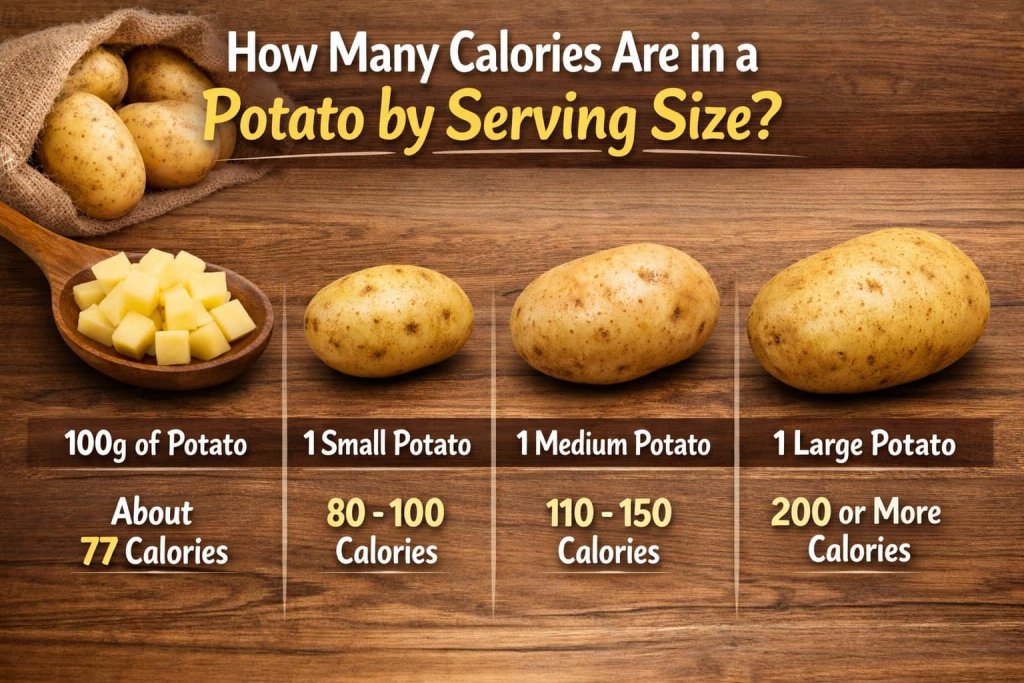
Here is a simple list-style breakdown for plain potato without heavy toppings:
- 100 grams of potato: about 77 calories
- 1 small potato: about 80 to 100 calories
- 1 medium potato: about 110 to 150 calories
- 1 large potato: about 200 or more calories
These numbers vary because potatoes come in different sizes and weights. A medium potato in one source may be smaller than a medium potato in another. Cooking method also matters, especially if oil, butter, or other toppings are added.
How Cooking Method Changes Potato Calories
A plain potato and a prepared potato dish can have very different calorie counts. Here is a simple practical guide:
- Boiled potato: usually stays close to the potato’s natural calorie level
- Baked potato: also stays close to the natural calorie level if eaten plain
- Mashed potato: calories increase once butter, milk, or cream are added
- Roasted potato: calories depend on how much oil is used
- French fries: much higher in calories because frying adds fat
- Potato chips: usually the most calorie-dense form because they are fried and easy to overeat
This is why a plain baked or boiled potato can fit into a healthy diet much more easily than fries, chips, or heavily loaded potato dishes.
Why Potato Calories Can Vary So Much
Size
A potato can be small, medium, or very large, and those labels are not always consistent from one source to another. A bigger potato naturally contains more carbohydrate and more calories.
Cooking Method
A plain baked or boiled potato stays relatively moderate in calories. Frying adds oil, which increases calories quickly. That is one reason French fries are much more calorie-dense than a plain baked potato. According to Harvard T.H. Chan School of Public Health, the health effect of potatoes depends a lot on the form in which they are eaten.
Toppings
Butter, sour cream, cheese, bacon, creamy sauces, and large amounts of oil can easily add more calories than the potato itself. For many people, toppings are the biggest reason a potato dish becomes high in calories.
Nutrition Profile of a Plain Potato
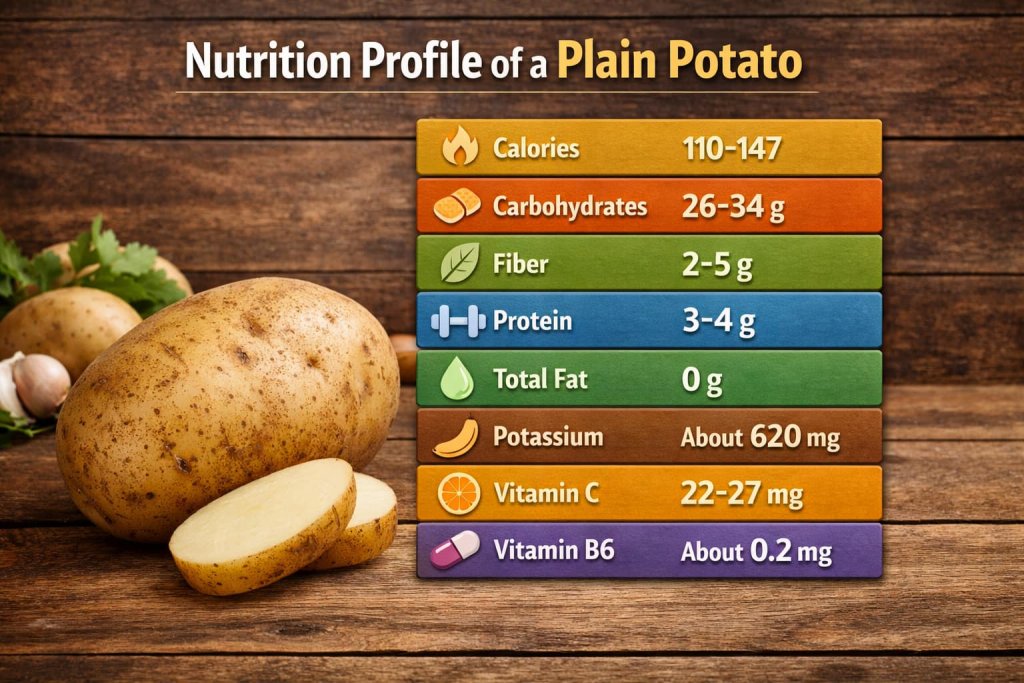
A plain potato is mostly a carbohydrate food, but it also provides several useful nutrients.
Here is a realistic nutrition profile for one medium skin-on potato:
| Nutrient | Typical amount |
|---|---|
| Calories | 110 to 147 |
| Carbohydrates | 26 to 34 g |
| Fiber | 2 to 5 g |
| Protein | 3 to 4 g |
| Total fat | 0 g |
| Potassium | about 620 mg |
| Vitamin C | about 22 to 27 mg |
| Vitamin B6 | about 0.2 mg |
Potatoes are naturally fat-free, cholesterol-free, and very low in sodium before salt or toppings are added. They are best known for providing carbohydrate for energy, along with potassium, vitamin C, and vitamin B6. According to Potatoes USA, a medium skin-on potato provides about 620 mg potassium and 27 mg vitamin C.
White Potato vs Sweet Potato Calories
Many people wonder whether a regular potato or a sweet potato is lower in calories. In practice, the difference is usually small when both are plain.
A plain white potato and a plain sweet potato can both fit into a healthy diet. The more important difference is usually not the calorie count. It is the portion size, cooking method, and what gets added on top.
A sweet potato may provide more vitamin A, while a white potato is especially known for potassium and vitamin C. Both can be good choices, and both become much higher in calories when fried or topped with large amounts of butter, sugar, cheese, or cream.
Key Nutrients in Potato
Potassium
Potatoes are a meaningful source of potassium, which helps support normal muscle and nerve function. Potatoes USA lists about 620 mg of potassium in one medium potato.
Vitamin C
Potatoes also provide vitamin C, which supports immune function and helps the body absorb iron. A medium potato provides roughly 22 to 27 mg, depending on the reference and serving size used.
Vitamin B6
Vitamin B6 helps with protein and carbohydrate metabolism. A medium potato provides about 10% of the daily value, which makes it a useful contributor to overall nutrient intake.
Fiber
Fiber is one reason potatoes can be filling, especially when eaten with the skin. The exact amount depends on the size and preparation method, but a plain medium potato can provide a useful amount. Harvard notes that potatoes contain fiber, though the amount depends on how they are prepared.
Potato With Skin vs Peeled Potato
A potato with the skin on usually has slightly more fiber than a peeled potato. The calorie difference is small, but the skin can make the potato a bit more filling and slightly more nutritious overall.
That does not mean peeled potatoes are unhealthy. The flesh still provides carbohydrate, potassium, vitamin C, and vitamin B6. Keeping the skin on is simply an easy way to get a little more fiber when you enjoy potatoes.
Is Potato Good for Weight Management?
Potatoes can work well for weight management when you keep the preparation simple and watch portion size.
A plain baked, boiled, or roasted potato can be satisfying for the calories because it contains water, starch, and some fiber. That combination can help with fullness. Potatoes are not automatically “fattening.” What usually drives calories higher is frying, large portions, or high-calorie toppings.
A practical example is one medium baked potato served with grilled chicken or beans and a large portion of non-starchy vegetables. That kind of meal is usually more balanced and filling than eating fries or a large loaded potato dish on its own.
For example, these habits make potatoes more weight-management friendly:
- Choose baked, boiled, roasted, or air-fried potatoes instead of deep-fried versions
- Keep butter, cheese, cream, and oil moderate
- Pair potatoes with lean protein and non-starchy vegetables
- Use potatoes as one part of the meal instead of the whole plate
This is also consistent with guidance from the American Diabetes Association, which places starchy foods in a balanced meal pattern rather than making them the main portion.
Are Potatoes Unhealthy?
Not by themselves. Plain potatoes can be part of a balanced diet.
The confusion usually comes from how potatoes are often eaten. French fries, loaded baked potatoes, potato chips, and large restaurant side dishes are very different from a plain potato cooked at home. Harvard notes that the health impact of potatoes depends a lot on the form in which they are eaten.
A 2025 study published by The BMJ found that French fry intake was associated with a higher risk of type 2 diabetes, while baked, boiled, and mashed potatoes did not show the same pattern in that analysis. That does not mean plain potatoes are a free food, but it does show that preparation method matters a lot.
Who Should Be a Little More Careful With Potatoes?
People With Diabetes or Prediabetes
Potatoes are a starchy carbohydrate, so they can raise blood glucose. That does not mean people with diabetes must avoid them completely, but portion size and meal balance matter. The American Diabetes Association recommends focusing on carbohydrate awareness and balanced meal planning.
A helpful approach is to pair potatoes with:
- Protein, such as chicken, fish, eggs, tofu, or beans
- Non-starchy vegetables, such as broccoli, green beans, or salad
- Reasonable portions instead of extra-large servings
People Trying to Reduce Calories
If your goal is weight loss, watch the extras. Butter, oil, cheese, creamy mashed potatoes, and fries can turn a moderate-calorie potato into a much heavier dish. In many cases, the toppings and cooking fat matter more than the potato itself.
For example, a plain baked potato can be a moderate-calorie food, but adding generous amounts of butter, cheese, sour cream, and bacon can turn it into a much heavier meal very quickly. That is why it helps to think about the full dish, not just the potato alone.
People Who Rely on Fries or Chips Often
Potato chips and fries are easy to overeat because they are much less filling per calorie than a plain potato. They are also usually higher in sodium and fat. Eating potatoes mostly in these forms changes the nutrition picture quite a bit.
Best Ways to Eat Potatoes More Healthfully
If you want to enjoy potatoes while keeping calories reasonable, these are the most practical options:
Bake or Boil Them
Plain baked or boiled potatoes keep the calorie count much closer to the potato’s natural level.
Keep the Skin On When Possible
The skin adds fiber and can help make the potato more filling. Even so, the flesh still provides useful nutrients, so peeled potatoes can still be part of a healthy meal.
Use Lighter Toppings
Try plain Greek yogurt, salsa, herbs, black pepper, or a small amount of olive oil instead of large amounts of butter, cheese, or cream.
Pair With Protein and Vegetables
A balanced plate can help with fullness and blood sugar control. This is especially useful for people who are watching carbs or trying to manage their weight.
Do Cooled Potatoes Have Any Special Benefit?
They can. According to Harvard Health Publishing, cooled potatoes may contain more resistant starch than hot potatoes. Resistant starch may support fullness and can lead to a smaller blood sugar response than rapidly digested starch in some situations.
That said, this does not make potatoes a special weight-loss food. It is better to think of this as a useful detail rather than a major health shortcut.
FAQs About How Many Calories in a Potato
How many calories are in a medium potato?
A medium potato usually has about 110 to 150 calories, depending on its weight. Potatoes USA lists 110 calories for a medium 5.3-ounce potato, while USDA SNAP-Ed lists 147 calories for a larger medium potato.
How many calories are in 100 grams of potato?
A plain potato has about 77 calories per 100 grams. That is a useful estimate for plain potato without added fat.
Is a potato good for weight loss?
It can be. A plain baked or boiled potato can fit into a weight-loss plan because it is filling and moderate in calories for its size. The main issue is usually frying or adding high-calorie toppings.
Are baked potatoes healthier than fries?
Usually, yes. A plain baked potato is lower in fat and usually lower in calories than fries. Research also suggests French fries are linked with less favorable metabolic outcomes than plain potato preparations.
Final Thoughts on Potato Calories
Potatoes are not as high in calories as many people assume. A plain potato is a moderate-calorie, nutrient-dense food that provides carbohydrate, potassium, vitamin C, and vitamin B6. For most people, the biggest difference comes from portion size and preparation.
If you want the most balanced option, choose plain baked, boiled, or roasted potatoes, keep toppings modest, and pair them with protein and vegetables. That way, potatoes can be a practical part of a healthy everyday diet.
Sources and References
- Potatoes USA — Potato Nutrition Facts
- USDA SNAP-Ed — Potatoes
- Harvard T.H. Chan School of Public Health — Are Potatoes Healthy?
- American Diabetes Association — Carbs and Diabetes
- American Diabetes Association — Get to Know Carbs
- The BMJ — Total and Specific Potato Intake and Risk of Type 2 Diabetes
- Harvard Health Publishing — Resistant Starch