
Yes, exercise can lower blood sugar (blood glucose) during and after activity, and it can also improve glucose control over time. For many people, physical activity helps muscles use glucose for fuel and improves insulin sensitivity, which can keep blood sugar steadier day to day.
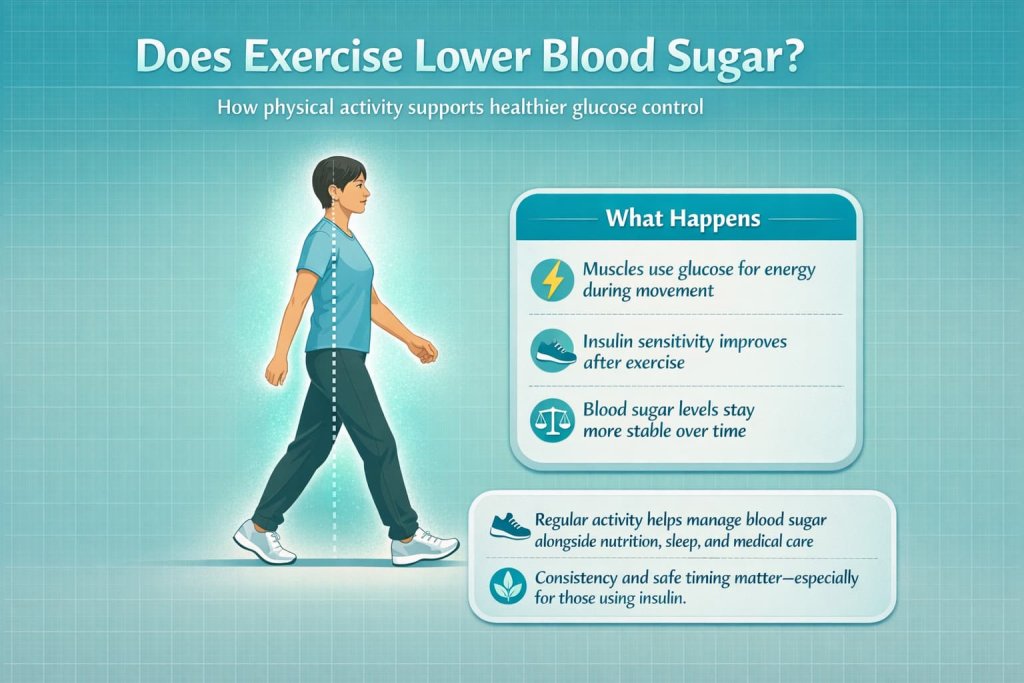
Understanding how exercise affects blood sugar matters because it’s one of the most practical, low-cost habits you can use alongside nutrition, sleep, stress management, and medical care. The key is picking the right type of movement, doing enough per week, and using safe timing strategies—especially if you take insulin or medications that can cause low blood sugar.
How exercise lowers blood sugar
Exercise helps lower blood sugar through a few simple (but powerful) mechanisms:
- Working muscles use glucose for energy. When your muscles contract, they can pull glucose from your bloodstream to fuel movement.
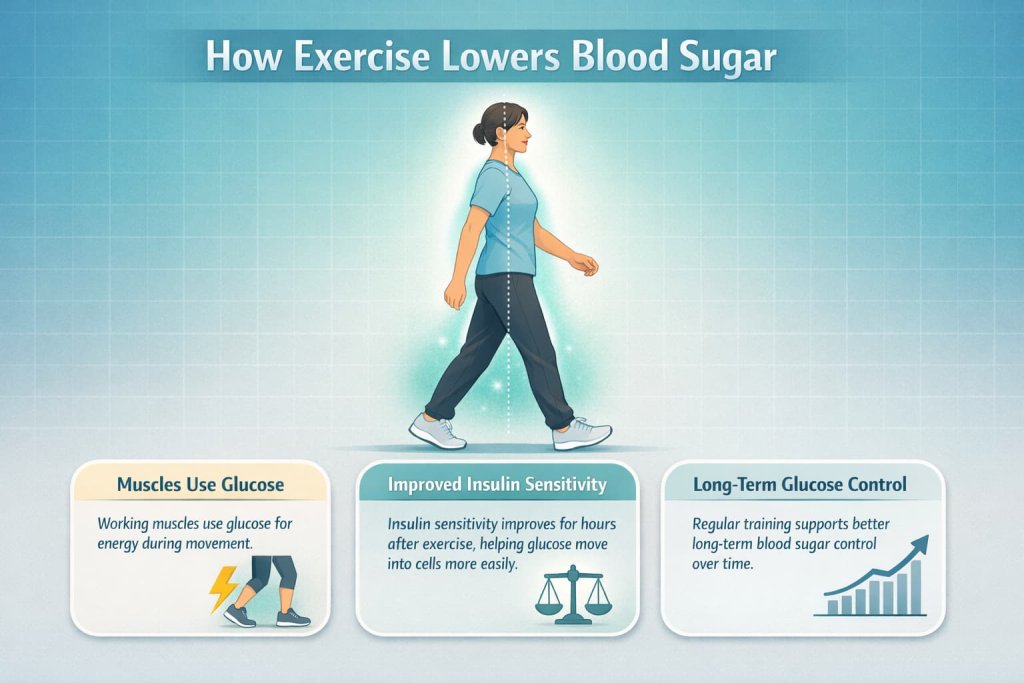
- Insulin sensitivity improves for hours after you exercise. The American Diabetes Association notes that physical activity can lower blood glucose for up to 24 hours or more after a workout by increasing insulin sensitivity.
- Over time, regular training improves overall glucose control. In a large meta-analysis of randomized trials (2011), structured exercise training was associated with an average HbA1c reduction of about 0.67% compared with control groups.
How fast does blood sugar drop after exercise
The timing depends on intensity, duration, your starting glucose, and whether you have diabetes (and what meds you take). But in general:
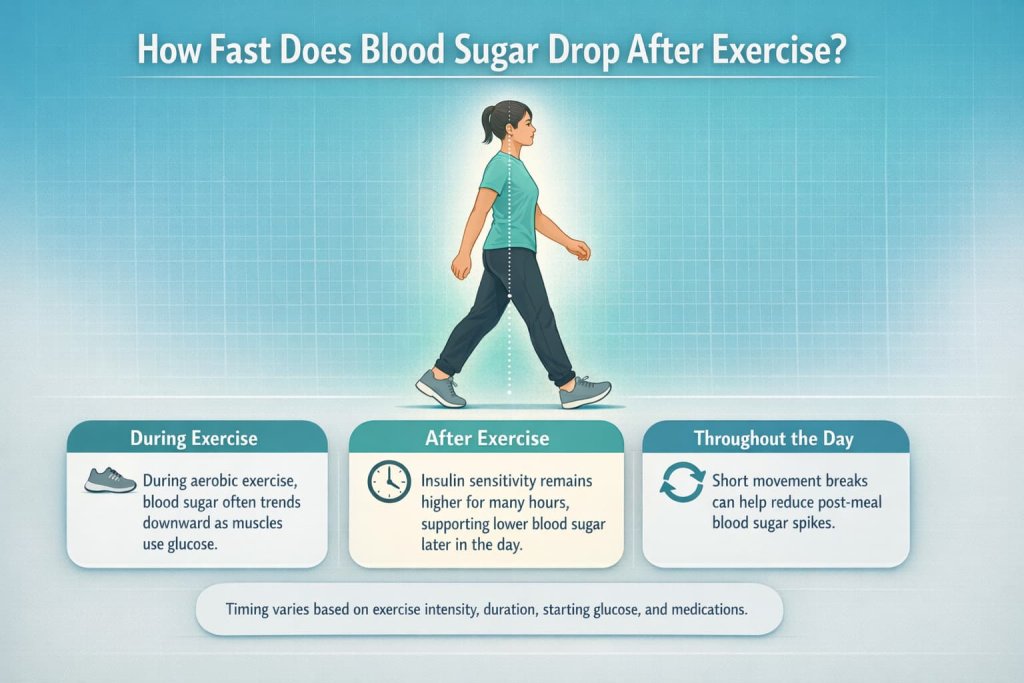
- During aerobic exercise (walking, cycling), blood sugar often trends downward as muscles use glucose.
- After exercise, insulin sensitivity can remain higher for many hours, which can mean lower readings later the same day or even into the next day.
- Brief movement breaks can help blunt post-meal spikes (more on this below).
Best types of exercise to lower blood sugar
Aerobic exercise
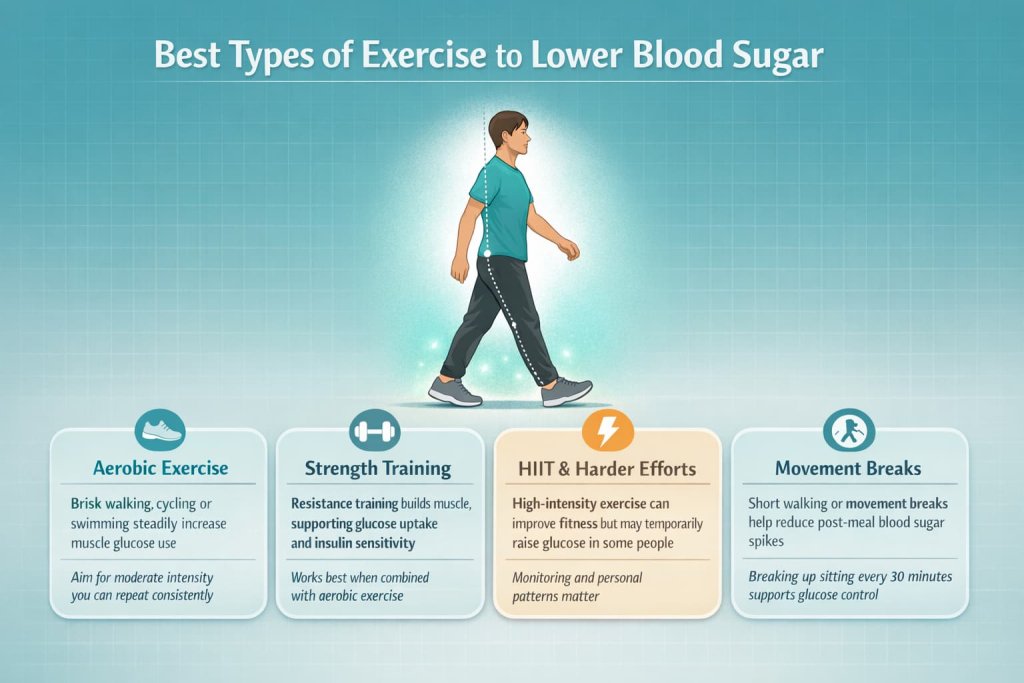
Aerobic activity (brisk walking, cycling, swimming) is one of the most reliable ways to lower glucose because it steadily increases muscle glucose use.
What to aim for:
- Moderate-intensity sessions you can repeat consistently (think “brisk but sustainable”).
Strength training
Resistance training builds and maintains muscle, which supports glucose uptake and long-term insulin sensitivity. Many guidelines recommend combining resistance work with aerobic exercise for stronger overall results.
HIIT and harder efforts
High-intensity interval training (HIIT) can improve fitness and glucose control, but it can also cause temporary glucose rises for some people (especially those with type 1 diabetes) due to stress hormones. It’s not “bad”—it just means monitoring and personal pattern-tracking matter.
Short movement breaks and “exercise snacks”
If you sit a lot, breaking up long sitting time can improve post-meal glucose.
- ADA guidance commonly recommends breaking up sitting at least every 30 minutes with brief activity—especially for people with type 2 diabetes.
- A 2022 systematic review/meta-analysis found that light-intensity walking breaks reduced postprandial glucose and insulin compared with continued sitting (and generally outperformed standing breaks).
How much exercise do you need to see benefits
Most major organizations point to a similar weekly baseline:
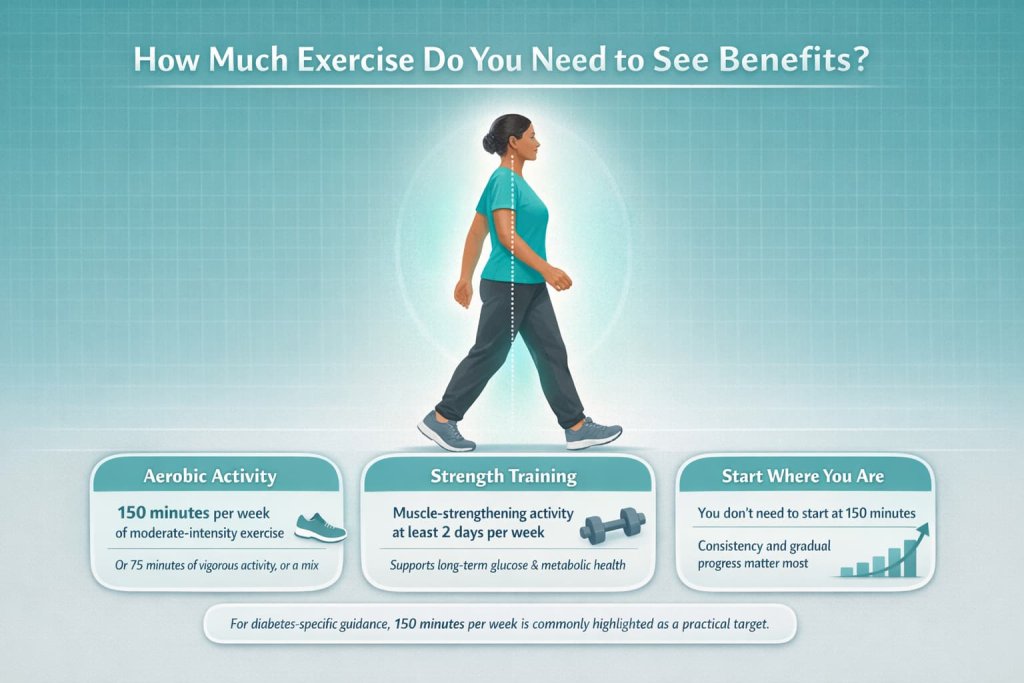
- At least 150 minutes per week of moderate-intensity aerobic activity (or 75 minutes vigorous, or a mix).
- Muscle-strengthening activity at least 2 days per week.
- For diabetes-specific guidance, the ADA highlights the “magic number: 150 minutes” as a practical target for managing diabetes.
If you’re starting from zero, you don’t have to jump straight to 150 minutes. Consistency and progression matter more than perfection.
Is walking after meals better for blood sugar
Often, yes—because it targets the post-meal glucose rise.
Evidence examples:
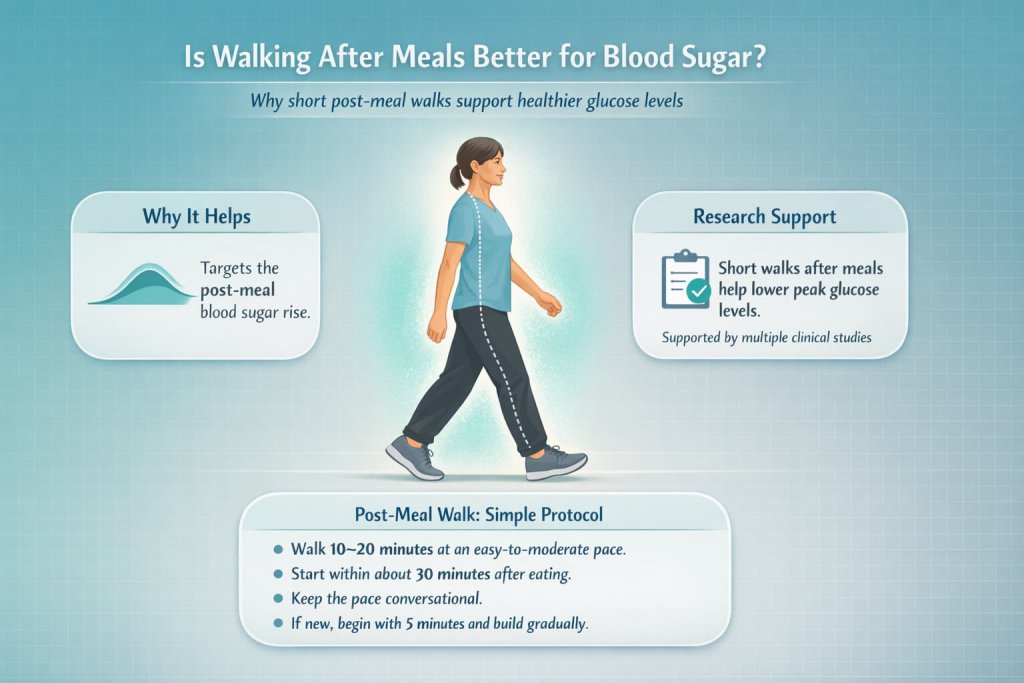
- A 2013 study in Diabetes Care found that three 15-minute bouts of post-meal walking helped control postprandial hyperglycemia in older adults.
- A 2025 study in Scientific Reports found a 10-minute walk immediately after a meal lowered peak glucose compared with a control condition in their trial design.
- A 2020 study reported postprandial moderate-intensity walking was effective for improving glucose homeostasis.
Post-meal walk (simple protocol)
How to do it
- Walk 10–20 minutes at an easy-to-moderate pace
- Start within about 30 minutes after eating if it feels comfortable
- Keep it conversational (you can speak in short sentences)
- If you’re new, start with 5 minutes and build up
Safety and blood sugar: avoiding lows and unexpected spikes
If you have diabetes, safety depends heavily on your medications, your starting glucose, and the type of exercise.
Watch for low blood sugar (hypoglycemia)
- The ADA defines low blood glucose as below 70 mg/dL and recommends the 15/15 rule (15g fast-acting carbs, recheck in 15 minutes) for treatment.
- Mayo Clinic notes some people (especially those using insulin or certain meds) may need to check blood sugar before, during, and after activity to prevent dangerous swings.
Know that some workouts can raise glucose short-term
- The ADA notes that while most aerobic exercise lowers glucose, high-intensity training and weightlifting can raise it in some cases. Tracking your pattern helps you adjust.
When to talk to a clinician before changing exercise
Consider getting individualized advice if you:
- Use insulin or meds linked with hypoglycemia
- Have frequent lows, very high readings, or wide glucose swings
- Have complications that affect feet, eyes, heart, or kidneys
- Are starting vigorous training after a long break
A sample week for better blood sugar control
Here’s a realistic, beginner-friendly structure (adjust intensity to your level and medical guidance):
- 3 days per week: 30 minutes brisk walking or cycling
- 2 days per week: full-body strength training (20–30 minutes)
- Most days: 10-minute post-meal walk after your largest meal
- Daily: stand up or walk briefly every 30 minutes during long sitting blocks
Common mistakes that reduce blood sugar benefits
- Doing one hard workout, then being inactive the rest of the week
- Skipping strength training entirely
- Sitting for long stretches without breaks
- Not adjusting for medication timing (when relevant)
- Going too intense too soon and burning out
FAQs
Does exercise lower blood sugar immediately?
Often, yes—especially aerobic exercise. But the response can vary based on intensity and your physiology, and some high-intensity or resistance workouts may cause temporary increases.
How long does exercise keep blood sugar lower?
The ADA notes blood glucose can be lower up to 24 hours or more after a workout due to improved insulin sensitivity.
What’s the best exercise to lower blood sugar fast?
For many people, a brisk walk is the fastest, simplest option—especially after meals.
How much exercise per week helps blood sugar the most?
A common evidence-based target is 150 minutes per week of moderate-intensity aerobic activity, plus strength training at least 2 days per week.
Can exercise lower blood sugar without losing weight?
Yes. Exercise can improve insulin sensitivity and glucose uptake even if weight doesn’t change. HbA1c improvements have been shown in structured exercise trials.
Should you exercise if your blood sugar is low?
If you’re at risk for hypoglycemia (for example, due to insulin), follow your clinician’s plan. The ADA provides general guidance on treating low blood glucose (under 70 mg/dL) and using fast-acting carbs when needed.
Conclusion
Exercise can lower blood sugar in the moment and improve glucose control over time—especially when you combine weekly aerobic activity, strength training, and simple habits like short post-meal walks. Start with what you can do consistently, build gradually, and use monitoring and medical guidance if you take medications that can cause lows.
This content is for informational purposes only and not medical advice.
References
- CDC. “Get Active | Diabetes” (May 15, 2024).
- Mayo Clinic. “Diabetes and exercise: When to monitor your blood sugar” (Jan 9, 2024).
- Buffey AJ, et al. “Interrupting Prolonged Sitting… Standing and Light-Intensity Walking…” (Sports Med. Epub Feb 11, 2022).
- Piercy KL, et al. “The Physical Activity Guidelines for Americans” (2018).
- Hashimoto K, et al. “Positive impact of a 10-min walk immediately after…” (Scientific Reports, 2025).