
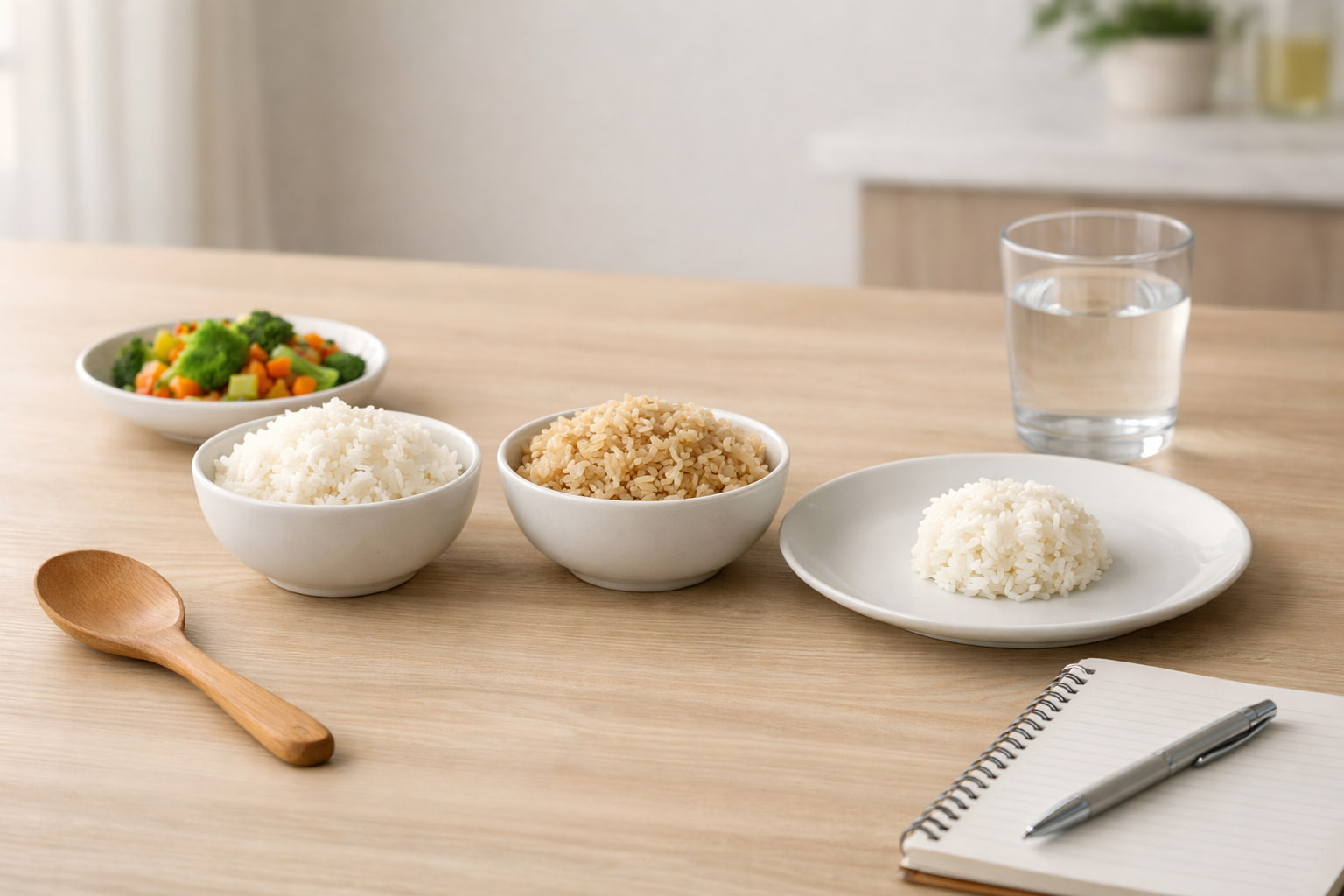
Rice is not especially high in calories on its own. A typical 1 cup serving of cooked rice has about 200 calories, though the exact amount depends on whether you choose white rice, brown rice, jasmine rice, or basmati rice, and whether you measure by cup or by weight. According to USDA FoodData Central, cooked white rice commonly lands around 130 calories per 100 grams and about 204 calories per cup. Understanding these numbers matters because rice is easy to portion generously, which can quietly raise total calories even in otherwise healthy meals.
The good news is that rice can absolutely fit into a healthy eating pattern. The main things that matter are portion size, cooking method, and what you pair it with. Brown rice also brings more fiber than white rice, which may help some people feel fuller.
How Many Calories Are in Rice by Serving Size?
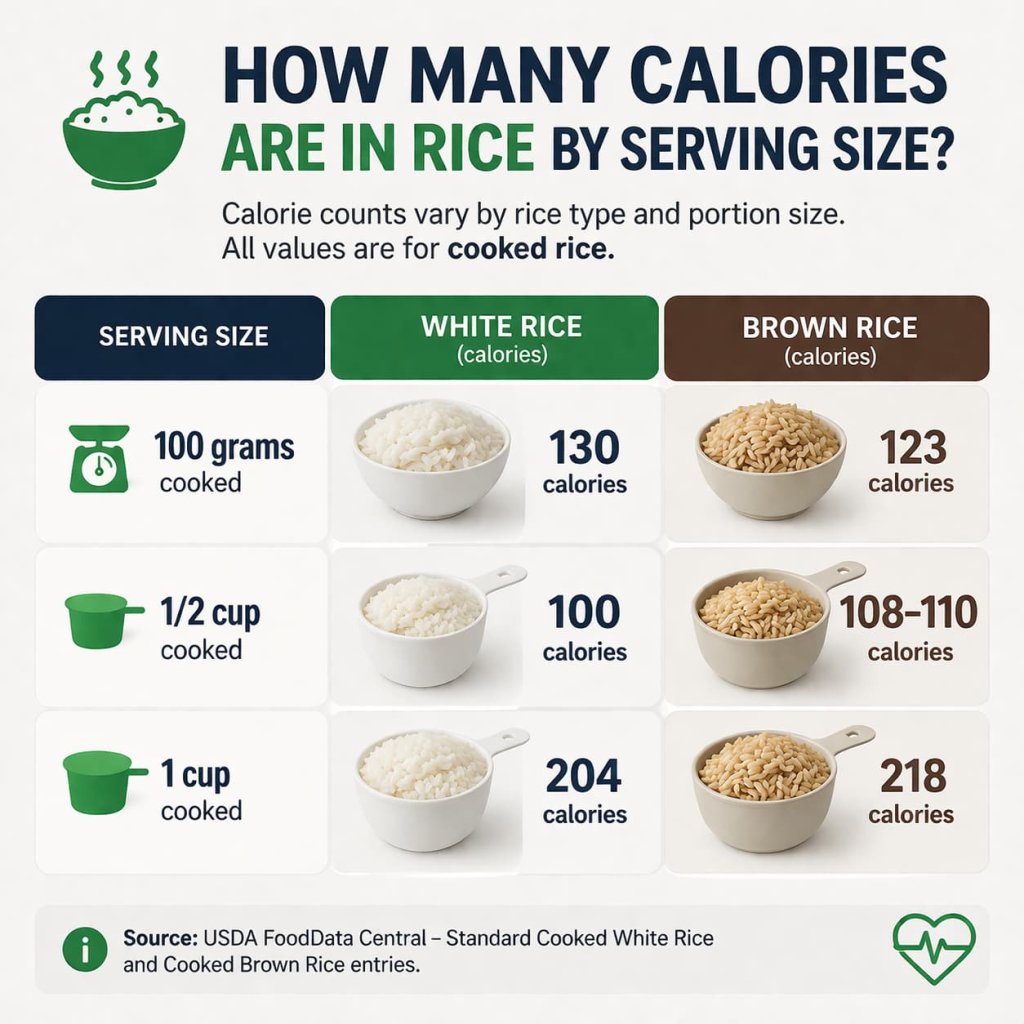
For most readers, these are the most useful everyday numbers:
- 100 grams cooked white rice: about 130 calories
- 1/2 cup cooked white rice: about 100 calories
- 1 cup cooked white rice: about 204 calories
- 100 grams cooked brown rice: about 123 calories
- 1/2 cup cooked brown rice: about 108 to 110 calories
- 1 cup cooked brown rice: about 218 calories
These values come from standard cooked rice entries in USDA FoodData Central, and they show why rice calories can look different depending on whether the article uses 100 grams or 1 cup as the serving size. A fluffier or wetter cooked rice may weigh differently in a measuring cup, so calorie counts can shift slightly even when the rice itself is similar.
A simple way to think about rice portions is:
- Small serving: about 1/2 cup cooked
- Moderate serving: about 3/4 to 1 cup cooked
- Large serving: 1 1/2 cups or more cooked
This matters because rice calories usually become a problem through portion creep, not because plain rice is unusually high in calories.
Dry Rice vs Cooked Rice Calories
One of the most common points of confusion is that dry rice and cooked rice do not have the same calorie count by volume. Dry rice is much more calorie-dense because it has not absorbed water yet. Once rice is cooked, it becomes heavier and bulkier, so the calories are spread across a larger volume.
That means a nutrition label for uncooked rice can look much higher than a chart for cooked rice, even when both are correct. For everyday tracking, it is best to compare cooked rice with cooked rice and dry rice with dry rice, not mix the two.
Rice Calories by Type
Not all rice is identical, but the calorie gap between common plain cooked types is usually smaller than people expect.
White Rice
Cooked white rice is usually around 130 calories per 100 grams and about 200 calories per cup, depending on the specific grain type and moisture level. White rice is refined, so it tends to be lower in fiber than brown rice.
Brown Rice
Cooked brown rice is often around 123 calories per 100 grams and about 218 calories per cup. Brown rice keeps its bran layer, which is why it generally contains more fiber and a broader natural nutrient profile than white rice.
Jasmine Rice
Cooked jasmine rice is often close to white rice in calories, commonly around 130 calories per 100 grams. The bigger difference is usually texture and how much people serve themselves, since jasmine rice is easy to eat in larger portions.
Basmati Rice
Cooked basmati rice is often in a similar general range, roughly 120 to 130 calories per 100 grams. As with other rice types, the final number depends on cooking method and water absorption.
What Changes Rice Calories Most?
In real meals, the biggest calorie difference often comes from how the rice is prepared, not whether it is white or brown.
Rice calories can rise noticeably when it is cooked with:
- Oil or butter
- Coconut milk
- Creamy sauces
- Fried seasonings
- Large restaurant-style portions
For example, plain steamed rice is very different from fried rice, seasoned rice mixes, or rice cooked in rich liquids. This matters because many people search for rice calories but are actually eating a rice dish with added fat and flavorings.
Nutrition Profile of Rice
Rice is mainly a carbohydrate food, which means it is best known for providing energy. It also contains a small amount of protein and very little fat. The exact nutrition profile depends on whether the rice is white, brown, enriched, or fortified.
Plain Cooked White Rice
A typical plain cooked white rice serving provides:
- Mostly carbohydrates
- A small amount of protein
- Very little fat
- Very little fiber
- Sometimes added nutrients if the rice is enriched, such as iron and folate
Plain Cooked Brown Rice
A typical plain cooked brown rice serving provides:
- Mostly carbohydrates
- A small amount of protein
- Very little fat
- More fiber than white rice
- Naturally retained nutrients from the bran and germ
According to MedlinePlus, whole grains such as brown rice provide nutrients including fiber, vitamins, and minerals, while refined grains generally contain less fiber.
Is Rice Good for Weight Management?
Rice can work well for weight management, but the answer depends on how much you eat and what the rest of the meal looks like.
Rice is not unusually calorie-dense compared with many other starchy foods. The issue is that rice is often served in large portions, especially in restaurant meals, takeout bowls, and mixed dishes. Two or three cups of cooked rice can add calories quickly, even before sauces, oil, or fried toppings are added.
Rice can also feel very different from meal to meal in terms of fullness. A bowl of plain rice by itself may not keep you full for long, but rice eaten with protein, vegetables, beans, or other high-fiber foods is often much more satisfying. This is one reason rice can work well in a weight-management plan when it is part of a balanced plate instead of the entire meal.
When Rice Can Support Weight Management
Rice may fit well into a weight-loss or weight-maintenance plan when:
- You keep portions moderate
- You pair it with lean protein and vegetables
- You choose higher-fiber options more often
- You avoid turning it into a very oily or heavily sauced dish
The NHS recommends choosing higher-fiber or wholegrain starchy foods, such as brown rice, more often as part of a balanced diet.
A Practical Rice Portion for Calorie Control
For many people, a useful starting portion is:
- 1/2 cup cooked rice for smaller meals
- 3/4 to 1 cup cooked rice for a balanced main meal, depending on your calorie needs and activity level
That kind of portion is often easier to fit into a calorie-conscious meal than a large bowl or plateful.
Key Nutrients in Rice
Rice is not a major source of every nutrient, but it can still contribute useful nutrition depending on the type.
Nutrients More Common in Brown Rice
Brown rice is generally a better source of:
- Fiber
- Magnesium
- Manganese
- Some B vitamins
- Small amounts of selenium
Nutrients Often Added to Enriched White Rice
White rice may provide:
- Iron
- Folate
- Some B vitamins
That means brown rice is often the better choice for fiber, while enriched white rice may still contribute certain added nutrients.
White Rice vs Brown Rice: Which Is Better?
There is no single best rice for everyone, but there are clear practical differences.
Brown Rice May Be Better If You Want More Fiber
Brown rice usually contains more fiber and more naturally retained nutrients. That may help with fullness and overall diet quality.
White Rice May Be Easier for Some People to Digest
Some people prefer white rice because it is softer, milder, and lower in fiber. That can be helpful during digestive upset or when someone needs a lower-fiber meal temporarily.
The Calorie Difference Is Not the Main Story
The calorie difference between white rice and brown rice is fairly small in normal portions. The bigger difference is usually fiber and nutrient profile, not calories.
Who Should Be a Little More Careful With Rice?
Rice is a staple food for many people and can be part of a healthy diet. Still, a few groups may want to be more intentional about the type and amount they eat.
People Managing Blood Sugar
Rice is rich in carbohydrates, and carbs can raise blood glucose. The American Diabetes Association explains that carbohydrates affect blood sugar, so portion size matters for people with diabetes or insulin resistance. Pairing rice with protein, vegetables, and fiber-rich foods may help make meals more balanced.
A practical approach is to keep rice portions moderate and combine rice with foods that add protein, fiber, or healthy fats, such as fish, eggs, beans, tofu, or non-starchy vegetables. That usually creates a steadier, more balanced meal than eating a large portion of rice on its own.
People Watching Total Calories
Rice itself is not the problem. Oversized servings are. A rice dish can go from moderate to high calorie quickly if it includes large portions, frying, butter, creamy sauces, or several add-ons.
Infants and Young Children Who Eat a Lot of Rice Products
This is an important safety point. The U.S. Food and Drug Administration has set an action level of 100 parts per billion for inorganic arsenic in infant rice cereals. This does not mean rice must be avoided completely, but it does support the idea of including a variety of grains rather than relying too heavily on rice-based products alone.
Tips to Make Rice More Weight-Loss Friendly
Rice can stay in your meals while still supporting calorie control. These strategies help:
Keep the Portion Measured
Use a measuring cup at first. It is easy to serve much more rice than you think.
Build the Meal Around Protein and Vegetables
Try filling more of the plate with vegetables and adding a lean protein source, then using rice as one part of the meal rather than the main volume.
Choose Brown Rice More Often if You Like It
Brown rice offers more fiber and may help some people stay fuller.
Watch High-Calorie Extras
Oil, butter, creamy sauces, fried preparation, and sugary sauces can add more calories than the rice itself.
Frequently Asked Questions
Is rice high in calories?
Not really. Plain cooked rice is moderate in calories. A standard 1 cup cooked serving is usually around 200 calories, which can fit into many meal plans.
How many calories are in 1 cup of cooked rice?
A cup of cooked white rice is commonly about 204 calories, while a cup of cooked brown rice is often about 218 calories.
Is brown rice lower in calories than white rice?
Usually not by much, and sometimes brown rice is slightly higher per cup depending on the database entry. The bigger benefit of brown rice is usually more fiber, not a dramatic calorie reduction.
Can you eat rice and still lose weight?
Yes. Rice can fit into a weight-loss diet if you manage portion size and build balanced meals around it.
Is rice a good carb source?
Rice is a useful carbohydrate source for energy. Brown rice and other whole grains may offer a better overall nutrient profile because they contain more fiber.
Conclusion
Rice can be a practical, affordable, and healthy part of your diet. The main takeaway is simple: plain cooked rice usually has about 200 calories per cup, and the smartest way to use it for weight management is to keep portions realistic and pair it with protein, vegetables, and other high-fiber foods. If you want a more filling option, brown rice is often the stronger choice.
Sources/References
- USDA FoodData Central — FoodData Central
- American Diabetes Association — Get to Know Carbs
- MedlinePlus — Carbohydrates
- NHS — The Eatwell Guide
- U.S. Food and Drug Administration — Action Level for Inorganic Arsenic in Rice Cereals for Infants