
A medium pear has about 100 calories. That makes pears a relatively low-calorie fruit choice that also provides fiber, natural sweetness, and useful nutrients. According to the U.S. Food and Drug Administration, a medium pear also provides about 26 grams of carbohydrate, 6 grams of fiber, and 190 milligrams of potassium.
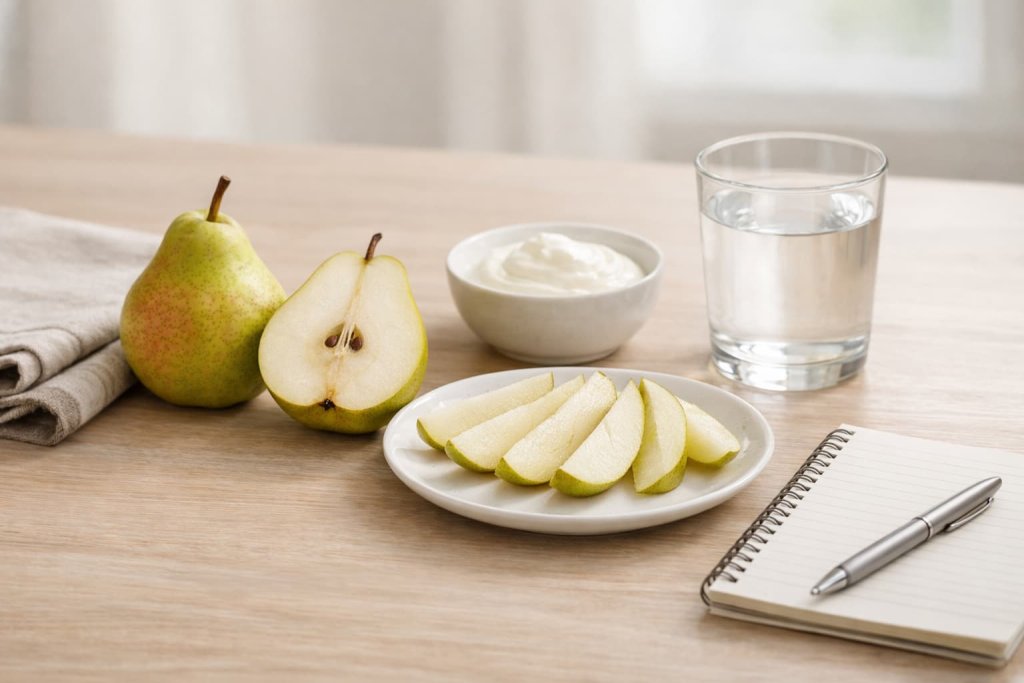
Understanding pear calories matters because size, variety, and form can change the total. A fresh whole pear is different from pear juice or pears packed in syrup, and those differences can affect fullness, sugar intake, and overall calorie balance. USDA FoodData Central is the standard authoritative source for weight-based nutrition data used to compare fruit servings and varieties.
How Many Calories in a Pear by Serving Size
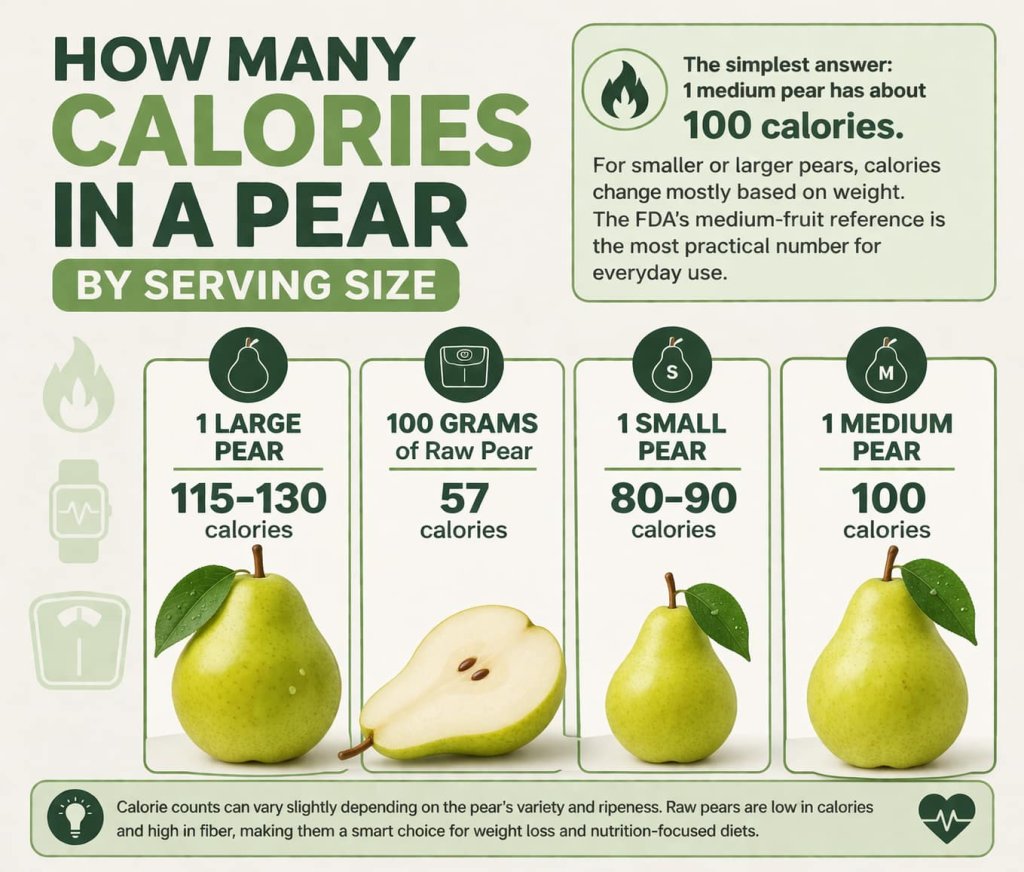
The simplest answer is that 1 medium pear has about 100 calories. For smaller or larger pears, the calories change mostly based on weight. The FDA’s medium-fruit reference is the most practical number for everyday use.
Here is a practical guide:
- 100 grams of raw pear: about 57 calories
- 1 small pear: about 80 to 90 calories
- 1 medium pear: about 100 calories
- 1 large pear: about 115 to 130 calories
The 100-gram estimate comes from USDA pear entries, while the medium-fruit estimate comes from the FDA reference for raw fruits.
If you track calories closely, using a kitchen scale or sticking to the medium-fruit estimate is the easiest way to stay accurate. Portion size matters more than the fruit name alone. NIDDK also emphasizes that understanding portions is an important part of managing intake.
Nutrition Profile of a Pear
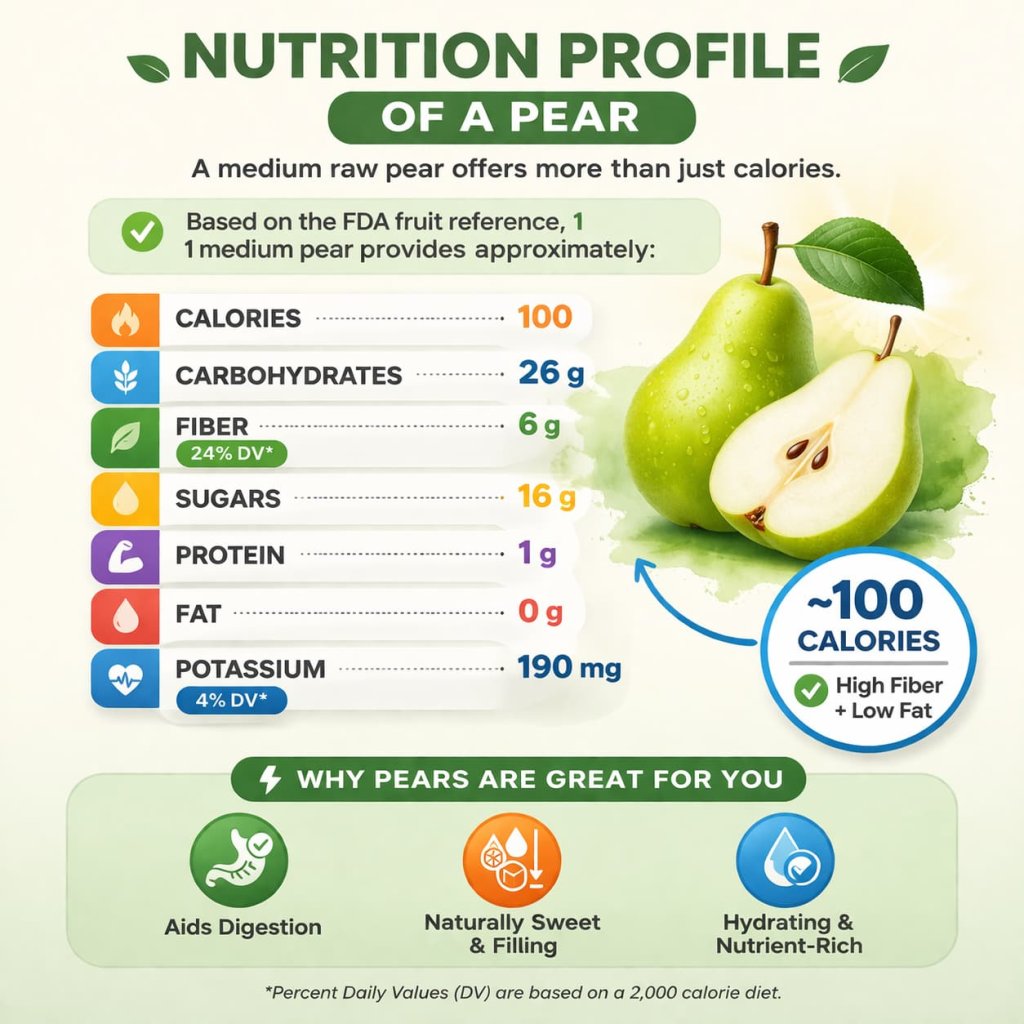
A medium raw pear offers more than just calories. Based on the FDA fruit reference, 1 medium pear provides approximately:
- Calories: 100
- Carbohydrates: 26 g
- Fiber: 6 g
- Sugars: 16 g
- Protein: 1 g
- Fat: 0 g
- Potassium: 190 mg
Pears are especially useful as a snack because they combine natural sweetness with fiber and water. That combination can make them more satisfying than many highly processed sweet snacks, even though the calorie total stays modest.
A helpful practical detail is that much of a pear’s fiber is in or just under the skin, so eating the skin can help you get more of the fruit’s filling benefit. That makes whole pears a smart option when you want a naturally sweet snack that supports fullness. USDA pear listings also commonly specify pears with skin, which reflects how many people eat them in real life.
Key Nutrients in Pears
Fiber
Fiber is one of the biggest nutritional strengths of pears. The FDA reference lists about 6 grams of fiber in a medium pear, which is a meaningful amount for one piece of fruit. Fiber can support fullness and is also important for digestive health.
Potassium
Pears also provide potassium, with about 190 milligrams in a medium pear according to the FDA. Pears are not among the highest-potassium fruits, but they still contribute to total daily intake.
Vitamin C and Other Plant Compounds
Pears provide a small amount of vitamin C and other naturally occurring plant compounds, but they are not as vitamin C-rich as fruits like oranges or strawberries. Their bigger everyday strength is the balance of fiber, water, and moderate calories.
Is a Pear Good for Weight Management?
Yes, pears can fit very well into a weight-management plan. They are relatively low in calories for their size, and their fiber content can help with fullness. Research highlighted by NIDDK notes that adequate dietary fiber and minimally processed foods can support healthier energy balance.
That does not mean pears are a weight-loss shortcut. What matters most is your overall eating pattern, portion sizes, and the foods pears replace. A pear works best when it replaces a more calorie-dense snack or dessert rather than simply adding extra calories to the day. NIDDK also notes that portions still matter, even with healthier foods.
Best Ways to Eat Pears for Weight Management
Pears work especially well for weight management when you use them in ways that improve satiety instead of turning them into a higher-calorie dessert. Whole fruit is usually the most practical choice.
Simple ways to use pears well include:
- eat a whole pear with the skin on
- pair pear slices with plain Greek yogurt or a small handful of nuts
- use a pear as a dessert swap when you want something sweet
- choose whole pear instead of pear juice when possible
Because pears provide fiber and natural sweetness, they can be a satisfying snack or side fruit without a high calorie load.
Fresh Pear vs Pear Juice or Canned Pears
Fresh pears are usually the best choice when you want the most fiber for the calories. Whole fruit tends to be more filling than juice because the fiber stays in the fruit. That matters when your goal is appetite control or better snack quality.
Canned pears can still fit into a healthy eating pattern, but it helps to check whether they are packed in juice, light syrup, or heavy syrup. Syrup can raise both sugar and calorie content compared with plain fresh fruit.
Pear juice may be easier to overconsume because it is less filling than eating a whole pear. For most people trying to manage hunger and calories, whole pears are the better everyday option.
Who Should Be a Little More Careful With Pears
Pears are a healthy food for many people, but they may not feel great for everyone in large amounts. The main group that may need more caution is people with irritable bowel syndrome (IBS) or those following a low-FODMAP eating approach.
According to Monash University, pears are high in excess fructose, and pears may also contain sorbitol. These fermentable carbohydrates can trigger bloating, gas, abdominal discomfort, or other digestive symptoms in some people with IBS. NIDDK notes that bloating and gas are common digestive symptoms when certain foods are harder to tolerate.
People who are closely managing carbohydrate intake may also want to be mindful of portion size, since a medium pear has about 26 grams of carbohydrate. That does not make pears unhealthy. It simply means the right portion depends on your overall eating pattern and personal goals.
Are Pears a Healthy Choice Overall?
For most people, yes. Pears are a nutrient-dense fruit choice that offers a good balance of calories, fiber, and natural sweetness. They are especially useful when you want a simple snack that feels satisfying without being heavily processed.
The healthiest way to eat pears is usually fresh, whole, and with the skin on. That gives you the most fiber and the best chance of feeling full for relatively few calories.
Conclusion
A medium pear has about 100 calories, making it a smart choice for people who want a naturally sweet fruit that also provides fiber and helpful nutrients. Pears can fit well into a balanced eating plan, especially when eaten whole and with the skin on.
If you want the best mix of satiety and nutrition, choose fresh whole pears most often, watch portion size when needed, and be more careful if you have IBS or known FODMAP sensitivity.
Sources and References
- U.S. Food and Drug Administration — Raw Fruits Poster (Text Version / Accessible Version)
- USDA FoodData Central — FoodData Central
- Monash University — High and Low FODMAP Foods
- National Institute of Diabetes and Digestive and Kidney Diseases — Food Portions: Choosing Just Enough for You
- National Institute of Diabetes and Digestive and Kidney Diseases — The Complex Interplay of Diet and the Gut Microbiome Influences Human Health
- National Institute of Diabetes and Digestive and Kidney Diseases — Symptoms and Causes of Gas in the Digestive Tract