
Two large eggs usually contain about 140 to 156 calories, depending on size and cooking method. For most people, that means 2 plain eggs are a moderate-calorie, high-protein food that can fit well into a balanced meal. According to the USDA, a large raw egg has about 72 calories, while a large hard-boiled egg has about 78 calories, so 2 eggs are typically about 144 to 156 calories before you add butter, oil, cheese, or other extras.

Understanding the calorie count in 2 eggs matters because eggs are often eaten at breakfast, used in meal prep, or chosen as a quick protein option during weight loss. The calories stay fairly modest, but the total meal can change quickly depending on how the eggs are cooked and what you serve with them. The Dietary Guidelines for Americans also include eggs among nutrient-dense protein foods that can fit into a healthy eating pattern.
How many calories are in 2 eggs by cooking method?
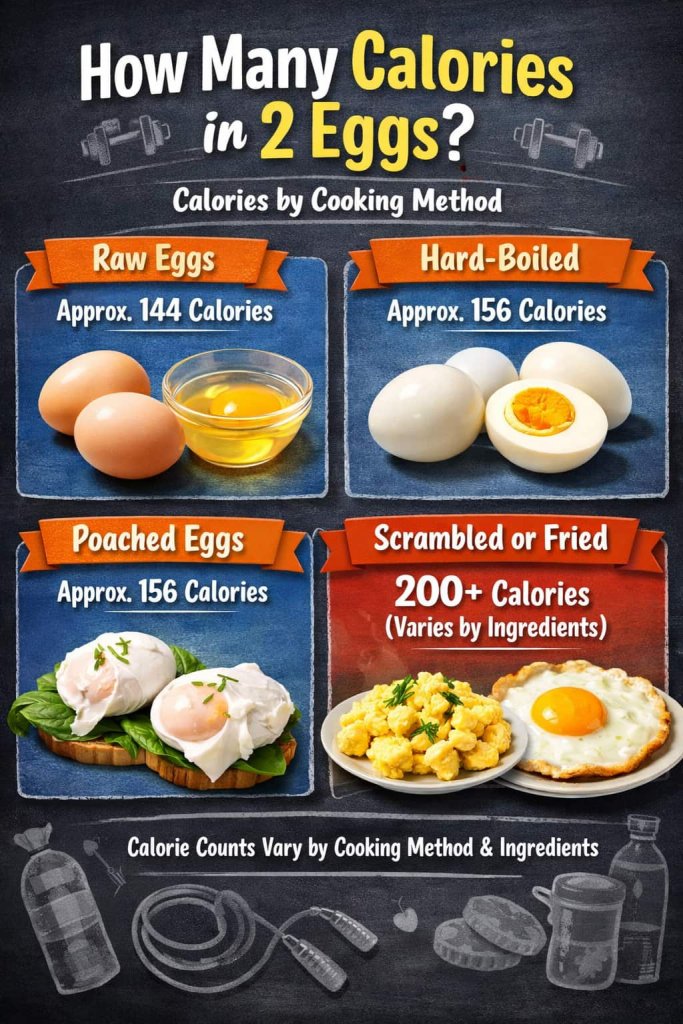
For a practical everyday answer, here is the calorie range most readers need:
- 2 large raw eggs: about 144 calories
- 2 large hard-boiled eggs: about 156 calories
- 2 poached eggs: usually close to boiled eggs if no fat is added
- 2 scrambled or fried eggs: often higher, depending on butter, oil, milk, or cheese used during cooking
That is why the simplest answer to “how many calories in 2 eggs” is about 140 to 160 calories for 2 plain large eggs, with the final number depending mostly on preparation. USDA data show a large raw egg at about 72 calories and a large hard-boiled egg at about 78 calories.
Calories in 2 eggs by egg size
Egg size also changes the calorie total a little. According to USDA egg-size data, 2 small eggs have fewer calories than 2 large eggs, while 2 extra-large or jumbo eggs have more. In practical terms, 2 medium eggs are usually a little lower than 2 large eggs, and 2 extra-large eggs are usually a little higher, so the exact number depends on the carton size you buy. For most readers, 2 large eggs remains the best standard estimate because it is the most commonly used reference in nutrition data and recipes.
Nutrition profile of 2 eggs
Two eggs are more than a calorie source. They are a nutrient-dense protein food that provides a useful mix of protein, fat, vitamins, and minerals for relatively few calories. Based on current USDA nutrition data, 2 large eggs provide roughly 12 to 13 grams of protein, about 10 to 11 grams of fat, and very little carbohydrate.
A practical nutrition profile for 2 large eggs looks like this:
- Calories: about 144 to 156
- Protein: about 12 to 13 g
- Fat: about 10 to 11 g
- Carbohydrates: less than 2 g
- Choline: a meaningful amount, mostly from the yolk
- Vitamin B12
- Selenium
- Riboflavin
- Vitamin D
- Small amounts of vitamin A and iron
Key nutrients in eggs
Protein
Eggs are well known for their high-quality protein. Two eggs give you around 12 grams of protein, which can help support fullness and make meals feel more satisfying. That is one reason eggs are commonly used in weight-management meals and high-protein breakfasts.
Choline
Choline is one of the most important nutrients in eggs. The National Institutes of Health Office of Dietary Supplements explains that choline is essential for cell membranes, metabolism, and normal nervous system function. Eggs, especially the yolk, are one of the best-known food sources of choline.
Vitamin D, B12, and selenium
Eggs also provide vitamin D, vitamin B12, and selenium in useful amounts. These nutrients help support normal body functions and improve the overall nutrient quality of a meal, even though eggs are not a major source of every vitamin or mineral.
Are 2 eggs good for weight management?
Yes, 2 eggs can be a good choice for weight management because they provide a moderate amount of calories along with protein, which may help with fullness. In simple terms, 2 plain eggs give you solid nutrition without taking up a large share of your daily calorie budget.
What matters most, though, is the full meal. Two boiled or poached eggs with fruit or vegetables are very different from 2 eggs fried in butter and served with sausage, white toast, and cheese. The Dietary Guidelines for Americans emphasize overall eating patterns and suggest choosing cooking methods that keep meals balanced and nutrient-dense.
When 2 eggs may work especially well in a weight-loss meal
Two eggs can be especially helpful when you pair them with foods that add volume and fiber without too many extra calories, such as:
- sautéed or steamed vegetables
- fresh fruit
- whole-grain toast
- beans
- plain potatoes
- Greek yogurt on the side
This combination can make the meal more filling and more balanced than eating eggs alone. It also fits well with broader healthy eating guidance that focuses on the total meal rather than one single food.
Are eggs healthy if they contain cholesterol?
This is one of the biggest questions people have about eggs. Egg yolks do contain dietary cholesterol, but current guidance focuses more on the overall diet pattern, especially saturated fat intake, than on avoiding eggs completely. The American Heart Association says healthy people can include up to one whole egg per day, and older adults with healthy cholesterol levels can include up to two per day because of eggs’ nutritional value.
For many people, the bigger issue is not the eggs themselves but what comes with them, such as bacon, sausage, butter-heavy cooking, or cheese-heavy breakfast plates. That is why 2 eggs can fit into a healthy diet for many adults, especially when the rest of the meal is balanced.
Who should be a little more careful?
People with an egg allergy
Egg allergy can cause reactions that range from mild symptoms to severe reactions. Anyone with a known egg allergy should avoid eggs and check labels carefully on packaged foods. The Mayo Clinic notes that egg allergy is one of the more common food allergies, especially in children.
People managing high LDL cholesterol or heart disease risk
Some people with high LDL cholesterol, diabetes, or cardiovascular disease may need more individualized advice on how often to eat eggs. Eggs do not automatically need to be avoided, but overall diet quality still matters. The American Heart Association recommends looking at the full diet pattern rather than judging one food in isolation.
People at higher risk from foodborne illness
Children, older adults, pregnant women, and people with weakened immune systems should be especially careful with undercooked eggs. The FDA warns that even clean, uncracked eggs may contain Salmonella, so safe handling and thorough cooking matter.
Food safety: the part many articles skip
Food safety is worth including in any egg article because raw or lightly cooked eggs can carry Salmonella. FDA guidance says to keep eggs refrigerated, cook eggs until yolks are firm, and cook foods containing eggs thoroughly. The USDA Food Safety and Inspection Service also notes that even unbroken, clean shell eggs can contain Salmonella Enteritidis, so safe handling matters from storage to serving.
The CDC reported a 2025 Salmonella outbreak linked to eggs, with 134 cases, 38 hospitalizations, and 1 death across 10 states. The outbreak is over, but it is still a useful reminder that proper storage, handwashing, and thorough cooking matter.
Easy ways to keep 2 eggs lower in calories
What usually raises the calorie count fastest is not the eggs themselves, but the extras used around them. A small amount of butter or oil, shredded cheese, cream, and processed breakfast meats can increase the total much more than people expect. That is why 2 plain eggs may stay in the 140 to 160 calorie range, while a full egg breakfast can climb much higher once cooking fat and sides are added.
If you want the benefits of eggs without adding too many calories, these strategies help:
- boil or poach them instead of frying
- scramble them with very little oil
- add vegetables instead of extra cheese
- pair them with fruit or whole grains instead of processed breakfast sides
- watch butter, creamy sauces, and high-calorie toppings
These small changes can make a bigger difference than the eggs themselves. The base calories in 2 eggs are fairly moderate. It is usually the extras that raise the total.
Common questions about how many calories in 2 eggs
Are 2 egg whites lower in calories than 2 whole eggs?
Yes. 2 egg whites are much lower in calories than 2 whole eggs because most of the fat and nearly all of the cholesterol are in the yolk. But whole eggs provide more total nutrition, including choline, vitamin D, and other yolk-based nutrients. So the better choice depends on your goal: egg whites are lower in calories, while whole eggs are more nutrient-dense overall.
Do 2 eggs have a lot of calories?
Not really. Two plain large eggs usually contain about 140 to 156 calories, which is moderate for a protein-rich food.
Are 2 eggs enough protein for breakfast?
They can be a good start, since 2 eggs provide around 12 to 13 grams of protein. Some people may want more protein depending on appetite, body size, activity level, and the rest of the meal.
Are boiled eggs lower in calories than fried eggs?
Usually, yes. Boiled eggs stay close to their natural calorie level, while fried eggs can become more calorie-dense if oil or butter is added.
Can I eat 2 eggs a day?
Many healthy adults can include eggs regularly, but the best amount depends on total diet quality and personal health needs. The American Heart Association says older adults with healthy cholesterol levels can include up to two eggs per day.
The bottom line
Two eggs usually contain about 140 to 156 calories, making them a practical, nutrient-dense choice for many people. They offer protein, choline, vitamin B12, selenium, and other nutrients in a relatively small calorie package. For weight management, eggs can work well when you keep the cooking method simple and build the rest of the meal carefully. And if you eat eggs often, remember that overall diet quality and safe food handling matter just as much as the calorie count.
Sources/References
- USDA — FoodData Central egg nutrition data
- Dietary Guidelines for Americans — Dietary Guidelines for Americans
- National Institutes of Health Office of Dietary Supplements — Choline Fact Sheet for Health Professionals
- American Heart Association — Dietary cholesterol and healthy diet guidance
- FDA — What You Need to Know About Egg Safety
- USDA Food Safety and Inspection Service — Shell Eggs from Farm to Table
- CDC — Salmonella outbreak linked to eggs
- Mayo Clinic — Egg allergy symptoms and causes