
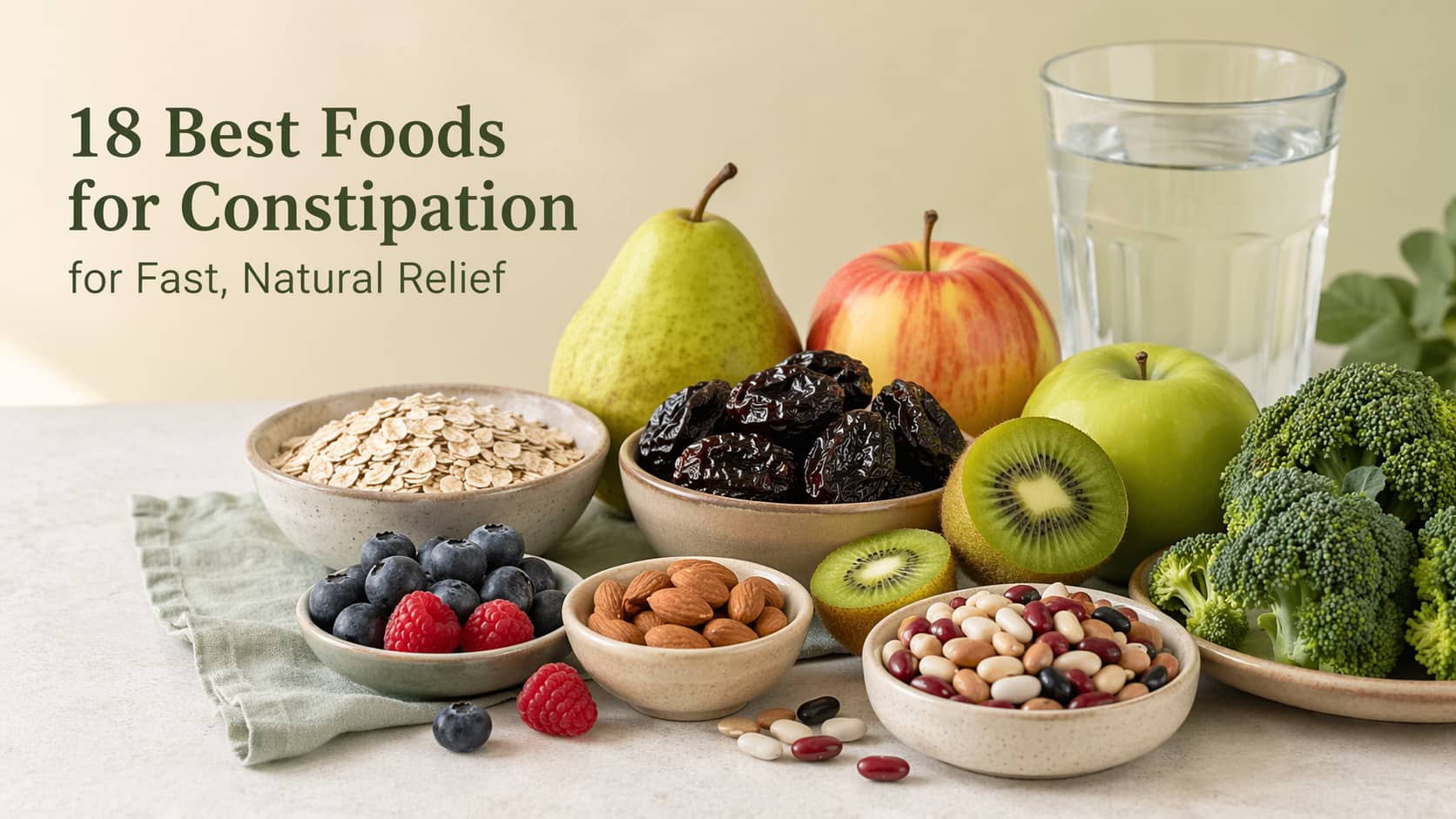
The best foods for constipation are fiber-rich foods, especially prunes, prune juice, and kiwifruit, along with beans, whole grains, fruits, vegetables, and nuts. These foods can help support softer, easier-to-pass stools, but they do not all work equally well or equally quickly. The strongest food-specific evidence is for prunes, prune juice, and kiwifruit, while the rest are best thought of as smart, high-fiber staples that support regularity over time.
Constipation is common, and food choices can make a real difference. The National Institute of Diabetes and Digestive and Kidney Diseases explains that adults generally need about 22 to 34 grams of fiber per day, and high-fiber foods such as whole grains, legumes, fruits, vegetables, and nuts are a key part of constipation-friendly eating.
How foods help constipation
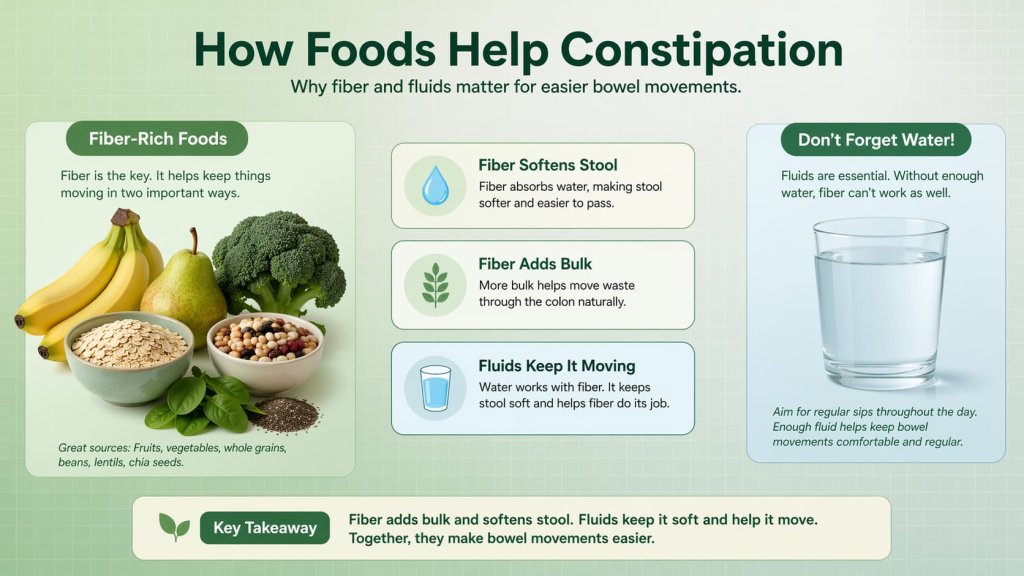
Fiber helps in two main ways. Some types absorb water and help soften stool, while others add bulk and help stool move through the digestive tract. MedlinePlus notes that increasing fiber too quickly can cause gas, bloating, and cramps, while the National Institute on Aging explains that water and other fluids help fiber work better.
A simple approach works best:
- Add fiber gradually, not all at once.
- Pair higher-fiber foods with enough fluids.
- Choose more whole, minimally processed foods.
- Give your routine a little time to work.
What to eat first if you want faster natural relief
If you want to start with the foods that have the best direct research behind them, begin with:
- Prunes
- Prune juice
- Kiwifruit
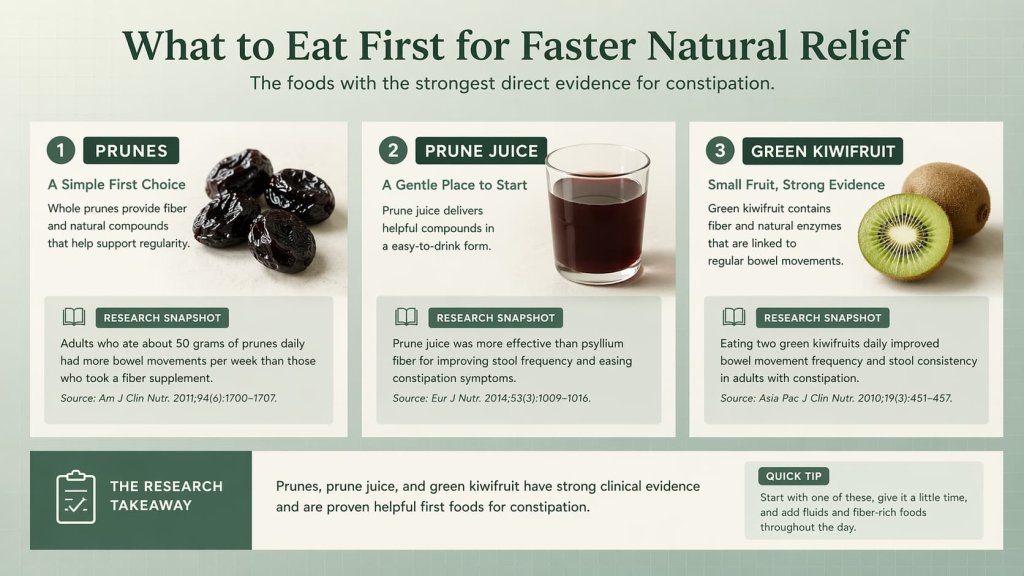
Research indexed in PubMed found that prune juice improved hard, lumpy stools and constipation symptoms, while the American College of Gastroenterology highlights evidence showing that green kiwifruit improved stool frequency and abdominal comfort in adults with chronic constipation.
How much should you actually try first?
To make this advice more practical, it helps to look at what researchers have actually tested. The strongest food-specific constipation research has used 2 green kiwifruits per day, while a well-known prune study used 100 grams of prunes per day split into two servings, and a later prune juice trial used 54 grams of prune juice per day. That does not mean everyone needs those exact amounts, but it gives you a realistic starting point instead of vague advice to simply eat more fiber.
It is also important to set expectations. “Fast” natural relief does not always mean same-day relief. In research, prune juice improved hard stools within a few weeks, and kiwifruit studies also tracked changes over weeks rather than hours. For people with IBS-C or people who bloat easily, kiwifruit may be a better first food to try, because prunes contain sorbitol and may worsen bloating in some people.
18 best foods for constipation
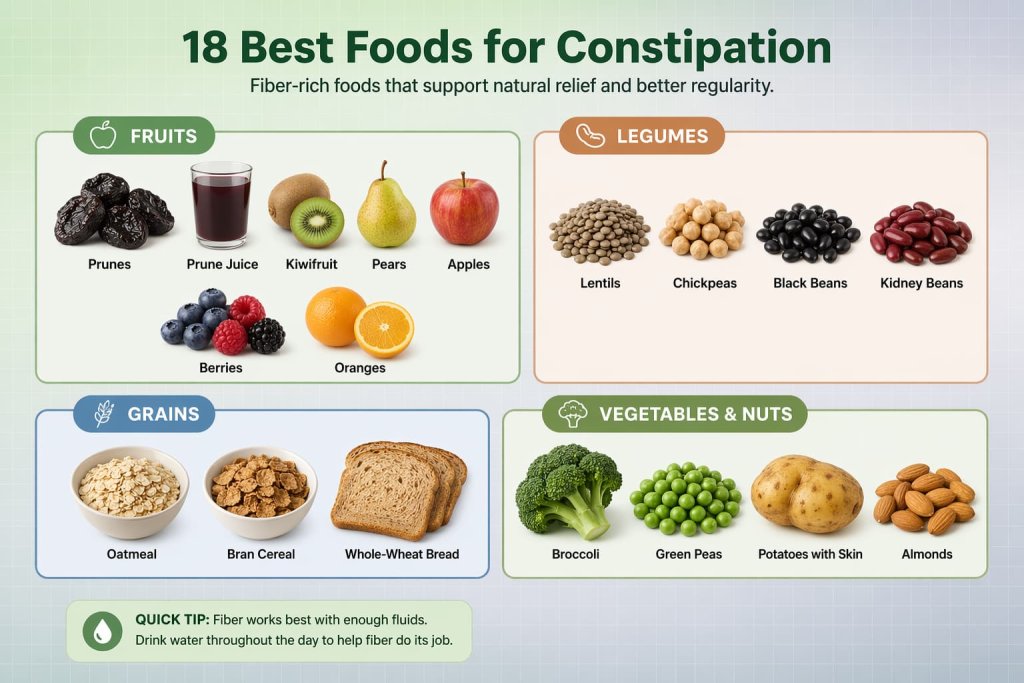
Fruit choices with the strongest track record
1. Prunes
Prunes are one of the best-known foods for constipation for a reason. They have direct human research behind them and are often one of the first foods clinicians and dietitians mention for constipation-friendly eating.
2. Prune juice
Prune juice can be useful for people who do not want to eat whole prunes. Research shows it can improve stool consistency and constipation symptoms, making it one of the most evidence-supported drink options for this problem.
3. Kiwifruit
Kiwifruit stands out because it has been studied head-to-head with other constipation remedies. In current research, green kiwifruit improved stool frequency and abdominal comfort, making it one of the best fruit options to try first.
4. Pears
Pears are a practical high-fiber fruit that fit well into everyday meals and snacks. They are specifically included in NIDDK’s constipation nutrition guidance.
5. Apples with the skin on
Apples are more helpful when you keep the skin on. Johns Hopkins Medicine notes that apples provide soluble fiber inside and insoluble fiber in the skin, which is one reason whole apples can be more helpful than peeled ones.
6. Berries
Berries are easy to add to oatmeal, yogurt, or cereal, and they are among the fruits NIDDK recommends for constipation-friendly eating patterns.
7. Oranges
Oranges add both fluid and fiber to the diet and are another fruit specifically listed in NIDDK guidance for constipation.
Beans and legumes that help build a higher-fiber diet
8. Lentils
Lentils are one of the easiest legumes to add to soups, grain bowls, and simple lunches. They are specifically recommended by NIDDK as a high-fiber food for constipation.
9. Chickpeas
Chickpeas work well in salads, grain bowls, and blended dips. They are another NIDDK-listed legume that can help raise daily fiber intake.
10. Black beans
Black beans are a useful staple if constipation is linked to a low-fiber eating pattern. They are also part of NIDDK’s recommended legume group for constipation.
11. Kidney beans
Kidney beans are another smart option for meals built around beans, vegetables, and whole grains. Like black beans and lentils, they help move your diet toward the fiber intake constipation guidance encourages.
Whole grains that support regularity
12. Oatmeal
Oatmeal is one of the simplest breakfast choices for constipation because it is easy to tolerate and easy to pair with fruit, nuts, or seeds. NIDDK lists oatmeal among the whole grains that can help increase fiber intake.
13. Bran flake cereal
Bran cereals are classic constipation foods because bran is rich in fiber. NIDDK specifically mentions bran flake cereals as a useful whole-grain option.
14. Whole-wheat bread
Whole-wheat bread can be a better everyday choice than refined white bread when constipation is an issue. NIDDK includes whole-wheat bread and pasta among the whole grains to emphasize.
Vegetables, potatoes, and nuts that round out the list
15. Broccoli
Broccoli is one of the vegetables directly named in NIDDK guidance for constipation. It is an easy add-on to lunches and dinners when you are trying to increase fiber without relying on one “miracle” food.
16. Green peas
Green peas are another practical vegetable choice that can help build a higher-fiber plate. They are specifically listed in constipation nutrition guidance.
17. Potatoes with the skin
Potatoes can be more helpful for constipation when you eat the skin. Johns Hopkins notes that potatoes, like apples, provide different helpful types of fiber, with the skin contributing insoluble fiber.
18. Almonds
Nuts are part of the high-fiber food group emphasized in constipation guidance, and almonds are one of the examples NIDDK names directly. A small handful can be an easy way to add more fiber to the day.
How to make these foods work better
These foods usually work best when you use them as part of a pattern, not as a one-time fix. A practical approach is to build meals around fruit, legumes, vegetables, whole grains, and nuts, while also drinking enough fluids so fiber can do its job well.
A simple constipation-friendly day might look like this:
- Oatmeal with berries at breakfast
- An apple, pear, or orange as a snack
- Lentils, chickpeas, or beans at lunch or dinner
- Broccoli, green peas, or a baked potato with the skin
- Prunes, prune juice, or kiwifruit as your most targeted food choice
A simple routine that can help these foods work better
Food works best when you pair it with a good bathroom routine. NIDDK says trying to sit on the toilet at about the same time each day can help, and 15 to 45 minutes after breakfast is one of the most practical times because eating helps the colon move stool along. It also helps to go when you feel the urge instead of waiting, give yourself enough time, and use a small footstool if that makes you more comfortable.
Regular physical activity matters too. NIDDK and the National Institute on Aging both note that staying active may help relieve constipation, so even simple movement such as daily walking can support the food changes you are making.
Foods that can make constipation worse
Processed, low-fiber foods often work against regularity. The MedlinePlus Medical Encyclopedia says to avoid or limit foods such as white breads, pastries, doughnuts, sausage, fast-food burgers, potato chips, and fries when constipation is a problem. The National Institute on Aging also notes that eating a lot of high-fat meats, dairy products, eggs, sweets, and processed foods may contribute to constipation.
When food alone may not fix constipation
Diet is important, but it is not always the whole story. NIDDK and the National Institute on Aging note that constipation can also be linked to low physical activity, travel or routine changes, and medicines or supplements. Examples include some antidepressants, antacids containing aluminum or calcium, antihistamines, certain pain medicines, some blood pressure medicines, diuretics, anticholinergics, and iron supplements.
That matters because a person can eat plenty of high-fiber foods and still stay constipated if a medicine, supplement, or underlying condition is driving the problem. If constipation started after a new medicine or supplement, or if diet changes are not helping, it is worth talking with a clinician before stopping anything on your own.
Who should be careful
Food-based constipation relief is usually reasonable for occasional constipation, but it is not the right answer for every situation. Be extra careful if you:
- Have severe or persistent constipation
- Feel very bloated or uncomfortable when you increase fiber
- Have an IBS-type pattern where certain high-fiber foods worsen symptoms
- Are older and also not drinking enough fluids
- Have a medical condition or take medicines that can contribute to constipation
When to get medical help
NIDDK says you should seek medical care if constipation does not improve with self-care, or right away if you have rectal bleeding, blood in the stool, constant abdominal pain, inability to pass gas, vomiting, fever, lower back pain, or unexplained weight loss. Those signs mean it is time to stop treating it as a simple food issue.
Frequently asked questions
What food is best for constipation?
The best-supported foods are prunes, prune juice, and kiwifruit. They have stronger direct research behind them than most other foods commonly recommended for constipation.
Should I add a lot of fiber at once?
No. Fiber should usually be increased gradually. MedlinePlus says adding too much too quickly can cause gas, bloating, and cramps.
What should I drink with high-fiber foods?
Water and other fluids are important because they help fiber work better and may make stools easier to pass.
How much fiber do adults usually need?
NIDDK says adults generally need about 22 to 34 grams of fiber per day, depending on age and sex.
Final takeaway
The best foods for constipation are not random “superfoods.” The strongest first choices are prunes, prune juice, and kiwifruit. After that, the goal is to build a more fiber-rich eating pattern with beans, whole grains, fruits, vegetables, potatoes with the skin, and nuts. Start gradually, drink enough fluids, stay active, and get medical help if symptoms persist or warning signs appear.
References
- American College of Gastroenterology — Kiwifruit: A Specific Food To Improve Stool Frequency in Patients With Chronic Constipation
- MedlinePlus — Dietary Fiber
- MedlinePlus Medical Encyclopedia — Constipation – self-care
- National Institute on Aging — Concerned About Constipation?
- PubMed — Prune Juice Containing Sorbitol, Pectin, and Polyphenol Ameliorates Subjective Complaints and Hard Feces While Normalizing Stool in Chronic Constipation: A Randomized Placebo-Controlled Trial
- PubMed — Exploratory Comparative Effectiveness Trial of Green Kiwifruit, Psyllium, or Prunes in US Patients With Chronic Constipation