
A teaspoon of sugar has about 16 calories and around 4.2 grams of sugar. That is a small amount by itself, but it can add up fast across coffee, tea, cereal, desserts, and sweetened drinks. Knowing how many calories are in a teaspoon of sugar matters because it helps you track added sugar more realistically and make better choices for weight management, blood sugar awareness, and overall diet quality. According to the USDA, one teaspoon equivalent of added sugar is 4.2 grams, and the FDA explains that carbohydrates provide 4 calories per gram and that added sugars should stay within daily limits.
How Many Calories in a Teaspoon of Sugar?
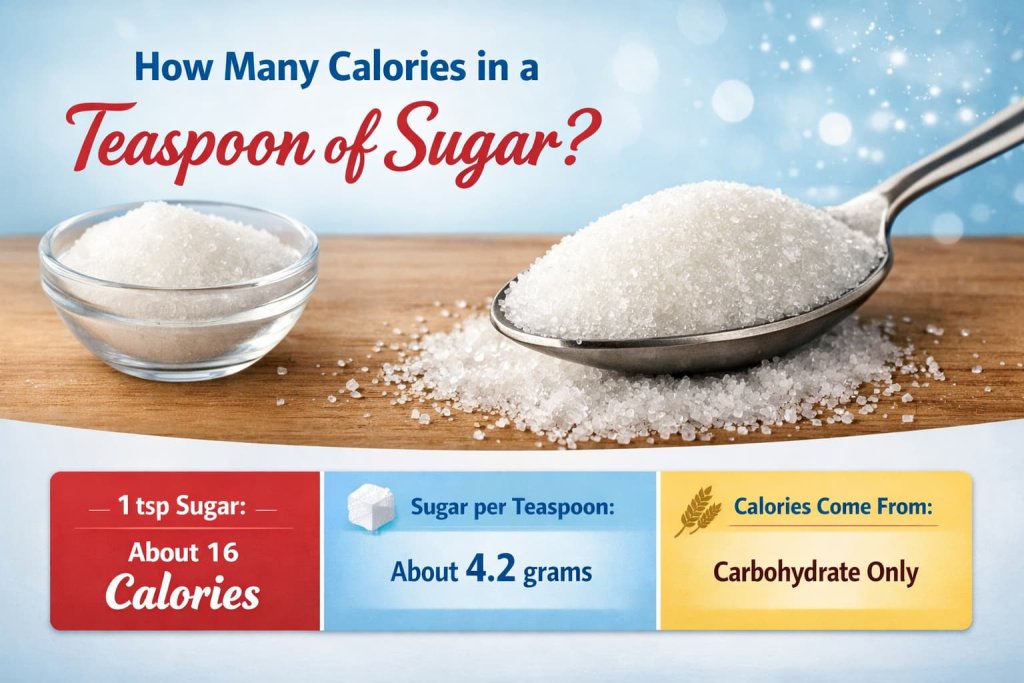
Here is the most practical answer for plain granulated table sugar:
- 1 teaspoon sugar: about 16 calories
- Sugar per teaspoon: about 4.2 grams
- Calories come from: carbohydrate only
In most cases, a level teaspoon of white granulated sugar is the standard reference for this calorie estimate. Calories can vary slightly if the teaspoon is rounded instead of level or if you use a different sweetener such as brown sugar, powdered sugar, honey, or maple syrup. For this article, the 16-calorie figure refers to a standard level teaspoon of table sugar.
This number is useful because many labels and health recommendations talk about sugar in grams, while people often measure sugar in teaspoons at home. Using the USDA teaspoon equivalent makes it easier to convert between the two.
Nutrition Profile of a Teaspoon of Sugar
Here is a simple nutrition profile for 1 teaspoon of granulated sugar:
| Nutrient | Typical amount |
|---|---|
| Calories | 16 |
| Carbohydrates | 4.2 g |
| Total sugar | 4.2 g |
| Added sugar | 4.2 g |
| Fat | 0 g |
| Protein | 0 g |
| Fiber | 0 g |
| Vitamins and minerals | No meaningful amount |
Plain table sugar is mostly quick carbohydrate energy. It does not provide meaningful fiber, protein, healthy fat, or notable vitamins and minerals. The FDA explains that labels separately list total sugars and added sugars, which helps show when calories are coming from sweeteners rather than nutrient-dense foods.
How a Teaspoon of Sugar Fits Into Daily Limits
A single teaspoon may not sound like much, but it uses part of your daily added sugar budget.
The FDA says the Daily Value for added sugars is 50 grams per day on a 2,000-calorie diet. Since one teaspoon of sugar is about 4.2 grams, that is roughly 8% of the Daily Value. The same FDA guidance also reflects the Dietary Guidelines recommendation to keep added sugars to less than 10% of total daily calories.
The American Heart Association uses a stricter practical target for everyday intake:
- Women: no more than 6 teaspoons of added sugar per day
- Men: no more than 9 teaspoons of added sugar per day
That means one teaspoon of sugar is about:
- 17% of the daily limit for women
- 11% to 12% of the daily limit for men
How to Convert Sugar on a Label Into Teaspoons
Nutrition labels usually list sugar in grams, not teaspoons. A practical shortcut is:
- 4.2 grams of sugar = about 1 teaspoon
- 8.4 grams = about 2 teaspoons
- 12.6 grams = about 3 teaspoons
This makes it easier to understand how much sugar you are really getting from foods and drinks. For example, a product with 21 grams of added sugar contains about 5 teaspoons of sugar. Using this quick conversion can help you compare products more clearly and stay closer to daily added sugar limits.
Is Sugar Good for Weight Management?
Sugar is not especially filling for the calories it provides, so it is usually not the most helpful choice if your goal is weight management. A teaspoon of sugar can fit into a balanced diet, but frequent added sugar from drinks, snacks, sauces, desserts, and coffee add-ins can make calorie intake climb without adding much fullness.
The NIDDK recommends limiting added sugars to less than 10% of calories per day in a healthy eating plan. NIDDK also notes that regularly taking in more calories than you use over time can lead to weight gain, and foods and drinks high in added sugar can contribute to that pattern.
When sugar may fit more easily
A teaspoon of sugar may be easier to fit into your day when:
- it is a small part of an otherwise balanced meal pattern
- you are not getting a lot of added sugar from other foods and drinks
- it replaces a larger sugary portion, such as a flavored coffee drink or dessert
When it adds up quickly
Sugar tends to add up fast when you use it in:
- multiple cups of tea or coffee
- sweetened yogurt or breakfast cereal
- bottled drinks and soda
- desserts and baked goods
- sauces, syrups, and sweet condiments
Key Nutrients in Sugar
Plain sugar does not offer much beyond energy. It is not a meaningful source of fiber, protein, vitamins, or minerals. That is why added sugar is usually best kept modest, especially compared with foods that naturally contain carbohydrate along with nutrients, such as fruit, plain dairy, beans, or whole grains. The FDA notes that diets high in calories from added sugars can make it harder to meet nutrient needs while staying within calorie limits.
Added Sugar vs Naturally Occurring Sugar
It also helps to separate added sugar from naturally occurring sugar. A teaspoon of table sugar is an added sugar, meaning it is added to foods or drinks for sweetness. That is different from the sugar found naturally in whole fruit or plain milk, which comes packaged with other nutrients. In general, health guidance focuses more on limiting added sugars than on avoiding nutrient-dense whole foods that naturally contain sugar.
Who Should Be a Little More Careful With Sugar?
Some people may want to watch teaspoons of added sugar more closely than others.
People trying to lose weight
Small spoonfuls can add up over the day, especially in drinks. If you are trying to create a calorie deficit, reducing habitual added sugar is often an easy place to start. NIDDK specifically includes high-sugar foods and drinks among factors that can affect body weight.
People with diabetes or blood sugar concerns
A teaspoon of sugar is still carbohydrate, so it counts toward total carb intake. People managing diabetes or prediabetes often need to pay closer attention to added sugars in beverages and snacks because those sources are easy to overlook. General guidance from NIDDK supports choosing eating patterns that help keep blood glucose in target range.
People with high added sugar intake already
The American Heart Association says most people in the U.S. consume almost 17 teaspoons of added sugar a day, so even “just one teaspoon here and there” may matter more than it seems when added to an already high intake.
People focused on dental health
Frequent exposure to sugary foods and drinks can be harder on teeth, especially when sipping sweet drinks over time. For that reason, added sugar habits matter for oral health as well as calories.
Teaspoon of Sugar vs Common Real-Life Amounts
A teaspoon of sugar is easy to underestimate because many foods and drinks contain several teaspoons at once. For example:
- 1 teaspoon sugar: about 16 calories
- 2 teaspoons sugar: about 32 calories
- 3 teaspoons sugar: about 48 calories
- 6 teaspoons sugar: about 100 calories
- 9 teaspoons sugar: about 150 calories
That is why even a modest daily habit, such as two teaspoons in coffee twice a day, can become a meaningful source of added calories over weeks and months. These conversions follow the USDA 4.2-gram teaspoon equivalent and the FDA 4-calories-per-gram carbohydrate standard.
A simple example: if you add 2 teaspoons of sugar to coffee twice a day, that is about 64 calories and 8.4 grams of sugar daily. Over time, even small habits like this can become a meaningful source of added calories.
Is a Teaspoon of Sugar Bad for You?
No. A teaspoon of sugar is not automatically unhealthy on its own. The bigger issue is your total pattern of added sugar intake across the day. One teaspoon in coffee is very different from large amounts coming from soda, desserts, sweetened coffee drinks, energy drinks, and processed snacks.
For most people, the practical goal is not to fear a small amount of sugar, but to keep overall added sugar intake in a reasonable range and make sure most calories come from foods with better nutrition value. That matches FDA and NIDDK guidance on limiting added sugars while staying within calorie needs.
Simple Ways to Cut Back Without Feeling Restricted
If you want to lower sugar intake without making your diet feel overly strict, these small changes can help:
- reduce sugar in coffee or tea gradually
- choose plain yogurt and add fruit yourself
- compare Nutrition Facts labels for added sugars
- swap sugary drinks for water or unsweetened tea more often
- save sweets for times you will really enjoy them instead of having them automatically
These changes are practical because they reduce repeated added sugar exposure, not just one isolated teaspoon.
If you still want sweetness, try reducing sugar gradually instead of removing it all at once. Many people find that stepping down from 2 teaspoons to 1, then to 1/2 teaspoon, feels more manageable and easier to maintain than making a sudden change.
FAQ
How many grams of sugar are in a teaspoon?
One teaspoon of granulated sugar is about 4.2 grams.
How many calories are in 2 teaspoons of sugar?
Two teaspoons of sugar have about 32 calories. That is simply double the roughly 16 calories in one teaspoon.
Is sugar high in calories?
Sugar is not extremely high in calories by volume compared with fats, but it is easy to consume often and in large amounts. Because it provides calories without much fullness or nutrition, it can add up quickly in everyday eating patterns.
Is a teaspoon of sugar okay during weight loss?
It can be. A teaspoon of sugar can fit into a weight-loss plan if your total calorie intake and overall added sugar intake stay in range. The bigger issue is repeated added sugar across the day, not just one teaspoon by itself.
Conclusion
A teaspoon of sugar contains about 16 calories and 4.2 grams of sugar. On its own, that is a small amount, but it can add up fast when sugar shows up several times a day in drinks, snacks, and packaged foods. For weight management and general health, the most useful approach is to watch your total added sugar intake, not panic over a single teaspoon. Start by checking labels, noticing how much sugar goes into your drinks, and making a few small swaps that are easy to keep.
Sources/References
- USDA — Food Patterns Equivalents Database 2013-14
- FDA — Added Sugars on the Nutrition Facts Label
- FDA — Daily Value on the Nutrition and Supplement Facts Labels
- FDA — How to Understand and Use the Nutrition Facts Label
- American Heart Association — How Much Sugar Is Too Much?
- American Heart Association — Sugar: Shrink the Sweet Spot for Blood Sugar Health
- NIDDK — Eating and Physical Activity to Lose or Maintain Weight
- NIDDK — Factors Affecting Weight and Health
- NIDDK — Healthy Living With Diabetes