
Most adults who want to gain weight should start by eating about 300 to 500 calories above their maintenance level each day, not by picking a random number like 3,000 calories. Your exact target depends on your age, sex, height, weight, activity level, and whether you are trying to regain lost weight or build more muscle. The most reliable way to begin is to estimate your current maintenance calories first and then add a modest surplus. According to the NHS, adults can often try adding around 300 to 500 extra calories a day, while the NIDDK Body Weight Planner can help personalize the starting point.

This matters because healthy weight gain is not just about eating more. A better plan is to raise calories in a balanced way, keep protein in the diet, and use strength training so more of the gain supports muscle and overall health. The USDA Food and Nutrition Service notes that calorie needs vary widely and provides food-pattern guidance across different calorie levels.
This guide is mainly for adults. Children and teens are still growing, so calorie targets should not be guessed from adult advice alone. The CDC notes that children and teens need support for healthy growth, and the NIDDK Teen Health Guide explains that teen weight concerns may need more individualized support.
How many calories should I eat to gain weight?
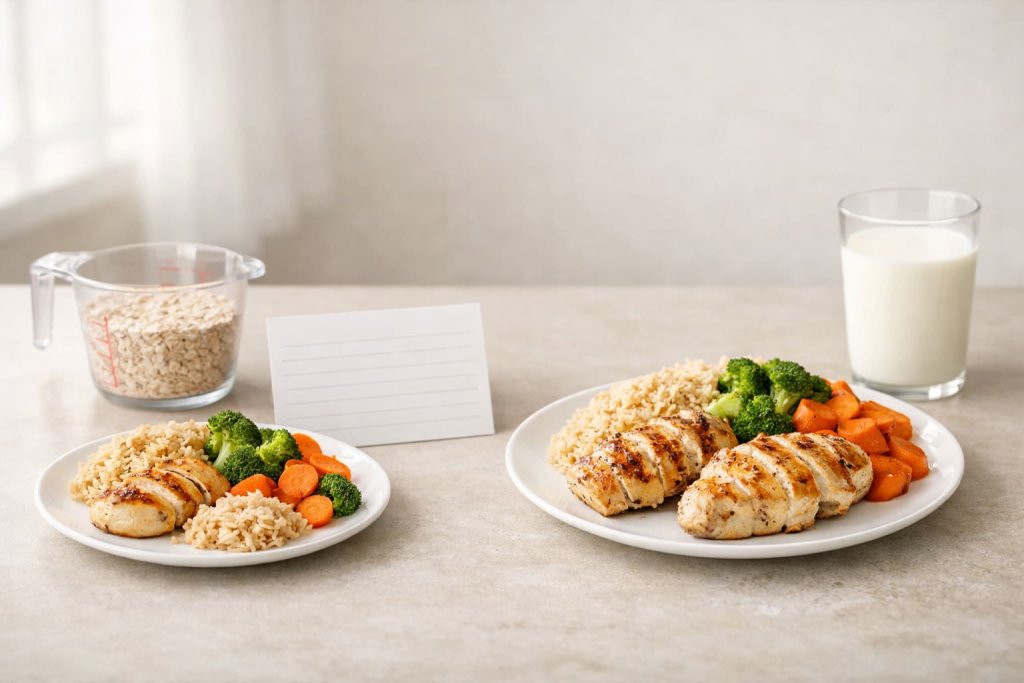
A practical answer is this: first estimate how many calories you need to maintain your current weight, then add 300 to 500 calories per day. That gives many people a safe, realistic starting range for gradual weight gain. For example, if your maintenance level is about 2,200 calories, a reasonable first target would be about 2,500 to 2,700 calories per day.
There is no universal weight-gain calorie number. Some people gain on 2,200 calories. Others may need 2,800 or more. The difference comes down to body size, daily movement, exercise, and normal variation in metabolism.
How fast should you gain weight?
A realistic and healthy goal is to gain about 0.5 to 1 pound per week for most adults. This pace gives your body time to adjust and may make it easier to gain weight in a more balanced way rather than pushing calories too high too quickly.
If you are not gaining after 2 to 3 weeks, increase your intake slightly, such as adding another 100 to 200 calories per day.
Start with your maintenance calories first
The best first step is to estimate maintenance calories using the NIDDK Body Weight Planner or a DRI-based calorie calculator. These tools are more useful than rough guesses because they factor in personal variables instead of relying only on averages.
Here is a simple way to think about it:
| Estimated maintenance calories | Starting target for weight gain |
|---|---|
| 1,800 | 2,100 to 2,300 |
| 2,000 | 2,300 to 2,500 |
| 2,200 | 2,500 to 2,700 |
| 2,400 | 2,700 to 2,900 |
| 2,600 | 2,900 to 3,100 |
These ranges are simply maintenance calories plus the 300 to 500 calorie surplus commonly used for gradual weight gain.
How to track if your calorie intake is working
The easiest way to know if your calorie target is right is to track your weight and adjust as needed.
- Weigh yourself 2 to 3 times per week under similar conditions, such as in the morning before eating
- Look for a slow upward trend over 2 to 4 weeks
- If your weight is not increasing, add 100 to 200 more calories per day
- If weight is increasing too quickly, slightly reduce calories
This helps you avoid guessing and keeps progress steadier.
What healthy weight gain looks like
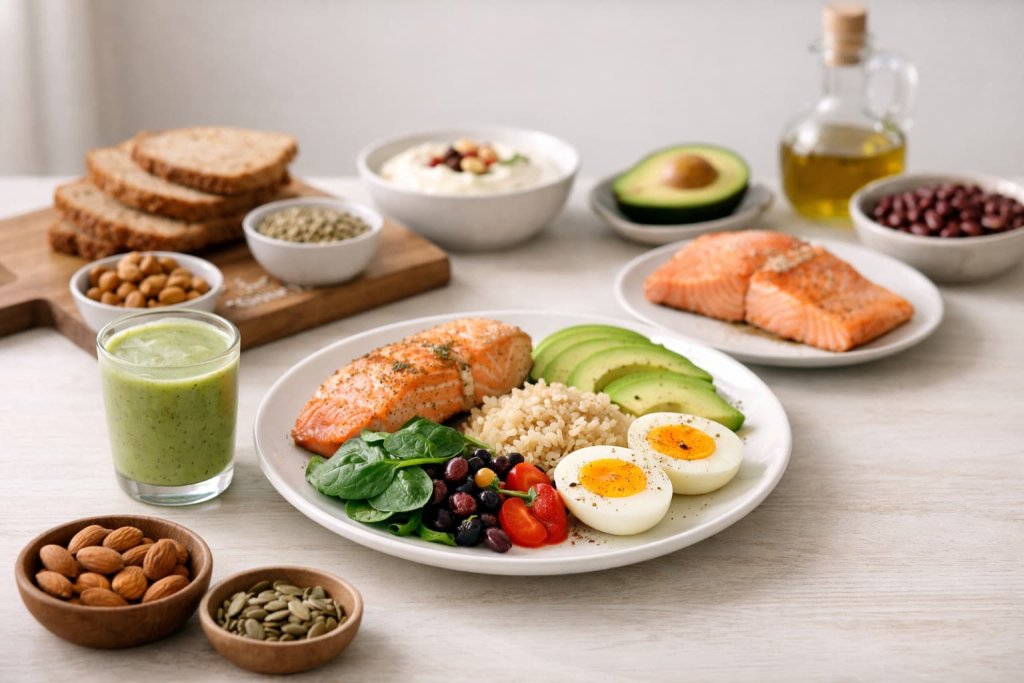
Healthy weight gain usually means adding calories through a balanced diet rather than loading up on sweets, soda, or heavily processed snack foods. MedlinePlus notes that eating extra calories within a well-balanced diet can help you gain weight, especially when there is also attention to any underlying medical issue that may be affecting weight.
A smart calorie surplus usually includes foods that are both calorie-dense and nutrient-dense, such as:
- dairy foods or fortified alternatives
- eggs
- beans and lentils
- nuts, seeds, and nut butters
- fish, poultry, or lean meats
- soy foods such as tofu and tempeh
- whole grains and starches added to regular meals
These foods help raise calories while also contributing protein, vitamins, minerals, or healthy fats.
What to eat when appetite is low
Low appetite is one of the biggest reasons people struggle to gain weight. MedlinePlus advises eating more often, choosing small meals, and keeping snacks close by instead of waiting for three large meals. It also notes that filling up on drinks before meals can make it harder to eat enough.
That usually means these strategies work better than trying to force one huge dinner:
- eat 5 or 6 smaller meals instead of 3 large ones
- keep easy snacks ready
- add extras such as cheese, nuts, or seeds to meals
- use higher-calorie drinks between meals, such as smoothies or milk-based drinks
The NHS also supports smaller meals, healthy snacks, and higher-calorie drinks between meals for people trying to gain weight gradually.
Easy ways to add calories without eating much more food
If you struggle to eat larger portions, small changes can increase calories without making meals feel too heavy:
- add 1 to 2 tablespoons of olive oil to meals
- use whole milk or fortified plant milk instead of water in recipes when appropriate
- spread peanut butter or almond butter on toast, fruit, or into smoothies
- sprinkle nuts, seeds, or cheese on meals
- choose rice, pasta, or potatoes as regular sides
These simple additions can increase daily calories without requiring much more food volume.
Protein matters if you want to gain muscle
Calories help you gain weight, but protein helps support muscle repair and growth. The National Academies list adult protein needs at about 0.8 grams per kilogram of body weight as a basic daily requirement, and MedlinePlus notes that healthy adults can generally get 10% to 35% of total calories from protein. Good protein sources include eggs, milk, fish, beans, lentils, soy foods, nuts, seeds, and poultry.
In real life, this means your calorie increase should not come only from desserts or snack foods. Try to include a meaningful protein source at meals and snacks so the extra calories do more for strength and recovery.
Strength training helps the extra calories go to better use
If your goal is to build size in a healthy way, add resistance training to your routine. The CDC Physical Activity Guidelines recommend muscle-strengthening activities on 2 or more days a week, and the National Institute on Aging highlights benefits such as maintaining muscle mass, improving mobility, and supporting healthier aging.
That does not mean you need a complicated bodybuilding routine. Consistent strength work, enough calories, and enough protein is the more useful foundation for most people who want to gain weight well.
Common mistakes when trying to gain weight
Some habits can make weight gain harder or less helpful:
- eating mostly low-nutrient, high-sugar foods instead of balanced meals
- skipping meals and trying to catch up later
- not eating enough protein
- avoiding strength training
- expecting fast results and not adjusting calories when needed
Consistency, balanced meals, and gradual progress usually work better than extreme changes.
Who should be a little more careful
If your weight has dropped without trying, do not assume you just need more calories. The National Institute on Aging says sudden, unintended weight loss can be a sign of a serious medical problem, and MedlinePlus also notes that a sudden, unexpected weight change can point to an underlying issue.
You should get medical advice before trying to gain weight on your own if you have:
- unexplained weight loss
- ongoing poor appetite
- nausea, vomiting, or digestive symptoms
- trouble chewing or swallowing
- a long-term illness
- rapid changes in weight or swelling
Older adults also need extra attention here. The National Institute on Aging notes that becoming too thin in older age can weaken immunity, raise fracture risk, and sometimes signal disease.
For adults, the CDC BMI categories classify a BMI below 18.5 as underweight. BMI is only a screening tool, not a diagnosis, but it can still be a useful sign that more evaluation may be needed.
Sample day of eating for weight gain
Here is a simple example of how extra calories can fit into a normal day:
- Breakfast: oatmeal made with milk, topped with banana and peanut butter
- Snack: yogurt with nuts and honey
- Lunch: rice, chicken, vegetables, and olive oil
- Snack: smoothie with milk, fruit, and a protein source
- Dinner: salmon, potatoes, and vegetables
- Extra addition: a glass of milk or a small handful of nuts before bed
This approach spreads calories through the day, which is often easier than trying to eat very large meals at once.
Common questions about calories for weight gain
Is 3,000 calories enough to gain weight?
Sometimes yes, sometimes no. It depends on your maintenance calories. A very active person may maintain weight near that level, while a smaller or less active person may gain on much less. Personalized tools are more useful than guessing.
Can I gain weight without eating junk food?
Yes. In fact, that is usually the better approach. Public-health guidance favors extra calories from balanced meals and nutrient-dense foods rather than relying on cakes, candy, sugary drinks, or other low-nutrition foods.
What is the easiest way to add calories?
For many people, the easiest method is to keep meal size reasonable and add calories through snacks, toppings, and drinks between meals. Examples include extra dairy, nuts, seeds, smoothies, or another small meal later in the day.
The bottom line on how many calories you should eat to gain weight
A good starting point for most adults is maintenance calories plus 300 to 500 per day. That is enough to support progress without turning the plan into guesswork. From there, focus on balanced meals, protein-rich foods, and regular strength training so the weight you gain supports your health, not just the scale number.
If you have been losing weight without trying, have a very low appetite, or think you may be underweight, speak with a doctor or registered dietitian before pushing calories higher. A personalized plan is always better than forcing food without understanding the reason.
Sources/References
- NIDDK — Body Weight Planner
- USDA Food and Nutrition Service — Dietary Patterns
- NHS — Healthy ways to gain weight
- MedlinePlus — Body Weight
- MedlinePlus — Eating extra calories when sick – adults
- MedlinePlus — Protein in diet
- National Academies — Dietary Reference Intakes for Energy, Carbohydrate, Fiber, Fat, Fatty Acids, Cholesterol, Protein, and Amino Acids
- CDC — Adult Activity: An Overview
- National Institute on Aging — How can strength training build healthier bodies as we age?
- National Institute on Aging — Maintaining a Healthy Weight
- National Institute on Aging — What Do We Know About Healthy Aging?
- CDC — Adult BMI Categories
- CDC — About Healthy Weight and Growth
- NIDDK — Take Charge of Your Health: A Guide for Teenagers