
Nattokinase can be dangerous for some people, especially if you take blood thinners, aspirin, or have a bleeding or clotting condition. That matters because it is often marketed as a “natural” circulation supplement, but the strongest safety concerns involve bleeding, drug interactions, and the risk of replacing proven medical treatment with an unproven supplement. Memorial Sloan Kettering Cancer Center warns that nattokinase may increase bleeding risk and should be avoided by people with coagulation disorders or those already using anticoagulant therapy.
What Is Nattokinase?
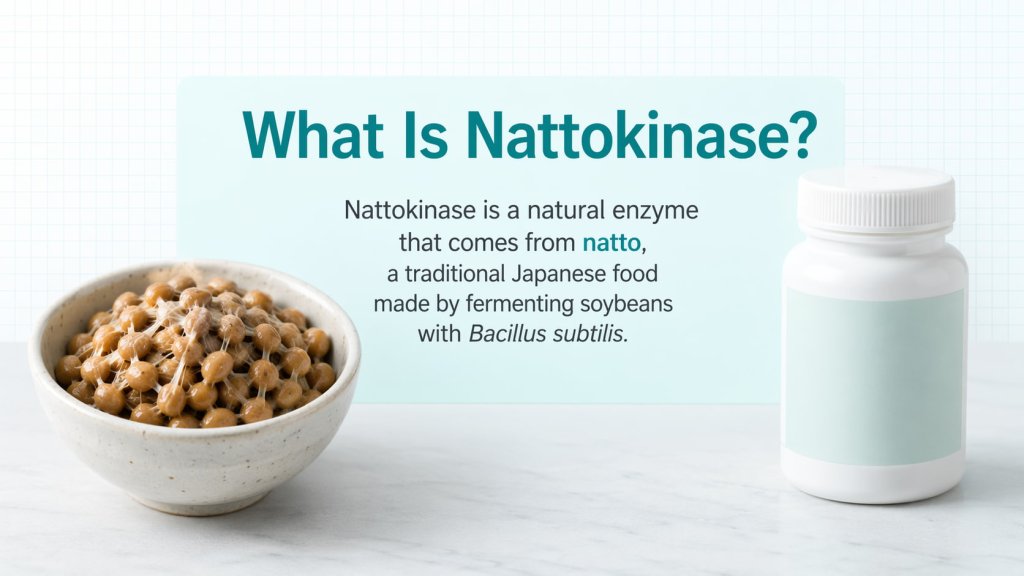
Nattokinase is an enzyme produced from natto, a traditional Japanese food made from soybeans fermented with Bacillus subtilis. According to Memorial Sloan Kettering Cancer Center, lab and early human studies suggest it may affect clot-related pathways and blood pressure, but human evidence is still limited.
The Main Nattokinase Dangers
Bleeding risk is the biggest concern
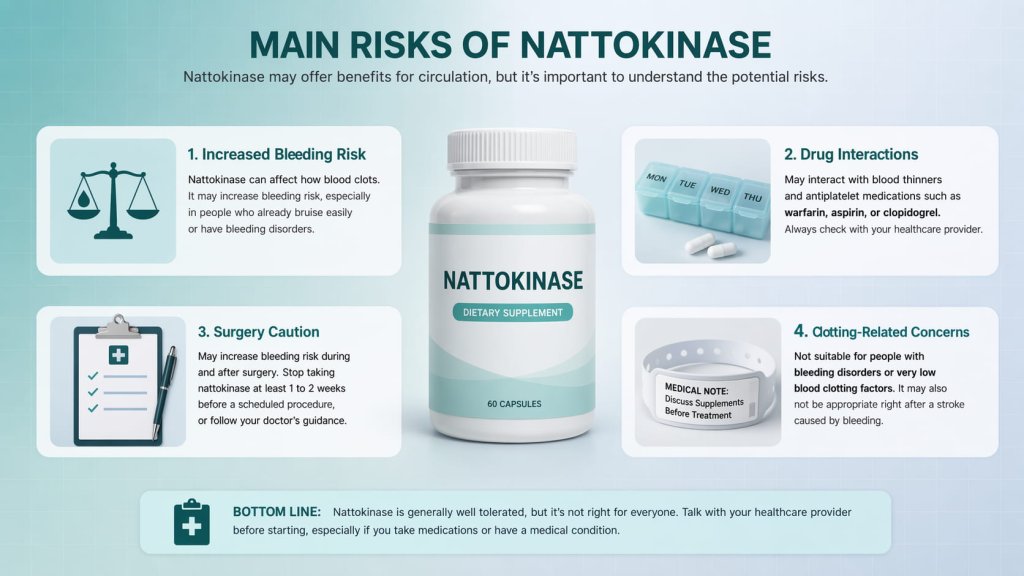
The most important nattokinase danger is its potential to increase bleeding risk. Memorial Sloan Kettering warns that nattokinase may increase bleeding when used with blood-thinning drugs, and it advises people with coagulation disorders or people already taking anticoagulant therapy not to use it.
This concern is not just theoretical. Memorial Sloan Kettering lists case reports of serious harm, including fatal internal bleeding in an older adult using over-the-counter nattokinase for atrial fibrillation and a report of intracerebral bleeding risk with aspirin use.
It can interact with aspirin and other blood thinners
Nattokinase is especially risky when combined with medicines that already affect clotting. Memorial Sloan Kettering specifically flags aspirin, anticoagulants, antiplatelet drugs, and fibrinolytic drugs as concerns, and the National Center for Complementary and Integrative Health notes that medication-supplement interactions matter most with high-risk situations such as surgery and medicines with a narrow therapeutic range, including warfarin.
Using nattokinase instead of prescribed anticoagulation is dangerous
One of the most serious nattokinase dangers is self-substitution. Memorial Sloan Kettering describes a case in which a person replaced warfarin with nattokinase after aortic valve replacement and later developed valve thrombosis that required repeat valve surgery. That is a strong reason not to treat nattokinase as a safe alternative to prescribed anticoagulation for atrial fibrillation, mechanical heart valves, or other clotting-risk conditions.
It may be risky if you have a history of deep vein thrombosis
Memorial Sloan Kettering also warns that nattokinase could theoretically cause an existing clot to dislodge, leading to stroke or embolism elsewhere in the body. For that reason, it advises people with a history of deep vein thrombosis to avoid nattokinase.
Surgery and procedures are another concern
If you are preparing for surgery, dental work, or another procedure, nattokinase is not something to overlook. NCCIH says some supplements can increase bleeding risk, affect anesthesia-related medicines, and cause heart rate or blood pressure problems around surgery. It also notes that some clinicians ask patients to stop herbal supplements several weeks before elective procedures.
A practical step is to review nattokinase with your surgical team well before the procedure, not a day or two before. The American Society of Anesthesiologists says physicians may recommend stopping supplements at least two weeks before surgery. Bringing the bottle or a clear photo of the label to your pre-op visit can make that review easier.
Natto vs. Nattokinase: An Important Warfarin Warning
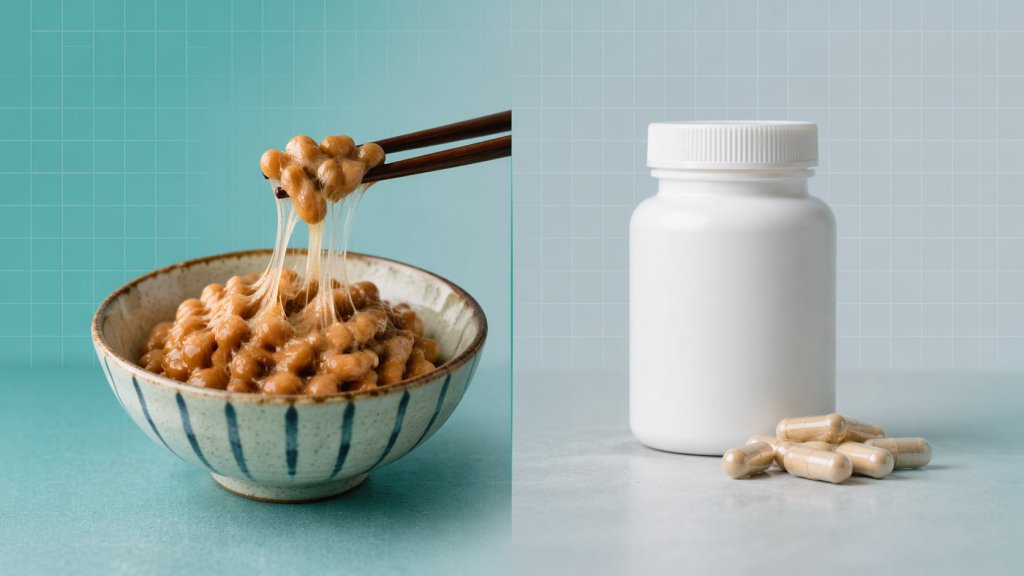
People often confuse natto and nattokinase, but they are not the same thing. Natto is the fermented soybean food, while nattokinase is an enzyme associated with it. This matters because Memorial Sloan Kettering notes that raw natto contains high levels of vitamin K, which may interfere with warfarin, and the NIH Office of Dietary Supplements says natto has high amounts of menaquinones, a form of vitamin K.
So even if someone is not taking a nattokinase capsule, high natto intake may still matter if they use warfarin. That is one more reason to tell your clinician exactly what food supplements and specialty foods you use.
Why “Natural” Does Not Mean Proven Safe
Nattokinase is sold as a dietary supplement, not an FDA-approved drug. According to the U.S. Food and Drug Administration, FDA does not approve dietary supplements before they are marketed, and there are no laws or regulations that limit the serving size of a supplement or the amount of a dietary ingredient in one serving. In practice, that means product labels, doses, and marketing claims should not be treated as proof of safety or effectiveness.
FDA also says manufacturers and distributors have the initial responsibility for safety and that the agency often operates through postmarket enforcement rather than pre-sale approval. That is very different from how prescription medicines are evaluated.
One useful quality check is to avoid assuming that words like “standardized” or “clinically tested” guarantee a safer product. The NIH Office of Dietary Supplements says label quality can be hard to judge and that “standardized” does not necessarily mean high quality.
It also notes that independent seals from organizations such as NSF, U.S. Pharmacopeia, or ConsumerLab can help show that a product was properly manufactured and does not contain harmful levels of contaminants, although those seals still do not prove the supplement is safe or effective for you.
What the Evidence Actually Shows
The evidence on benefits is mixed and still limited. An earlier randomized trial in Hypertension Research reported lower blood pressure in adults with prehypertension or stage 1 hypertension after nattokinase use, but a longer randomized controlled trial in Clinical Hemorheology and Microcirculation found no significant effect on subclinical atherosclerosis progression, blood pressure, or lab measures in healthy adults at low cardiovascular risk.
That is why a careful article on nattokinase dangers should not present it as a proven heart-health shortcut. Memorial Sloan Kettering also notes that clinical data are lacking for several promoted uses.
Who Should Be Careful With Nattokinase?
People with a history of allergy to natto or fermented soy products should also be careful. Memorial Sloan Kettering notes that some severe allergic reactions have been reported in patients who were allergic to nattō. That makes allergy history worth checking before treating nattokinase as a routine heart health supplement.
Before using nattokinase, extra caution is warranted for the following groups:
- People taking warfarin, apixaban, rivaroxaban, dabigatran, heparin, clopidogrel, or daily aspirin because nattokinase may add to bleeding risk
- People with a coagulation disorder or any known bleeding tendency
- People with a history of deep vein thrombosis, because of the concern that an existing clot could dislodge
- Anyone scheduled for surgery or an invasive procedure, because supplements can complicate bleeding control and perioperative care
- Anyone thinking about replacing prescribed anticoagulation with a supplement
Practical Safety Checks Before You Use It
If you are still considering nattokinase, these are the most important steps:
- Tell your doctor, pharmacist, or surgeon about it before you start or continue using it
- Do not combine it with blood thinners or daily aspirin unless your clinician specifically reviews the risk
- Do not use it as a substitute for prescribed treatment for atrial fibrillation, valve disease, or clot prevention
- Read the label carefully and remember that supplement serving sizes and ingredient amounts are not preapproved by FDA
- Mention it before blood tests, because Memorial Sloan Kettering notes that nattokinase may affect clotting-related lab results such as PT, PTT, and INR
Warning Signs That Need Prompt Medical Attention
Seek urgent medical care if you develop possible signs of serious bleeding, such as:
- vomiting blood or vomit that looks like coffee grounds
- black, tarry stools or blood in the stool
- dizziness, unusual weakness, confusion, or shortness of breath
- severe or unusual bruising or any bleeding that does not stop
The MedlinePlus and Mayo Clinic guidance on gastrointestinal bleeding can help readers recognize warning signs, but symptoms like these need prompt medical evaluation rather than home management.
If you think a supplement may have caused a serious reaction, stop using it and get medical help right away. The U.S. Food and Drug Administration page on reporting dietary supplement problems and NCCIH guidance on using dietary supplements wisely note that consumers can report serious supplement-related safety problems, which can help regulators identify harmful products more quickly.
Frequently Asked Questions
Is nattokinase a blood thinner?
Not in the same way as a prescription anticoagulant, but it does have clot-related effects and may increase bleeding risk, especially when combined with blood-thinning medicines.
Is nattokinase safe with aspirin?
That combination should be treated cautiously. Memorial Sloan Kettering specifically warns that nattokinase may increase aspirin’s effects and raise the risk of excessive bleeding, including intracerebral hemorrhage risk in a reported case context.
Should you stop nattokinase before surgery?
Talk with your surgeon or anesthesia team well in advance. NCCIH says some supplements can increase bleeding risk and interfere with medicines used around surgery, and the American Society of Anesthesiologists says physicians may recommend stopping supplements at least two weeks before elective procedures.
Is natto the same as nattokinase?
No. Natto is the fermented soybean food, and nattokinase is an enzyme associated with it. Natto is also high in vitamin K, which may interfere with warfarin.
Conclusion
Nattokinase dangers are easy to underestimate because the product is sold as a supplement and often promoted as natural. But the main risks are real: bleeding, dangerous interactions, warfarin-related confusion with natto, allergy concerns, and the temptation to replace proven medical treatment with a product that does not have strong long-term evidence behind it. For most people, the safest next step is simple: review it with a clinician or pharmacist before using it.
This content is for informational purposes only and not medical advice.
References
- NIH Office of Dietary Supplements — Botanicals and Botanical Dietary Supplements
- American Society of Anesthesiologists — Herbal and Dietary Supplements and Anesthesia