
For most adults, there is not a separate official normal blood pressure chart by age and gender. The current adult categories are the same for men, women, and older adults: normal blood pressure is below 120/80 mm Hg. What does change with age is how blood pressure tends to behave, especially in older adults, and how risk patterns differ between men and women. In children and teens, age and gender do matter because healthy ranges are based on growth-related percentiles rather than one fixed adult cutoff.
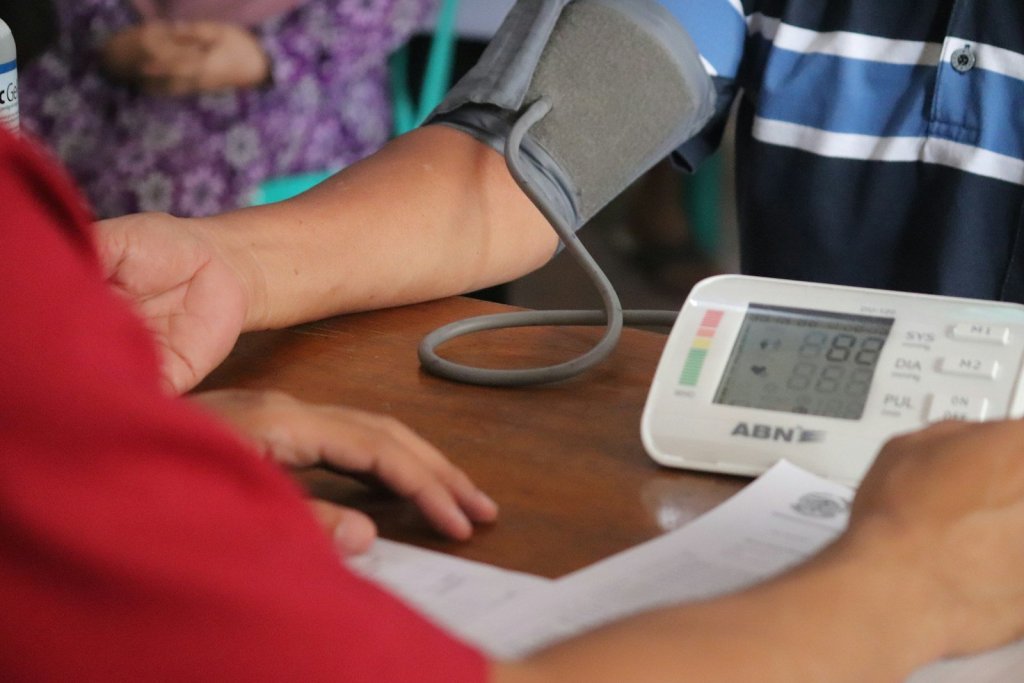
That distinction matters because many online charts oversimplify the topic. A medically accurate blood pressure chart should separate adult categories, older-adult patterns, men-versus-women risk differences, and pediatric readings, which depend on age, gender, and height. According to the Centers for Disease Control and Prevention, 48.1% of U.S. adults have high blood pressure.
Adult Blood Pressure Chart by Age and Gender
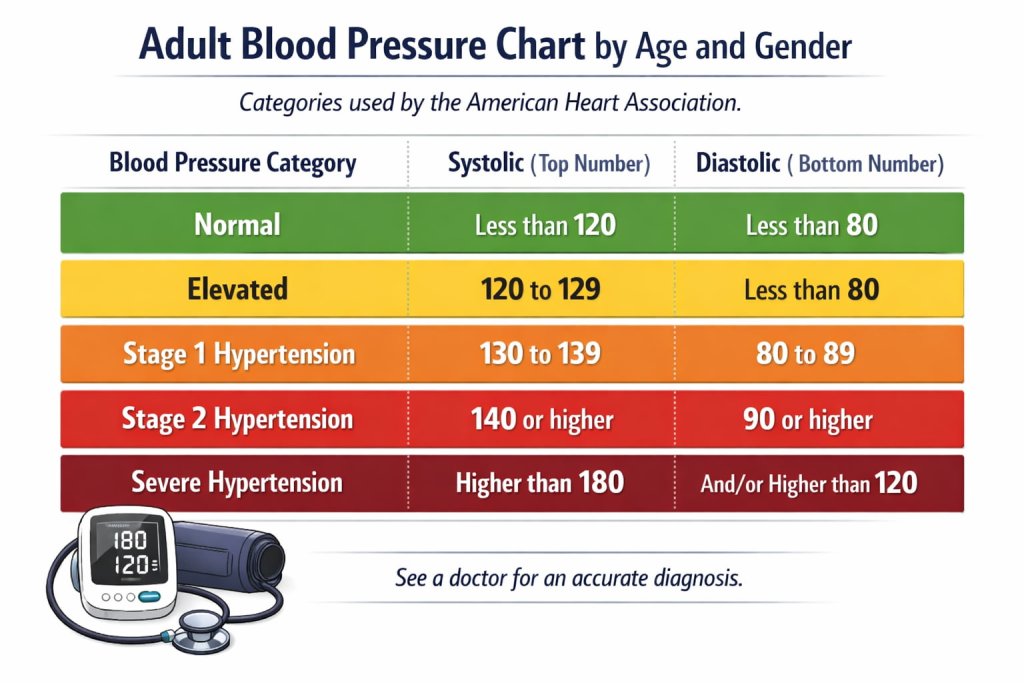
The current chart used by the American Heart Association applies to most adults of all ages and both sexes. A clinician should confirm a diagnosis rather than relying on one reading alone.
| Blood pressure category | Systolic (top number) | Diastolic (bottom number) |
|---|---|---|
| Normal | Less than 120 | Less than 80 |
| Elevated | 120 to 129 | Less than 80 |
| Stage 1 hypertension | 130 to 139 | 80 to 89 |
| Stage 2 hypertension | 140 or higher | 90 or higher |
| Severe hypertension | Higher than 180 | And/or higher than 120 |
How doctors confirm high blood pressure
A single reading is useful, but it is not usually enough to diagnose hypertension. According to the American Heart Association, a proper diagnosis is based on an average of two or more readings taken on two or more occasions.
It also helps to know one simple chart rule: if your systolic and diastolic numbers fall into different categories, the higher category is used. For example, a reading of 128/82 is classified as stage 1 hypertension because the bottom number falls in the stage 1 range.
A reading higher than 180/120 mm Hg needs prompt attention. If it stays that high and symptoms such as chest pain, shortness of breath, back pain, weakness, numbness, vision changes, or trouble speaking are present, it may be a hypertensive emergency.
Why Adult Blood Pressure Does Not Have a Different Official Normal Range by Age
A lot of people search for a blood pressure chart by age because blood pressure often rises over time. But a rise with age does not mean higher readings become officially normal. Adults are still interpreted with the same category system, whether they are 25, 45, or 75.
That said, age still matters clinically. In older adults, the systolic number often rises more than the diastolic number because arteries become stiffer over time. That pattern changes risk, treatment decisions, and the way clinicians interpret trends, even though the category cutoffs stay the same.
What Changes for Older Adults and Seniors
According to the National Institute on Aging, older adults often develop isolated systolic hypertension, where the top number is 130 or higher while the bottom number stays below 80. This happens because of age-related stiffening of the major arteries, and it is the most common form of high blood pressure in older adults.
The systolic number also becomes more important with age. The American Heart Association notes that for people over 50, systolic pressure often tells more about heart risk because large arteries stiffen, plaque builds over time, and cardiovascular disease becomes more common.
A practical senior takeaway
For seniors, the goal is not to use a different normal-for-age chart. The better question is whether the reading falls into a healthy adult category and whether the pattern shows a rising systolic pressure over time. A reading like 138/76 may be common in older adults, but it still falls into stage 1 hypertension, not a separate senior-normal range.
Read Also: Blood Pressure Chart for Seniors: Normal & Safe Ranges
Blood Pressure Differences in Men and Women
Men and women use the same adult blood pressure categories, but risk patterns shift across life stages. The American Heart Association says men are more likely than women to get high blood pressure until age 64. At age 65 and older, women are more likely to get it.
The CDC reports a similar overall pattern in U.S. adults: 50% of men have high blood pressure compared with 44% of women, and prevalence rises sharply with age.
What this means in real life
A blood pressure reading of 132/82 means the same thing for a man and a woman: it is stage 1 hypertension. Gender does not change the category. What gender can change is the likelihood of developing high blood pressure at different ages and life stages.
Pregnancy is one important exception for women
Pregnancy deserves special attention because blood pressure changes during pregnancy are not something to brush off as routine. According to the National Heart, Lung, and Blood Institute, gestational hypertension is blood pressure 140/90 mm Hg or higher that develops after 20 weeks of pregnancy or close to delivery.
The American College of Obstetricians and Gynecologists notes that blood pressure at or above 140/90 mm Hg during pregnancy may need closer monitoring or treatment. That means pregnant readers should not rely only on a general adult chart. Any clearly elevated reading during pregnancy should be discussed promptly with an OB-GYN or other maternity clinician.
Blood Pressure Chart for Children and Teens by Age and Gender
This is where age and gender really do matter. The American Heart Association says a healthy blood pressure range for a child depends on gender, age, and height, and children ages 3 and older should have yearly blood pressure checks.
For children under 13, clinicians do not use one single normal number for everyone. Instead, they compare the reading with pediatric percentile charts. The National Heart, Lung, and Blood Institute pediatric blood pressure tables provide reference ranges by age and height for boys and girls.
Simplified pediatric blood pressure chart
The CDC summary of pediatric guidance shows the general framework below. Exact interpretation still depends on pediatric percentile tables for younger children.
| Age group | Normal | Elevated | High blood pressure |
|---|---|---|---|
| Children under 13 | Below the 90th percentile | 90th to less than 95th percentile, or 120/<80 mm Hg up to less than the 95th percentile, whichever is lower | At or above the 95th percentile |
| Teens 13 to 17 | Below 120/80 | 120/<80 to 129/<80 | 130/80 or higher |
Why children need a different chart
A reading that may be normal for one child could be high for another child of a different age, gender, or height. That is why pediatric readings should be interpreted with the proper chart, not with a generic adult table.
How to Measure Blood Pressure Correctly at Home
The Centers for Disease Control and Prevention recommends a few simple steps to improve accuracy at home: sit quietly for at least 5 minutes, keep your back supported, place both feet flat on the floor, rest your arm at chest height, use the cuff on bare skin, and do not talk during the reading. The American Heart Association also recommends an automatic upper-arm cuff monitor and says wrist and finger devices are less reliable.
For the best reading, avoid smoking, caffeine, and exercise for 30 minutes beforehand, empty your bladder, and take two readings one minute apart. A single number is only a snapshot. A log of readings over time is much more useful.
When a Blood Pressure Reading Needs Medical Attention
A mildly high reading does not always mean you have hypertension. The American Heart Association notes that a single high reading is not an immediate cause for alarm, and a clinician should confirm whether there is a true pattern.
But very high readings are different. If your blood pressure is higher than 180/120 mm Hg, wait a minute and check again. If it is still that high, contact a health professional right away. If it is that high and you also have symptoms like chest pain, shortness of breath, back pain, weakness, numbness, vision changes, or trouble speaking, call emergency services immediately.
FAQ
What is the best blood pressure by age?
For most adults at any age, the best category is still below 120/80 mm Hg. Age can change blood pressure patterns, especially systolic pressure in older adults, but it does not create a new official normal range for adults.
Is 140/90 normal for an older adult?
No. Even in seniors, 140/90 falls into stage 2 hypertension under current adult categories. Older adults may commonly have higher systolic readings, but those numbers are not considered normal just because of age.
Is 130/80 high for women?
Yes. A reading of 130/80 meets the threshold for stage 1 hypertension in adults, including women. The category is the same for men and women.
Is 120/80 normal for a child?
Not always. In children, normal blood pressure depends on gender, age, and height. For some children, 120/80 may be above the healthy range, which is why pediatric charts are used instead of one fixed number.
Can one high reading mean you have hypertension?
Not usually. One high reading can be a warning sign, but diagnosis should be confirmed by a medical professional using repeat measurements and overall context. Home tracking can help show whether the number is an isolated spike or part of a pattern.
Conclusion
A truly accurate blood pressure chart by age and gender needs one important correction: adults do not have separate official normal charts by age or sex, but children do have age- and gender-based ranges. For adults, the same standard chart applies across age groups. What changes is how blood pressure tends to rise with age, how systolic pressure becomes more important in older adults, and how risk patterns differ between men and women.
If you are tracking your numbers at home, focus on accurate measurement, record trends, and bring those readings to your clinician. That gives a much clearer picture than relying on a generic age chart alone.
This content is for informational purposes only and not medical advice.
Sources and References
- American Heart Association — Understanding Blood Pressure Readings
- American Heart Association — Home Blood Pressure Monitoring
- American Heart Association — Know Your Risk Factors for High Blood Pressure
- American Heart Association — High Blood Pressure in Children and Teens
- National Institute on Aging — High Blood Pressure and Older Adults
- Centers for Disease Control and Prevention — High Blood Pressure Facts
- Centers for Disease Control and Prevention — Measuring Your Blood Pressure
- Centers for Disease Control and Prevention — Differences in Blood Pressure Levels Among Children by Sociodemographic Status
- National Heart, Lung, and Blood Institute — Blood Pressure Levels for Boys and Girls by Age and Height Percentile
- National Heart, Lung, and Blood Institute — High Blood Pressure During Pregnancy
- American College of Obstetricians and Gynecologists — Preeclampsia and High Blood Pressure During Pregnancy