
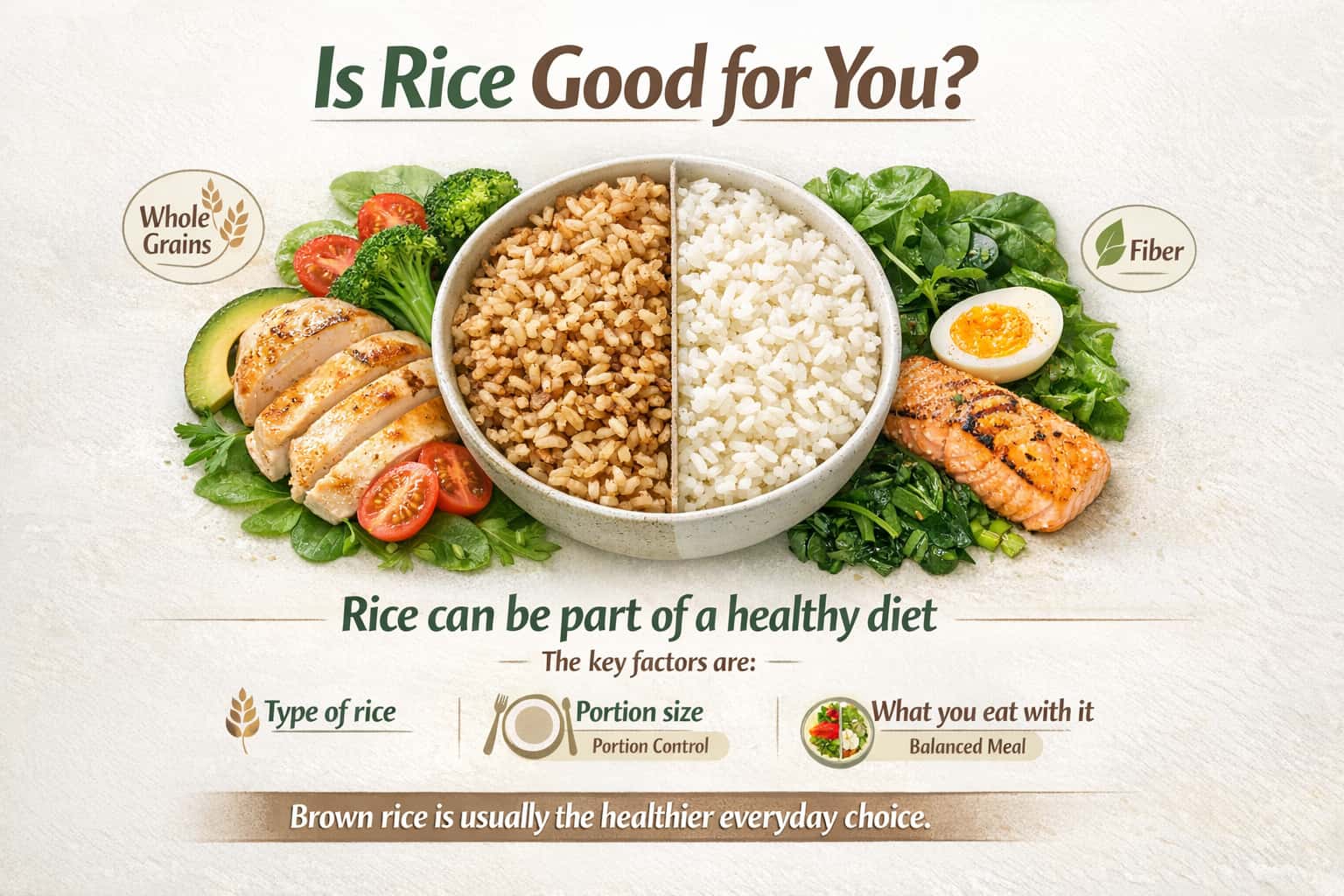
Yes, rice can be good for you—especially when you choose the right type, keep portions reasonable, and build a balanced meal around it. The biggest distinction is whole-grain rice versus refined rice: the Dietary Guidelines for Americans and USDA’s Simple with My Plate guide emphasize whole grains, while CDC diabetes guidance recommends fewer refined grains such as white rice and more whole foods overall.
That does not mean rice is automatically “healthy” or “unhealthy.” Rice can fit a healthy eating pattern, but the answer depends on three things: the type of rice, the portion size, and what else is on your plate. Those details matter more than the food being rice in the first place.
What makes rice healthy or less healthy?
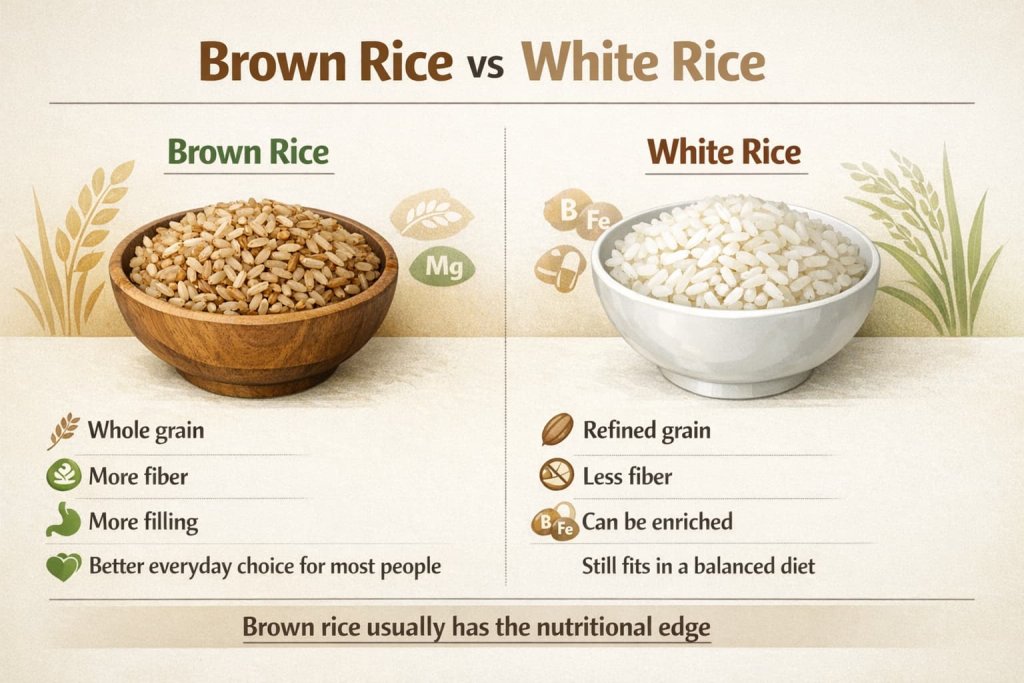
Rice is mainly a carbohydrate food, but not all rice works the same way nutritionally. Brown rice is a whole grain. White rice is a refined grain. According to CDC’s healthy carb guidance and MedlinePlus carbohydrate guidance, refining grains removes fiber and often removes key nutrients too, although some nutrients may be added back if the food is enriched. Whole-grain foods also tend to have more fiber and protein than refined versions.
That is why rice can be perfectly fine in a healthy diet, but brown rice is usually the stronger everyday choice for most people. It keeps the bran and germ, so it offers more fiber and a more whole-food nutrient profile. White rice can still fit, especially if it is enriched, but it usually brings less fiber and is often less filling.
Brown rice vs. white rice: which is better?
For most adults, brown rice is the healthier default. USDA MyPlate says to make half your grains whole grains, and brown rice is one easy way to do that. CDC also notes that refined grains such as white rice are lower in fiber and are generally a less helpful carb choice when you are trying to get the most nutrition with less impact on blood sugar.
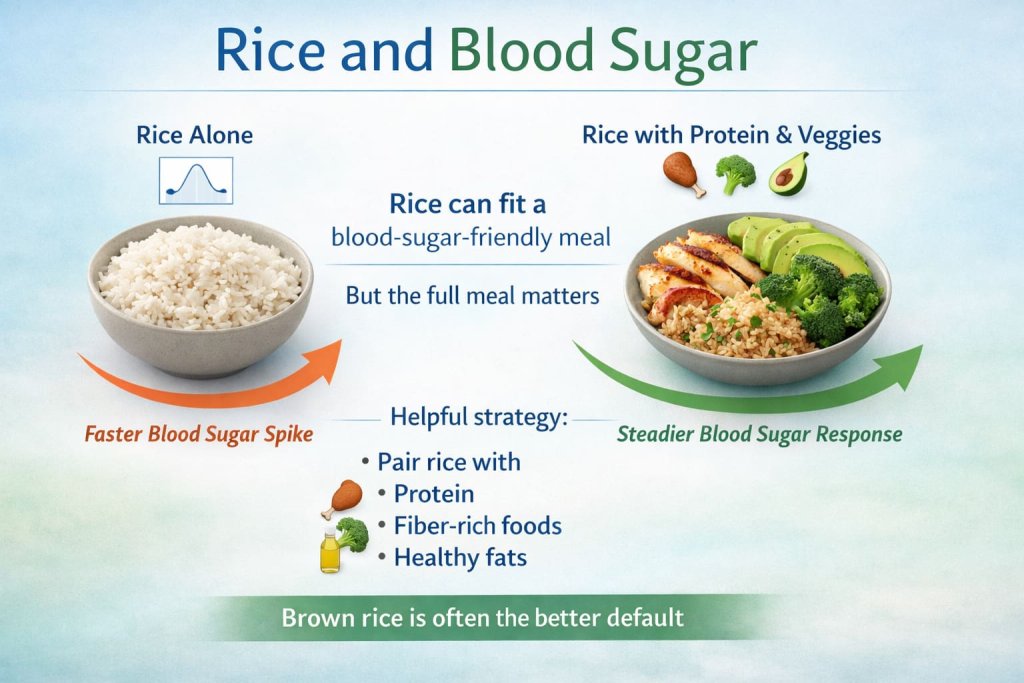
Still, white rice is not junk food. It is a simple staple food that can work in many diets. The problem is usually not “rice” by itself. It is eating large portions of white rice with very little protein, fiber, or vegetables, which can make the meal less filling and harder on blood sugar control.
There are also situations where white rice may be the more practical option. For example, MedlinePlus guidance on low-fiber diets includes refined white breads, cereals, pasta, and similar low-fiber foods while excluding brown rice and other whole grains. So if someone has been told to follow a temporary low-fiber diet, white rice may be a better fit than brown rice.
It is also worth adding one nuance here: not all white rice is nutritionally identical. Some white rice is enriched, which means certain nutrients are added back after processing.
FDA notes that enriched rice can provide folic acid, and polished white rice may also have added iron, niacin, and thiamine through enrichment. So while brown rice is usually the more fiber-rich whole-grain choice, enriched white rice can still contribute useful nutrients as part of a balanced meal.
Is rice good for blood sugar?
Rice can fit a blood-sugar-friendly diet, but the type of rice and the rest of the meal matter a lot. CDC says refined grains such as white rice are processed to remove the fiber, and it also explains that eating carbohydrates with foods that contain protein, fat, or fiber slows how quickly blood sugar rises.
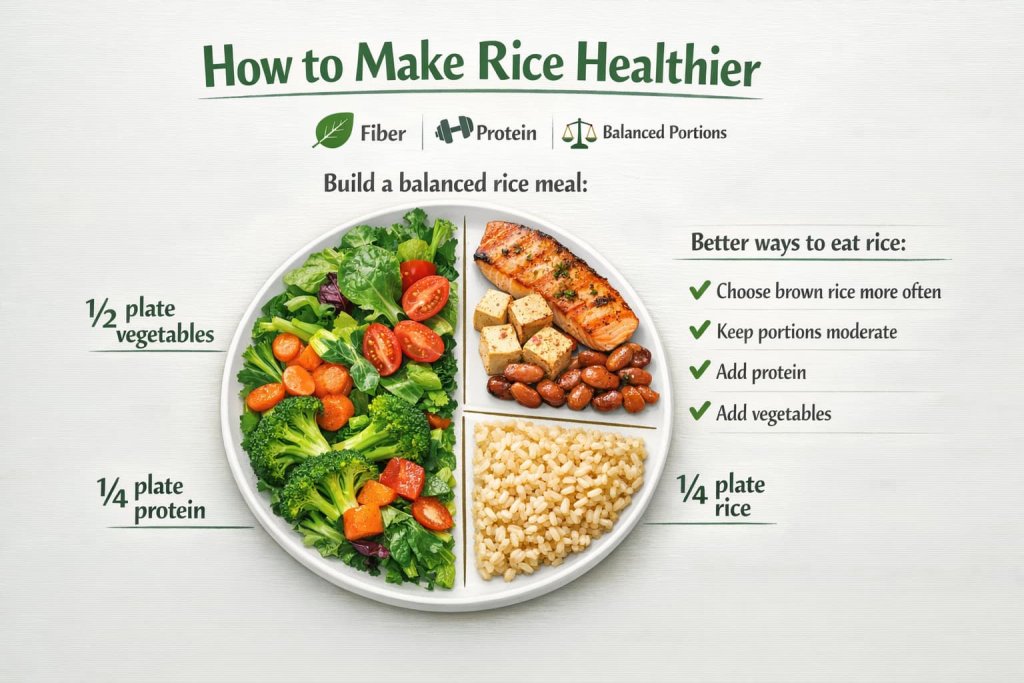
A smarter way to eat rice is to stop thinking of it as the whole meal. CDC’s plate method suggests filling half the plate with nonstarchy vegetables, one quarter with lean protein, and one quarter with carb foods such as rice. That structure makes rice easier to fit into a balanced meal than a big bowl of rice with very little else.
Here are a few practical ways to make a rice meal healthier:
- Choose brown rice more often if you want more fiber.
- Keep the rice portion moderate instead of making it most of the meal.
- Pair rice with beans, fish, eggs, tofu, chicken, or another protein.
- Add vegetables so the meal has more volume, fiber, and nutrients.
Can rice fit a weight-loss diet?
Yes. Rice can absolutely fit a weight-loss or weight-management diet. The bigger issues are portion size, total calories, and whether the meal is balanced enough to keep you full. Whole grains tend to help more with fullness because they contain more fiber and protein than refined grains.
Portion size matters more than many people realize. USDA MyPlate counts 1/2 cup cooked rice as 1 ounce-equivalent of grains, which is smaller than many restaurant or takeout servings. If your usual rice serving is two or three cups, that is very different nutritionally from a moderate serving alongside vegetables and protein.
So the better question is often not “Is rice good for weight loss?” but “How much rice am I eating, and what am I eating with it?” Rice can work well in a calorie-conscious diet when the portion is sensible and the meal is built around balance rather than just starch.
What about arsenic in rice?
In its consumer guidance, FDA explains how to limit arsenic exposure and notes that rice tends to absorb arsenic more readily than other crops. But FDA also says consumers can certainly eat rice as part of a well-balanced diet. The practical message is not to panic. It is to avoid relying too heavily on any one grain and to keep some variety in your diet.
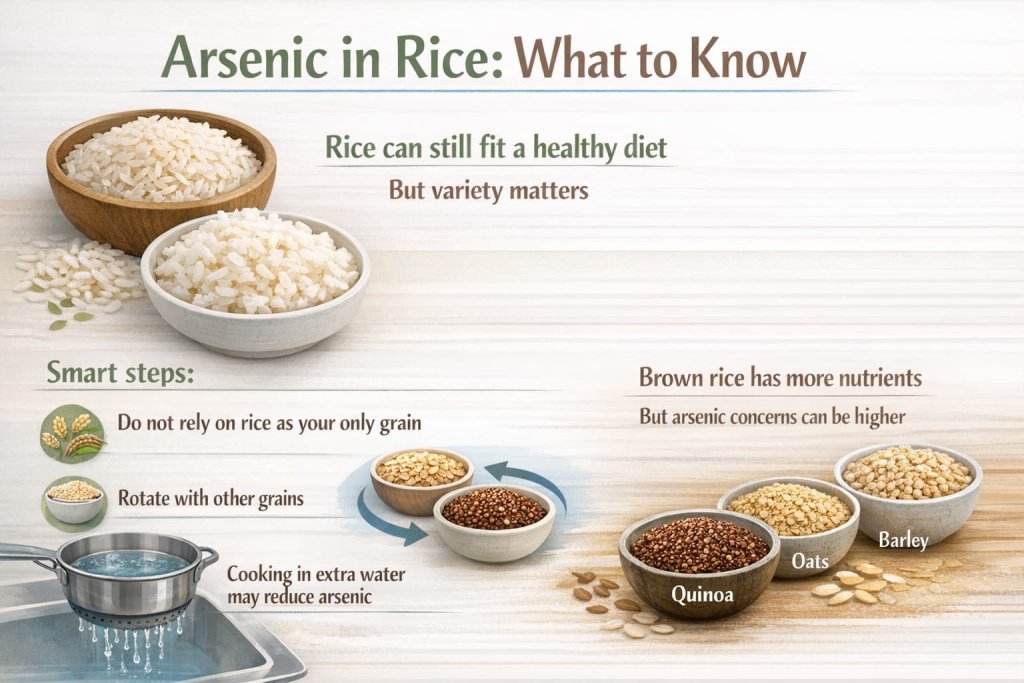
There is one important tradeoff to mention here. Brown rice has nutritional advantages because it keeps the bran and germ, but that outer layer is also part of why arsenic concerns can be more relevant with brown rice than with white rice.
FDA has noted that white rice cereals tend to have lower inorganic arsenic levels overall than brown rice cereals. That does not mean brown rice is “bad,” and it does not mean you need to avoid it. It simply means that if rice is a major staple in your diet, rotating with other grains can be smarter than relying on one type of rice alone.
FDA also says that cooking rice in excess water—about 6 to 10 parts water to 1 part rice, then draining the extra water—can reduce inorganic arsenic by about 40% to 60%, depending on the type of rice.
The tradeoff is that this method can also lower the nutritional value of enriched polished and parboiled rice, including some added folate, iron, niacin, and thiamine. FDA further notes that rinsing rice before cooking has only a minimal effect on arsenic in the cooked grain and can wash away some of those added nutrients.
For babies and toddlers, the FDA guidance is a little more specific. Rice cereal can still be part of the diet, but it should not be the only grain and does not need to be the first grain. A varied diet matters even more for very young children.
Is rice gluten-free?
Plain rice is a naturally gluten-free grain choice. In the MedlinePlus video on gluten and celiac disease, gluten is described as a protein found naturally in wheat, barley, and rye—not rice. That makes plain rice a common option for people who need to avoid gluten.
The healthiest way to eat rice
One practical point that also matters is food safety. Cooked rice should not sit out at room temperature for hours. FoodSafety.gov advises refrigerating cooked rice within 2 hours of cooking, or within 1 hour if the temperature is above 90°F.
USDA says leftovers are generally best used within 3 to 4 days, and reheated leftovers should reach 165°F. This does not change whether rice is nutritious, but it does matter for whether leftover rice stays safe to eat.
If you want the short practical version, rice is healthiest when you use it like this:
- Make brown rice your routine choice when possible.
- Keep your serving moderate.
- Do not let rice crowd out vegetables and protein.
- Rotate in other grains sometimes so rice is not your only staple.
- If rice is a major daily food in your diet, consider FDA’s excess-water cooking method from time to time.
That approach lines up best with current U.S. guidance: more whole grains, fewer refined grains, balanced meals, and enough variety to lower the downsides of leaning too heavily on one food.
FAQ: Is rice good for you?
Is brown rice healthier than white rice?
Usually, yes. Brown rice is a whole grain, while white rice is a refined grain. Whole grains generally provide more fiber and protein and are recommended more often in current healthy eating guidance.
Is white rice bad for you?
No. White rice is not inherently bad for you. But it is a refined grain, so it usually has less fiber than brown rice and is best eaten in balanced portions with protein and vegetables rather than as the bulk of the meal.
Is rice okay if you have diabetes or prediabetes?
It can be, but meal structure matters. CDC recommends fewer refined grains overall and explains that pairing carbohydrates with protein, fat, or fiber helps slow how quickly blood sugar rises. Brown rice is often the better default if it works for you.
Should you stop eating rice because of arsenic?
Not necessarily. FDA says rice can certainly be eaten as part of a well-balanced diet. The smarter move is to vary your grains and use cooking strategies thoughtfully if rice is a major staple in your diet.
Conclusion
So, is rice good for you? Yes—rice can be a healthy part of your diet, but the best answer depends on the type of rice, the portion, and the overall meal. Brown rice is usually the better everyday choice because it is a whole grain. White rice can still fit, especially in moderate portions and balanced meals. And if you eat rice often, it is worth knowing the FDA arsenic guidance so you can make smart, calm, practical choices.
A simple place to start is this: keep rice on the menu if you enjoy it, but upgrade some servings to brown rice, pair it with protein and vegetables, and do not make it your only grain.
References
- Centers for Disease Control and Prevention — Diabetes Meal Planning
- Centers for Disease Control and Prevention — Choosing Healthy Carbs
- U.S. Food and Drug Administration — What You Can Do to Limit Exposure to Arsenic
- U.S. Food and Drug Administration — Folate and Folic Acid on the Nutrition and Supplement Facts Labels
- MedlinePlus — Carbohydrates
- MedlinePlus — Gluten and Celiac Disease
- FoodSafety.gov — Food Safety Tips for Holidays and Parties