
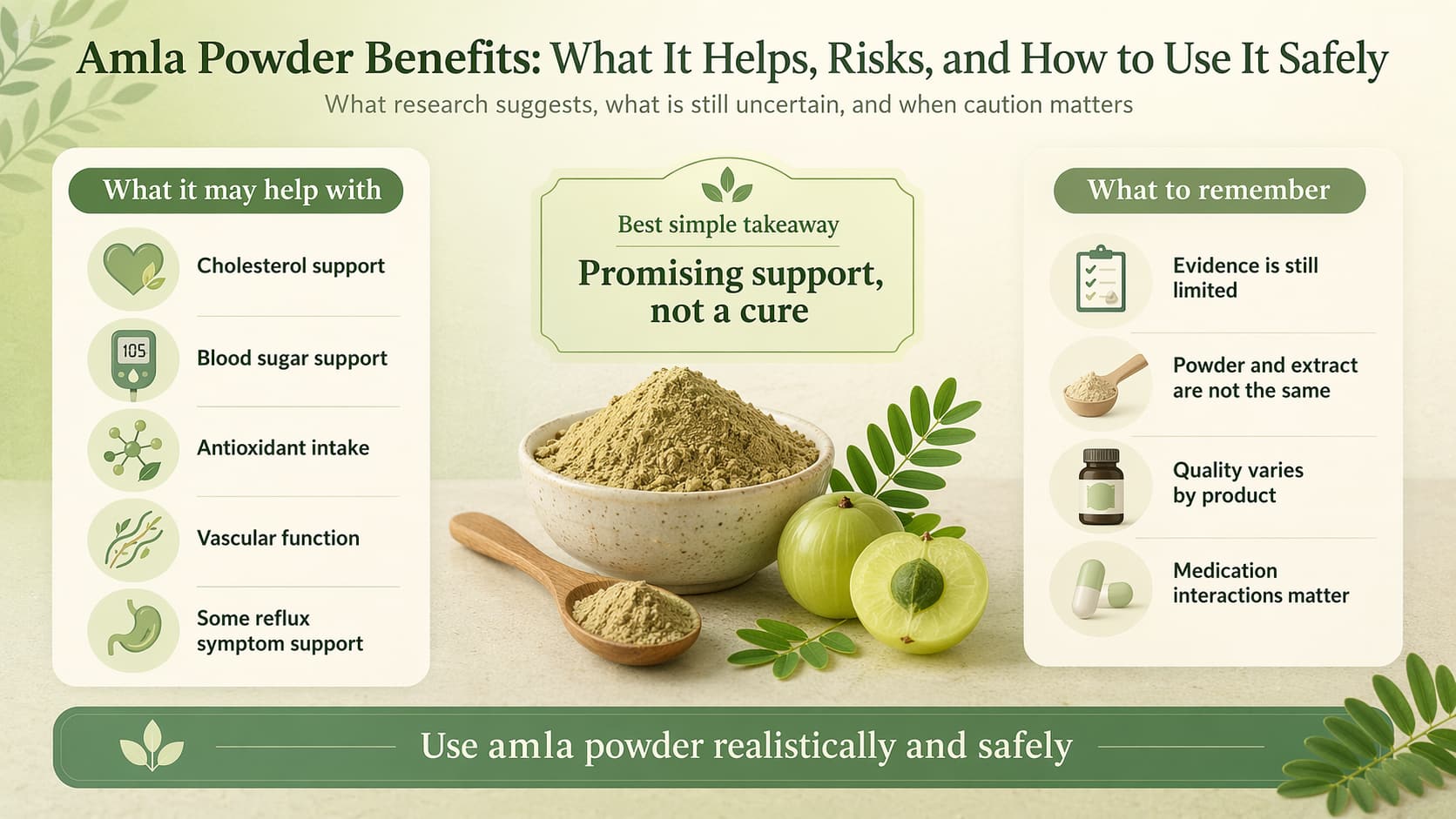
Amla powder may support cholesterol, blood sugar, and antioxidant intake, but the strongest human evidence points to cardiometabolic benefits, not miracle results. If you are looking into amla powder benefits, it helps to know what is actually supported by clinical research, what is still uncertain, and when extra caution matters.
Amla powder is widely used in traditional wellness routines, but modern evidence is mixed. Some studies are promising, especially for blood lipids and vascular health, while many popular claims online go beyond what human trials clearly show. That is why it is smart to look at the research, product quality, and safety before using it regularly.
What Is Amla Powder?
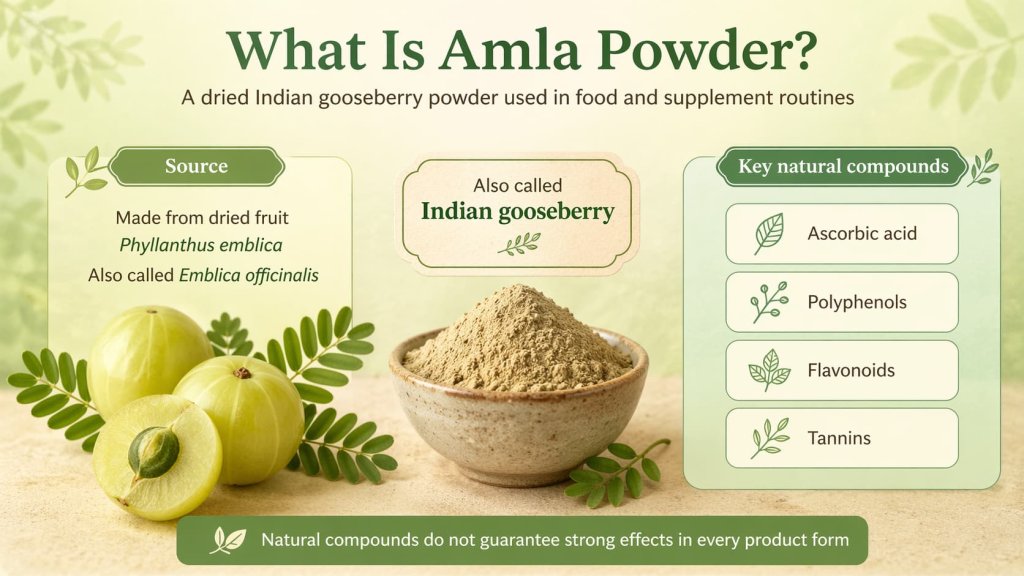
Amla powder is made from dried Indian gooseberry fruit, also called Phyllanthus emblica or Emblica officinalis. According to Memorial Sloan Kettering Cancer Center, the fruit contains compounds such as ascorbic acid, polyphenols, flavonoids, and tannins.
That nutrient profile helps explain why amla gets so much attention. Still, being rich in antioxidants does not automatically mean it will produce strong real-world health effects in every form or every dose. For supplements, the likely benefit depends on the preparation, the amount used, and the quality of the product.
Evidence-Backed Amla Powder Benefits
Amla Powder Benefits for Cholesterol and Triglycerides
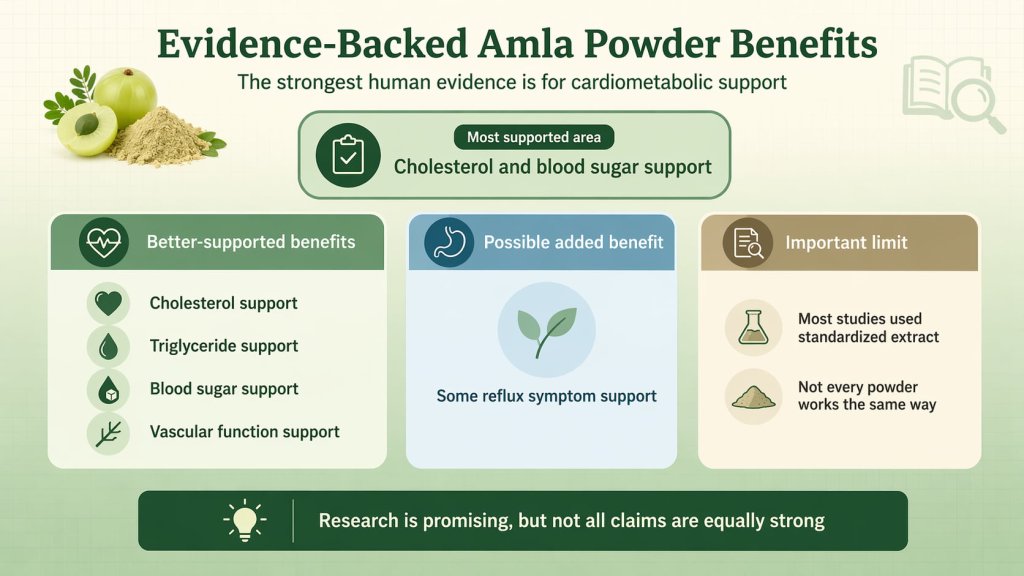
This is the most convincing area of research. A 2023 systematic review and meta-analysis of randomized controlled trials found that amla supplementation improved lipid-related markers, along with glucose and C-reactive protein. In plain terms, the best current evidence suggests amla may help support a healthier cholesterol profile in some adults.
This does not mean amla powder works like a prescription statin, and it should not replace medical treatment. But if your goal is general heart-health support, this is the benefit with the clearest human evidence so far.
Amla Powder Benefits for Blood Sugar Support
The same meta-analysis found beneficial effects on glucose markers, which suggests amla may offer modest blood sugar support in some people. Small human studies in people with metabolic or diabetes-related risk factors have pointed in a similar direction, but the research base is still much smaller than it is for established medical therapies.
That means it is more accurate to say amla powder may help support healthy blood sugar management than to say it controls diabetes. This difference matters, because dietary supplements are not approved like drugs and are not intended to diagnose, treat, cure, or prevent disease.
Amla Powder Benefits for Oxidative Stress and Vascular Function
A randomized, double-blind, controlled study in adults with type 2 diabetes found that standardized Phyllanthus emblica extract improved endothelial function and reduced biomarkers of oxidative stress and systemic inflammation over 12 weeks. Another placebo-controlled clinical study reported similar improvements in endothelial function, inflammation, and lipid profile in adults with metabolic syndrome. (PubMed)
This matters because endothelial function is tied to blood vessel health. It does not prove amla powder prevents cardiovascular disease, but it does support the idea that amla may have meaningful cardiometabolic effects beyond basic antioxidant marketing language. (PubMed)
Amla Powder Benefits for Reflux Symptoms
There is also some human evidence for digestive symptom relief. A double-blind, randomized, placebo-controlled clinical trial found that amla reduced the frequency and severity of heartburn and regurgitation in patients with non-erosive reflux disease.
This is promising, but it is still a narrower finding than many broad “amla helps digestion” claims online. Amla may help some reflux symptoms in some people, but that is not the same as proving it is a general digestive fix.
Claims About Amla Powder That Need More Caution
Some of the most popular claims are also the least proven. Memorial Sloan Kettering notes that for several traditional uses, the evidence is limited, preclinical, or lacking. Its summary says there is no scientific evidence supporting amla for diarrhea, and that human data are lacking for some other uses, while anti-inflammatory evidence is mainly preclinical.
So when people talk about amla powder as a detox product, a cure-all, or a disease-fighting supplement, that goes too far. A safer and more accurate takeaway is this:
- It may support cholesterol, blood sugar, and oxidative stress markers.
- It may help some reflux symptoms.
- It is not proven to treat or cure disease.
- Many traditional or online claims still need better human evidence.
It also helps to set realistic expectations. In human studies, amla’s benefits were usually measured as changes in lab markers such as cholesterol, triglycerides, oxidative stress, inflammation, or vascular function after weeks of consistent use. That is very different from the way many supplements are marketed online. Current evidence does not show that amla powder gives fast, dramatic results in a few days or reliably delivers broad claims like detox, cancer prevention, or all-purpose immune support. (PubMed)
Amla Powder vs. Amla Extract: Why the Difference Matters
This is one of the most important details people miss. Many clinical studies used standardized extracts, not generic loose powder. In the vascular and metabolic studies, researchers used measured extract preparations with defined dosing, which is very different from a spoonful of powder from a random bag.
Because of that, you should be careful about assuming every amla powder product will give the same result as a clinical trial. The research supports amla as a promising botanical, but it does not prove that all powders are equivalent in potency or effect.
Processing and storage can also change what the final product contains. That is one more reason to avoid assuming that fresh amla, standardized extract, and generic powder all work the same way.
How to Choose a Better Amla Powder
If you want the most practical value from amla powder, focus on quality and labeling rather than hype.
Look for these basics:
- A clear Supplement Facts panel
- The exact ingredient form, such as plain amla fruit powder versus standardized extract
- Serving size and amount per serving
- Minimal unnecessary additives
- A third-party quality seal when available
The NIH Office of Dietary Supplements says supplement labels should list ingredients, dose per serving, and other ingredients. It also explains that third-party groups may test supplement quality.
It also helps to avoid products making disease-treatment promises. Products that sound too medical or too miraculous deserve extra skepticism.
Who Should Be Careful With Amla Powder?
Amla is not automatically risky for everyone, but some people should be especially careful.
Be more cautious if you:
- take clopidogrel
- take aspirin or other antiplatelet medicines
- use several supplements at once
- take prescription medicines regularly
- are preparing for surgery
Memorial Sloan Kettering reports that amla extract increased antiplatelet activity when used with clopidogrel and Ecosprin in a study of patients with type 2 diabetes. That makes interaction risk an important point, especially for people already taking medicines that affect bleeding or clotting.
Also use extra caution if you are pregnant, breastfeeding, giving supplements to a child, or actively receiving chemotherapy or radiation therapy. The National Center for Complementary and Integrative Health notes that many dietary supplements have not been well tested in pregnant women, nursing mothers, or children. Memorial Sloan Kettering also notes that amla has strong antioxidant effects and may therefore interfere with chemotherapy and radiation therapy.
How to Use Amla Powder Realistically
The best way to think about amla powder benefits is as possible support, not a shortcut. It may fit into a broader health routine that includes a balanced diet, sleep, exercise, and appropriate medical care. It should not replace fruit and vegetables, and it should not replace prescribed treatment for high cholesterol, diabetes, reflux, or any other condition.
There is also no single, universally standardized dose for plain amla powder in the U.S. market. Products vary widely, and many human trials used extract forms rather than plain powder. In practical terms, that means following the product label and checking with a qualified healthcare professional is a better approach than copying a random serving suggestion from social media.
What Dose Has Actually Been Studied?
One important detail is missing from many amla articles: the best-known human studies usually did not use a loose kitchen-style powder. They used standardized amla extract in measured doses. In clinical trials, researchers commonly studied 250 mg or 500 mg twice daily, and many of the better-known cardiometabolic studies ran for about 12 weeks.
That does not create a universal dose for plain amla powder, because powders and extracts are not interchangeable. But it does give you a more realistic benchmark. Research-backed amla products were standardized, measured, and used consistently for weeks, not taken casually in unknown amounts.
Frequently Asked Questions About Amla Powder Benefits
Is amla powder good for cholesterol?
It may be. This is the best-supported benefit so far, with a systematic review and meta-analysis finding improvements in lipid-related markers.
Can amla powder help blood sugar?
Possibly, but the effect appears modest and the evidence is still developing. It should not be used as a replacement for diabetes care.
Is amla powder the same as amla extract?
No. Many clinical studies used standardized extracts, which may not match the strength or composition of ordinary powder products.
Can amla powder replace medicine?
No. Supplements should not be treated as substitutes for prescribed care for conditions such as high cholesterol, diabetes, or reflux.
Safety Box
Who it may be for: adults who want a food-based botanical supplement and understand that the main evidence is for possible cardiometabolic support, not disease treatment.
Who should be careful: anyone taking blood thinners or antiplatelet medicines, anyone using multiple supplements or prescription drugs, anyone who is pregnant or breastfeeding, parents considering supplement use for children, and anyone scheduled for surgery or receiving chemotherapy or radiation.
Conclusion
Amla powder benefits look most credible in one area: support for cholesterol, glucose-related markers, and vascular health, with some early evidence for reflux symptom relief. That is promising, but it is still very different from the exaggerated claims often used to market herbal powders online.
If you want to try amla powder, choose a well-labeled product, keep expectations realistic, and talk with a healthcare professional if you take medicines or have an ongoing condition. That gives you the best chance of using it in a way that is both practical and safe.
This content is for informational purposes only and not medical advice.
References
- NIH Office of Dietary Supplements — Dietary Supplements: What You Need to Know
- National Center for Complementary and Integrative Health — Dietary and Herbal Supplements
- PubMed — Effects of Phyllanthus emblica extract on endothelial dysfunction and biomarkers of oxidative stress in patients with type 2 diabetes mellitus: a randomized, double-blind, controlled study
- PubMed — Evaluation of the effects of a standardized aqueous extract of Phyllanthus emblica fruits on endothelial dysfunction, oxidative stress, systemic inflammation and lipid profile in subjects with metabolic syndrome: a randomised, double blind, placebo controlled clinical study