
Aloe vera juice side effects can include stomach cramps and diarrhea, especially when the product contains aloe latex. Other concerns include medication interactions, potassium loss, and rare liver injury. Your risk depends on the preparation, how much you drink, and your health conditions.

Understanding the label matters because inner-leaf gel, aloe latex, and whole-leaf extracts are different. Before making aloe juice a daily habit, check what the product contains and whether it could interact with your medications.
Why the Type of Aloe Vera Juice Matters
The word “juice” does not tell you which parts of the aloe leaf were used or how the product was processed.
| Aloe preparation | What it contains | What to know |
|---|---|---|
| Inner-leaf gel | Clear gel from inside the leaf | Different from latex; some short-term oral safety evidence exists. |
| Aloe latex | Yellowish material beneath the outer leaf surface | Contains aloin and related compounds with stimulant laxative effects. |
| Nondecolorized whole-leaf extract | Whole-leaf material without processing to remove certain compounds | Retains latex-associated substances and raises greater safety concerns. |
| Decolorized whole-leaf extract | Whole-leaf material filtered to reduce compounds such as aloin | Requires separate assessment from unfiltered extracts; processing does not guarantee safety. |
In its February 2025 guidance, NCCIH reports that short-term studies suggest oral aloe gel may be safe for up to 42 days. That finding does not establish a safe drinking schedule for every product or prove that long-term daily use is safe.
Aloe Vera Juice Side Effects to Know
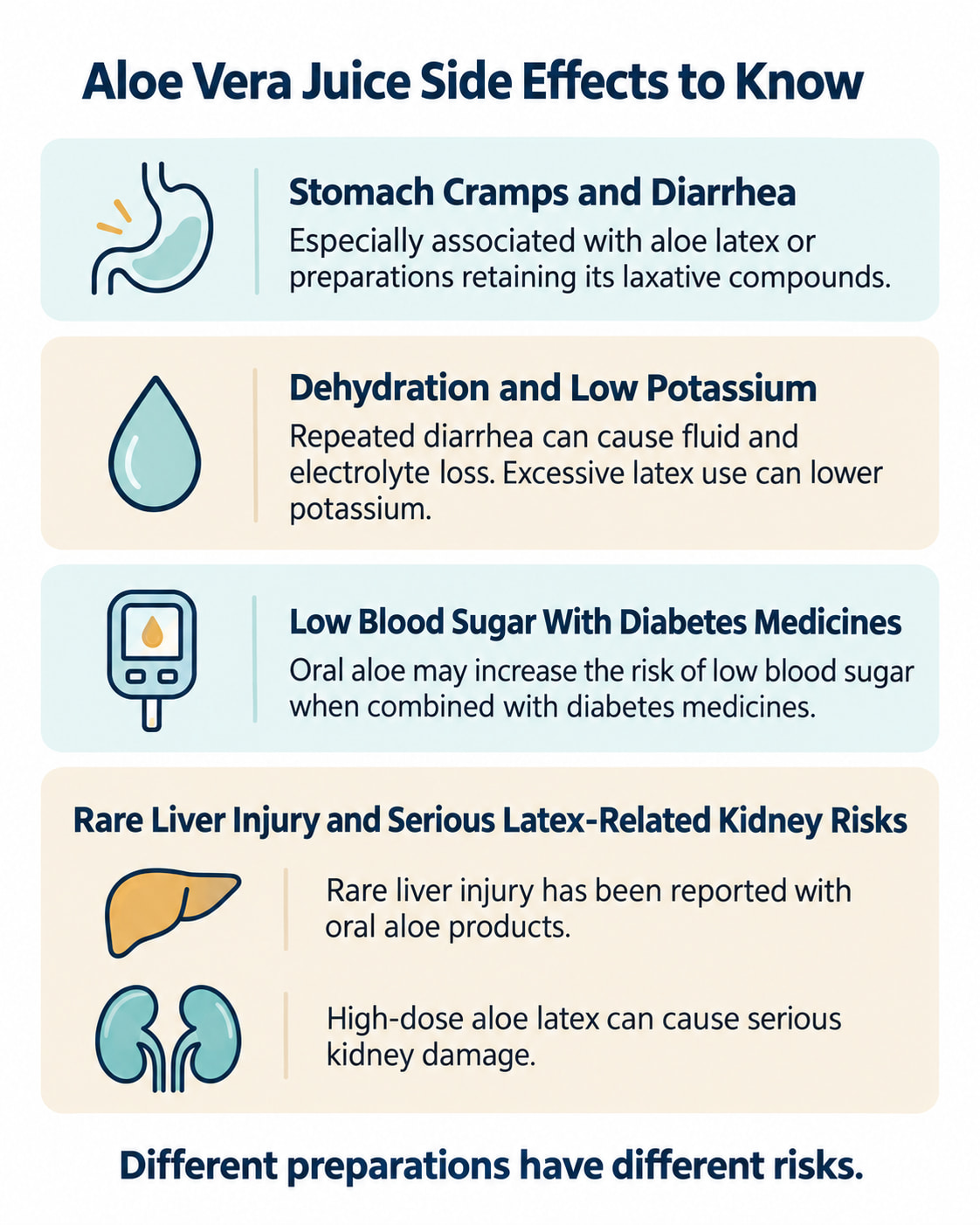
Stomach Cramps and Diarrhea
Aloe latex stimulates bowel activity and can cause abdominal pain, cramping, and loose stools. These effects are particularly relevant to products that retain latex or its laxative compounds.
Diarrhea after drinking aloe is an unwanted effect. It is not evidence that your body is “detoxing,” and it is a reason to stop using the product.
Dehydration and Low Potassium
Repeated diarrhea can cause fluid and electrolyte loss. With excessive aloe latex use, potassium levels may fall, which can increase the risks associated with certain heart medicines.
The concern is greater when aloe latex is combined with other laxatives or medicines that lower potassium.
Low Blood Sugar With Diabetes Medicines
Some research suggests oral aloe may lower blood glucose. Combining it with diabetes medicines could increase the risk of hypoglycemia, or low blood sugar.
Ask your diabetes care team before using oral aloe. Do not change your prescribed medication to accommodate a supplement.
Rare Liver Injury and Serious Latex-Related Kidney Risks
The NIH’s LiverTox review identifies oral aloe as a rare cause of clinically apparent liver injury. Its May 2022 update describes cases that often began 3–24 weeks after starting oral preparations.
These reports involve different extracts and supplements. They cannot establish how likely liver injury is from a particular bottled juice. LiverTox also notes that injury has recurred after someone restarted aloe following an earlier reaction.
Separately, Mayo Clinic warns that high doses of aloe latex can cause serious kidney damage. This warning concerns latex exposure and should not be interpreted as an expected effect of every purified aloe beverage.
Who Should Avoid Aloe Vera Juice?
Some people should avoid oral aloe, while others need a clinician or pharmacist to review the specific product first.
| Group | Precaution |
|---|---|
| Pregnant or breastfeeding people | Avoid self-directed oral aloe use. NCCIH cautions that gel, latex, and whole-leaf forms taken by mouth may be unsafe. |
| Children | Do not give aloe latex or medicinal aloe laxatives to children under 12. Ask a pediatric clinician before offering other oral aloe products. |
| People with bowel obstruction, inflammatory bowel disease, unexplained abdominal pain, or severe dehydration | Avoid laxative aloe preparations. |
| People with kidney or liver disease | Obtain medical advice before using oral aloe because the potential adverse effects may be especially relevant. |
| People taking prescription medicines or preparing for surgery | Have the product checked for possible interactions and tell the surgical team about its use. |
The European Medicines Agency’s bowel-condition restrictions apply specifically to medicinal laxative aloe preparations. They do not establish that every purified beverage has the same risks—or that those beverages are suitable for everyone with digestive disease.
Aloe Vera Juice and Medication Interactions
Bring the bottle or a clear photograph of its ingredients to your pharmacist. The formulation matters when assessing a possible interaction.
| Medicine or product | Potential concern |
|---|---|
| Diabetes medicines | Oral aloe may increase the risk of low blood sugar. |
| Digoxin | Potassium loss from aloe latex may increase adverse effects. |
| Potassium-lowering diuretics | Combining them with aloe latex may worsen potassium loss. |
| Other stimulant laxatives | Combining them with aloe latex may increase diarrhea and dehydration. |
| Warfarin and other blood-thinning medicines | Oral aloe may increase bleeding risk. |
| Other medicines taken by mouth | Aloe latex may reduce absorption and affect how well they work. |
Mayo Clinic lists these potential interactions in its March 2025 guidance. The likelihood varies by preparation and medicine; the same risk should not be assumed for every aloe drink.
Does Aloe Vera Juice Cause Cancer?
The strongest concern comes from research on nondecolorized whole-leaf extract. A two-year National Toxicology Program study found large-intestine tumors in rats given this preparation.
In guidance reviewed March 2026, NIEHS explains that more information is needed to determine the potential risks to humans, including which products people consume and their exposure levels.
These findings do not directly prove that purified commercial aloe juice causes cancer in humans. They also do not establish that every purified product is safe for indefinite use.
How to Reduce Avoidable Aloe Vera Juice Risks
If you are considering aloe juice, use these checks before buying or drinking it:
- Identify the preparation. Look for clear information about inner-leaf gel or decolorized whole-leaf processing. Ask the manufacturer if the label is unclear.
- Avoid oral aloe latex and unfiltered whole-leaf preparations. Do not assume that “natural” or “organic” means latex compounds were removed.
- Ask about aloin testing. NIEHS describes 10 parts per million as an industry standard for oral products. It is not a universal safe daily dose or an FDA safety guarantee.
- Use only products intended for consumption. Skin-care aloe gels are not interchangeable with beverages.
- Review the entire ingredient list. This helps you identify other herbs, sweeteners, or ingredients you may need to avoid.
- Do not push through side effects. Stop the product if it causes diarrhea, cramping, or another suspected reaction.
For example, a bottle labeled only “whole-leaf aloe juice” leaves an important question unanswered: was it processed to reduce latex-associated compounds?
When to Seek Medical Help
Stop taking oral aloe and seek prompt medical advice if symptoms are severe or concerning.
For diarrhea, NIDDK recommends contacting a doctor right away for warning signs such as:
- Severe abdominal pain or frequent vomiting.
- Black, tarry stools or blood in the stool.
- Dehydration symptoms, including reduced urination, marked thirst, or dizziness.
- In adults, diarrhea lasting more than two days or six or more loose stools in a day.
Yellowing of the skin or eyes also needs prompt assessment because it can indicate liver problems. Trouble breathing or swelling of the lips, tongue, or throat requires emergency care.
Bring the product label and explain when you started using it, how much you consumed, and which other medicines or supplements you take.
Frequently Asked Questions
Is It Safe to Drink Aloe Vera Juice Every Day?
Long-term daily safety has not been established across aloe beverages. Short-term findings for particular gel preparations cannot be applied to every product. Review the ingredients and your health situation before making it a routine.
How Much Aloe Vera Juice Is Safe to Drink?
There is no universal evidence-based daily amount for all aloe juices. Concentrations and processing differ. A serving size on a bottle does not establish that the product is suitable for you.
Can Latex-Free Aloe Vera Juice Still Cause Side Effects?
Yes. Removing latex-associated compounds does not rule out medication interactions, individual reactions, or problems with other ingredients. “Latex-free” should not be interpreted as “risk-free.”
Is Homemade Aloe Vera Juice Safer Than Bottled Juice?
Homemade preparation does not let you reliably verify the final aloin content. Do not assume that peeling or rinsing a leaf makes the resulting drink safe. Commercial products also require scrutiny of their processing and ingredients.
Does Drinking Aloe Vera Juice on an Empty Stomach Prevent Side Effects?
Reliable evidence does not establish an empty-stomach advantage for safety. Changing when you drink it does not remove latex-associated risks or medication interactions.
Has the FDA Banned Aloe Vera Juice?
No. The FDA’s 2002 rule concerned aloe ingredients in OTC stimulant laxative drugs because sufficient safety and effectiveness evidence had not been provided. It was not a blanket ban on aloe beverages.
Conclusion
Aloe vera juice safety depends on the preparation and your circumstances. Check the label, avoid latex-containing and unfiltered whole-leaf products, and ask a pharmacist about interactions before making it a habit. If symptoms develop, stop using it and seek help when needed.
This content is for informational purposes only and not medical advice.
References
- National Center for Complementary and Integrative Health. Aloe Vera: Usefulness and Safety.
- Mayo Clinic. Aloe: Safety, Side Effects, and Interactions.
- National Institute of Diabetes and Digestive and Kidney Diseases. Aloe Vera — LiverTox.
- European Medicines Agency. Aloes Folii Succus Siccatus: Herbal Medicinal Product.
- National Institute of Environmental Health Sciences. Aloe Vera: Exposure and Safety Questions.
- U.S. Food and Drug Administration. Final Rule on Aloe and Cascara Sagrada Ingredients in OTC Laxative Drugs.
- National Institute of Diabetes and Digestive and Kidney Diseases. Symptoms and Causes of Diarrhea.