
How to use oregano oil depends on the product you have. Start by identifying whether it is an oral supplement or an external-use product, follow its specific directions, and never apply concentrated oregano essential oil undiluted to skin.
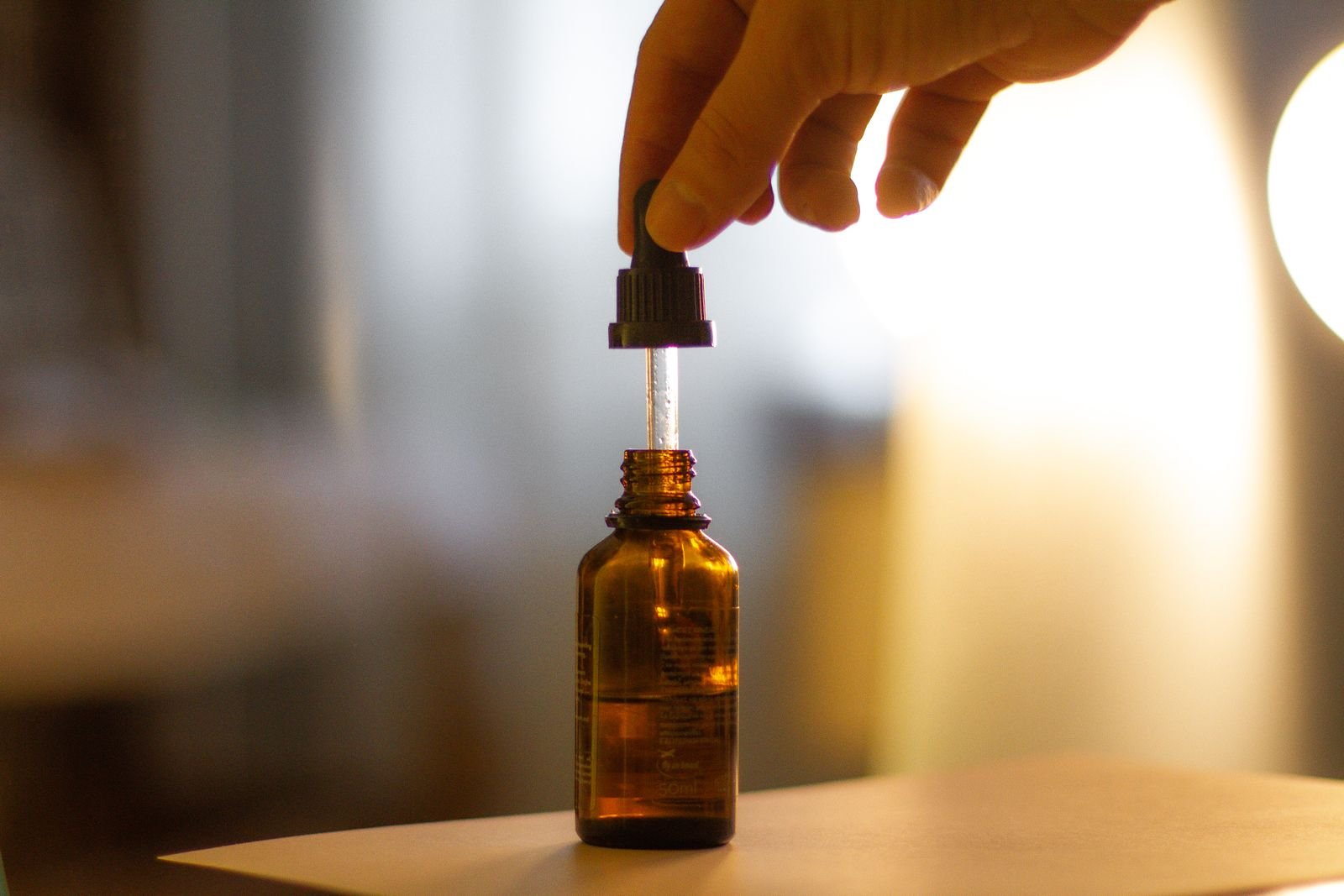
Human research is limited, and there is no established oral dose for preventing or managing illness. Understanding the form and concentration helps you avoid confusing a supplement with an oil intended for fragrance or skin use.
Oregano Oil Forms: What Is in the Bottle?
Oregano oil contains aromatic compounds, including carvacrol and thymol. Products vary in their ingredients, strength, and intended use.
The names “oregano oil” and “oil of oregano” do not reliably tell you how to use a bottle. Read the full label rather than relying on the product name.
| Product form | What to check | Main precaution |
|---|---|---|
| Concentrated essential oil | Intended use, ingredients, and dilution instructions | Do not swallow an external-use or fragrance product or apply it undiluted |
| Oral liquid supplement | Supplement Facts, serving size, and directions | Do not copy another brand’s drop count |
| Capsules or softgels | Amount per serving and number of capsules per serving | Do not assume one capsule equals a particular number of liquid drops |
| Prepared topical product | Application areas, frequency, and whether further dilution is required | Use only as directed for skin application |
Fresh or dried oregano used in cooking is a different form of exposure. Its ordinary culinary use does not establish the safety of concentrated oil.
Carvacrol Percentage Is Not the Same as Dilution
A label may highlight the percentage of carvacrol in its oregano ingredient. That number does not necessarily describe how much essential oil is in the finished product.
For example, a carvacrol percentage and a percentage of essential oil mixed into a carrier describe different things. If the label does not explain what its percentage refers to, ask the manufacturer. A higher number does not establish a better health outcome.
How to Use Oregano Oil Supplements
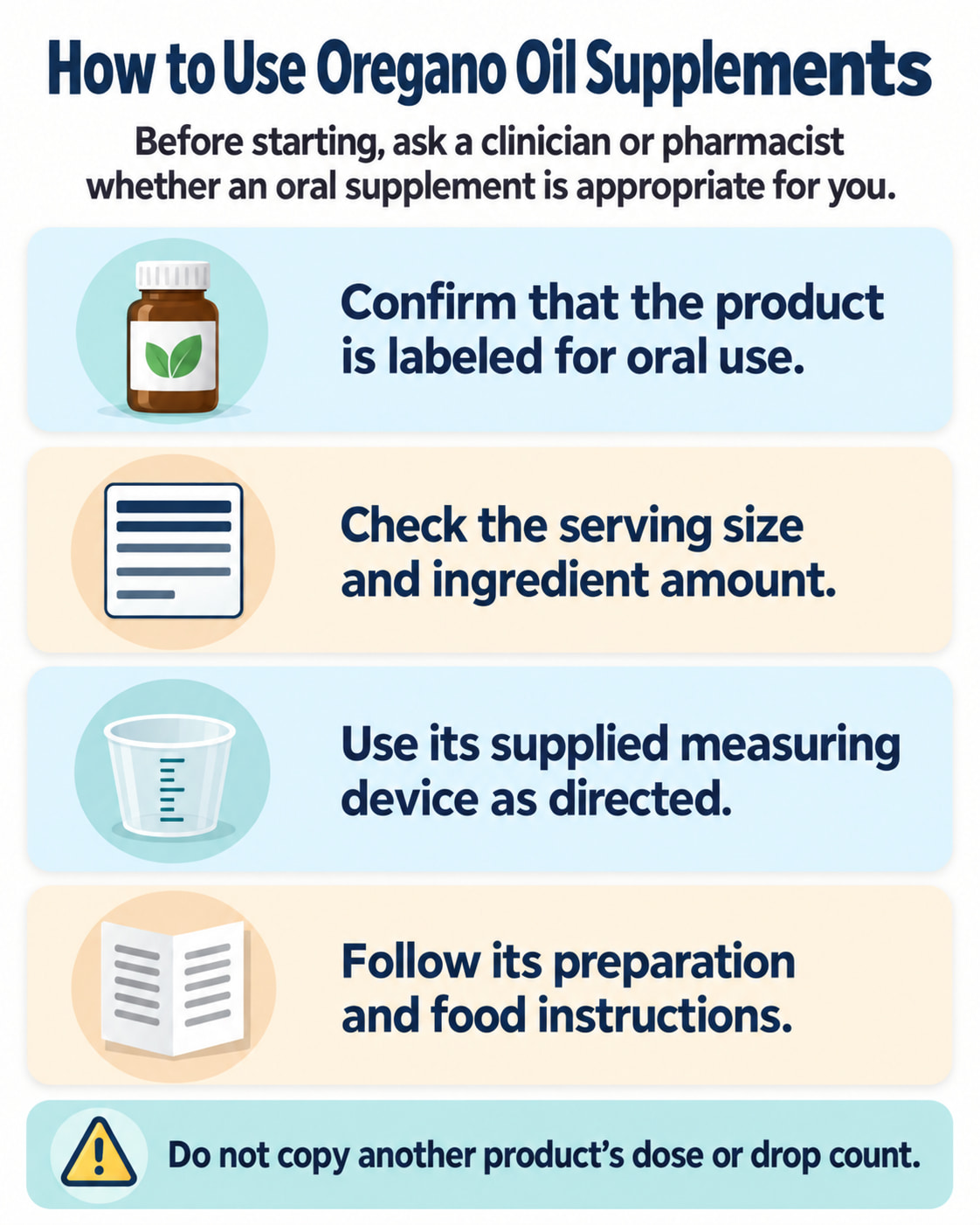
Before starting an oral supplement, ask a clinician or pharmacist whether it is appropriate for your reason for taking it, medical history, and medications.
If its use is appropriate:
- Confirm that it is an oral supplement. Do not ingest products labeled for external use, fragrance, or diffusers.
- Read the entire serving information. Check whether the stated ingredient amount applies to one capsule, multiple capsules, drops, or a measured liquid volume.
- Use the product’s supplied measuring device as directed. Do not estimate a serving or borrow instructions from another bottle.
- Follow its preparation and food instructions. Do not open capsules or improvise dilution unless the directions specifically allow it.
- Review continued use. Do not increase the amount or keep taking it for persistent symptoms without professional advice.
The FDA’s dietary supplement guidance explains that supplements are not approved for safety and effectiveness before sale. A Supplement Facts panel identifies a supplement; it does not prove that the product provides a health benefit.
How Much Oregano Oil Should You Take?
There is no universal, clinically established dose. The Drugs.com professional oregano monograph, updated July, 2026, reports insufficient clinical evidence to support a specific therapeutic dose.
A manufacturer’s suggested serving is not a proven effective dose for colds, digestive symptoms, or infections. Research involving a particular emulsified oil or extract also cannot be converted directly into drops from a retail bottle.
There is no established general schedule for daily use, “cycling,” or a fixed course that applies to everyone.
How to Dilute Oregano Oil for Skin Use
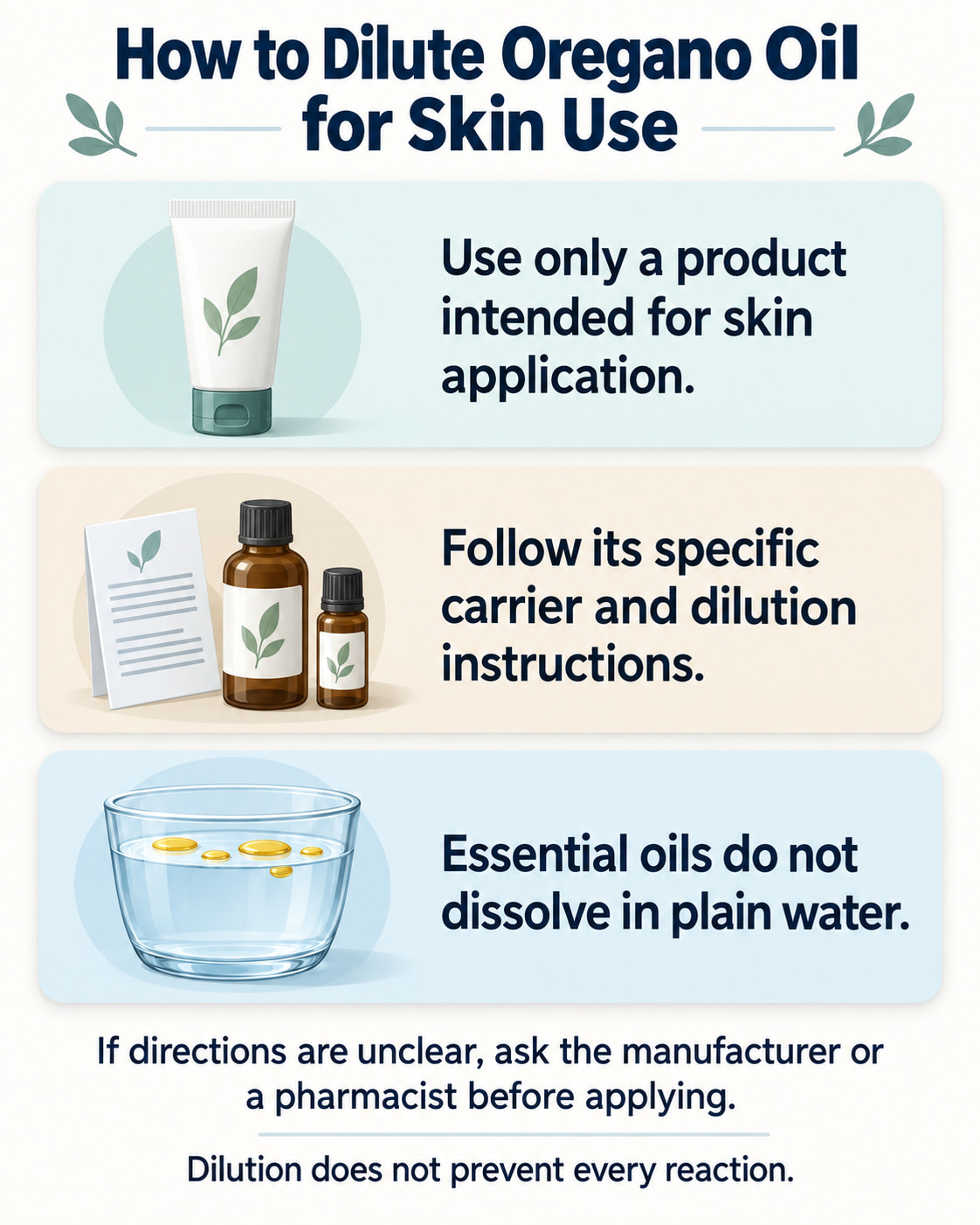
Use only a product intended for skin application, and follow its specific dilution instructions. A prepared topical product with clear directions can avoid the uncertainty of mixing concentrated oil yourself.
For products that require dilution, a carrier oil is the base used to reduce the essential-oil concentration. Follow the specified carrier and proportions; a general essential-oil chart is not automatically appropriate for oregano.
The Tisserand Institute’s essential oil safety guidelines advise against applying undiluted essential oils to skin. Dilution can reduce irritation risk, but it does not prevent every reaction.
If the label only says “dilute before use” without giving a ratio or concentration, ask the manufacturer or a pharmacist for clarification before applying it.
What Dilution Percentages Mean
A dilution percentage describes how much essential oil is present in the finished mixture. For example, 1% by volume means one part essential oil in 100 total parts of mixture.
This explains the calculation; it is not a recommended oregano-oil concentration. The appropriate concentration depends on the product, application site, and person using it.
Drop-based charts are approximate. The Tisserand Institute notes that drop size varies with the oil and dispenser, and that its general chart does not establish safety for every oil or situation.
Why Water Is Not a Carrier Oil
Essential oils do not dissolve in plain water. Adding concentrated oregano oil to a glass of water or a bath can leave undiluted droplets in contact with your mouth, digestive tract, or skin.
Do not improvise a drink, gargle, or bath mixture with concentrated essential oil. A professionally formulated oral liquid has its own ingredients and directions; it should not be recreated by adding essential-oil drops to water.
Where You Should Avoid Applying It
Do not apply oregano essential oil to broken, irritated, or inflamed skin. Keep it out of your eyes and do not put it inside your nose, ears, or other sensitive body areas.
Stop using a topical product if burning, itching, redness, or swelling develops. A small-area test cannot guarantee that repeated use will be free of irritation or allergy.
What Research Says About Oregano Oil
Laboratory studies have examined oregano oil and its compounds for effects on microorganisms. Those findings do not establish that swallowing or applying a retail product will provide the same effects in people.
Human studies are generally small or involve specific formulations. For example, a 2025 study reported changes in salivary pH after participants consumed an oregano-oil jelly. The study involved 91 participants, while its antimicrobial testing took place separately in the laboratory. It did not establish that the jelly prevents or manages oral infections.
A small 2011 surgical-wound trial involved a prepared oregano extract ointment. That formulation does not provide a basis for applying concentrated essential oil or a homemade mixture to wounds.
The available evidence does not establish oregano oil as a reliable way to shorten a cold or replace prescribed medication. Persistent symptoms need an appropriate assessment rather than a stronger supplement dose.
Oregano Oil Side Effects and Who Should Avoid It
According to NIH’s oregano safety summary, higher oral amounts can cause abdominal discomfort, heartburn, nausea, vomiting, constipation or diarrhea, dizziness, and headache. Allergic reactions are also possible.
Skin exposure can cause irritation or contact dermatitis. Burning and worsening discomfort are reasons to stop, not signs that the oil is working.
Pregnancy, Breastfeeding, and Children
Avoid oregano supplements during pregnancy. Safety information for concentrated use during breastfeeding is insufficient, so check with your healthcare professional before using it.
Do not give children DIY oregano-oil doses or use an adult dilution recipe on them. Essential-oil exposures can be especially hazardous for young children. Keep bottles closed and locked away from children and pets.
Allergies, Medications, and Medical Conditions
Avoid oregano products if you have a known oregano allergy. If you have reacted to related herbs, discuss that history with your clinician before trying a concentrated product.
Ask a pharmacist to review all ingredients alongside your medicines and other supplements. Although interaction warnings circulate online, the current professional oregano monograph lists no well-documented interactions. This limited evidence does not establish that every combination is safe.
Also discuss use if you have an ongoing medical condition or an upcoming procedure. Tell your care team about any supplement you already take.
When to Seek Medical Help
For suspected poisoning or accidental ingestion of concentrated essential oil, contact US Poison Control at 1-800-222-1222 promptly. Do not wait for symptoms or induce vomiting.
The Poison Control first-aid guidelines advise:
- Eye exposure: Rinse immediately with room-temperature running water for 15–20 minutes, removing contact lenses, and get poison-center guidance.
- Skin exposure: Remove contaminated clothing and rinse for at least 15 minutes. Mild soap can help remove oil from the skin.
- Severe symptoms: Call 911 for trouble breathing, collapse, seizures, or inability to awaken.
Seek medical care for persistent or worsening pain, blistering, swelling, or other symptoms after exposure. Outside the United States, contact your local poison service or emergency number.
Frequently Asked Questions
How Many Drops of Oregano Oil Should I Take?
There is no universal drop count. Concentration and dropper size vary. If a clinician or pharmacist considers an oral supplement appropriate, follow that exact product’s instructions.
Can You Take Oregano Oil Every Day?
A standard safe and effective daily schedule has not been established. Discuss ongoing use instead of assuming that an over-the-counter supplement is suitable indefinitely.
Should You Take Oregano Oil With Food?
Follow the oral supplement’s directions. Taking something with food does not make a concentrated external-use oil suitable for swallowing.
Can You Put Oregano Oil Under Your Tongue?
Do not place concentrated essential oil under your tongue. It can irritate sensitive tissue. Do not improvise this route for an oral supplement either; use only its labeled method.
Can Oregano Oil Help You Get Over a Cold Faster?
Good-quality human evidence has not established that oregano oil shortens a common cold. Laboratory antimicrobial findings do not demonstrate faster recovery in people.
Can You Use Oregano Essential Oil in Cooking?
Do not use a fragrance or external-use oil as a food ingredient. Fresh or dried oregano is the straightforward culinary option. Food-flavoring use does not justify supplement-level ingestion.
Conclusion
Learning how to use oregano oil starts with understanding the bottle’s intended use and concentration. Avoid undiluted skin application, homemade oral mixtures, and dose recommendations borrowed from other products.
Before using a supplement or mixing a topical product, take the label to a pharmacist and ask whether the formulation and directions are appropriate for you.
This content is for informational purposes only and not medical advice.
References
- FDA. FDA 101: Dietary Supplements.
- Drugs.com. Oregano: Uses, Benefits, and Dosage.
- Tisserand Institute. How to Use Essential Oils Safely.
- Tisserand Institute. Dilution Guidelines for Essential Oils.
- Cicalău and colleagues. Salivary pH Modulation and Antimicrobial Properties of Oregano-Oil Jelly in Relation to Menstrual and Menopausal Status.
- Ragi and colleagues. Oregano Extract Ointment for Wound Healing: A Randomized, Double-Blind, Petrolatum-Controlled Study Evaluating Efficacy.
- National Capital Poison Center. Essential Oils: Poisonous When Misused.