
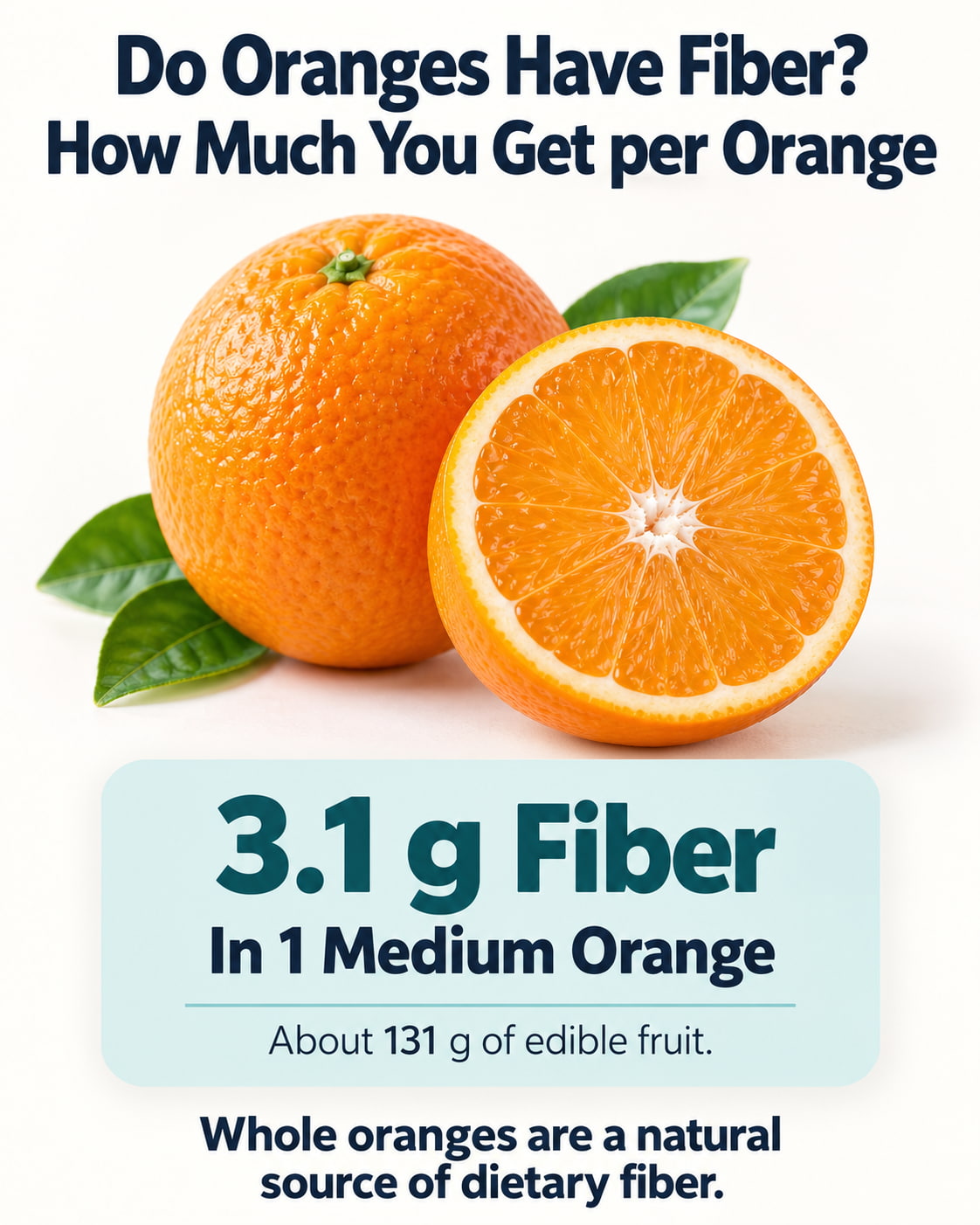
Yes, oranges have fiber. A medium orange with about 131 grams of edible fruit provides approximately 3.1 grams of fiber. A smaller orange provides less, while a large orange can supply around 4.4 grams.
That fiber is present in the peeled fruit you eat. You do not need to eat the outer peel to get it. Choosing whole orange segments is a practical way to add fiber to breakfast, a snack, or a salad.
How Much Fiber Is in an Orange?
USDA reference data list 2.4 grams of fiber per 100 grams of raw orange. The amount per orange depends on how much edible fruit it contains.
The following estimates use USDA’s fruit nutrient data. The weights exclude the outer peel and seeds.
| Orange portion | Edible weight | Approximate fiber |
|---|---|---|
| Small orange | 96 g | 2.3 g |
| Medium orange | 131 g | 3.1 g |
| Large orange | 184 g | 4.4 g |
| 1 cup of orange sections | 180 g | 4.3 g |
| Raw orange, weighed portion | 100 g | 2.4 g |
These are reference estimates, rounded to one decimal place. Individual oranges vary in size and composition.
Why Orange Size Matters
A large orange generally provides more fiber because you eat more fruit. However, descriptions such as “small” and “medium” are only rough guides.
If you track fiber closely, weigh the edible fruit after peeling it. Using the generic USDA value, 150 grams of orange provides approximately 3.6 grams of fiber:
150 × 2.4 ÷ 100 = 3.6 grams
For everyday meal planning, “about 3 grams per medium orange” is a reasonable shortcut.
Do Oranges Have Fiber After Peeling?
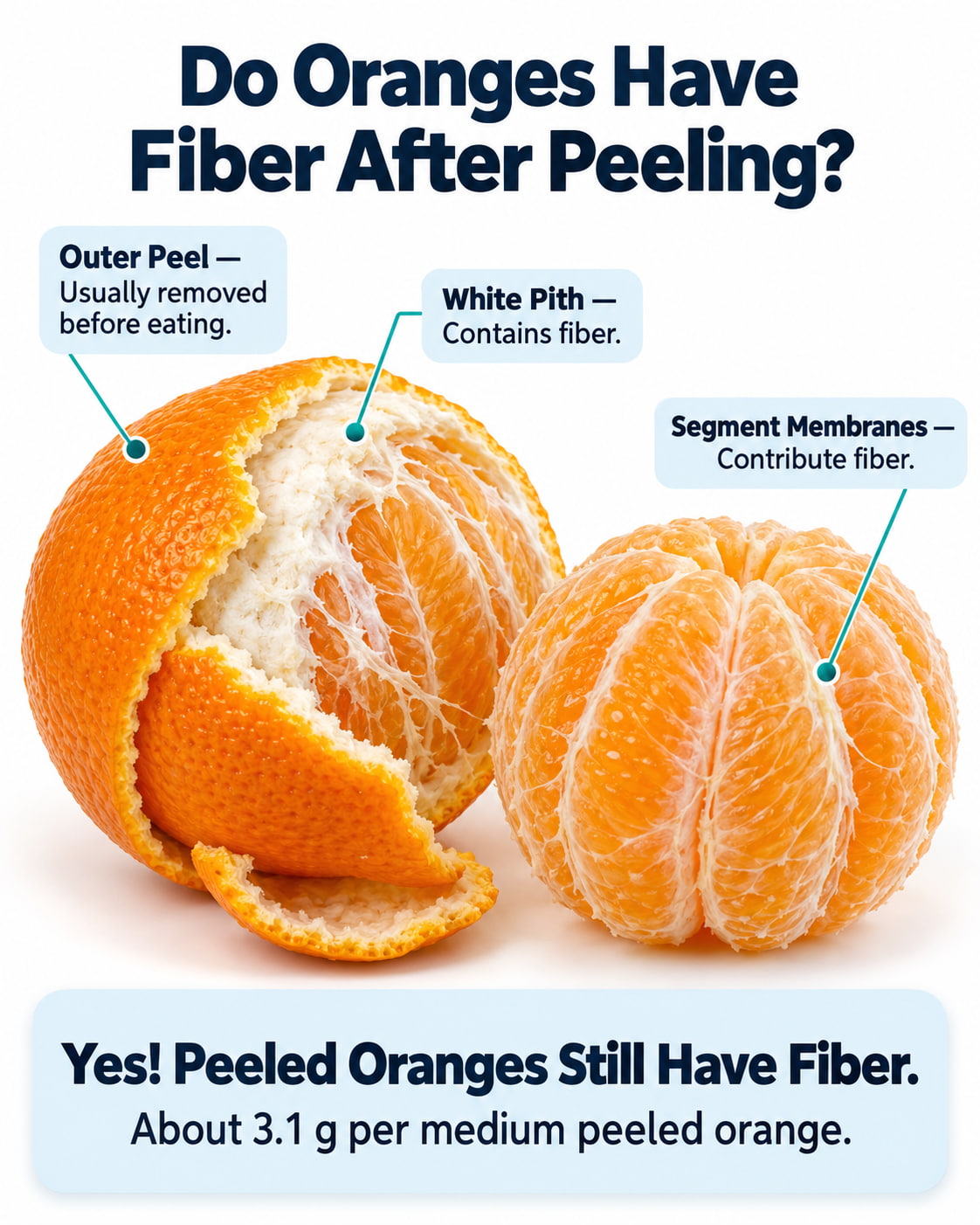
Yes. Peeled oranges still contain fiber in their flesh and the thin membranes surrounding the segments. The nutrition values above already exclude the outer peel.
It helps to distinguish three parts of the fruit:
- Outer peel: The orange-colored skin you usually remove.
- White pith: The white layer underneath the peel.
- Segment membranes: The thin coverings around the individual sections.
The pith and membranes contribute fiber. USDA research on citrus found that the way the edible portion was prepared, including whether segment membranes remained, affected measured fiber content.
You can peel an orange normally and eat the segments with their thin coverings intact. Leaving some white pith attached is fine, too.
Whole Oranges vs. Orange Juice: Which Has More Fiber?
Whole oranges provide substantially more fiber than ordinary orange juice. Juicing separates the liquid from much of the fruit’s fibrous material.
| Food or drink | Reference serving | Approximate fiber |
|---|---|---|
| Whole orange | 1 medium, 131 g | 3.1 g |
| Orange sections | 1 cup, 180 g | 4.3 g |
| Raw orange juice | 1 cup, 248 g | 0.5 g |
This compares common servings, which have different weights. The juice figure is a USDA reference estimate; packaged products can differ.
The Dietary Guidelines for Americans, 2025–2030 recommend eating whole fruits in their original form and consuming 100% fruit juice in limited portions. If increasing fiber is your priority, choosing orange segments makes that goal easier.
Does Orange Juice With Pulp Have More Fiber?
Pulp can contribute fiber, but a “with pulp” description does not tell you how much is in a serving. Check the Dietary Fiber line on the Nutrition Facts label.
Also check the serving size. A value listed for a small glass does not describe the whole bottle. Avoid assuming that juice contains the same fiber as the oranges used to make it.
How Oranges Fit Into Your Daily Fiber Intake
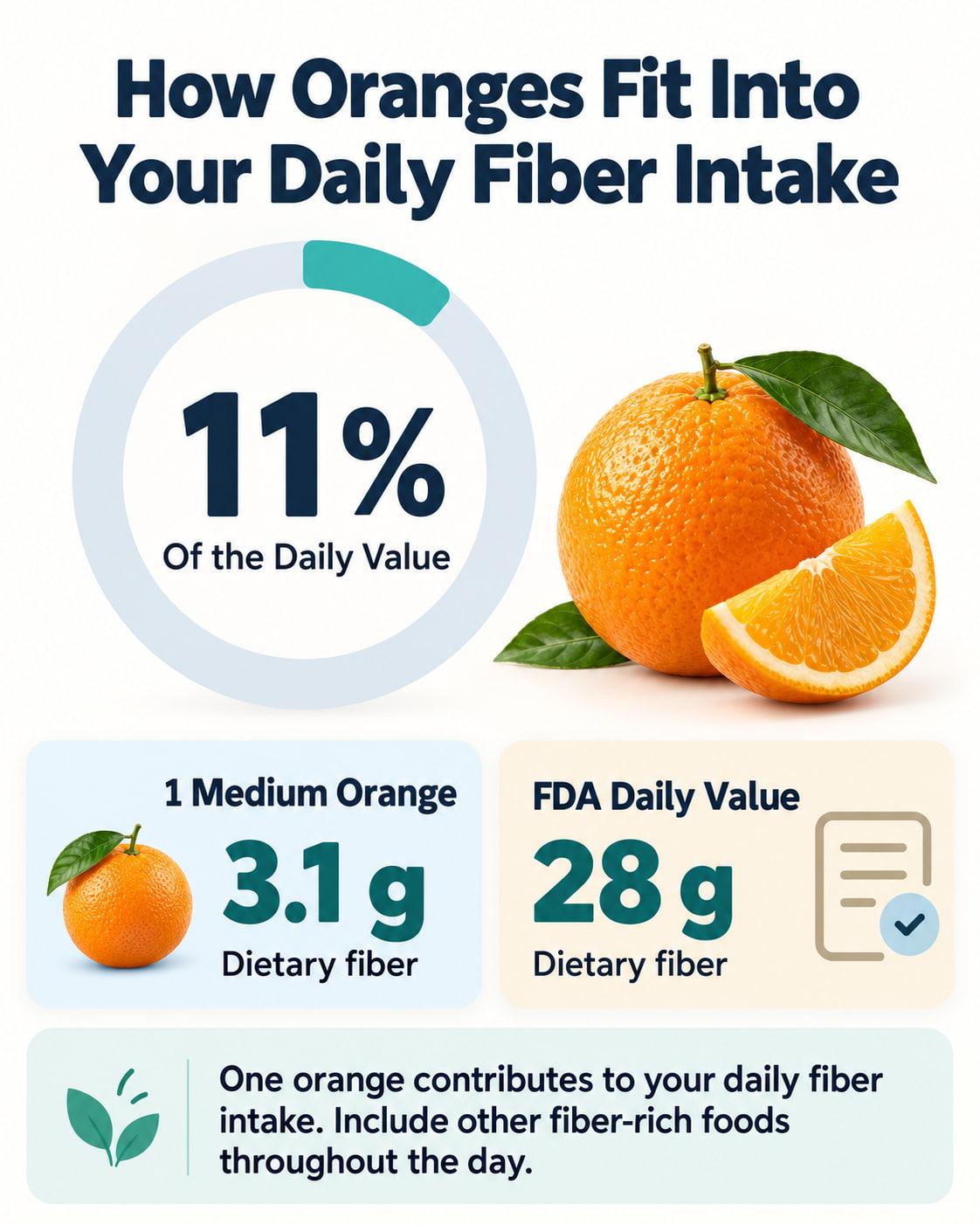
The FDA’s Daily Value for dietary fiber is 28 grams. A medium orange containing 3.1 grams contributes approximately 11% of that benchmark.
The Daily Value helps you compare foods. Your individual fiber goal may differ with factors such as age and sex.
Are Oranges High in Fiber?
Oranges provide a useful amount, but a medium orange falls below the FDA’s general guide of 20% Daily Value or more per serving for a high amount of a nutrient.
An orange can be one part of a day that also includes beans, vegetables, whole grains, nuts, and other fruit.
For example, you might eat orange segments with oatmeal at breakfast, include beans at lunch, and serve vegetables with dinner. Getting fiber from several foods is easier than relying on one fruit to supply most of it.
What Types of Fiber Are in Oranges?
Oranges contain both soluble and insoluble fiber. Laboratory research supported by USDA has measured both types in the fruit, although their proportions vary.
- Soluble fiber dissolves in water. Some forms create a gel-like substance during digestion.
- Insoluble fiber does not dissolve in water and helps move food and waste through the digestive tract.
Can Oranges Help With Regularity?
Whole oranges can contribute to the fiber intake that supports regular bowel movements. NIDDK includes oranges among fruit sources in its nutrition guidance for constipation.
The same guidance gives an adult fiber range of 22–34 grams per day, depending on age and sex. It also recommends increasing fiber gradually and drinking enough liquids to help it work.
If you currently eat little fiber, build up your intake over time. Add a serving of fruit or another fiber-containing food, and make further changes as you become comfortable with them. Eating several oranges at once is not necessary.
An orange also cannot guarantee a bowel movement. Persistent constipation can have several causes and may need individual assessment.
When to Seek Medical Advice
Contact a healthcare professional if constipation continues despite self-care. Seek prompt medical attention if constipation occurs with blood in the stool, constant abdominal pain, vomiting, or an inability to pass gas, as described in NIDDK’s guidance on constipation symptoms.
Easy Ways to Eat More Whole Oranges
Choose a serving that fits your appetite and meal. A few simple options include:
- Add segments to breakfast. Serve them alongside oatmeal or whole-grain toast.
- Use an orange as a snack. Peel it when you are ready to eat, or pack prepared segments.
- Mix orange pieces into a salad. Try them with leafy greens, beans, and your usual dressing.
- Build a varied fruit bowl. Combine orange segments with berries or other fruit you enjoy.
- Pair an orange with nuts. This makes a simple snack with different textures and flavors.
For the fiber amounts in this guide, keep the edible segments in the meal instead of using only their juice.
Frequently Asked Questions
How Much Fiber Is in Half an Orange?
Half of a medium orange provides approximately 1.6 grams of fiber, assuming the whole fruit has about 131 grams of edible flesh. The amount changes with the orange’s size.
Do Oranges Have Fiber Without the Peel?
Yes. The peeled fruit still contains fiber, including in the thin membranes around its segments. Standard whole-orange nutrition figures exclude the outer peel and seeds.
Does the White Part of an Orange Contain Fiber?
Yes. The white pith contributes fiber, as do other parts of the edible fruit. You do not need to pick off every white strand before eating an orange.
Is Orange Juice With Pulp a Good Way to Get Fiber?
Check the label before relying on it. Visible pulp does not establish the fiber amount, and juice generally supplies much less fiber than eating whole orange segments.
Is One Orange Enough Fiber for the Day?
No. A medium orange supplies about 11% of the 28-gram Daily Value. Include other fiber sources, such as beans, whole grains, vegetables, nuts, and additional fruit, throughout the day.
Can Eating an Orange Help You Poop?
An orange can contribute to the overall fiber intake that supports regularity. Results depend on your broader diet and the cause of constipation, so it should not be expected to work immediately or reliably on its own.
Conclusion
Oranges offer a practical way to add fiber: about 3.1 grams in a medium peeled orange, with more in a larger serving. Whole segments provide much more fiber than juice.
Try adding an orange to breakfast or your next snack, and include a variety of other fiber-containing foods across the day.
This content is for informational purposes only and not medical advice.