

Oranges are rich in vitamin C, antioxidants, and fiber that may help support immunity, heart health, and overall wellness. As one of the most widely consumed citrus fruits worldwide, oranges provide a powerful mix of essential nutrients that contribute to daily energy, hydration, and disease prevention.
Understanding the health benefits of oranges is important for anyone seeking a nutrient-dense and balanced diet. This citrus fruit not only delivers vitamin C to strengthen immune defense but also provides potassium, folate, and polyphenols that support cardiovascular and metabolic health.
According to the U.S. Department of Agriculture (USDA), oranges are part of the fruit group in the Dietary Guidelines for Americans, which recommend consuming 1.5–2 cups of fruit daily to promote long-term health and reduce chronic disease risk (USDA MyPlate – Fruits).
In this science-based guide, you’ll learn about the nutritional profile of oranges, 10 proven health benefits, and evidence-backed safety tips for storage and consumption—helping you make the most of this naturally sweet, vitamin-rich fruit.
What Are Oranges? and Nutritional Profile of Oranges

Oranges (Citrus sinensis) are popular citrus fruits known for their sweet-tart flavor and high vitamin C content. Originally from Southeast Asia, they’re now grown worldwide, including in the United States, Brazil, and Spain. Oranges count toward daily fruit intake and provide natural sugars, fiber, and key micronutrients that support overall nutrition and hydration.
Common types include navel (fresh eating), Valencia (juice), blood oranges (antioxidant pigments), and mandarins/clementines (small, easy to peel).
Nutritional Profile of Oranges
Oranges are nutrient-dense yet low in calories, offering a balance of vitamins, minerals, antioxidants, and fiber that contribute to overall health.
Below is the approximate nutrient composition of one medium orange (131 g), based on data from USDA FoodData Central (FDC ID: 1102667, 2025 update):
| Nutrient | Amount per 1 medium (131 g) | % Daily Value (DV) | Key Benefits |
|---|---|---|---|
| Calories | 62 kcal | — | Low-calorie, nutrient-dense snack |
| Carbohydrates | 15.4 g | 6% | Provides quick energy |
| Fiber | 3.1 g | 11% | Supports digestion and fullness |
| Protein | 1.2 g | 2% | Helps maintain body tissue |
| Fat | 0.2 g | <1% | Naturally low in fat |
| Vitamin C | 70 mg | 78% | Powerful antioxidant supporting immune function |
| Potassium | 237 mg | 5% | Helps regulate blood pressure |
| Folate (Vitamin B9) | 39 µg | 10% | Supports cell and red-blood-cell formation |
| Calcium | 52 mg | 4% | Contributes to bone health |
| Thiamin (Vitamin B1) | 0.1 mg | 8% | Supports energy metabolism |
Values are approximate and may vary by variety and ripeness.
Oranges also contain beneficial plant compounds, including flavonoids (hesperidin, naringenin) and carotenoids (beta-cryptoxanthin, lutein), which may help protect against oxidative stress and inflammation (National Library of Medicine – PMC Review, 2023).
10 Proven Health Benefits of Oranges
Including oranges in your daily diet may help support overall wellness thanks to their high vitamin C, fiber, potassium, and antioxidant content. Below are ten science-backed benefits that explain why this citrus fruit is a smart addition to balanced nutrition.
1. Supports Immune Function

Oranges are an excellent source of vitamin C, a key nutrient that supports immune cell activity and helps reduce oxidative stress. According to Verywell Health, vitamin C aids in maintaining the normal function of white blood cells and may shorten the duration of mild respiratory discomforts.
Beyond vitamin C, oranges provide flavonoids and polyphenols—powerful plant compounds with antioxidant and anti-inflammatory properties. A review published in the National Library of Medicine (PMC) notes that citrus flavonoids may help modulate immune responses and protect cells against free radical damage.
2. Supports Heart and Cardiovascular Health

The potassium and soluble fiber in oranges may help maintain healthy blood pressure and cholesterol levels. As reported by Medical News Today, potassium assists in relaxing blood vessel walls and balancing sodium levels, which supports cardiovascular function.
A higher dietary potassium intake is also associated with a lower risk of stroke and heart disease, making oranges a beneficial fruit for long-term heart health. (Medical News Today)
3. Supports Skin Health and Collagen Production

Vitamin C plays an essential role in collagen synthesis, the structural protein responsible for maintaining firm, youthful skin. According to Medical News Today, this vitamin helps repair tissues and supports skin elasticity by promoting new collagen formation.
Regular consumption of vitamin C-rich foods like oranges may also support the body’s defense against UV-induced oxidative stress, keeping the skin healthy and radiant. (Medical News Today)
4. Supports Digestion and Gut Health

The dietary fiber and high water content in oranges help support smooth digestion and regular bowel movements. Verywell Health explains that the soluble fiber in oranges contributes to stool softness and may help maintain a healthy balance of gut bacteria.
Additionally, research from the National Library of Medicine (PMC) suggests that citrus phytochemicals—such as flavanones and limonoids—may have prebiotic-like effects that promote gut microbial diversity and reduce intestinal inflammation.
5. Supports Healthy Blood Pressure

Oranges are naturally low in sodium and rich in potassium, a mineral that plays a vital role in regulating blood pressure and vascular tone. Medical News Today notes that adequate potassium intake helps counteract sodium’s effect on blood pressure and supports healthy heart rhythm.
Incorporating oranges into a balanced diet can therefore contribute to maintaining optimal blood pressure levels and overall cardiovascular well-being.
6. Supports Antioxidant and Anti-Inflammatory Activity
Oranges contain a wide range of antioxidants, including flavanones, carotenoids, and ascorbic acid (vitamin C), which may help reduce oxidative stress and systemic inflammation. According to a comprehensive analysis published by the National Library of Medicine (PMC), these bioactive compounds can neutralize free radicals and support cellular protection.
Consistent consumption of antioxidant-rich fruits like oranges supports the body’s natural defense system, contributing to long-term wellness.
7. Supports Eye Health and Vision

The carotenoids found in oranges—especially beta-cryptoxanthin and lutein—are converted into vitamin A in the body, which supports eye surface health and visual performance. Verywell Health reports that antioxidants from citrus fruits may help protect the retina and lens from oxidative damage, potentially supporting healthy vision as part of an overall nutrient-rich diet.
8. Supports Healthy Iron Absorption

Vitamin C in oranges significantly enhances the absorption of non-heme iron from plant foods, helping support red-blood-cell formation and oxygen transport. WebMD highlights that pairing oranges with iron-rich foods (like lentils or spinach) may improve iron uptake, especially for individuals following vegetarian or vegan diets.
9. Supports Weight Management as Part of a Healthy Diet

Low in calories yet high in water and fiber, oranges can promote satiety and help manage calorie intake. According to Verywell Fit, oranges provide natural sweetness and hydration without excessive sugar, making them a smart choice for mindful eating.
Replacing high-calorie snacks with oranges may help support weight balance and overall metabolic health as part of a nutritious lifestyle.
10. Supports Overall Wellness and Disease Risk Reduction
Regular consumption of fruits like oranges is strongly associated with better overall wellness and a lower risk of chronic diseases, largely due to their combination of fiber, vitamin C, antioxidants, and plant phytonutrients. These nutrients work together to support cardiovascular, metabolic, and immune functions while reducing oxidative stress.
A large 2021 meta-analysis published in the American Journal of Clinical Nutrition found that individuals who consumed higher amounts of fruits and vegetables had significantly lower risks of heart disease, cancer, and all-cause mortality. (PubMed – National Library of Medicine)
Additionally, the World Health Organization (WHO) recommends eating at least 400 g of fruits and vegetables per day as part of a healthy diet to help reduce the risk of noncommunicable diseases such as heart disease, stroke, and certain cancers. (WHO – Healthy Diet Guidelines)
Including oranges regularly as part of a varied fruit intake may therefore support long-term wellness, improve dietary quality, and contribute to disease risk reduction through consistent intake of essential vitamins, minerals, and phytonutrients.
How to Include Oranges for Best Results
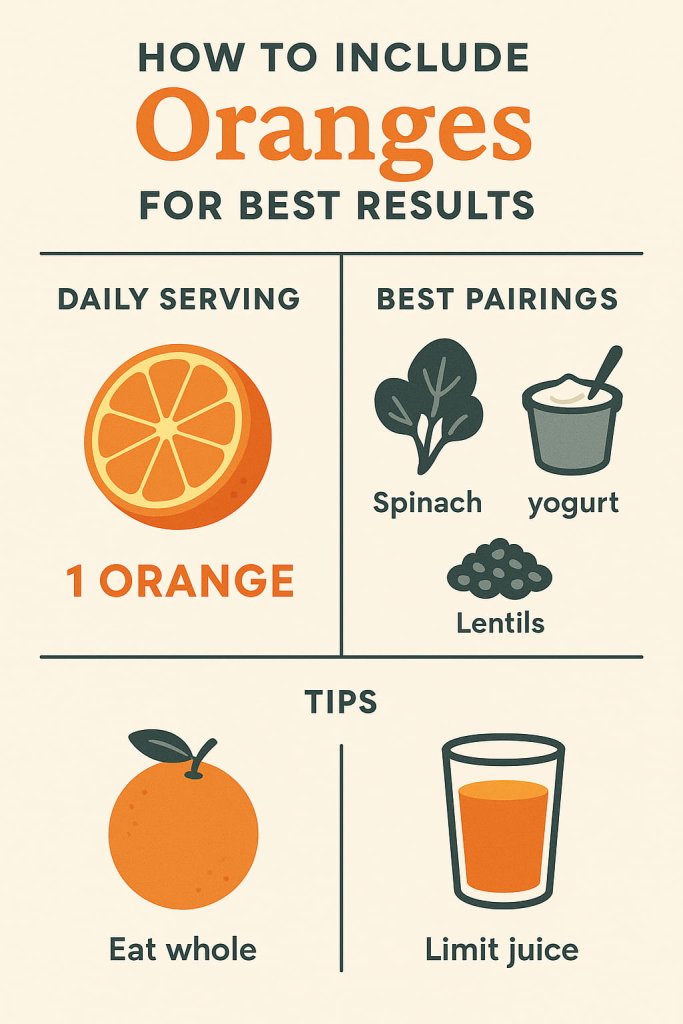
To gain the most nutritional and wellness benefits, include 1 medium orange (about 130–150 g) daily as part of a balanced diet. Whole oranges provide fiber, hydration, and vitamin C in a form that supports digestive health and steady energy.
Best ways to enjoy oranges:
- Eat whole rather than juiced: Whole oranges retain their fiber, which slows sugar absorption and supports satiety. Orange juice, while nutrient-rich, lacks fiber and may spike blood sugar more quickly if consumed in large amounts (Harvard T.H. Chan School of Public Health).
- Pair with iron-rich foods: Vitamin C enhances the absorption of non-heme iron from plant foods like spinach, lentils, and beans (NIH Office of Dietary Supplements). Add orange slices or juice to salads or smoothies containing these ingredients.
- Best time to eat: Oranges can be enjoyed at any time of day. Eating them in the morning or between meals may help boost hydration and energy naturally.
- Use in meals: Add fresh orange segments to salads, yogurt, oatmeal, or stir-fries; use zest to flavor sauces or baked goods.
- Hydration tip: Oranges are about 85 % water, making them an excellent way to support daily fluid intake.
Including oranges regularly may therefore help you meet daily fruit recommendations while supporting overall wellness.
Possible Side Effects and Precautions (Safety & Compliance)
While oranges are safe for most people, certain individuals should consume them mindfully.
- Acid reflux sensitivity: The natural acidity of oranges may aggravate symptoms of acid reflux or GERD in some individuals. If you experience discomfort, moderate intake or pair with non-acidic foods (Cleveland Clinic).
- Blood sugar moderation for diabetics: Oranges have a low glycemic load, but juice can raise blood glucose more rapidly. Whole fruits are a better choice for people managing diabetes (Mayo Clinic).
- Citrus allergy (rare): Allergic reactions to citrus are uncommon but possible. Symptoms can include skin irritation or mouth tingling. If allergic responses occur, discontinue use and seek medical advice (NIH MedlinePlus).
- Dental enamel erosion: Drinking too much orange juice can gradually wear down tooth enamel due to its natural acidity. The American Dental Association (ADA) notes that acidic drinks are a common cause of dental erosion (ADA – Dental Erosion). To protect teeth, rinse with water after drinking, wait 30 minutes before brushing, and limit juice to mealtimes to reduce acid exposure (MouthHealthy by ADA).
When eaten in moderation as part of a diverse diet, oranges are safe and beneficial for most healthy adults.
Recommended Dosage, Storage, and Food Safety Tips
Daily Serving
Enjoy one medium orange (130–150 g) per day as part of a balanced diet. This serving provides approximately 70 mg of vitamin C, fulfilling nearly 80% of the Daily Value (DV) for adults. In addition to vitamin C, oranges supply fiber, potassium, folate, and antioxidants that support hydration, immune function, and overall wellness (USDA FoodData Central).
Food Safety and Handling
Following safe food-handling practices helps maintain the quality and safety of oranges from purchase to consumption. The U.S. Food and Drug Administration (FDA) and U.S. Department of Agriculture (USDA) recommend these evidence-based guidelines:
- Washing:
Rinse whole oranges thoroughly under cool running water before cutting or peeling to remove dirt, microbes, and pesticide residues. The FDA advises washing all fresh produce—even those with inedible peels—to prevent cross-contamination when slicing or handling (FDA – Produce Safety Guidelines). - Storage:
Store uncut oranges at room temperature for up to 3 days, or refrigerate at 40 °F (4 °C) or below for up to 2 weeks to maintain freshness and reduce microbial growth. The USDA emphasizes keeping refrigerators at or below 40 °F for optimal food safety and shelf life (USDA – Safe Food Storage). - Avoid Cross-Contamination:
Keep oranges separate from raw meat, seafood, and poultry during storage and preparation. The FDA highlights the importance of separation to prevent bacteria from spreading to ready-to-eat produce (FDA – Food Safety at Home). - Leftover Sections:
Place peeled or sliced oranges in a clean, airtight container, refrigerate promptly, and consume within 1–2 days for best quality and safety.
By following these FDA- and USDA-endorsed produce safety practices, you can ensure that oranges remain fresh, flavorful, and safe to eat, while maintaining their full nutritional value.
Frequently Asked Questions (FAQ)
Q1. What’s the difference between eating oranges and drinking orange juice?
Whole oranges provide fiber that helps slow sugar absorption and improve digestion, whereas juice delivers nutrients without fiber, leading to faster glucose spikes. Choose whole fruit more often.
Q2. How does vitamin C in oranges compare to other fruits?
A single medium orange provides about 70 mg of vitamin C—more than most apples or bananas but slightly less than kiwi or strawberries (NIH Office of Dietary Supplements).
Q3. When is the best time to eat oranges?
They can be enjoyed at any time. Morning or mid-day consumption supports hydration and energy, while post-meal intake aids iron absorption.
Q4. Are oranges safe during pregnancy?
Yes. Oranges provide folate, vitamin C, and hydration—important nutrients during pregnancy. Ensure fruits are washed before consumption (American College of Obstetricians and Gynecologists – ACOG).
Q5. How long can oranges be stored?
Whole oranges can last 1–2 weeks in the refrigerator. Peeled segments should be refrigerated in sealed containers and eaten within 48 hours.
Q6. Can people be allergic to oranges?
Citrus allergies are rare but possible; reactions can include itching, redness, or mild swelling. Seek medical advice if symptoms occur (NIH MedlinePlus).
Q7. Does eating oranges help prevent colds?
Oranges support immune function because of their vitamin C and antioxidant content, but they do not prevent or cure infections. Balanced nutrition and hygiene are key.
(For SEO, add FAQ schema markup when publishing on WordPress to improve visibility in “People Also Ask” results.)
Conclusion
Oranges are one of nature’s most nutrient-dense fruits—packed with vitamin C, fiber, potassium, and antioxidants that support heart, skin, and immune health. When enjoyed regularly as part of a balanced diet rich in fruits and vegetables, they contribute to overall wellness and nutritional balance.
Choose whole oranges over juice when possible, store them safely, and enjoy them daily in moderation for long-term benefits.
This content is for informational purposes only and not medical advice.