
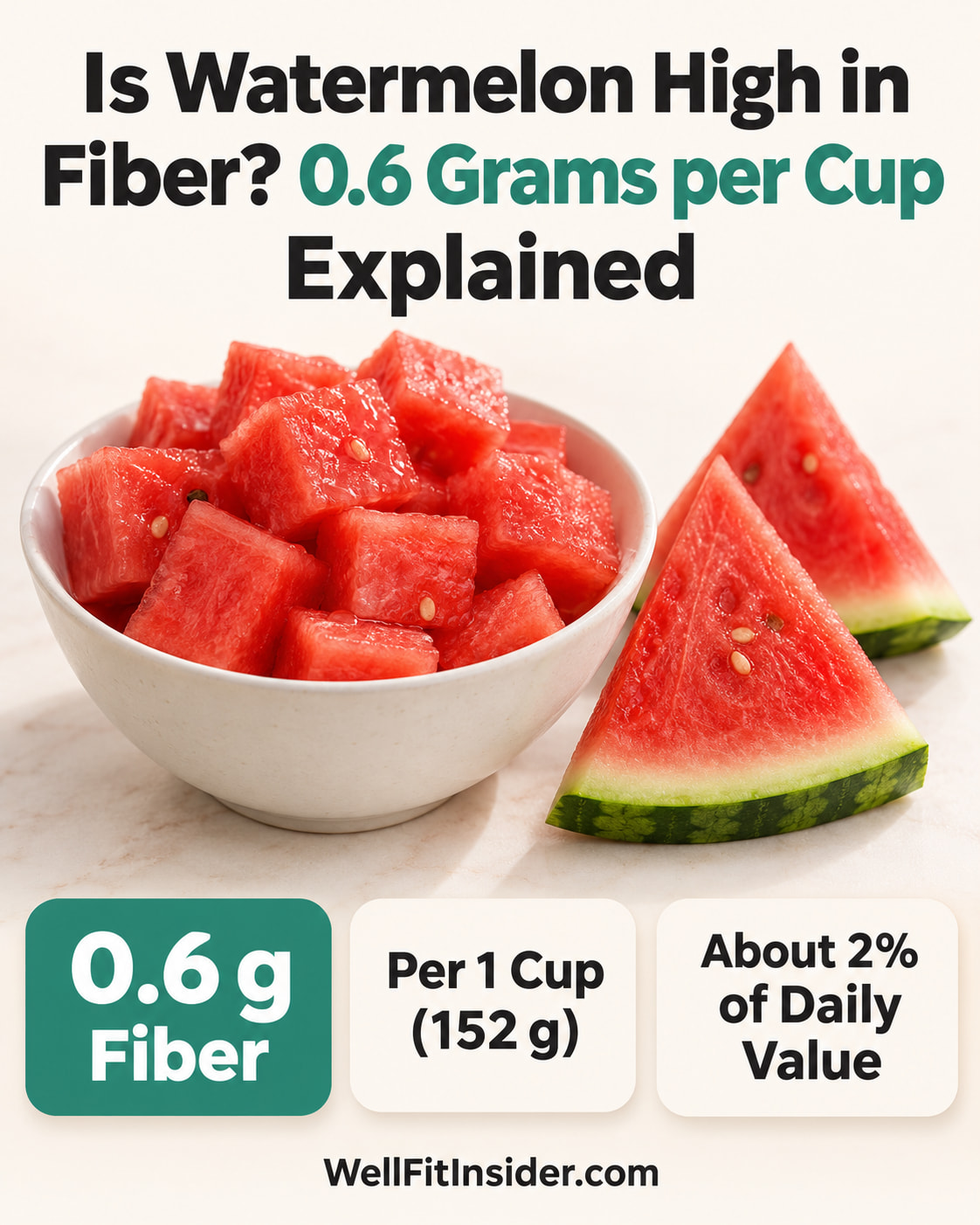
Watermelon is not high in fiber: 1 cup of diced raw watermelon, weighing about 152 grams, contains approximately 0.6 grams of fiber—roughly 2% of the Daily Value.
That distinction matters if you are choosing foods to increase your fiber intake. Watermelon can still fit into a varied diet, but berries, pears, and apples with their skin provide more fiber for the same weight of fruit.
Is Watermelon High in Fiber?
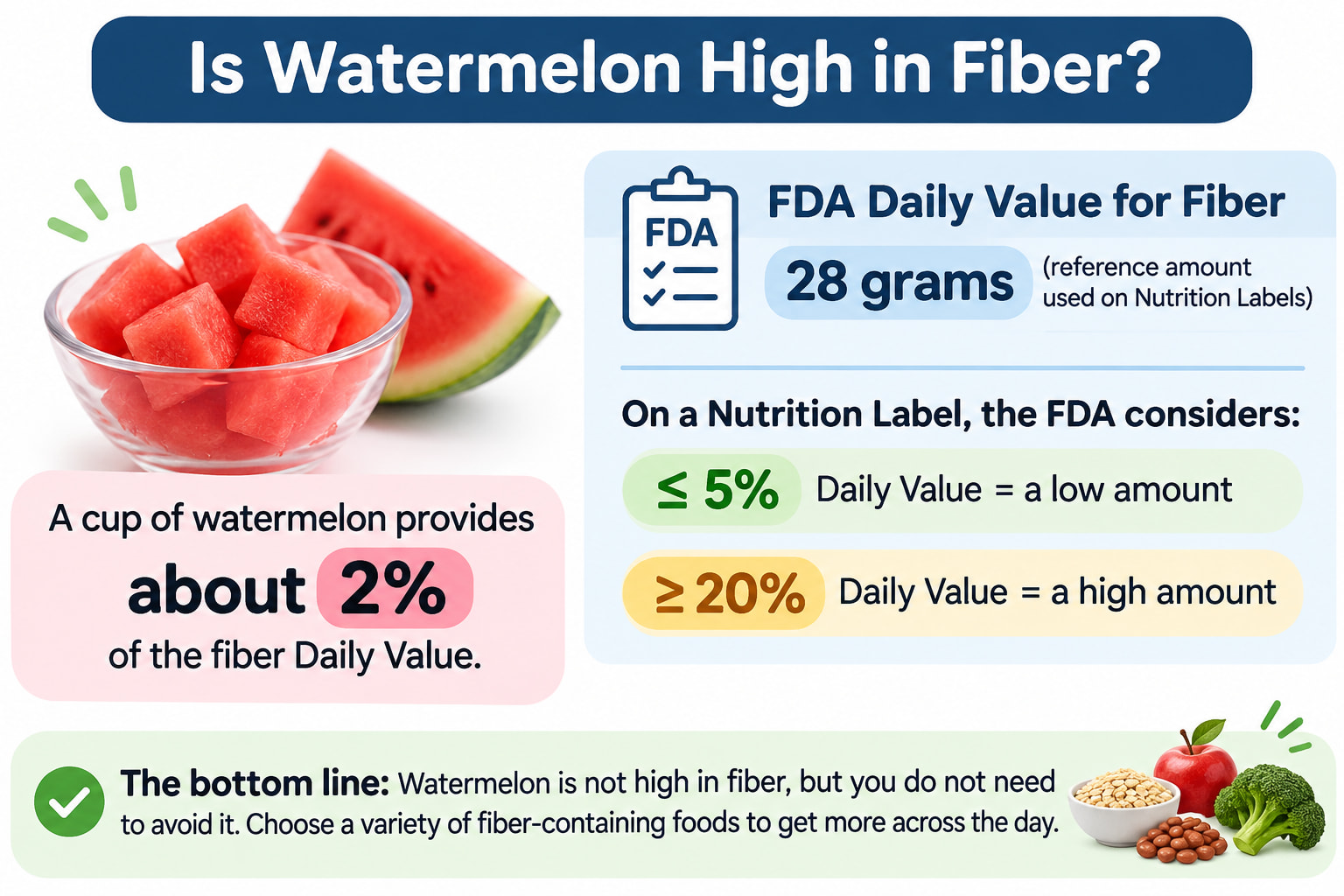
The FDA’s Daily Value guidance lists 28 grams as the Daily Value for dietary fiber. This is a standard reference used on nutrition labels, rather than an exact requirement for every person.
When reading a label, the FDA considers:
- 5% Daily Value or less a low amount of a nutrient.
- 20% Daily Value or more a high amount.
A cup of watermelon provides about 2% of the fiber Daily Value, so its contribution is small. You do not need to avoid it, but choosing a variety of fiber-containing foods will help you get more across the day.
How Much Fiber Is in Watermelon?
According to USDA watermelon nutrient data, the amount depends on how much you eat.
| Portion of raw watermelon | Approximate weight | Dietary fiber |
|---|---|---|
| 100 grams | 100 g | 0.4 g |
| ½ cup, diced | 76 g | 0.3 g |
| 1 cup, diced | 152 g | 0.6 g |
| 2 cups, diced | 304 g | 1.2 g |
These estimates use USDA SR Legacy data from 2018. Half-cup and two-cup values are calculated from the per-100-gram figure and rounded.
Why the Portion Description Matters
“Per cup” is most useful when you know what is being measured. The 0.6-gram figure applies to diced raw watermelon. A loosely filled bowl, a large wedge, and a glass of watermelon juice are different portions.
For a practical estimate, measure diced watermelon in a measuring cup. If you need more precision, weigh the edible portion.
How Watermelon Compares With Higher-Fiber Fruits
The table below compares 100 grams of each fruit, rather than mixing cups with whole-fruit portions.
| Raw fruit | Fiber per 100 grams |
|---|---|
| Raspberries | 6.5 g |
| Pears | 3.1 g |
| Apples with skin | 2.4 g |
| Strawberries | 2.0 g |
| Cantaloupe | 0.9 g |
| Watermelon | 0.4 g |
Source: USDA’s 2018 dietary fiber reference table. Values are estimates and can vary by variety and sample.
Raspberries provide substantially more fiber than watermelon for the same weight. Strawberries, pears, and apples with their skin also make useful additions when increasing fiber is your goal.
You can combine fruits instead of replacing watermelon entirely. For example, add strawberries or raspberries to a bowl of diced watermelon.
What Does Watermelon Provide Besides Fiber?
The same USDA entry gives the following approximate amounts for 1 cup of diced watermelon:
| Nutrient or component | Amount per cup |
|---|---|
| Calories | 46 |
| Total carbohydrate | 11.5 g |
| Total sugars | 9.4 g |
| Vitamin C | 12.3 mg |
| Potassium | 170 mg |
| Water | 139 g |
Watermelon is approximately 91% water by weight in this entry. Its water content and other nutrients give it a place in a varied eating pattern, even though it contributes little fiber.
Does Watermelon Help With Constipation?
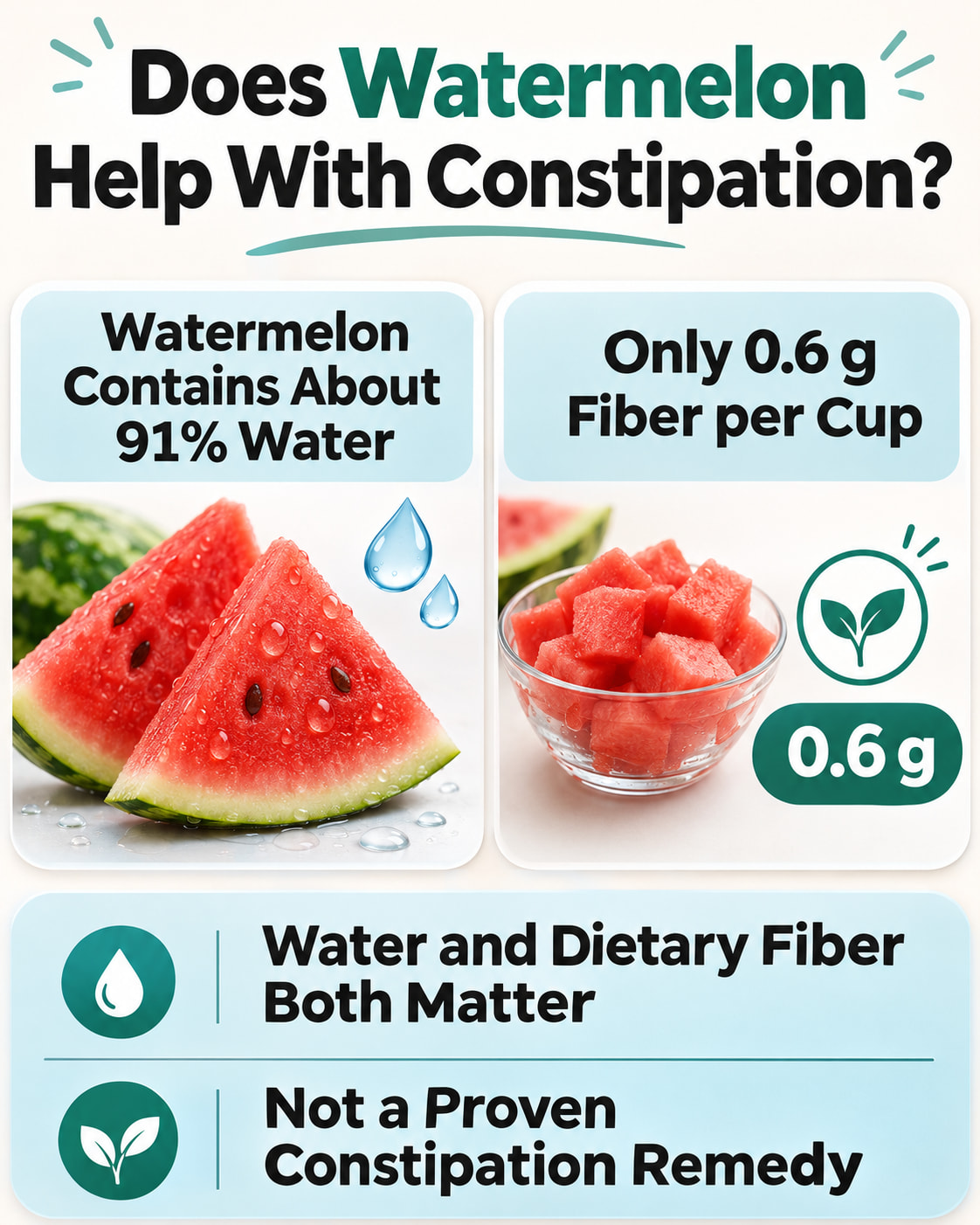
Watermelon contributes water to your diet, but its small fiber content makes it a limited choice for increasing fiber intake.
According to NIDDK guidance, adequate liquids help fiber work. The agency also recommends adding fiber gradually so your body can adjust.
These general recommendations do not establish that watermelon itself will resolve constipation. A serving’s water and fiber content cannot predict whether it will trigger a bowel movement.
For more fiber, include a range of foods such as whole grains, beans, lentils, berries, vegetables, and nuts. If constipation persists or keeps returning, discuss it with a healthcare professional instead of relying on one food.
Can Watermelon Cause Bloating or Digestive Discomfort?
Some people experience digestive symptoms after eating watermelon despite its low fiber content.
Monash University’s FODMAP guidance lists watermelon among high-FODMAP fruits. FODMAPs are carbohydrates that may be incompletely absorbed and can contribute to gas, bloating, discomfort, or changes in bowel habits in some people with irritable bowel syndrome.
Low fiber and low FODMAP are different characteristics. A food can contain little fiber and still be uncomfortable for someone sensitive to certain carbohydrates.
Tolerance varies, so this does not mean everyone needs to avoid watermelon. If you repeatedly notice symptoms, discuss the pattern with a healthcare professional or registered dietitian before making broad dietary restrictions.
How to Add More Fiber When Eating Watermelon
You can enjoy watermelon while including foods that contribute more fiber. Try one of these simple combinations:
- Mix it with berries. Add raspberries or strawberries to a watermelon fruit bowl.
- Serve it with oatmeal. Enjoy watermelon alongside an oat-based breakfast.
- Pair it with nuts. Have a portion of nuts with watermelon as a snack.
- Include it with a bean-based meal. Serve watermelon alongside a lentil dish or a meal containing beans.
The additional fiber comes from the other ingredients, and the total depends on their portions. Start with a manageable change rather than increasing several high-fiber foods at once.
Frequently Asked Questions
How Much Fiber Is in Two Cups of Watermelon?
Two cups of diced watermelon contain approximately 1.2 grams of fiber, based on a total weight of 304 grams. Doubling the portion doubles the estimated fiber, but the amount remains modest.
How Much Fiber Is in a Slice of Watermelon?
It depends on the slice’s size. USDA lists a reference wedge weighing 286 grams with about 1.1 grams of fiber. Your slice may be much smaller or larger, so a weighed portion gives a more useful estimate.
Which Has More Fiber, Watermelon or Cantaloupe?
Cantaloupe has more fiber by weight. USDA reference data list approximately 0.9 grams per 100 grams of cantaloupe, compared with 0.4 grams per 100 grams of watermelon. Both contain less fiber than raspberries or pears in the same comparison.
Does Watermelon Juice Contain Fiber?
The amount depends on how the juice is made. CDC guidance on whole fruit and juice notes that many fruit juices contain little or no fiber. Check a packaged product’s label rather than assuming it contains the same amount as diced watermelon.
Can Watermelon Cause Bloating Even Though It Is Low in Fiber?
Yes, some people may experience bloating because of sensitivity to its FODMAP carbohydrates. Symptoms are not necessarily caused by fiber, and many people eat watermelon without digestive discomfort.
Should I Stop Eating Watermelon if I Need More Fiber?
Usually, you can keep enjoying it while getting more fiber from other foods. Pair it with berries, oats, nuts, or a meal containing legumes, and look at your overall food choices rather than expecting one fruit to meet your needs.
Conclusion
Watermelon provides about 0.6 grams of fiber per cup, so it makes only a small contribution to daily fiber intake. You can still enjoy it while choosing other fruits and foods that supply more fiber.
For an easy next step, add berries to your watermelon bowl or serve watermelon alongside oatmeal, nuts, or a meal containing beans. Build variety into your meals and increase fiber gradually.
This content is for informational purposes only and not medical advice.