
Cantaloupe health benefits come mainly from its high water content plus key nutrients like vitamin C, vitamin A (from carotenoids), and potassium that support normal immune function, vision, hydration, and heart health as part of a balanced diet. It’s also a simple way to add fruit to your day without many calories for the portion size.
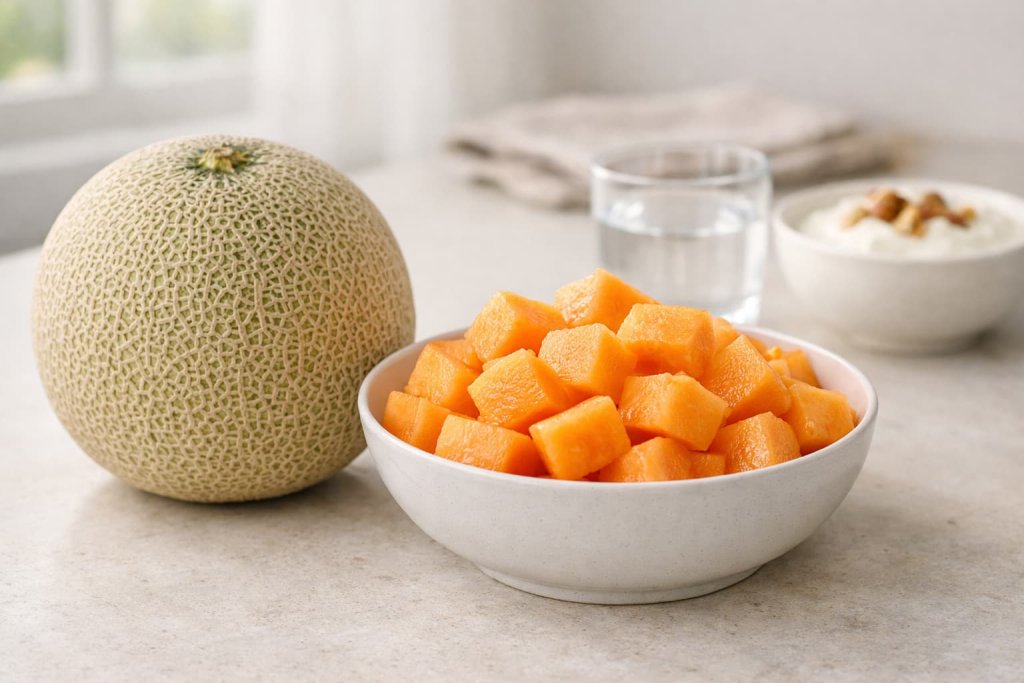
This guide breaks down 11 evidence-based reasons cantaloupe is worth keeping in your rotation, plus realistic serving tips, food-safety steps (important for melons), and who should be a little more careful.
Cantaloupe health benefits at a glance
- Hydration support (high water content)
- Vitamin C for immune function and collagen synthesis
- Vitamin A activity (from carotenoids) for normal vision
- Potassium for blood pressure support as part of a heart-healthy diet
- Low calorie density for snack planning and weight goals
- Food safety wins when you wash the rind and refrigerate cut melon promptly
What cantaloupe is and why its nutrition matters
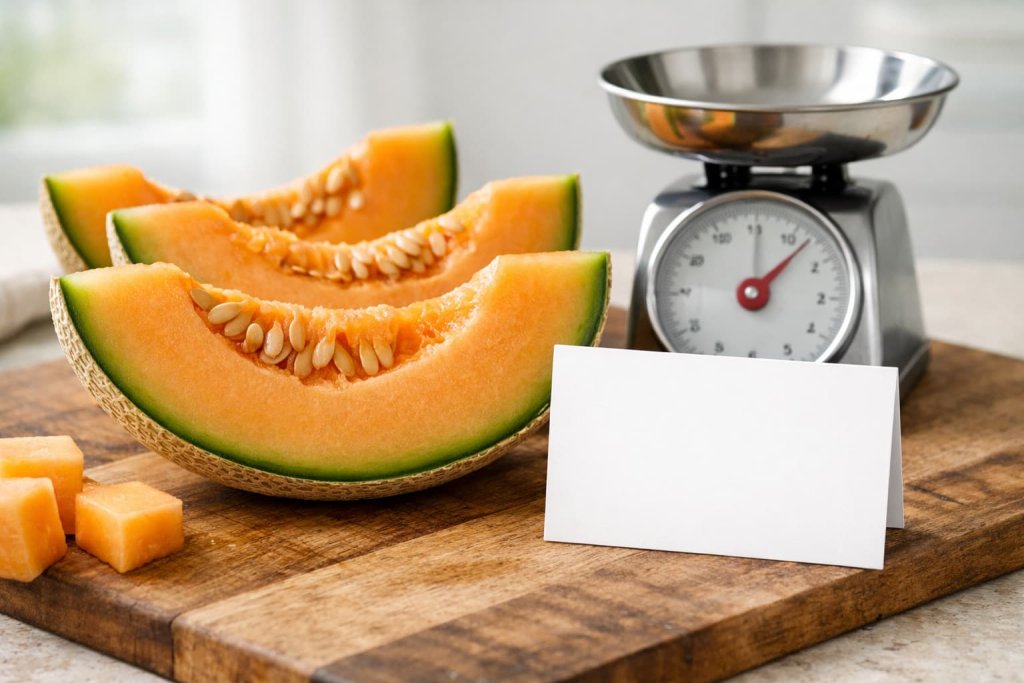
Cantaloupe (a type of muskmelon) is a water-rich fruit with natural sweetness. Nutritionally, it stands out because it delivers a lot of micronutrients for relatively few calories, which is why it fits well into many eating styles—from general wellness to weight-management and heart-healthy patterns.
Cantaloupe nutrition facts (1 cup, about 177 g)
Below is a practical snapshot for a common serving size.
| Nutrient (1 cup, 177 g) | Amount |
|---|---|
| Calories | 60 |
| Carbohydrates | 14.4 g |
| Fiber | 1.6 g |
| Vitamin C | 65 mg |
| Vitamin A (RAE) | 299 mcg |
| Potassium | 472.6 mg |
According to MyFoodData (USDA-derived database values), 1 cup of cantaloupe provides about 60 calories, 65 mg vitamin C, 299 mcg RAE vitamin A, and 472.6 mg potassium.
Cantaloupe health benefits: 11 science-backed reasons to eat it
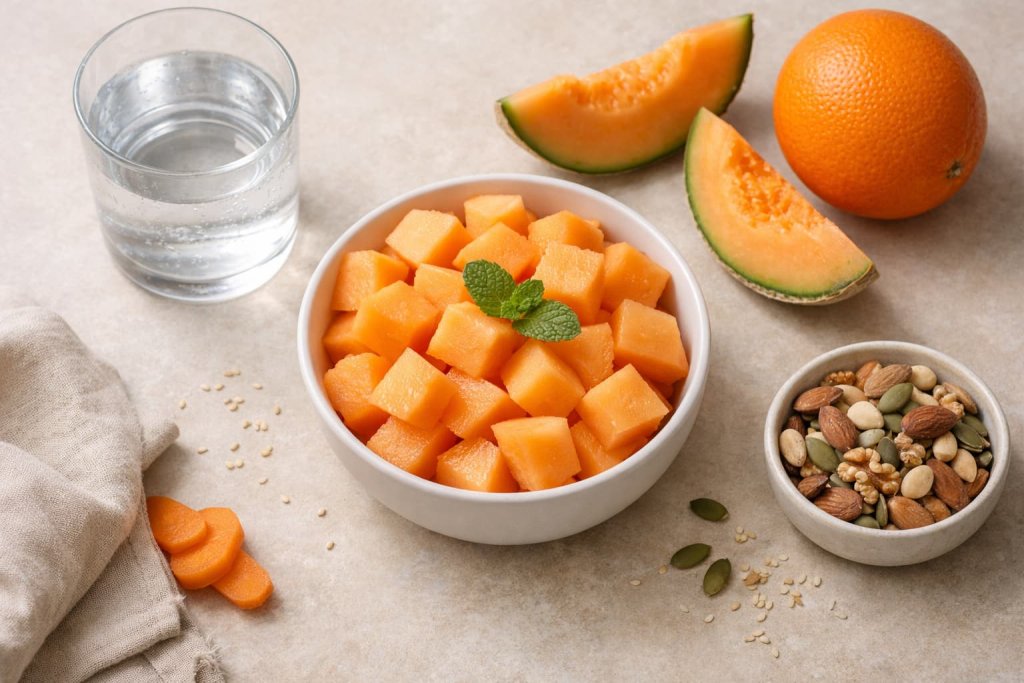
These benefits are framed in safe, evidence-based language—focused on what the nutrients in cantaloupe are known to support in the body.
1) Helps support hydration
Cantaloupe is a high-water fruit. Eating water-rich foods can support daily fluid intake and is especially useful when you want something refreshing and light. Because it’s naturally sweet, it can also make “hydration-friendly snacking” feel easier than forcing down another bottle of water.
2) Provides vitamin C for normal immune function
Vitamin C is essential for many roles in the body, including immune function and antioxidant activity. Cantaloupe is a straightforward way to add vitamin C through whole food—especially for people who don’t love citrus.
The NIH Office of Dietary Supplements notes vitamin C is an important physiological antioxidant and is required for the biosynthesis of collagen.
3) Supports collagen production (skin and connective tissue)
Collagen is a structural protein used throughout the body (skin, tendons, ligaments, blood vessels). Vitamin C is required for collagen biosynthesis, which is why vitamin C–containing foods are often described as supporting skin and connective tissue—without making “beauty” promises.
4) Supports normal vision through vitamin A activity
Cantaloupe’s orange color reflects carotenoids, and some carotenoids can be converted to vitamin A in the body. Vitamin A is important for normal vision.
The NIH Office of Dietary Supplements explains vitamin A is important for normal vision and that the body can convert some carotenoids into vitamin A.
5) Antioxidants from carotenoids (supports overall wellness)
Cantaloupe’s orange color comes from carotenoids, which are plant compounds that can function as antioxidants in the diet. In real-world terms, this is a “diet quality” benefit: eating a variety of colorful fruits and vegetables helps you build an antioxidant-rich pattern without relying on supplements.
6) Supports immune function and normal cell growth (vitamin A roles)
Vitamin A is also involved in immune function and supports normal growth and development at the cellular level. That doesn’t mean cantaloupe “prevents illness,” but it does mean it contributes to nutrients your body relies on daily.
7) Supports heart health through potassium’s role in blood pressure regulation
Potassium helps maintain fluid balance and supports normal blood pressure. Getting potassium from foods is one reason fruits and vegetables are often included in heart-healthy eating patterns.
The NIH Office of Dietary Supplements notes that people with low potassium intakes have an increased risk of developing high blood pressure, especially when sodium intake is high, and that increasing potassium while decreasing sodium might help lower blood pressure.
8) Helps you get more fruit in a “whole foods” way
If you’re trying to improve overall diet quality, adding fruit consistently is one of the simplest moves. Cantaloupe works in breakfast bowls, snacks, and desserts—so it’s easier to stick with than “special” foods you rarely buy.
The USDA MyPlate guidance encourages focusing on whole fruits (not just juice) as part of a healthy eating pattern.
9) A smart choice when you want volume without many calories
Because it’s water-rich, cantaloupe gives you a generous portion for relatively few calories. That’s helpful if you’re working on portion awareness, snack planning, or reducing reliance on high-calorie sweets—without feeling like you’re “dieting.”
Practical idea: pair cantaloupe with protein (like Greek yogurt or cottage cheese) to make it more filling and steady.
10) Provides small amounts of fiber that support digestive regularity
Cantaloupe isn’t a “high-fiber” food, but it does provide some fiber. Even modest fiber can help support normal digestion and regularity when your overall pattern includes a variety of fiber-containing foods (beans, whole grains, vegetables, nuts, seeds, and fruits).
Quick reality check: cantaloupe is not a high-fiber fruit. If your goal is significantly more fiber, combine cantaloupe with higher-fiber foods (berries, chia, oats, beans, whole grains, nuts, seeds) while keeping cantaloupe as the hydrating, vitamin-rich “base.”
11) Supports food safety when you handle it the right way (wash before cutting)
This is a big one for melons: the rind can carry bacteria, and cutting can transfer germs from the outside to the edible flesh.
The U.S. Food and Drug Administration specifically highlights rinsing produce under running water and calls out melons like cantaloupe because bacteria can be on the outer rind; it also recommends using a clean produce brush and avoiding soap.
12) Supports food safety when you refrigerate cut cantaloupe promptly
Cut melon is perishable. Leaving it out too long increases food-safety risk.
The Centers for Disease Control and Prevention advises not leaving perishable foods out for more than 2 hours (or 1 hour if temperatures are above 90°F/32°C) because bacteria multiply rapidly in the “danger zone.”
Safety box: how to eat cantaloupe more safely
Use these steps every time you cut a melon:
- Wash your hands before prep.
- Rinse the whole melon under running water.
- Scrub the rind with a clean produce brush (especially important for the textured surface).
- Use a clean knife and cutting board.
- Refrigerate cut cantaloupe promptly (2-hour rule; 1 hour if it’s very hot).
- If you buy pre-cut cantaloupe, choose packages that are cold (kept in a refrigerated case), intact (no leaks), and within the “use by” date. Refrigerate immediately after purchase and keep it cold until you eat it.
- Keep cut melon cold in the fridge and don’t leave it sitting out during parties or picnics.
Quick safe-cut method (30 seconds)
- Wash and scrub the rind under running water, then dry it with a clean paper towel.
- Place on a clean cutting board; slice with a clean knife.
- Remove seeds, cube the flesh, and transfer to a clean airtight container.
- Refrigerate right away.
Who cantaloupe is best for (and who should be careful)
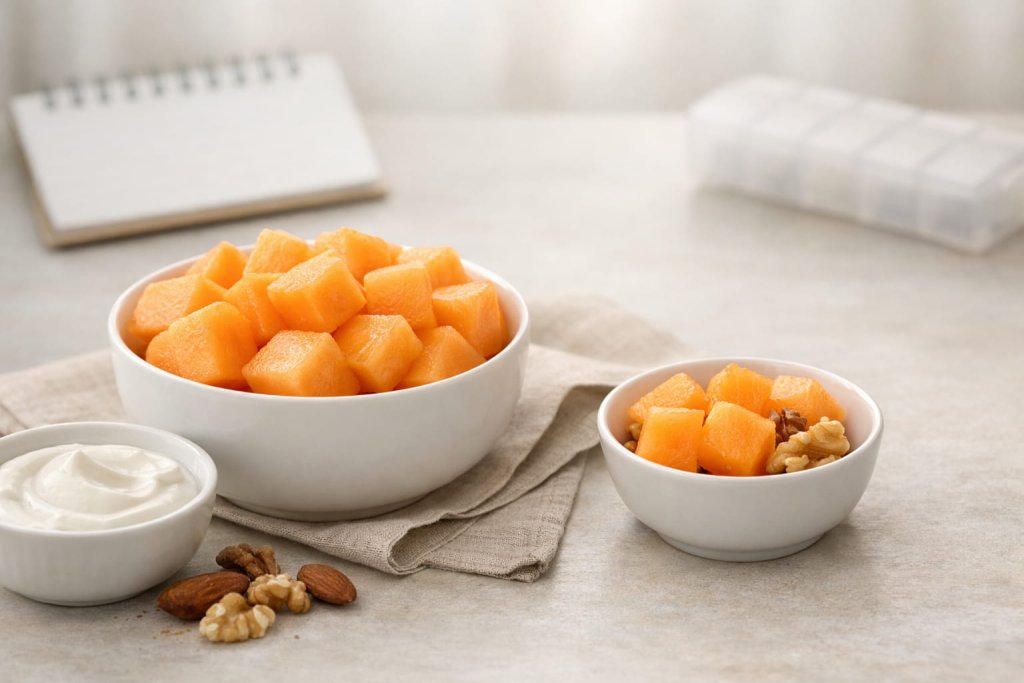
Good fit for most people who want
- A refreshing fruit snack that’s easy to portion
- More vitamin C and carotenoid-rich produce
- A sweet option that still feels “light”
- Fruit that works well in breakfast, smoothies, and desserts
Be a little more cautious if you have
- Kidney disease or potassium restrictions. Potassium needs can be individualized; food sources are generally safe for people with normal kidney function, but restrictions may apply in kidney disease. The NIH ODS notes potassium from foods isn’t harmful in healthy people with normal kidney function because excess is eliminated in urine. (If you have kidney disease, follow your clinician’s guidance.)
- Diabetes or blood sugar concerns. Cantaloupe contains natural sugars and carbs. Many people can still include it, but portion size matters. Pairing it with protein or healthy fats can help with satiety and steadier eating. If you track blood sugar, consider starting with 1/2 cup and pairing it with protein or fat (like Greek yogurt, nuts, or cottage cheese). This approach can help with fullness and may reduce the chance you’ll overeat carbs at that sitting. If you use insulin or medications that can cause low blood sugar, follow your clinician’s guidance on fruit portions and timing.
- Oral allergy syndrome or melon allergy. Some people who react to certain pollens can feel itching or tingling in the mouth after eating melon. If you’ve had reactions to melons or related fruits, avoid it and ask a clinician for personalized guidance.
- Higher risk for foodborne illness (pregnancy, older adults, weakened immune systems). Consider avoiding pre-cut melon sitting in open displays, and focus on whole melons you wash and cut at home.
How much cantaloupe should you eat (realistic serving guidance)
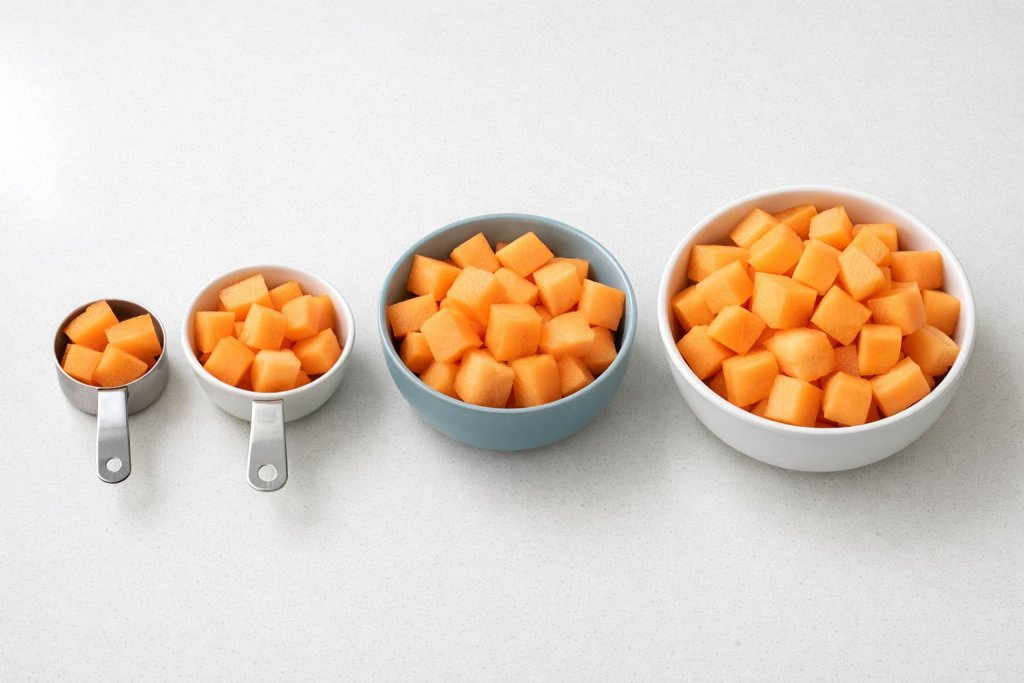
A common serving is 1 cup cubed. That portion is usually easy to fit into meals or snacks.
Simple ways to portion it without measuring:
- A bowl about the size of your cupped hand
- One layer of cubes covering the bottom of a small cereal bowl
If you’re watching carbs, start with ½ cup and see how it fits your day.
How to pick, store, and prep cantaloupe for best quality
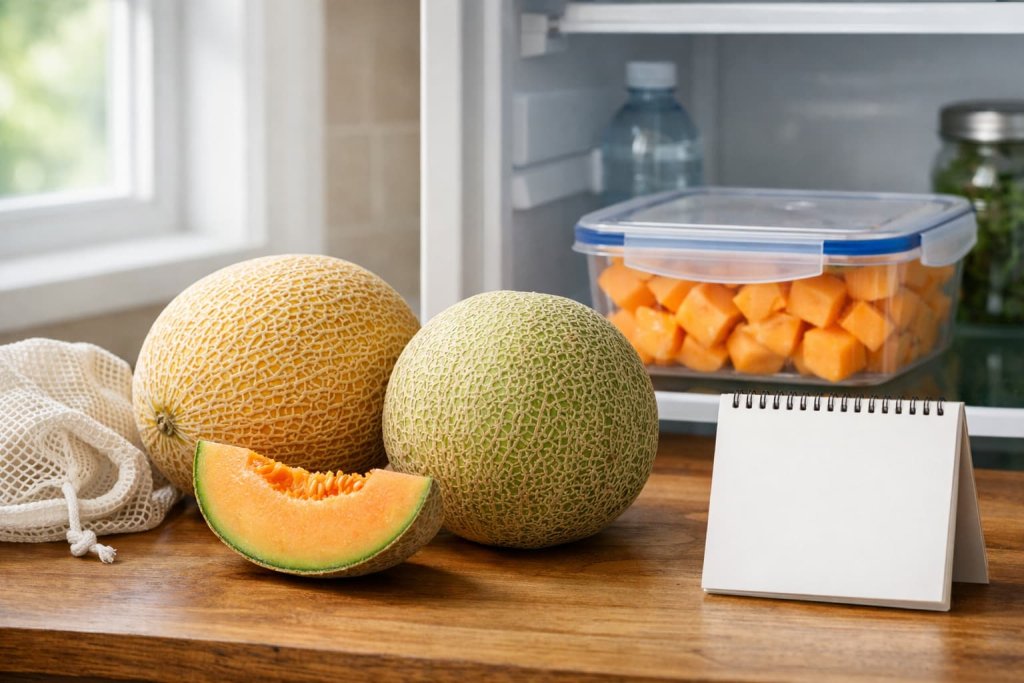
How to choose a ripe cantaloupe
- Smell: a ripe cantaloupe often has a sweet aroma near the stem end
- Feel: it should have a little “give,” not be rock-hard
- Avoid: major soft spots, cracks, or leaking areas
How to store it
- Whole cantaloupe: room temperature until ripe, then refrigerate if you won’t use it soon
- Cut cantaloupe: store in an airtight container in the fridge and keep it cold
For best quality, aim to eat cut cantaloupe within about 3–4 days when kept refrigerated in a sealed container. If it smells sour, looks slimy, or tastes “off,” throw it out.
Prep tip for fast weekday use
Cut the melon right after you buy it (once ripe), portion into containers, and grab-and-go for breakfast or snacks.
Easy ways to eat cantaloupe (without getting bored)
- Breakfast: cantaloupe + plain Greek yogurt + nuts
- Snack: cantaloupe + cottage cheese + cinnamon
- Salad: cantaloupe cubes + cucumber + mint + a squeeze of lime
- Smoothie: cantaloupe + yogurt + ice (skip added sugar)
- Dessert swap: cantaloupe with a drizzle of lemon and a pinch of salt to boost flavor
People Also Ask about cantaloupe health benefits
Is cantaloupe high in sugar?
Cantaloupe has natural fruit sugar and carbohydrates. It’s not “sugar-free,” but it’s also water-rich and typically eaten in moderate portions like 1 cup.
Is cantaloupe good for weight loss?
It can be a helpful choice because it’s refreshing, water-rich, and relatively low in calories per cup. Your overall calorie intake and eating pattern matter most.
Is cantaloupe good for blood pressure?
Cantaloupe provides potassium, which supports normal blood pressure regulation as part of an overall balanced diet—especially when sodium intake is also managed.
Is cantaloupe good for skin?
Cantaloupe provides vitamin C, which is required for collagen biosynthesis, and it contains carotenoids that can contribute to vitamin A activity—both relevant to normal skin structure and function.
Should you wash cantaloupe before cutting?
Yes. Wash and scrub the rind under running water before cutting to reduce the risk of transferring germs from the outside to the edible flesh.
FAQ: Cantaloupe Health Benefits
1) How often can I eat cantaloupe?
If it fits your preferences and tolerances, you can eat it regularly—many people enjoy it a few times per week as part of a varied fruit intake.
2) What’s the healthiest way to eat cantaloupe?
Whole, fresh cantaloupe (not candied or sugar-added). Pair it with protein or healthy fats if you want a more filling snack.
3) Is cantaloupe better than watermelon?
They’re both hydrating fruits. Cantaloupe typically provides more vitamin A activity (from carotenoids) and also offers vitamin C and potassium. The “better” choice is the one you’ll eat consistently.
4) Can kids eat cantaloupe?
Yes, for most kids it’s a nutritious fruit. Cut it into age-appropriate pieces to reduce choking risk, and keep food safety in mind.
5) How long can cut cantaloupe sit out?
Follow the general rule: don’t leave perishable foods out more than 2 hours (or 1 hour if it’s hotter than 90°F/32°C).
6) Is pre-cut cantaloupe safe?
It can be, but it’s higher risk than whole melon because it’s already cut and handled. Choose cold, well-refrigerated packages, check dates, and keep it cold at home.
7) Can I eat cantaloupe if I have kidney disease?
Some people with kidney disease need to limit potassium. Ask your clinician or renal dietitian what portion size is safe for you.
Conclusion
Cantaloupe is a simple, nutrient-dense fruit that supports hydration and provides meaningful vitamin C, vitamin A activity, and potassium—plus it’s easy to use in snacks and meals. If you want the biggest payoff, focus on two things: smart portions and strong food safety (wash before cutting and refrigerate promptly).
If you’re building healthier habits, add cantaloupe to your weekly grocery list and plan one “default” way to eat it—like yogurt bowls, snack plates, or a fruit-forward breakfast.
This content is for informational purposes only and not medical advice.