
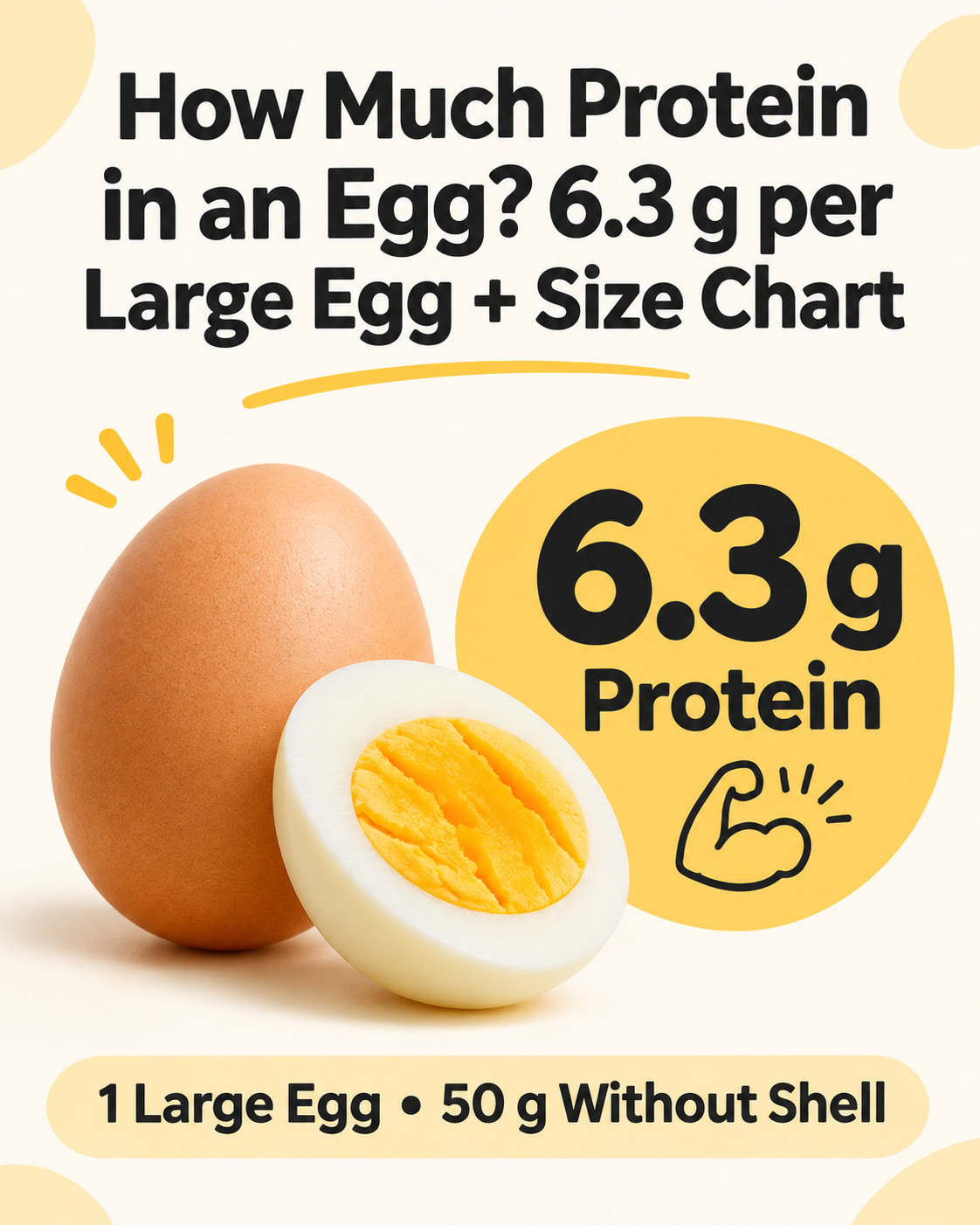
One large whole chicken egg contains about 6.3 g of protein, based on USDA’s reference serving of 50 g without the shell.
For meal planning, start by checking the egg size and whether you’re counting whole eggs, whites, or a prepared dish. Those distinctions make the estimate more useful than treating every egg serving as identical.
Egg Protein by Size
Use this chart to match your portion. The weights describe the edible contents—the white and yolk—not the shell.
| US reference size | Approximate weight without shell | Protein per whole egg |
|---|---|---|
| Small | 38 g | 4.8 g |
| Medium | 44 g | 5.5 g |
| Large | 50 g | 6.3 g |
| Extra-large | 56 g | 7.0 g |
| Jumbo | 63 g | 7.9 g |
Protein estimates are calculated from USDA’s raw whole-egg data and the edible weights in its egg-size guide, rounded to one decimal place.
US carton size categories are based on the weight of a dozen eggs in their shells. That is different from the shell-free weights used for nutrition calculations above.
For an egg sold under a different sizing system, check the package’s serving size and nutrition information rather than assuming its “large” label matches this chart.
Egg White vs. Yolk: Where Is the Protein?
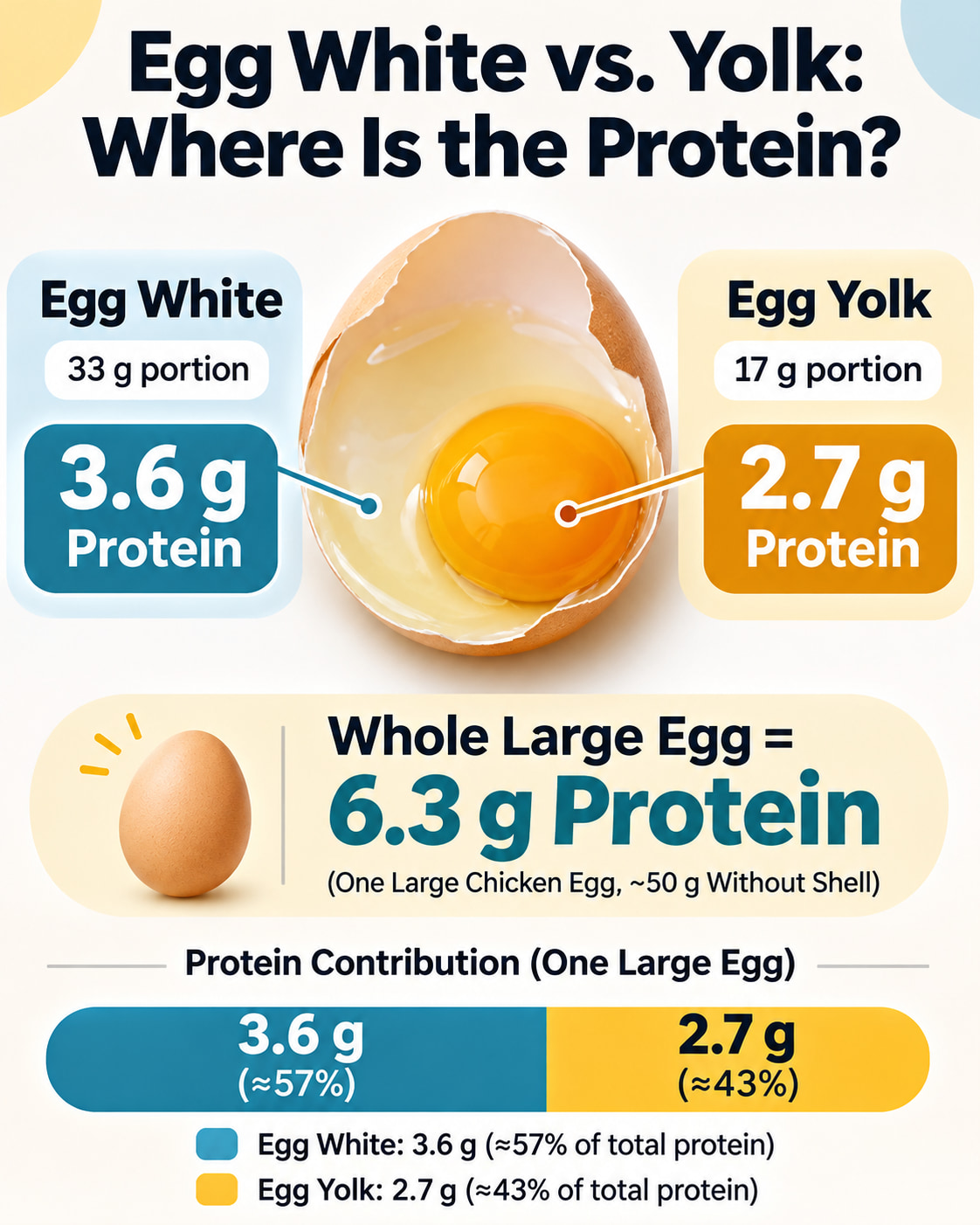
Both parts contain protein. USDA lists approximately 3.6 g in a large egg’s 33 g white and 2.7 g in its 17 g yolk. See the USDA reports for egg whites and egg yolks.
This comparison uses the parts of one egg, not equal weights of white and yolk. The white contributes more protein per egg, but the yolk is not protein-free.
When tracking breakfast, select “egg white” only when you actually leave out the yolk. For liquid egg whites from a carton, use the label’s serving size and measure your portion rather than assuming one pour equals one white.
Does Cooking Change the Protein in Eggs?
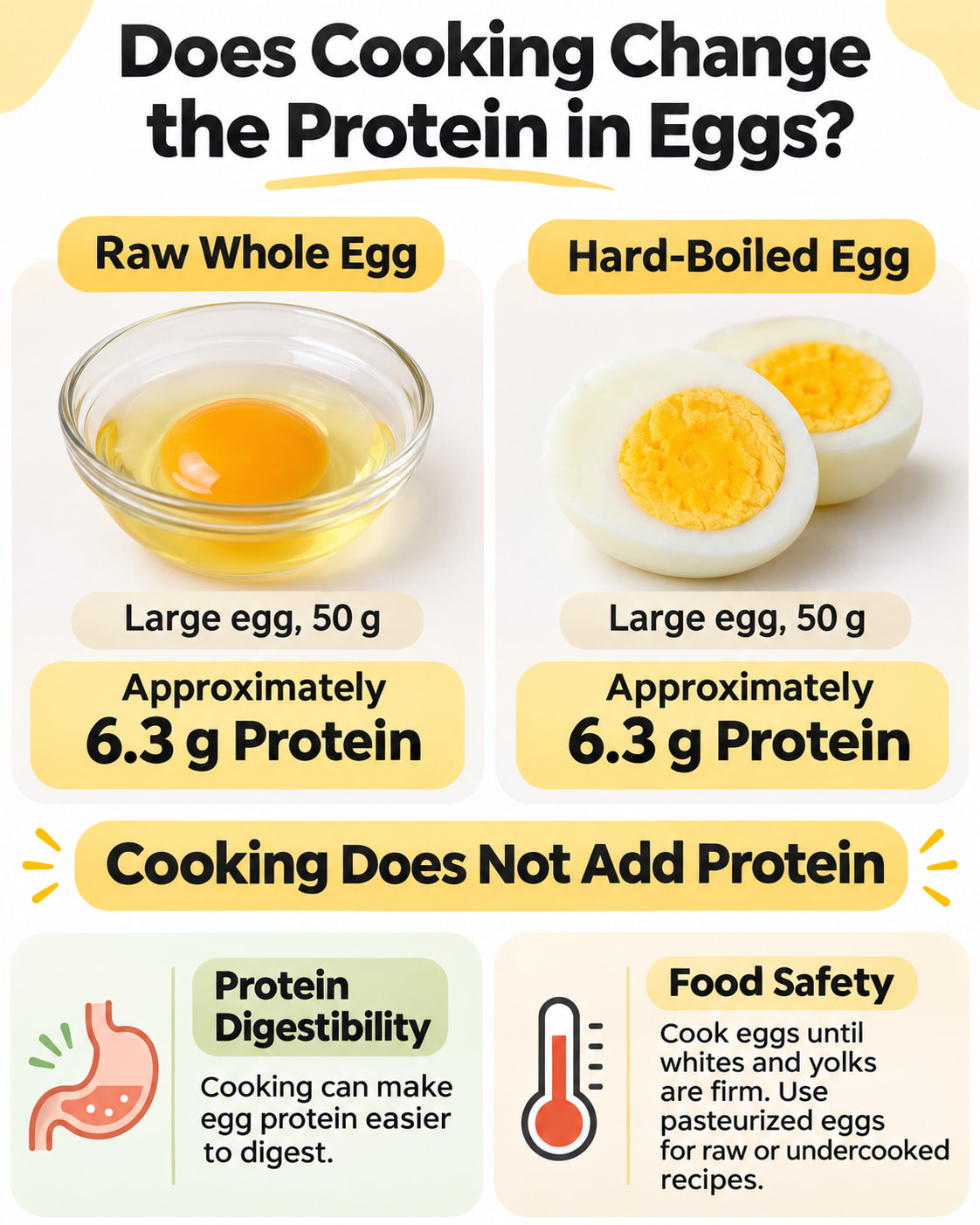
A large, 50 g hard-boiled egg also provides about 6.3 g of protein, according to USDA’s cooked-egg entry.
For scrambled eggs and omelets, a practical approach is to count the eggs you use, then account for the other ingredients separately. This avoids relying on a generic food-tracking entry that may represent a different recipe. For a shared dish, calculate the recipe total and divide it according to the portion you eat.
Protein content and digestibility are different questions. The first concerns how much protein is in the food; the second concerns how effectively your digestive system breaks it down and absorbs it.
A small human study published in 1998 found that cooked egg protein was digested more efficiently than raw egg protein. However, it involved just five people who had undergone intestinal surgery. Its exact results should not be treated as universal absorption rates—or as evidence that cooking adds protein to an egg.
There is also a food-safety reason to avoid ordinary raw eggs: they can contain Salmonella. The FDA’s egg-safety guidance recommends cooking eggs until the whites and yolks are firm. For recipes served raw or undercooked, use pasteurized shell eggs or pasteurized egg products.
How Much Protein Is in Two or Three Eggs?
Here is how common portions compare when using large eggs:
| Portion | Approximate protein |
|---|---|
| Two whole eggs | 12.6 g |
| Three whole eggs | 18.8 g |
| One whole egg plus two whites | 13.5 g |
Calculated from USDA’s unrounded raw-egg values, then rounded to one decimal place.
These are portion comparisons, not instructions about how many eggs to eat each day.
Eggs provide complete protein, meaning they supply all nine essential amino acids—the protein building blocks your body must obtain from food. As MedlinePlus explains, complete protein describes amino acid composition; it does not mean one serving supplies all the protein you need.
Whether an egg-based meal provides enough protein depends on your needs and what else you eat. Protein requirements vary with factors including age, health, and physical activity, so there is no single egg count that suits everyone.
For everyday meal planning, match the egg size, count the whole eggs or whites you use, and include the rest of the meal. That gives you a practical estimate without treating a nutrition reference value as an exact measurement of every egg.
This content is for informational purposes only and not medical advice.